


TL;DR
- Plotline and its closest alternatives are genuinely similar in category and different in emphasis. A comparison that declares a winner here is not credible.
- The tools are built around different architectural bets, not different quality levels.
- This article covers what Plotline does and who it fits.
- It covers the evaluation criteria that actually differentiate this category.
- It covers direct alternatives including Digia and how each one's depth compares.
- It covers adjacent alternatives in CEP in-app modules and product-adoption tools.
- It covers where gamification and stories capability diverges most concretely, and how each option handles CleverTap and MoEngage coexistence.
- It closes with a comparison table and how to structure a two-week proof of concept that avoids a demo-driven decision.
- Sourcing note: every claim about Plotline traces to Plotline's own published pages or a comparison sourced from them, and every claim about Digia traces to Digia's own published pages, with the origin stated at each point rather than presented as independently verified fact.
Most comparison content in this category has an unstated agenda: pick a winner, build the argument backward. That approach does not work here, and pretending otherwise produces a worse decision, not a clearer one. Plotline is a genuinely capable, no-code, standalone in-app engagement platform. Its closest alternatives are not worse versions of the same product. They are built around different bets about what a growth team needs, standalone versus layered on an existing CEP, broad format libraries versus AI-assisted campaign review, published pricing versus custom quotes. The useful output of this article is not a ranking. It is a map precise enough that a reader can locate their own situation on it.
What Plotline Does and Who It Fits
Plotline is a no-code in-app engagement platform built for mobile-first growth teams, covering nudges, widgets, gamification, video, and experimentation from a standalone dashboard. Its published format library spans modals, banners, tooltips, stories, videos, gamification, bottom sheets, and page pops, and the gamification library specifically extends to scratch cards, spin wheel, quizzes, streaks, milestones, and over 100 skill-based games, which is a genuinely deep catalogue relative to most tools in this category.
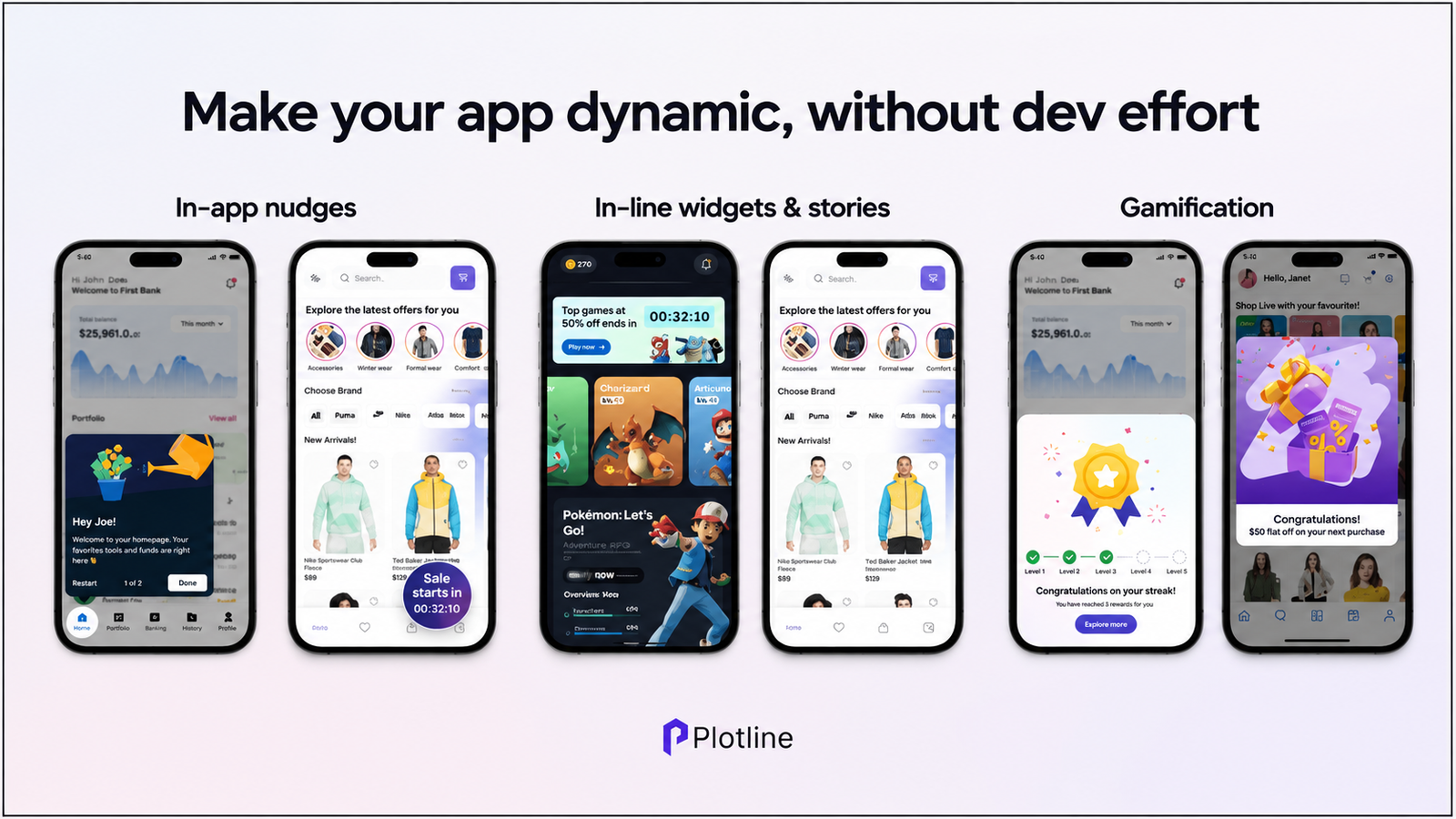
Plotline's no-code builder includes Figma import, letting a design team's existing mockups become a live campaign directly, and Plotline publishes no-code A/B/n and multivariate testing plus feature flags as native product lines, which positions experimentation as a first-class capability rather than an add-on. Plotline also publishes push, email, WhatsApp, and RCS support alongside its in-app tools, extending beyond pure in-app rendering into adjacent outbound channels.
Plotline publishes a starting price of $499 per month on its Starter plan, priced on monthly active users and impressions, along with GDPR, SOC 2, and ISO 27001 compliance certifications. A published, budgetable starting price without a mandatory sales conversation is a real point of difference from most of the category, where custom quoting is the default.
The team profile Plotline fits best: mobile-first growth teams that want a full standalone in-app program running quickly, with no dependency on an existing CEP integration, a broad no-code format library including design-to-campaign Figma import, and a pricing structure they can budget against before a sales call. For teams whose priority is standing up a full standalone in-app program fast, Plotline's model is a genuinely reasonable fit.
The Evaluation Criteria That Actually Differentiate in This Category
Six dimensions separate tools in this space in ways that matter for an actual decision, more than a generic feature checklist would surface.
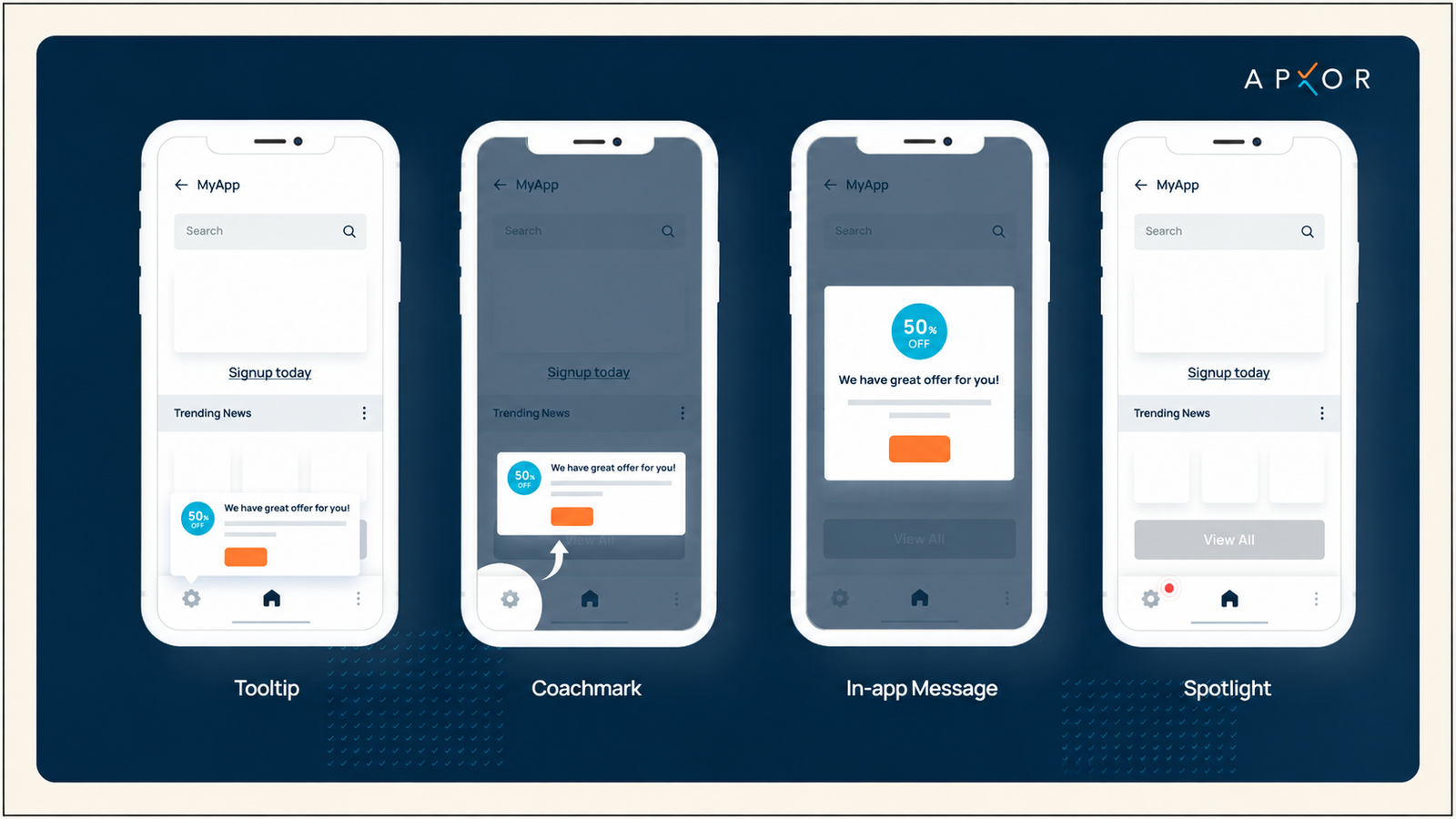
Component breadth. How many distinct format types does the tool render, and how deep is each one, a scratch card that is a single fixed template versus a scratch card with configurable prize tiers, reveal thresholds, and reward logic.
Rendering fidelity. Does the component render as native UI using the platform's own rendering pipeline, or does it render through a WebView, an embedded browser surface inside the native app. This affects visual polish, animation smoothness, and how closely a campaign can match an app's own design system.
SDK footprint. How much does the tool add to the app's binary size and runtime overhead. This matters more for consumer apps operating at scale, where every additional SDK is scrutinised against release-gate crash rate and performance thresholds.
Targeting granularity. How precisely can a campaign be scoped to a specific user segment, and does that targeting logic live inside the in-app tool itself or does it reuse targeting already computed elsewhere.
Integration model. Does the tool run standalone, replacing or sitting independently of any existing customer engagement platform, or does it plug into an existing CEP and reuse its segmentation and event data. This is the single most consequential architectural fork in the category, and it determines almost everything else about implementation cost and timeline.
No-code ceiling. Where does the no-code workflow actually stop, and what specifically requires a developer once you hit that ceiling. Every tool in this category claims no-code. The honest question is what the exception list looks like in practice.
Direct Alternatives, Compared Honestly
Digia. Digia Engage is an in-app engagement layer built to plug directly into the customer engagement platform you already run, reusing existing segments and events instead of adding a new data layer. Digia organises its format library into five product lines: nudges, widgets, surveys, gamification, and in-app video, covering tooltips, bottom sheets, banners, stories, and video alongside gamification mechanics including scratch cards, spin-to-win, streak tracking, milestone badges, and quizzes. Digia's AI layer covers three specific jobs: natural-language audience segmentation, on-brand creative generation, and an automated pre-launch review of every campaign, which is a narrower but more targeted AI scope than a general-purpose no-code builder assistant. Digia does not publish list pricing, quoting per account based on user volume, connected channels, and impression count, and SDK integration takes around 20 minutes with a first live campaign typically inside 24 hours, which is fast for an SDK-based approach without matching Plotline's zero-integration no-code model.
Where Digia leads: the CEP-layered architecture itself, for a team that already has meaningful segmentation and journey investment in CleverTap, MoEngage, or WebEngage and does not want to duplicate that work in a second system. Where Plotline leads: format library breadth (100+ skill-based games specifically, and Figma import), a published starting price, and a fully standalone model that requires no existing CEP at all.
The honest read on how much actually changes. Both companies publish sub-100ms in-app trigger latency figures, and neither number has been independently re-measured by the other in this comparison. On core in-app rendering speed, the published claims are comparable. The meaningful difference is architectural, not a quality gap: one tool assumes an existing CEP relationship and is built to extend it, the other assumes no such dependency and is built to be complete on its own.
Adjacent Alternatives: CEP In-App Modules and Product-Adoption Tools
These are not direct substitutes for Plotline, and the conditions under which they become the better answer are narrow and specific.
CEP in-app modules. CleverTap, MoEngage, and WebEngage all ship an in-app messaging channel bundled within a broader outbound-first platform covering push, email, and SMS. In hands-on testing, one such platform's native templates render as native UI, a genuine advantage over WebView-based rendering, but the template set itself is limited to overlay shapes: cover, interstitial, half-interstitial, header, footer, and banner, and a separate CEP's in-app content was confirmed to render through a WebView rather than native UI, according to that platform's own developer documentation. This category becomes the better answer specifically when a team's in-app needs are genuinely limited to standard promotional overlays, and the segmentation engine already bundled with the CEP is sufficient, since adding either Plotline or a dedicated in-app layer on top of an already-adequate overlay system is unnecessary complexity for that specific use case.
Product-adoption tools. Appcues and Pendo are built around guided onboarding and feature adoption workflows, not general-purpose in-app engagement. Appcues' mobile experiences focus on Flows, Embeds, surveys, modals, slideouts, and tooltips, without gamification as a core native format, and Pendo's published mobile formats centre on lightboxes, tooltips, walkthrough guides, and NPS surveys, also without gamification as a native guide format. This category becomes the better answer specifically when the core problem is guided product education and feature discovery, not campaign-style engagement, gamification, or monetisation surfaces, since both tools bring strong onboarding-flow analytics that neither Plotline nor Digia are built to prioritise as their primary focus.
Gamification and Stories Depth
This is the axis where the category diverges most concretely, and the differences are specific enough to be worth stating in exact terms rather than generalities.
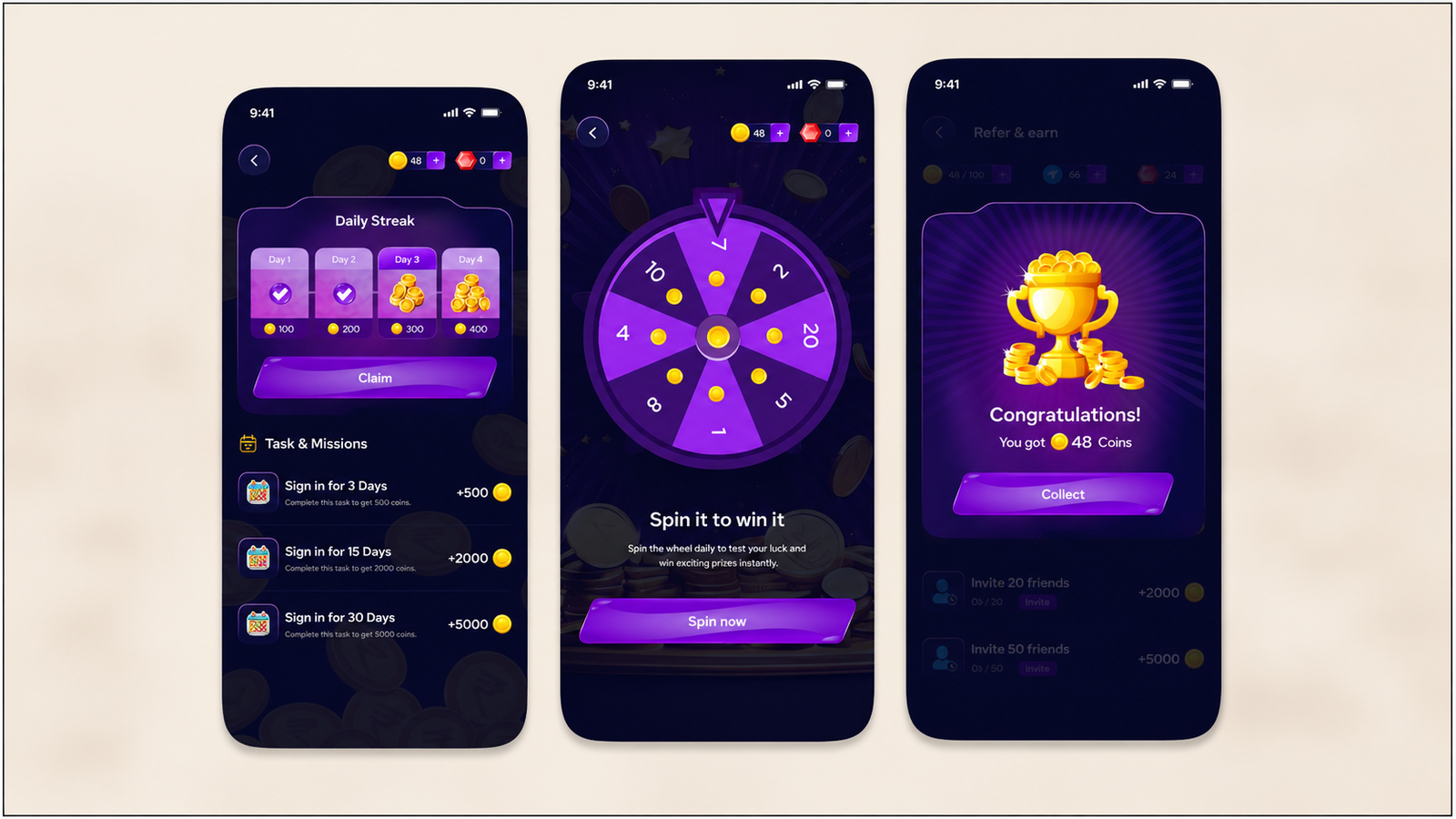
Plotline's gamification catalogue is the deepest published in this comparison set: scratch cards, spin wheel, quizzes, streaks, milestones, and more than 100 skill-based games, which is meaningfully broader in raw format count than any other tool covered here. Digia's gamification set covers scratch cards, spin-to-win, streak tracking, milestone badges, and quizzes, narrower in raw count but covering the mechanics most commonly deployed at scale by Indian consumer apps specifically. Neither Appcues nor Pendo publishes gamification as a core native mobile format, and CEP in-app modules generally ship a smaller set, spin-the-wheel and scratch cards as templates, with reward configuration for those templates typically requiring code-level editing rather than a pure dashboard field, a materially different depth than a purpose-built in-app engagement platform's native configuration.
On stories and video specifically, Plotline publishes stories, PiP video, full-page video, and shoppable video formats, while Digia's video product line covers PiP video, in-app stories, and full-screen video. Both cover the same core territory. Plotline's shoppable video format is a specific capability not confirmed as published on Digia's side as of this comparison, which is worth confirming directly with either vendor if commerce-integrated video is a specific requirement.
The concrete takeaway: a team whose roadmap requires a very wide variety of skill-based game mechanics, beyond the standard scratch card and spin-wheel set, should weight Plotline's published breadth heavily. A team whose gamification needs are covered by the standard mechanics but who also needs those mechanics to sit on top of an existing CEP's segmentation without duplication should weight the architectural question above raw format count.
CEP Integration: CleverTap and MoEngage Coexistence
This is the practical question that determines implementation cost more than any feature comparison, and the two tools handle it in structurally different ways.
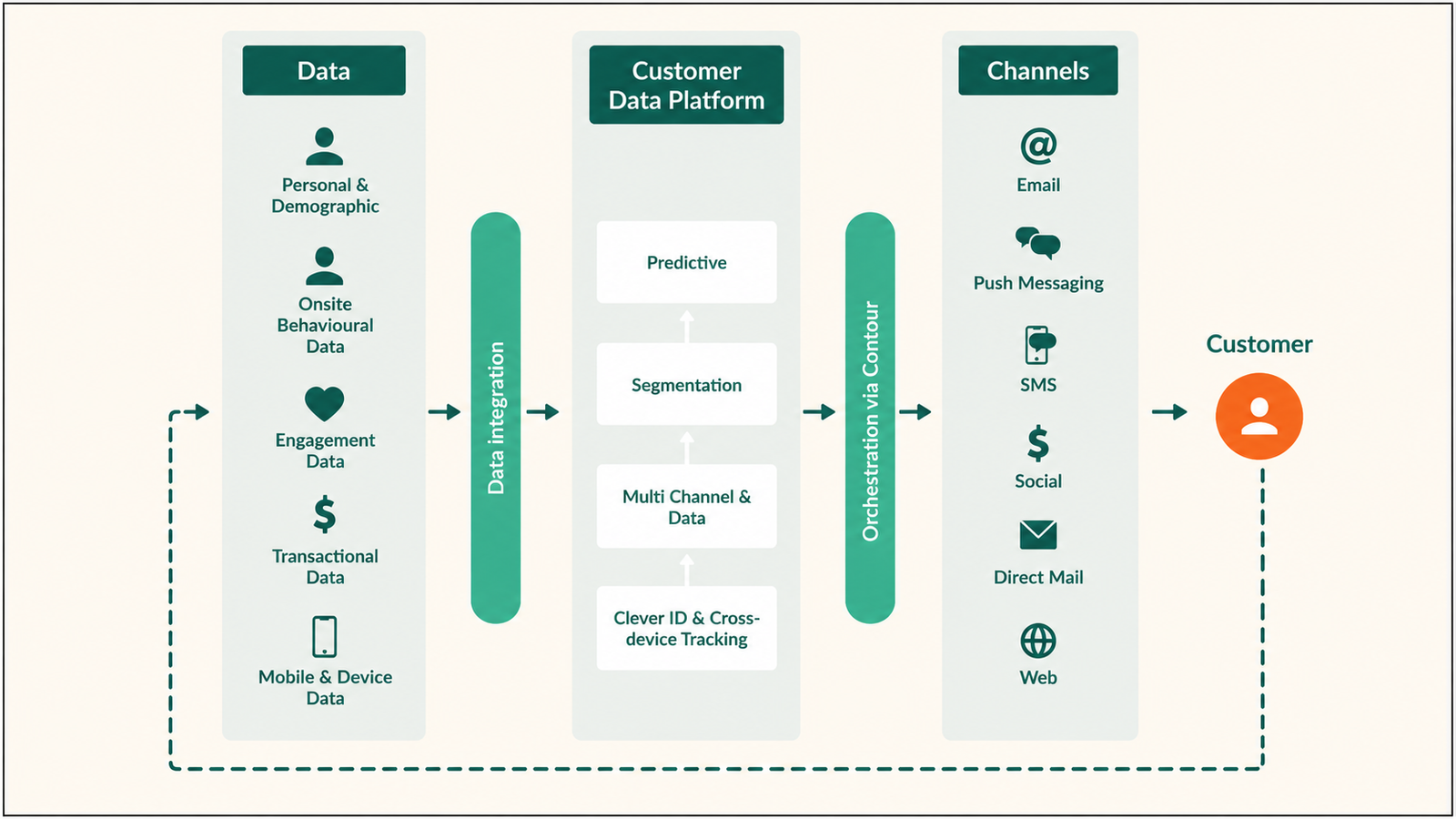
How Digia handles it. Digia is built specifically as an add-on layer on CleverTap, MoEngage, or WebEngage, reusing existing segments. Stable user IDs and attributes are shared between the CEP and Digia so targeting stays consistent across both platforms, mirroring or importing the same segmentation rules for in-app delivery rather than recomputing them independently. The integration adds roughly 20 minutes of engineering time on top of the core SDK setup, and the existing CEP continues to own outbound channels, push, email, and SMS, unchanged.
How Plotline handles it. Plotline is typically deployed alongside a CEP for outbound channels, rather than built specifically as a layer that renders on top of one. Plotline's own segmentation and campaign analytics operate within its own system, which means a team running both Plotline and an existing CEP is generally running two separate targeting logics side by side, coordinated by the team rather than architecturally unified by the tool.
The event forwarding question this raises. The default path that produces duplicated, potentially divergent segmentation is wiring a new tool's SDK to the same raw event sources a CEP already reads from, producing two independent systems computing overlapping state from separately ingested copies of the same signal. This risk is architecture-dependent, not a fixed property of either tool: a team implementing Plotline alongside CleverTap or MoEngage should ask directly whether Plotline's own targeting reads from raw events independently or from a governed, CEP-computed segment, since the answer determines whether the coexistence is genuinely clean or whether it introduces the segment-drift risk this article's companion piece covers in depth.
How to Run a Two-Week POC
The one surface and one metric to test. A capped, scoped proof of concept, typically two to four weeks, with a defined number of integrations and a single clear success criterion, keeps vendor management timelines tight and produces a decision the team can actually act on, rather than an open-ended evaluation that drags without resolution. For this category specifically, the right scope is one surface, a specific screen or moment in the user journey, not a full campaign programme, and one metric, a conversion or engagement rate lift against a holdout, not a bundle of secondary signals. Testing everything at once produces ambiguous results that satisfy neither vendor's case convincingly.
The questions to ask each vendor, not just watch demonstrated. Avoid demo theatre by sending a specific script in advance and scoring only what is executed live, against your own data and your own use case, rather than a generic feature tour. For this category, the specific questions worth scripting in advance: how does targeting logic reach the in-app layer, from raw events or from a governed segment; what is the actual, measured latency from trigger to render on your own test device, not the vendor's published figure; what does the no-code workflow's genuine exception list look like, the specific campaign type that would require a developer; and what is the real timeline from contract signature to a first live campaign, not from SDK integration alone.
How to avoid a demo-driven decision. Gartner's research found that through 2025, roughly 30% of proof-of-concept projects were abandoned after the PoC stage, largely due to unclear success criteria defined too late in the process. Define the single success metric and the specific threshold that constitutes a pass before the POC begins, not after seeing early results from either vendor. Reference customer conversations, direct calls with at least three customers similar in product category and scale, are a more reliable signal of vendor quality than demo polish or funding announcements, and are worth scheduling in parallel with the technical POC rather than skipping in favour of the technical test alone.
Topics Not in the Brief That Teams Should Know
Both companies' latency figures are self-reported and should be independently tested, not compared as-published. Both Digia and Plotline publish sub-100ms in-app trigger latency, and neither figure has been independently re-measured against the other. This is the single most important caveat in any comparison in this category: a vendor's own published performance number reflects their own testing conditions, which may not match a specific team's device mix, network conditions, or app architecture. The two-week POC's own latency measurement, taken on the evaluating team's own test devices, is the only figure that should actually inform the decision.
G2 ratings in this category are frequently self-reported by the vendor rather than independently verified within the comparison itself. Plotline's own published materials cite a 4.7 out of 5 G2 rating, which is a real, checkable figure on G2's own platform, but a team should verify current ratings directly on G2 rather than trusting a vendor's self-cited figure at face value, since ratings and review counts shift over time and a comparison page's snapshot can become outdated.
Compliance certification parity does not mean equivalent security posture. Both Digia and Plotline list GDPR, SOC 2, and ISO 27001 compliance, which establishes a baseline but does not answer the deeper architectural question of what data actually moves between systems and where the PII boundary sits. A team with a security review ahead should ask both vendors the same specific questions about data residency, sub-processor lists, and re-identification capability, not stop at confirming the certification badges match.
Switching from Plotline to a CEP-layered alternative, or the reverse, is a scoped evaluation, not a full platform migration. Because a CEP-layered tool is built to render inside an existing CEP integration rather than stand alone, a team already running Plotline and evaluating a layered alternative typically keeps their CleverTap, MoEngage, or WebEngage setup for outbound channels and evaluates the in-app layer specifically as a side-by-side swap, which is a materially smaller project than migrating an entire customer engagement platform.
Key Takeaways
Plotline is a genuinely capable, no-code, standalone in-app engagement platform with the deepest published gamification library in this comparison set, Figma-to-campaign import, and a published starting price a team can budget against without a mandatory sales conversation.
The six dimensions that actually differentiate this category are component breadth, rendering fidelity, SDK footprint, targeting granularity, integration model, and where the no-code ceiling genuinely sits. Integration model is the single most consequential fork, since it determines almost everything else about implementation cost and timeline.
Direct alternatives to Plotline, principally Digia, differ architecturally rather than in raw quality: a standalone system built to be complete on its own versus a layer built to render inside an existing CEP and reuse its segmentation, with comparable published trigger latency on both sides.
CEP in-app modules and product-adoption tools are adjacent, not direct, alternatives, and each becomes the right answer only under narrow conditions: standard overlay messaging needs already served by an existing CEP for the former, guided onboarding and feature adoption as the core problem for the latter.
Gamification depth diverges most concretely at the raw format count level, where Plotline's 100+ skill-based games exceed any other tool covered, while the mechanics most commonly deployed at scale, scratch cards and spin-the-wheel, are available across most of the category with varying no-code depth.
CleverTap and MoEngage coexistence is handled architecturally by CEP-layered tools, which reuse computed segments directly, and operationally by standalone tools, which typically run their own targeting logic alongside an existing CEP rather than reading from it, a distinction worth confirming directly during evaluation.
A disciplined two-week POC, scoped to one surface and one metric, with success criteria defined before testing begins and reference customer calls run in parallel, is what prevents a demo-driven decision, given that roughly 30% of proof-of-concept evaluations are abandoned industry-wide due to unclear success criteria defined too late in the process.
Further Reading
From Digia Engage:
- Digia vs Plotline: In-App Engagement Comparison — the primary source this article's Plotline and Digia claims are drawn from, including the full feature-by-feature table
- Digia vs MoEngage: In-App Engagement Comparison — the hands-on integration test referenced for CEP in-app module rendering behaviour
- CleverTap Alternatives: 7 Tools for Teams Who Want Better In-App UI — the comparable diagnosis-first framework applied to CleverTap specifically
- MoEngage Alternatives for In-App Messaging on Consumer Apps — the companion comparison covering MoEngage's in-app module in depth
- Integrating an In-App Layer Without Duplicate Data Pipelines or PII Movement — the full technical architecture behind the segment forwarding and event duplication risk covered in this article
- Digia Engage MoEngage Integration — the specific plugin architecture and segment-sharing mechanism referenced in the CEP integration section
External Sources:
- Plotline, WebEngage Alternatives Comparison Page — Plotline (Plotline's own published format list, G2 rating, and pricing, cited as the primary source for direct Plotline claims)
- No-code Gamification Templates, MoEngage Help Center — MoEngage (CEP in-app module gamification template depth and reward configuration workflow)
- The Essential IT Vendor Selection Criteria Checklist — TechnologyMatch (scoped POC duration and structure recommendations)
- Unbiased IT Vendor Selection Methods and When to Use Them — TechnologyMatch (scripted demo methodology to avoid demo theatre)
- How Do You Evaluate AI Vendors Beyond the Demo? — AI Assembly Lines (Gartner's 30% PoC abandonment statistic and unclear success criteria as the primary cause)
- AI Vendor Evaluation Checklist — Dan Cumberland Labs (reference customer conversations as a reliability signal)
Digia is one of the platforms evaluated in this article, alongside Plotline and several adjacent categories. This comparison draws on Digia's own published comparison page against Plotline, which discloses its sourcing method and limitations directly. Book a demo to run your own scoped, side-by-side evaluation against your existing CleverTap, MoEngage, or WebEngage setup, or read the full Digia vs Plotline comparison for the complete feature-by-feature breakdown this article draws on.