Chameleon improves the product experience. Digia deepens the app.
Digia vs Chameleon: In-App Engagement
Chameleon combines product tours, tooltips, launchers, banners, HelpBar, and microsurveys in one platform. Digia Engage specializes in richer mobile-native widgets, gamification, stories, surveys, and video.
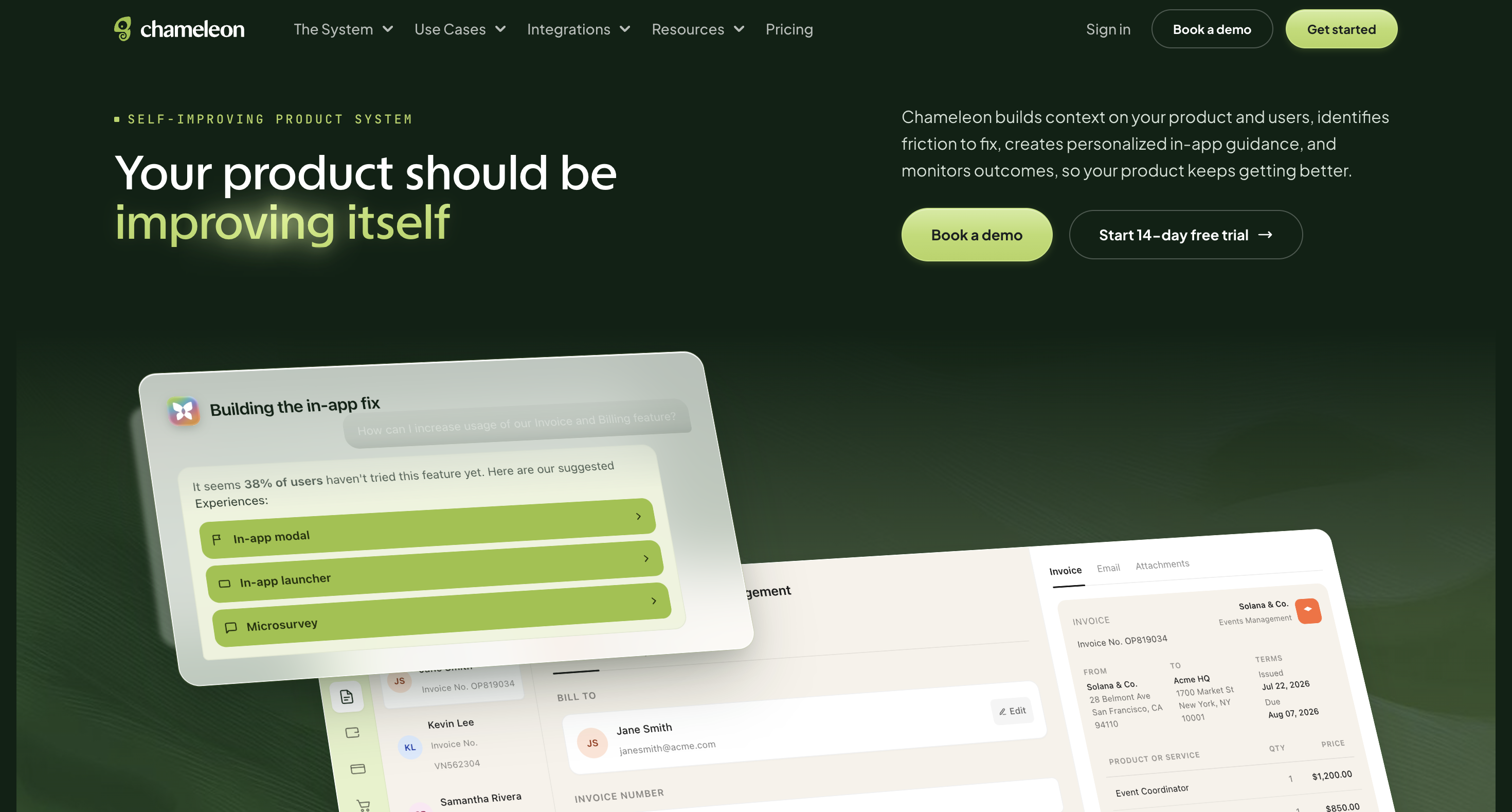
Chameleon is a in-product adoption platform spanning analytics, session replay, onboarding, and contextual surveys. Digia Engage is a dedicated in-app engagement layer built around rich mobile-native components. This comparison is based on Chameleon's published materials, not a hands-on Chameleon SDK test.
What this comparison found, in short
- Chameleon is an all-in-one in-product adoption platform whose center of gravity is native-looking in-product guidance, self-serve help, experimentation, and feedback.
- Chameleon now publishes actionable product analytics with funnels, paths, retention reports, session replay, no-code onboarding, and contextual surveys.
- Chameleon's published in-app layer centers onboarding patterns and surveys; it does not publish the same mobile-native library of widgets, stories, video, and gamification that Digia offers.
- Digia is narrower by design: a mobile-native rendering layer with widgets, stories, video, surveys, and native gamification that can sit beside an existing CEP.
How this comparison was put together
Chameleon claims on this page trace to Chameleon's own product pages. Broader competitor sections summarize each company's public homepage positioning. This is not a hands-on integration test, and unavailable public details are marked as such rather than guessed.
Disclosure. Digia sells Digia Engage and competes with Chameleon on mobile in-app engagement. This page was written by Digia, is not independent, and is not sponsored by or affiliated with any platform named here.
. Something out of date? Email info@digia.tech.
At a glance
Feature comparison across product adoption platforms
| Feature / Capability | Digia Engage | Userpilot | Chameleon | UserGuiding | WalkMe |
|---|---|---|---|---|---|
| Best fit | Mobile teams already running a CEP | SaaS teams combining analytics and onboarding | Product teams building native-looking in-app guidance | Teams prioritizing self-serve onboarding and support | Enterprises driving adoption across employee software |
| In-app depth | Nudges, widgets, stories, surveys, video, native gamification | Flows, checklists, tooltips, banners, and surveys | Tours, tooltips, launchers, banners, HelpBar, microsurveys | Tours, checklists, hotspots, surveys, banners, resource centers | Walkthroughs, tooltips, notifications, surveys, automation, AI assistance |
| Authoring | Visual mobile-native builder with AI assistance | No-code onboarding and engagement builder | No-code builder with styling and A/B testing | No-code onboarding and self-service builder | Enterprise authoring, analytics, governance, and automation |
| Analytics | Reuses connected CEP analytics | Funnels, paths, retention, trends, and session replay | Experience analytics, goals, and experimentation | Onboarding, survey, and engagement analytics | Application, workflow, content, and adoption analytics |
| Gamification | Native scratch cards, spin-to-win, streaks, milestones, quizzes | No published native mechanic library | No published native mechanic library | No published native mechanic library | No published native mechanic library |
| Architecture | Dedicated mobile rendering layer added to an existing CEP | Standalone product growth platform | Standalone in-product adoption platform | Standalone adoption and self-service platform | Enterprise digital adoption platform across applications |
| Pricing | Custom quote | MAU-based paid plans | Public plans plus enterprise options | Public MAU-based plans | Custom quote |
Chameleon vs Userpilot
Chameleon centers in-product guidance and experimentation. Userpilot centers product analytics plus onboarding.
- Primary strength: Chameleon: In-product guidance and experimentation. Userpilot: Product analytics plus onboarding.
- Experience library: Chameleon publishes tours, tooltips, launchers, banners, helpbar, and microsurveys; Userpilot publishes flows, checklists, tooltips, banners, and surveys.
- Analytics: Chameleon emphasizes experience analytics, goals, and experimentation; Userpilot emphasizes funnels, paths, retention, trends, and session replay.
- Digia difference: Digia supplies a mobile-native rendering layer with widgets, stories, video, surveys, and gamification inside an existing CEP.
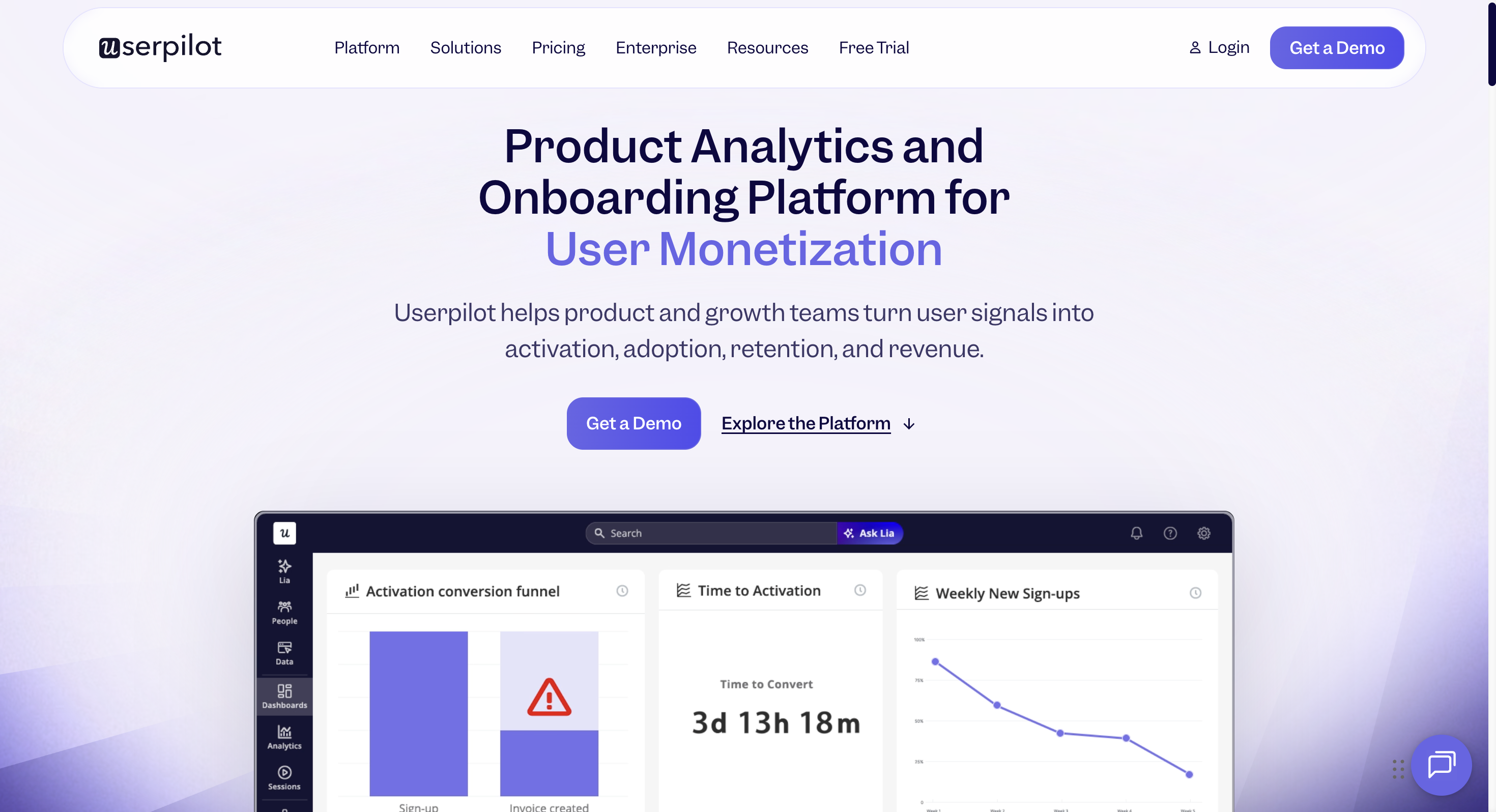
| Feature / Capability | Chameleon | Userpilot |
|---|---|---|
| Primary strength | In-product guidance and experimentation | Product analytics plus onboarding |
| Experience library | Tours, tooltips, launchers, banners, HelpBar, and microsurveys | Flows, checklists, tooltips, banners, and surveys |
| Analytics | Experience analytics, goals, and experimentation | Funnels, paths, retention, trends, and session replay |
| Best fit | Teams prioritizing native-looking guidance | SaaS teams combining insight and action |
| Pricing | Public plans plus enterprise options | MAU-based paid plans |
Choose Chameleon if:
Teams prioritizing native-looking guidance.
Choose Userpilot if:
SaaS teams combining insight and action.
Chameleon vs UserGuiding
Chameleon centers in-product guidance and experimentation. UserGuiding centers self-serve onboarding and support.
- Primary strength: Chameleon: In-product guidance and experimentation. UserGuiding: Self-serve onboarding and support.
- Experience library: Chameleon publishes tours, tooltips, launchers, banners, helpbar, and microsurveys; UserGuiding publishes tours, checklists, hotspots, surveys, banners, and resource centers.
- Analytics: Chameleon emphasizes experience analytics, goals, and experimentation; UserGuiding emphasizes onboarding, survey, and engagement analytics.
- Digia difference: Digia supplies a mobile-native rendering layer with widgets, stories, video, surveys, and gamification inside an existing CEP.
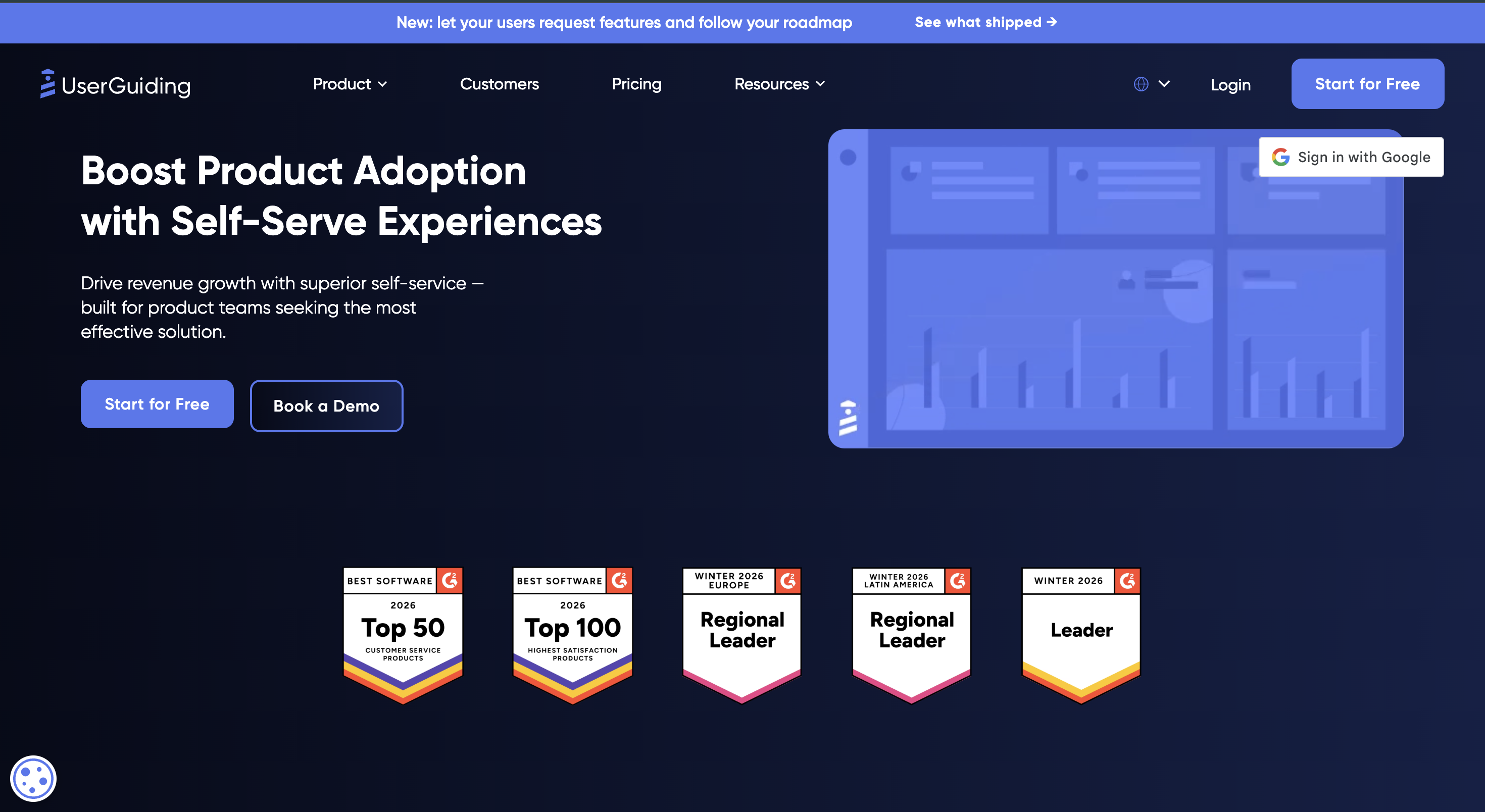
| Feature / Capability | Chameleon | UserGuiding |
|---|---|---|
| Primary strength | In-product guidance and experimentation | Self-serve onboarding and support |
| Experience library | Tours, tooltips, launchers, banners, HelpBar, and microsurveys | Tours, checklists, hotspots, surveys, banners, and resource centers |
| Analytics | Experience analytics, goals, and experimentation | Onboarding, survey, and engagement analytics |
| Best fit | Teams prioritizing native-looking guidance | Teams prioritizing accessible self-service |
| Pricing | Public plans plus enterprise options | Public MAU-based plans |
Choose Chameleon if:
Teams prioritizing native-looking guidance.
Choose UserGuiding if:
Teams prioritizing accessible self-service.
Chameleon vs WalkMe
Chameleon centers in-product guidance and experimentation. WalkMe centers enterprise digital adoption.
- Primary strength: Chameleon: In-product guidance and experimentation. WalkMe: Enterprise digital adoption.
- Experience library: Chameleon publishes tours, tooltips, launchers, banners, helpbar, and microsurveys; WalkMe publishes walkthroughs, tooltips, notifications, surveys, automation, and ai assistance.
- Analytics: Chameleon emphasizes experience analytics, goals, and experimentation; WalkMe emphasizes application, workflow, content, and adoption analytics.
- Digia difference: Digia supplies a mobile-native rendering layer with widgets, stories, video, surveys, and gamification inside an existing CEP.

| Feature / Capability | Chameleon | WalkMe |
|---|---|---|
| Primary strength | In-product guidance and experimentation | Enterprise digital adoption |
| Experience library | Tours, tooltips, launchers, banners, HelpBar, and microsurveys | Walkthroughs, tooltips, notifications, surveys, automation, and AI assistance |
| Analytics | Experience analytics, goals, and experimentation | Application, workflow, content, and adoption analytics |
| Best fit | Teams prioritizing native-looking guidance | Enterprises driving adoption across employee software |
| Pricing | Public plans plus enterprise options | Custom quote |
Choose Chameleon if:
Teams prioritizing native-looking guidance.
Choose WalkMe if:
Enterprises driving adoption across employee software.
Architecture, not just features
Where Digia and Chameleon actually diverge
product adoption platform vs dedicated rendering layer
Chameleon joins marketing, service, analytics, and customer data. Digia is built specifically for the mobile in-app rendering layer and plugs into the product stack already in place.
Source [1]: Chameleon homepageDifferent in-app format depth
Chameleon publishes in-app in-app experiences and in-app guidance. Digia adds purpose-built native widgets, stories, video, surveys, and gamification mechanics.
Source [2]: Chameleon microsurveysMobile SDK coverage
Chameleon documents SDKs for iOS, Android, React Native, and Flutter, with identification, event tracking, push, in-app forms, and geofencing. Digia uses its SDK to render a broader native experience layer.
Source [4]: Chameleon product toursDifferent AI territory
Chameleon applies AI across its product adoption platform and service products. Digia's AI is scoped to in-app segmentation, creative generation, and pre-launch review.
Source [1]: Chameleon homepageFlows vs component depth
Chameleon's flows coordinate product adoption experiences, push, and in-app. Digia concentrates on the richness and native behavior of the experience shown inside the app.
Source [2]: Chameleon microsurveysCoexistence is the practical path
Teams can keep Chameleon for customer data, product automation, product analytics, guidance, and feedback, and flows while using Digia for richer native app experiences.
Side by side
Digia vs Chameleon, in-app
| Dimension | Chameleon | Digia Engage |
|---|---|---|
| Core architecture | Standalone in-product adoption platform | Dedicated in-app rendering layer for an existing CEP |
| In-app authoring | Drag-and-drop pop-up and flow builders | Visual mobile-native component builder |
| Inline content | Published mobile in-app in-app experiences | Native inline widgets in the core in-app layer |
| Gamification | No published native mechanic library | Scratch cards, spin-to-win, streaks, milestones, quizzes |
| Video and stories | Not published as dedicated native formats | Purpose-built PiP, full-screen, story-style video and stories |
| AI | AI across product adoption workflows | In-app segmentation, creative generation, and campaign review |
| Off-app channels | Email, SMS, in-app guidance, and other platform surfaces | Uses the channels of the connected CEP |
| Pricing | Free tier plus profile- and usage-based paid plans | Custom quote |
Choose Digia if:
You already have a product stack and want deeper mobile-native widgets, video, stories, surveys, and gamification.
Choose Chameleon if:
You want product data, product adoption, product analytics, guidance, and feedback, analytics, in-app guidance, and automation in one product adoption platform.
FAQ
Common questions
Is Digia a replacement for Chameleon?
Usually no. Chameleon covers product data, product adoption, product guidance and feedback, in-app guidance, service, analytics, and automation. Digia is designed to add a deeper mobile-native in-app layer while Chameleon continues to own those broader jobs.
Does Chameleon support in-app messages?
Yes. Chameleon publishes in-app pop-up messaging for iOS and Android, alongside in-app guidance, segmentation, personalization, and cross-channel flows.
Source [2]: Chameleon microsurveys
Which mobile SDKs does Chameleon support?
Chameleon documents mobile SDKs for iOS, Android, React Native, and Flutter. Its documented app capabilities include profile identification, event tracking, push notifications, in-app forms, and geofencing.
Source [4]: Chameleon product tours
Does Chameleon have native in-app gamification?
Chameleon does not publish a native mechanic library comparable to Digia's scratch cards, spin-to-win, streaks, milestones, and quizzes. Custom experiences may still be possible through an app team's own implementation.
Source [2]: Chameleon microsurveys
How does Chameleon pricing work?
Chameleon publishes a current pricing that varies by active users, selected capabilities, and plan level. Teams should use Chameleon's current calculator for an exact quote.
Source [3]: Chameleon pricing
When should a team choose Chameleon?
Choose Chameleon when product data, product analytics, guidance, and feedback, analytics, and automation should live in one product adoption platform. Choose Digia when the primary need is richer mobile-native in-app formats on top of the product stack already in place.
Sources cited on this page
- Chameleon homepage (self-improving product system positioning): chameleon.io, accessed August 2026.
- Chameleon microsurveys (contextual surveys, targeting, triggers, and integrations): chameleon.io/surveys, accessed August 2026.
- Chameleon pricing (current public plans and enterprise options): chameleon.io/pricing, accessed August 2026.
- Chameleon product tours (tours, tooltips, launchers, styling, and experimentation): chameleon.io/product-tours, accessed August 2026.
- Braze homepage (current customer engagement positioning): braze.com, accessed August 2026.
- MoEngage homepage (current agentic engagement positioning): moengage.com, accessed August 2026.
- CleverTap homepage (current customer lifetime value positioning): clevertap.com, accessed August 2026.
- WebEngage homepage (current Retention OS positioning): webengage.com, accessed August 2026.
- Airship homepage (current mobile-first experience positioning): airship.com, accessed August 2026.
Want deeper mobile-native in-app engagement?
See how Digia adds widgets, gamification, stories, surveys, and video alongside the customer engagement platform you already run.