




TL;DR
- Not a localisation problem: India’s in-app tooling gap goes beyond currency and translation.
- Different device reality: Indian consumer apps operate across a wider range of RAM, storage, Android versions, and device capabilities, making SDK footprint important.
- Different network reality: Intermittent connectivity makes tools dependent on live content fetching unreliable and increases the need for local caching and graceful degradation.
- Scale vs. ARPU: Tens of millions of low-ARPU users create a very different economic model from thousands of high-ARPU SaaS accounts, challenging per-seat and per-MAU pricing.
- Different regulatory requirements: DPDP introduces India-specific compliance and data-processing obligations that cannot simply be treated as GDPR with a different name.
- Vernacular-first experiences: Supporting Indian users requires more than translated strings. It requires handling different languages, text lengths, scripts, and UI layouts.
- UPI + COD behaviour: Indian payment patterns create specific in-app moments and UX requirements that differ from card-first markets.
- Support timezone matters: India-based implementation and support can reduce delays during integration compared with teams operating in distant time zones.
- India-specific evaluation: Vendors should be assessed on device resilience, network performance, pricing, compliance, vernacular support, payment flows, and support coverage, not just feature lists.
Most vendor evaluations in this category start from a feature list built for a US or European buyer, with an India section added afterward covering currency, a support email, and maybe a Hindi translation pack. That approach treats India as a smaller, cheaper version of the same market a US-built tool was designed for. It is not. The device base is different, the network conditions are different, the unit economics are inverted, the compliance regime has its own shape, and the payment layer has no direct equivalent in the market most of these tools were originally built to serve. None of this is a localisation checklist item. Each one is a structural constraint that changes what the tool itself has to be built to do.
The Device Reality
The install base a US-built tool assumes and the install base an Indian consumer app actually runs on are not the same population, and the gap is large enough to change architecture decisions, not just testing checklists.
Only 22% of India-sold Android devices received security patches beyond 18 months of launch, per GSMA Intelligence's 2024 Android Fragmentation Report, and most sub-₹15,000 devices receive just one OS upgrade and 24 months of security patches total. Devices in the $150 to $300 range typically offer 3 to 4GB of RAM, and OEM skins including MIUI, One UI, and ColorOS introduce memory management behaviour that diverges from Android's own default assumptions in ways that directly affect app performance under real load. Over 24,000 distinct Android device variants exist as of 2024, with Samsung alone accounting for roughly 40% of them, and testing on a handful of popular configurations risks missing issues that affect thousands or millions of end users running non-standard hardware.
India leads global app downloads with approximately 25.5 billion installs, 17.1% of the global total, and this volume runs predominantly on Android, the platform where fragmentation and monetisation efficiency both work against the app in ways iOS does not. The monetisation gap is stark: iOS generates $3.31 per download compared to Google Play's $0.49 per download, a 6.8x difference, which means the same engineering investment in a tool's SDK footprint has to be justified against a fundamentally different revenue-per-install baseline in a market this Android-heavy.
What this means for SDK footprint tolerance is direct and unforgiving. A US-built in-app tool designed against a device base skewing toward recent iPhones and mid-to-high-end Android flagships can afford a heavier SDK, richer local caching, and more aggressive background processing than an Indian consumer app can. A tool that adds meaningful binary size, memory overhead, or battery drain is not a minor inconvenience on a 2GB RAM device with a five-year-old chipset. It is the difference between the app staying installed and being uninstalled the first time the OS kills a background process to free memory for something else.
The Network Reality
This is a structurally different connectivity profile from what most in-app tools assume by default. A tool built around the expectation of a live network fetch at the moment a campaign needs to render, common in platforms designed for markets with consistently strong LTE or 5G coverage, degrades badly the moment that fetch fails or times out, which happens routinely for a meaningful share of Indian users, not as an edge case but as a normal condition of daily use. The correct architectural response is not a loading spinner with a longer timeout. It is designing the in-app content delivery layer around intermittent connectivity as the default case: aggressive local caching of campaign configuration, graceful degradation when a fetch fails, and a design philosophy that treats "the network is unreliable right now" as the expected state rather than an exception to handle after the fact.
A tool architected for a market where connectivity is assumed reliable treats offline handling as a resilience feature bolted on afterward. A tool architected correctly for the Indian network reality treats it as the starting condition the whole delivery system is built around, which produces a materially different and more robust default behaviour under the exact conditions a large share of the actual user base experiences daily.
The Scale Inversion
US SaaS product-adoption and engagement tools were built around a specific unit economics assumption: a small number of high-value accounts, seats billed per user, and pricing models that scale with successful account-level adoption. This assumption holds for a B2B software vendor selling to a few thousand enterprise seats. It inverts completely for an Indian consumer app serving tens of millions of low-ARPU users.
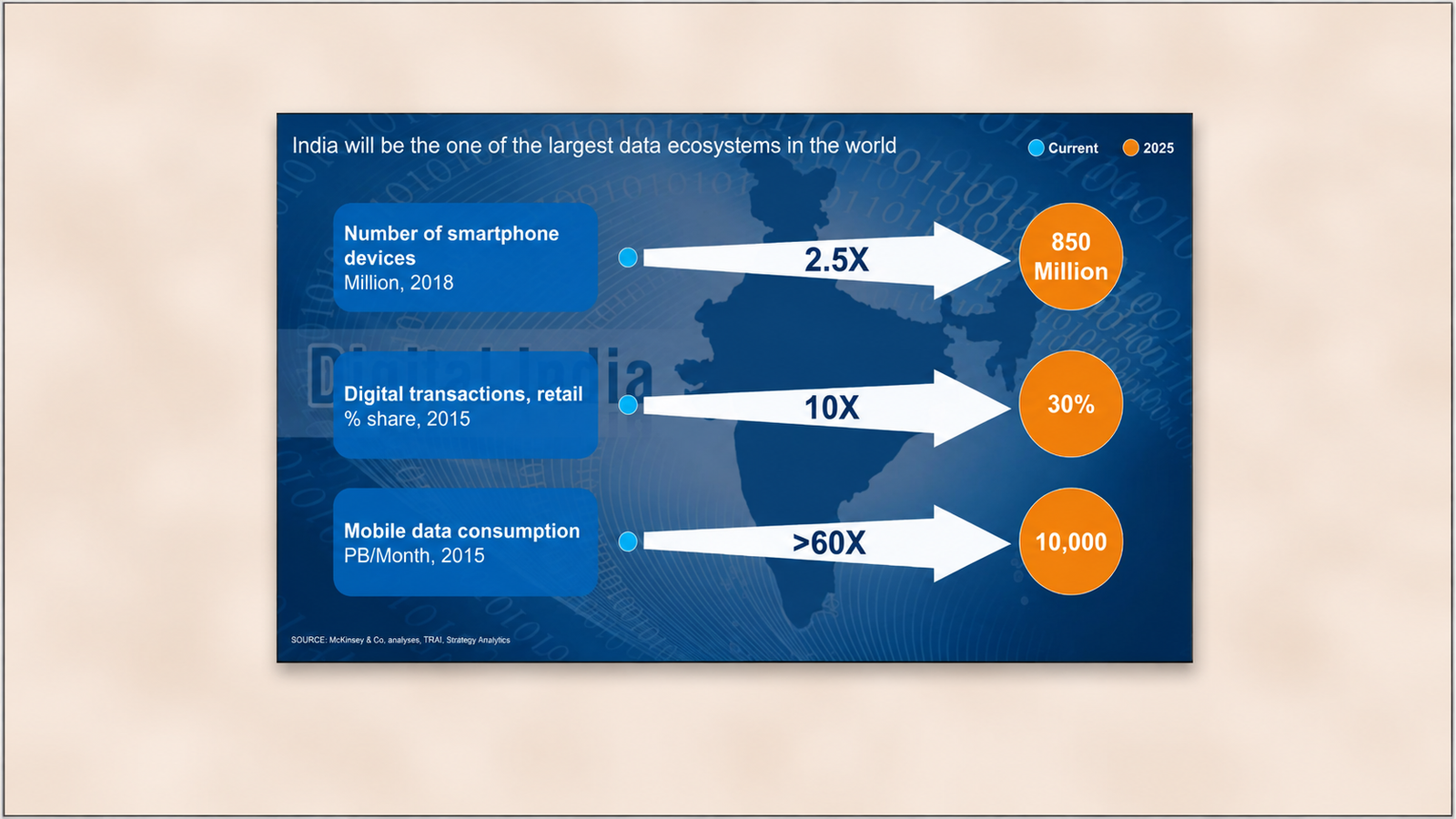
A pricing model metered on Monthly Active Users, rather than a fixed seat count, means the total bill climbs directly with user growth, which is a reasonable trade for a B2B vendor whose own revenue scales with the customer's account growth, but becomes a structural disincentive for a consumer app whose user growth is the entire point of the business, not a proxy for revenue growth in the same direct way. A tool priced for a market of thousands of high-value accounts, applied to a market of tens of millions of users generating a few dollars of ARPU each, produces a bill that grows faster than the revenue it is meant to support, precisely at the moment a growth team's own metrics are working.
This inversion is not solved by an India-specific discount on an otherwise unchanged pricing structure. It requires a pricing model built from the start around high-volume, low-ARPU economics, where the cost per user is calibrated against what an Indian consumer app can actually sustain per user, not translated down from a B2B enterprise rate card designed for a completely different customer profile.
The Regulatory Context
India's Digital Personal Data Protection Act applies to the processing of personal data of Indian residents regardless of where that processing occurs, meaning a vendor headquartered outside India is squarely within scope the moment it processes an Indian user's data, independent of the vendor's own physical location. This is a meaningfully different starting posture from a GDPR-shaped compliance approach, and treating DPDP as "GDPR with a different acronym" misses several specific requirements.
Every third-party vendor that touches personal data, including analytics and engagement platforms, must have a signed Data Processing Agreement in place, and the data fiduciary, the Indian app itself, remains accountable for any misuse or violation regardless of what the vendor's own contract or infrastructure looks like. The Data Protection Board of India began its first enforcement actions in Q1 2026 against app developers processing data without valid consent or with inadequate retention policies, which makes this a live, currently active enforcement question rather than a theoretical compliance item to revisit later.
Consent handling under DPDP has specific mechanics that differ from a generic GDPR-style consent banner: purpose limitation requirements, defined retention windows, and a data fiduciary accountability structure that places the burden on the app itself, not just the vendor processing the data on its behalf. A tool built primarily against GDPR's shape, and then patched to claim DPDP compliance, frequently misses these mechanics, because the two regimes, while broadly similar in spirit, differ in specific structural requirements that a genuinely India-first compliance posture has to be built around from the start rather than retrofitted onto afterward.
Vernacular and Multi-Language Surfaces
India has 22 official languages and hundreds of dialects, and designing only for English users limits growth significantly, since the next wave of internet users overwhelmingly prefers interacting in regional languages including Hindi, Tamil, Telugu, Bengali, and Marathi. Nearly 75% of new internet users in India prefer content in their native language, and 84% of Indian consumers find content in regional languages more relatable and trustworthy, which directly influences how they interact with a brand, while platforms that support vernacular languages report up to 3x higher time spent and 7x higher engagement compared to English-only content.
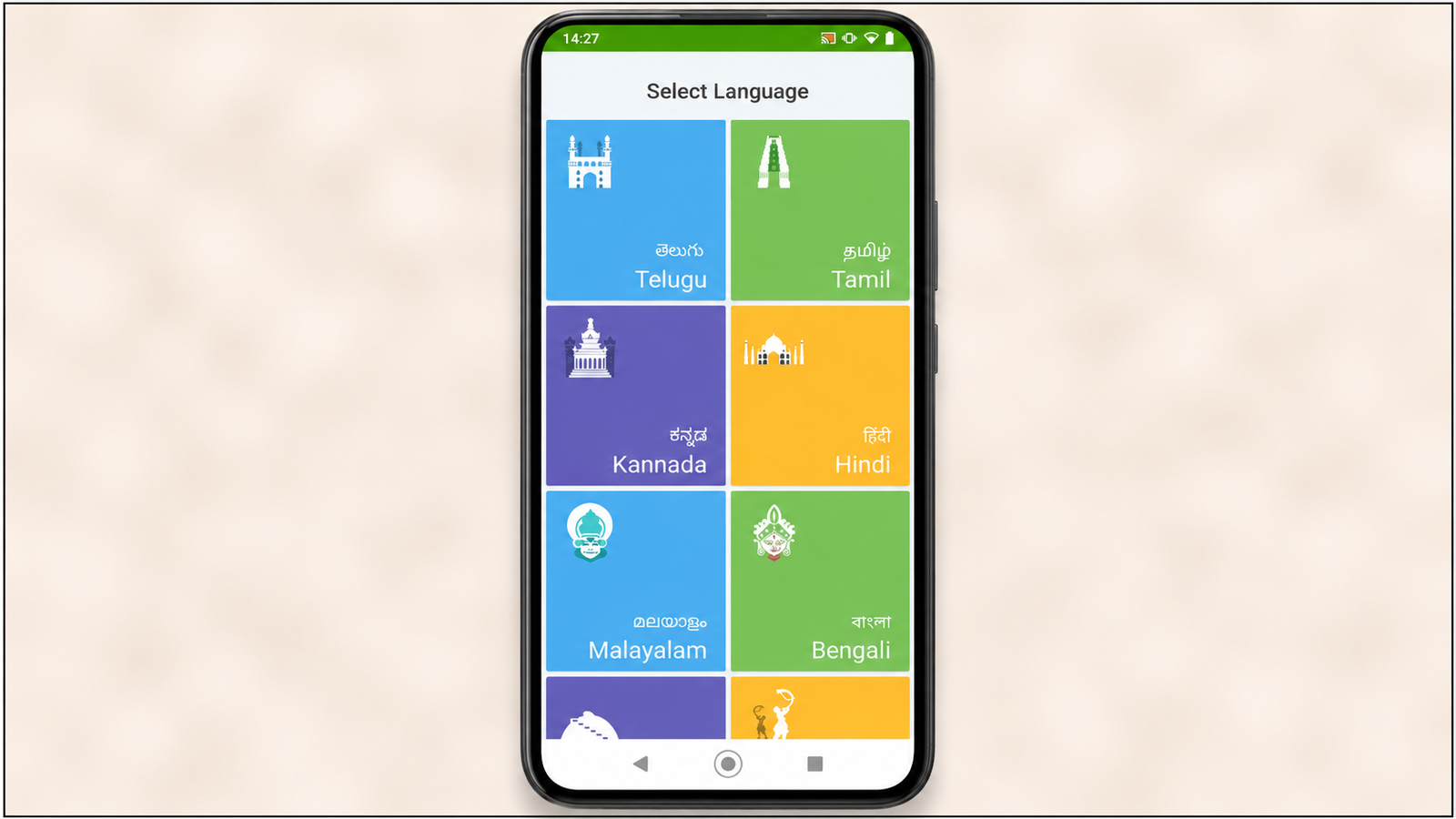
This is where most in-app tools stop at exactly the wrong layer. UI localisation goes well beyond translating strings: it adapts the entire interface, layout flexibility, typography, icons, and cultural conventions, ensuring the interface feels natural and functional in every locale, not just linguistically accurate. Text expansion is a specific, concrete problem: translated strings frequently run 30 to 50% longer than their English source, which breaks any fixed-width UI component that was designed and tested only in English. Indic scripts carry additional rendering complexity beyond expansion length: Devanagari, Tamil, Telugu, and Bengali scripts involve complex ligatures and variable glyph shaping that a simple string-swap approach, tested only against Latin-script layouts, frequently renders incorrectly or clips.
Flipkart supports 10 Indian languages and specialises its interface, product information, and promotional messages to local preferences specifically, not just a translated menu, and this localisation depth was a key factor in attracting customers from Tier 2 and Tier 3 cities during high-traffic events like Big Billion Days. JioHotstar describes itself as a platform with over 100,000 hours of content across 17 languages, and IPL 2026 was offered through 12 language options with more than 20 feeds, which is the scale of vernacular investment the highest-performing Indian consumer apps treat as table stakes, not a stretch goal.
The practical implication for in-app tooling: a component library that assumes a fixed-width English string, tested only against Latin script layouts, will render broken text, clipped labels, and misaligned components the moment a campaign is translated into Hindi or Tamil. A tool built for the Indian market needs its rendering layer to handle variable text length and complex script rendering as a first-class design constraint, not an edge case discovered after a campaign has already shipped and broken in production.
Payment and Transaction Patterns
The payment layer in Indian consumer apps has no direct equivalent in the market most in-app tools were originally built to serve, and this shapes which in-app moments actually matter in an Indian consumer funnel.
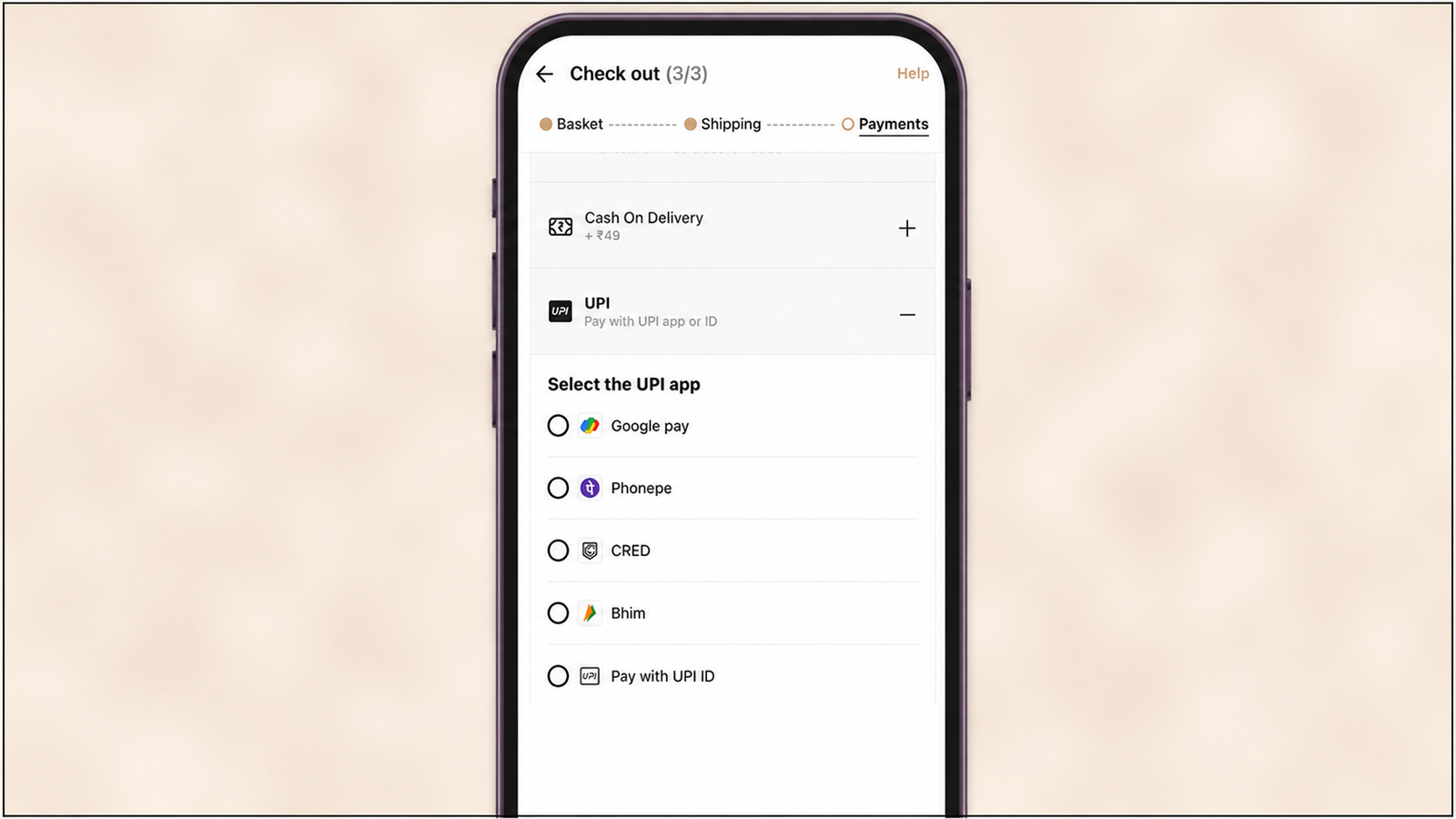
UPI has become the default payment rail for Indian consumer transactions, and large delivery and commerce platforms are increasingly internalising payment flows specifically to remove app-switching friction from checkout, since Zepto, Swiggy, and Zomato have all built in-app UPI capabilities that let a user complete a transaction without being redirected to a separate payment app. Cash on delivery historically brought millions of first-time Indian shoppers online, people who did not yet trust cards, wallets, or UPI, and COD orders carry nearly three times higher return-to-origin rates than prepaid orders, a real, ongoing cost that shapes how Indian consumer apps design the payment moment specifically, not just the checkout button.
These are not abstract payment preferences. They are in-app moments with specific design requirements a US-built tool's generic checkout flow does not anticipate: a payment-method selection screen that has to reframe COD versus online payment without penalising the cash choice, a first-transaction UPI onboarding flow that needs to work for a user who has never linked a payment instrument to any app before, and a trust-building sequence around the payment moment specifically, because for a meaningful share of Indian first-time digital payment users, the payment screen itself is the single highest-anxiety moment in the entire session. A US-built engagement tool, designed around a market where card-on-file is the default and the payment step is a low-friction formality, has no reason to have built for any of this, because the market it was originally designed for never required it.
Support and Implementation
Support timezone overlap is a genuine, structural factor in project timelines, not just a convenience preference, and it matters more than a feature comparison for a specific reason: implementation and troubleshooting are iterative processes, and every round-trip delay in getting a question answered compounds across a multi-week integration project.
A vendor whose standard support model is built around US or European business hours creates a real overlap gap for an Indian team's working day. An urgent issue discovered at 11am IST, filed against a support team based in California, sits unanswered until that team's own morning, which for an Indian team is late evening or overnight. Across a multi-week implementation project, this delay compounds meaningfully: a question that would take fifteen minutes to resolve with same-timezone support instead adds most of a working day to the project timeline, every time it happens, and it happens repeatedly across any real integration project involving edge cases the documentation did not anticipate.
Local implementation support changes this dynamic entirely, not because the underlying technical problem is different, but because the feedback loop for solving it is dramatically faster. A vendor with India-based support and implementation staff can resolve the same class of issue within the same working day, repeatedly, across the full implementation timeline, which is the specific reason timezone overlap changes project velocity in a way that a feature comparison between two otherwise similar tools does not capture at all.
The Evaluation Checklist
Before any vendor, global or India-based, makes it onto a shortlist, the following questions should be answered directly, not inferred from a feature list or a generic compliance badge.
On device and network resilience. What is the SDK's actual binary size and memory footprint, measured against a 2 to 4GB RAM device, not a flagship test device? Does the tool cache campaign configuration locally, and does it degrade gracefully or fail visibly when a live fetch times out on an intermittent connection?
On pricing. Is the pricing model built around high-volume, low-ARPU economics from the start, or is it a B2B seat-based or high-ARPU MAU model with a discount applied for the Indian market? What does the total cost look like at 10x and 50x current user volume, not just at current scale?
On compliance. Can the vendor produce a DPDP-specific compliance posture, not just a GDPR compliance statement with a note that DPDP is broadly similar? Is there a signed DPA available, and does the vendor's own data residency and retention policy match DPDP's specific requirements, not just GDPR's?
On vernacular support. Does the component library handle variable text length and complex script rendering natively, or does it require manual QA and layout fixes for every language beyond English? Has the vendor's own product been tested with real Hindi, Tamil, or Bengali content, not just a translated menu string?
On payment-layer awareness. Does the vendor have documented experience building in-app moments around UPI-first flows and COD-versus-online payment framing, or is this a gap the implementation team will be discovering and solving from scratch during the integration itself?
On support. What is the vendor's actual support timezone coverage, confirmed directly rather than assumed from a general "24/7 support" claim? Is there India-based implementation staff available for the actual integration project, not just a post-sale account manager based elsewhere?
A vendor that answers all six categories with specific, confirmable detail rather than a generic reassurance is a genuinely different evaluation than one that treats India as a market-entry checkbox on an otherwise unchanged product.
Topics Not in the Brief That Teams Should Know
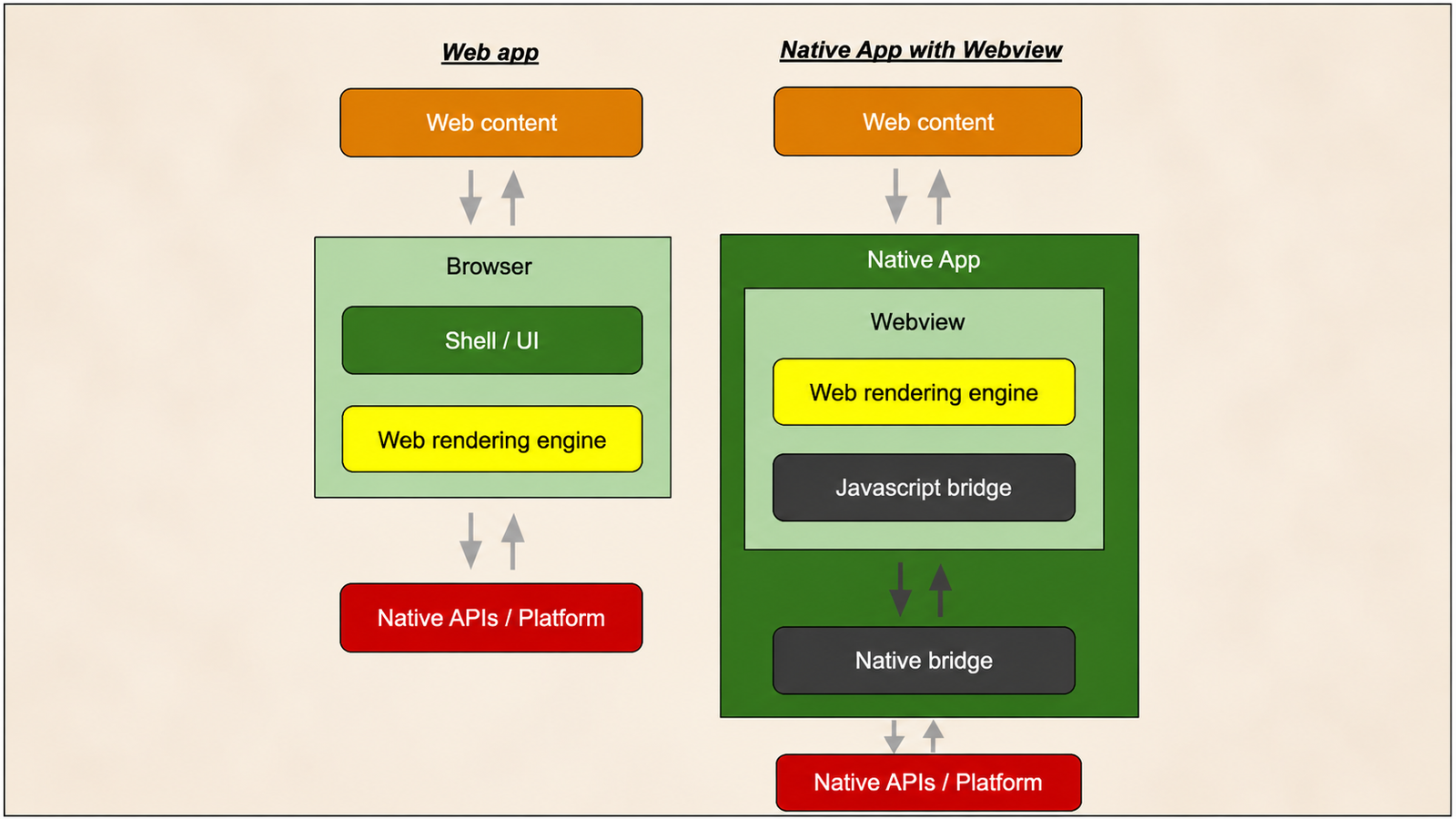
The WebView-versus-native rendering question matters more in India specifically, not just generally. In-app content rendered through a WebView, an embedded browser surface inside a native app, carries the visual seams, loading behaviour, and interaction characteristics of a webpage rather than native UI, and this gap is more visible and more costly on a lower-end Android device with limited RAM than on a flagship test device, because WebView rendering carries a real memory and performance overhead that compounds with everything else already covered about the actual Indian device base.
Battery and background process discipline is a specific, testable constraint, not a general performance goal. A tool that runs aggressive background polling or maintains persistent connections for real-time features will be more visibly punished on Indian devices, where OS-level background process killing is more aggressive by default on budget Android skins specifically to preserve battery life on lower-capacity hardware, than on the device profile a US-built tool was likely tested against.
Regional festival and seasonal traffic spikes are a distinct operational reality worth planning for explicitly. Big Billion Days-scale traffic surges are a recurring, predictable pattern in the Indian e-commerce calendar, and a vendor's infrastructure needs to be evaluated specifically against its ability to handle these predictable, extreme traffic spikes, not just steady-state load, since a tool that performs adequately under normal conditions can fail precisely during the highest-value commercial moments of the year if it was not architected with this specific traffic pattern in mind.
WhatsApp as a genuine engagement and commerce channel, not just a messaging afterthought. WhatsApp has over 535 million users in India as of early 2026, its largest market globally, with over 200 million users interacting directly with business accounts and nearly 80% of small businesses considering it critical to daily operations. A tool's engagement strategy for the Indian market that does not account for WhatsApp as a first-class channel, not a secondary integration, is missing a genuinely central piece of how Indian consumers already expect to interact with brands.
Key Takeaways
The device reality in India, low security patch coverage, 3 to 4GB RAM as a common baseline, OEM-specific memory management behaviour, and over 24,000 distinct Android variants, means SDK footprint tolerance is a hard architectural constraint, not a nice-to-have optimisation.
The network reality, carrier-specific band fragmentation and intermittent connectivity as a normal condition rather than an edge case, means in-app content delivery has to be architected around local caching and graceful degradation from the start, not patched with a longer timeout after launch.
The scale inversion from thousands of high-ARPU B2B accounts to tens of millions of low-ARPU consumer users breaks per-seat and per-MAU pricing models that were never built for this economic profile, producing bills that climb faster than the revenue they are meant to support at exactly the moment user growth succeeds.
DPDP compliance has specific mechanics, extraterritorial scope, mandatory DPAs with every data-touching vendor, and an active enforcement regime as of Q1 2026, that a GDPR-shaped compliance posture retrofitted with an India label frequently misses.
Vernacular support has to extend to variable text length, complex script rendering, and cultural adaptation of the full interface, not a translated string file, given that regional-language platforms see measurably higher trust, time spent, and engagement compared to English-only experiences.
UPI-first payment flows and COD-versus-online payment framing are specific in-app design requirements with no direct equivalent in the market most global tools were originally built to serve, and a vendor without documented experience here is discovering these requirements during your integration project, not before it.
Support timezone overlap changes implementation project velocity directly, since every question that requires an overnight round-trip compounds across a multi-week integration in a way that a feature comparison alone does not capture.
Further Reading
From Digia Engage:
- Pendo Alternatives for Consumer Mobile Apps — the B2B-versus-consumer scale inversion and DPDP-specific compliance detail this article builds on directly
- How Meesho Improved Payment Conversions — the COD-to-UPI transition and payment-moment design detail referenced in this article's payment section
- Why In-App Campaigns Convert 8x Better Than Email — the in-app UPI internalisation pattern across Zepto, Swiggy, and Zomato
- Digia vs MoEngage: In-App Engagement Comparison — the WebView-versus-native rendering distinction referenced in this article's additional topics
- CleverTap Alternatives: 7 Tools for Teams Who Want Better In-App UI — the broader vendor evaluation framework this article's checklist extends with India-specific criteria
- Digia Engage — native rendering, event-based triggering, and India-based support built around the specific constraints this article documents
External Sources:
- What India Cell Phones Are Available in 2025? — Alibaba Electronics (GSMA Intelligence 2024 Android Fragmentation Report; carrier band fragmentation across Jio, Airtel, and Vodafone Idea)
- Test Mobile App Performance on Low-End Devices — Minitap (device RAM and OEM skin memory management data)
- Understanding Device Fragmentation — MoldStud (24,000+ Android device variant count)
- Android Statistics 2026 — Axis Intelligence (India's 25.5 billion download share; iOS versus Android monetisation efficiency gap)
- Website Localization Framework: Proven Strategies for Enterprises in 2026 — Reverie (Flipkart's 10-language localisation strategy; 84% regional-language trust statistic; 3x/7x engagement lift data)
- Vernacular AI Apps in India — NetZero India (75% of new internet users preferring native-language content)
- Design That Speaks Every Language: UI Tips for Localization — SimpleLocalize (text expansion percentages; UI localisation beyond translation)
- UI UX Design Trends India 2026 — HNK Media (22 official languages; vernacular-first design trend data)
- Vernacular Is Becoming the Default Interface for Commerce — Rukam Capital (JioHotstar and IPL language coverage; WhatsApp's 535 million India user base and business account engagement)
Digia Engage is built around the specific constraints this article documents: native rendering without a WebView, event-based triggering that caches gracefully under intermittent connectivity, deployment pricing scoped to Indian consumer app economics rather than B2B seat pricing, and India-based implementation support. Book a demo to see how the architecture holds up against your own device base and network conditions, or read the Pendo alternatives comparison for the fuller DPDP and scale-inversion detail this article draws on.
Frequently Asked Questions
Why isn't the India tooling gap solvable with a currency toggle and translation file? Because the underlying constraints are architectural, not cosmetic. The device base has meaningfully lower RAM, storage, and patch coverage than a typical US or European install base. The network is intermittently connected in a way that breaks tools built around a live-fetch assumption. The user base is tens of millions of low-ARPU users rather than thousands of high-ARPU accounts, which inverts standard SaaS pricing models. The regulatory regime, DPDP, has specific mechanics distinct from GDPR. None of these are solved by adjusting currency display or adding a translated menu to an otherwise unchanged product.
What does the Indian device reality mean for SDK footprint decisions? Only 22% of India-sold Android devices receive security patches beyond 18 months, and most budget devices offer 3 to 4GB of RAM with OEM-specific memory management that diverges from standard Android behaviour. A heavier SDK that would be a minor consideration on a recent flagship device is a meaningful risk factor for app uninstalls on this device profile, since the OS is more likely to aggressively kill background processes and the app itself is more likely to be forcibly closed under memory pressure. Tools evaluated for the Indian market need their actual binary size and memory footprint tested against low-RAM devices specifically, not just flagship test hardware.
How does DPDP compliance differ from a GDPR-shaped approach? DPDP applies extraterritorially to any vendor processing Indian residents' data regardless of where that vendor is headquartered, requires a signed Data Processing Agreement with every third-party vendor touching personal data, and places accountability on the Indian app itself as the data fiduciary regardless of the vendor's own infrastructure. The Data Protection Board of India began active enforcement in Q1 2026. A vendor that treats DPDP as functionally identical to GDPR with a different name frequently misses these specific mechanics, which is a real compliance risk, not just a documentation gap.
Why does vernacular support need to go beyond a translated string file? Translated text frequently runs 30 to 50% longer than the English source, which breaks fixed-width UI components tested only in English. Indic scripts including Devanagari, Tamil, Telugu, and Bengali involve complex ligatures and variable glyph rendering that a simple string-swap approach often renders incorrectly. Beyond the technical rendering question, 84% of Indian consumers find regional-language content more trustworthy, and vernacular-first platforms see 3x higher time spent and 7x higher engagement compared to English-only experiences, which means vernacular support is a genuine engagement lever, not just an accessibility checkbox.
Why do UPI and COD behaviour matter for in-app tooling specifically? Because they create specific in-app design requirements with no direct equivalent in markets where card-on-file is the payment default. A payment-method selection screen has to reframe COD versus online payment without penalising the cash option, since COD historically brought millions of first-time digital users online and remains a meaningful share of transactions despite its higher return-to-origin cost. A first-transaction UPI flow has to work for users who have never linked a payment instrument to any app before. A generic checkout flow built for a card-on-file market has no reason to have anticipated either requirement.
Why does support timezone overlap matter more than a feature comparison? Because implementation is an iterative process, and every question that requires an overnight round-trip with a support team based outside India's working hours adds most of a working day to the project timeline, repeatedly, across a multi-week integration. A vendor with India-based support and implementation staff resolves the same class of issue within the same working day, which compounds into a materially faster implementation timeline over the course of a real integration project, independent of whether the two vendors being compared have otherwise similar feature sets.