


TL;DR
- The 8x figure is real and widely cited, and it is also frequently misunderstood. Teams that don't understand where it actually comes from will misapply in-app campaigns and see nothing close to 8x.
- This article covers the specific source of the 8x figure and what it was actually measuring.
- It covers the real CTR benchmark gap between in-app and email once both are compared on the same terms.
- It covers the three mechanisms behind why in-app converts better: engagement context, zero friction to action, and full visual attention.
- It covers the conditions the advantage depends on, and where the advantage disappears and actively backfires.
- It covers the frequency asymmetry between the two channels, and the format and creative advantage.
- It covers how the two channels work together as a system rather than competitors, and how to build the budget reallocation case correctly.
- Sourcing note: Every statistic in this article is attributed to its source, and where a figure is a specific case study result rather than a broad industry benchmark, that distinction is stated explicitly.
Growth teams cite "in-app converts 8x better than email" the way marketing teams cite almost any round, memorable multiple: confidently, frequently, and usually without checking where it came from. That matters, because a team that treats 8x as a universal constant will build a campaign strategy on a number that does not describe the situation they are actually in, and will be confused when their own results land nowhere close to it.
The advantage in-app campaigns hold over email is real. It is also conditional, mechanism-dependent, and easy to destroy through the exact kind of misapplication that citing a fixed multiple encourages. This article starts by tracing the 8x figure to its actual source, then rebuilds the comparison from data that genuinely supports it, then covers what has to be true for the advantage to exist at all.
Where the 8x Figure Actually Comes From
The 8x figure traces to a single, specific, real result: Airship reports that one national media company used in-session experiences to collect user preferences and saw a conversion rate 8 times higher than standard push notifications. Read that sentence again carefully, because two words in it matter more than the number itself: the comparison is against push notifications, from one company's case study, not against email, and not a cross-industry benchmark.
This distinction is not pedantic. Push notifications and email are different channels with different baseline performance, different delivery mechanics, and different fatigue curves. A multiple that describes in-app's advantage over push does not automatically describe its advantage over email, because the two comparison channels do not perform identically to begin with. Citing "8x better than email" when the underlying study measured "8x better than push, at one media company, on a specific preference-collection campaign" is the exact kind of number laundering that turns a real, narrow, useful data point into a misleading, universal-sounding claim.
None of this means the 8x figure is fake, or that in-app does not meaningfully outperform email. It means the widely repeated version of the claim has drifted from its source, and a team that wants to build a defensible business case needs the real comparison, built from data that actually measures in-app against email specifically, not a borrowed number from an adjacent comparison.
Rebuilding the Real Comparison: In-App vs Email on the Same Terms
The honest comparison starts with click-through rate benchmarks for each channel, measured independently and then set against each other.
On the email side: Salesforce and multiple 2025 to 2026 benchmark studies place a "good" email CTR in the 2 to 5% range, with MailerLite's dataset across 3.6 million campaigns and 181,000-plus accounts showing an all-industry average closer to 1.7 to 2.1%, and automated behavioural flows performing meaningfully better than one-off campaigns, averaging 5.58% CTR rather than the flat campaign-level number.
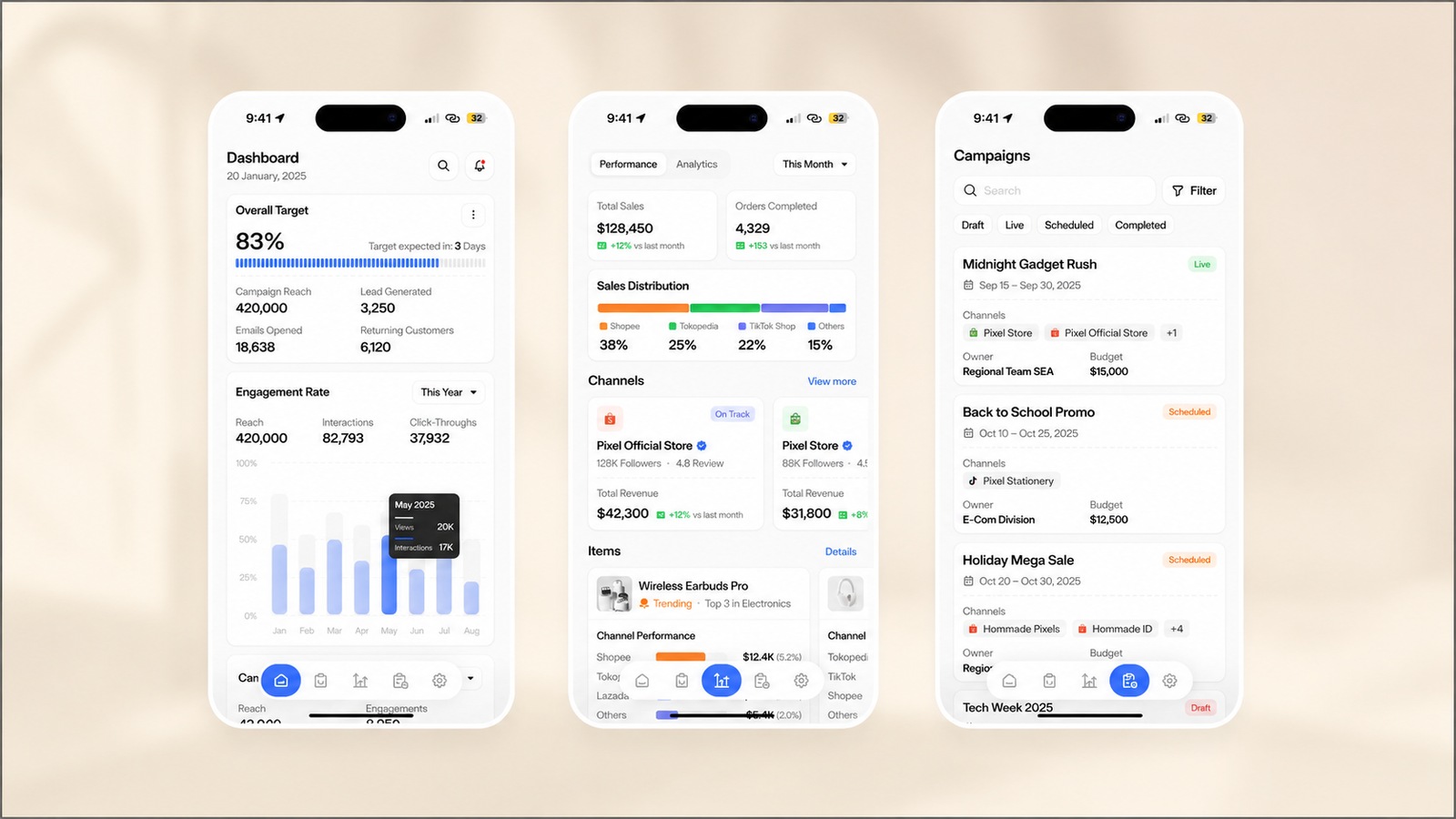
On the in-app side: click-through rate on in-app nudges is healthy in the 15 to 40% range, well above the 2 to 5% range typical for email and push, reflecting the structural advantages covered in the next section.
Setting these ranges directly against each other, rather than reaching for a single borrowed multiple, produces something more useful than a fixed number: a range. Comparing the low end of in-app performance (15%) against the high end of email performance (5%) produces a 3x gap. Comparing the high end of in-app (40%) against the low end of blended email campaign performance (1.7%) produces a gap over 20x. An 8x multiple sits comfortably inside this real range, which is likely why the borrowed figure has spread so easily: it is plausible, even though its actual origin is a different comparison entirely. The honest position for a team building a business case is not "in-app converts 8x better than email, full stop." It is "in-app conversion typically runs 3 to 20-plus times higher than email CTR, and where a specific implementation lands in that range depends on the conditions covered next."
There is also a critical measurement caveat that applies specifically to the email side of this comparison and inflates the apparent email number if left uncorrected. Enterprise security tools including Microsoft Defender, Proofpoint, Mimecast, and Barracuda pre-click every link in incoming emails to scan for malware before a human ever sees the message, and M3AAWG research found that 20 to 80% of B2B email clicks are non-human, with even B2C rates running up to 10% bot-driven. This means a meaningful share of the email CTR figures used in most published benchmarks, and therefore a meaningful share of any comparison built on them, includes clicks that were never a human decision at all. This does not change the direction of the in-app advantage. It means the honest gap between the two channels is, if anything, larger than the raw benchmark numbers alone suggest, because email's benchmark number is partially inflated by bot activity that in-app's number is not exposed to in the same way.
The Mechanism: Why In-App Converts Better
Three specific mechanisms explain the gap, and understanding each one is the prerequisite for knowing when the advantage will and will not hold.
Engagement context. An in-app campaign reaches a user who is already inside the product, in an active session, doing something. An email reaches a user in their inbox, a context defined by everything except the product the campaign is about. The in-app user has already cleared every barrier to attention that an email has to fight through from zero: opening the app, having a reason to be there, being in a state of mind connected to the product at all. The email user has to be pulled out of whatever they were doing and into a completely different context before the campaign's actual message even begins.
Zero friction to action. The friction to act on an in-app campaign is a single tap. The friction to act on an email campaign is open, read, decide, click, wait for a page to load, and often log in again once it loads. Each of these additional steps is a drop-off point. An in-app nudge that asks a user to complete an action they are already positioned to complete, in the same screen or one tap away, removes every one of these steps simultaneously.
Full visual attention. Push notifications, in-app messages, and interstitials are increasingly being used to maximise the moments where a user's attention is genuinely available, since full-screen and near-full-screen in-app formats occupy the user's visual field in a way that a single line in a crowded inbox cannot. An email is one message competing with dozens of others in a list the user is scanning, often on a device and in a moment disconnected from the product entirely. An in-app campaign is, for the duration it is on screen, the only thing the user is looking at.
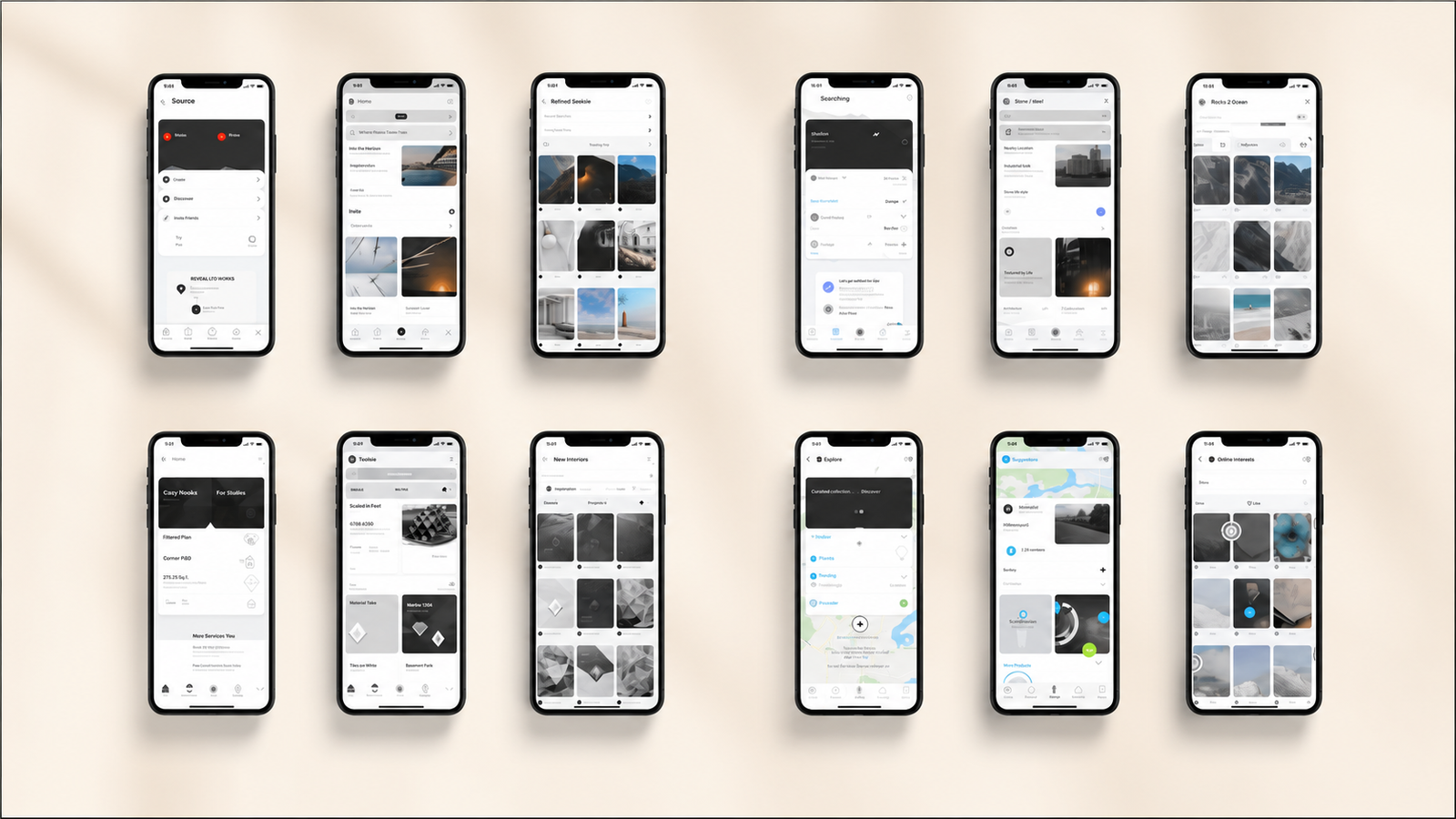
These three mechanisms compound rather than operate independently. A user in the right context, facing zero friction, with full attention on the message, is in a fundamentally different decision state than a user scanning an inbox between other tasks. The 8x-and-higher gap in the real benchmark data is the observable outcome of these three conditions stacking on top of each other.
The Conditions the Advantage Depends On
Because the mechanisms above are specific and conditional, the advantage itself is conditional. Three requirements have to hold simultaneously for the in-app channel to actually deliver anything close to its structural advantage.
The user has to be in an active session. In-app campaigns cannot reach a user who is not currently in the app. This is the most basic and most frequently overlooked constraint: in-app is not a replacement channel for reaching lapsed or inactive users. It is a channel that only exists during the window a user has already chosen to open the app, which is precisely the scenario email and push are built to create in the first place.
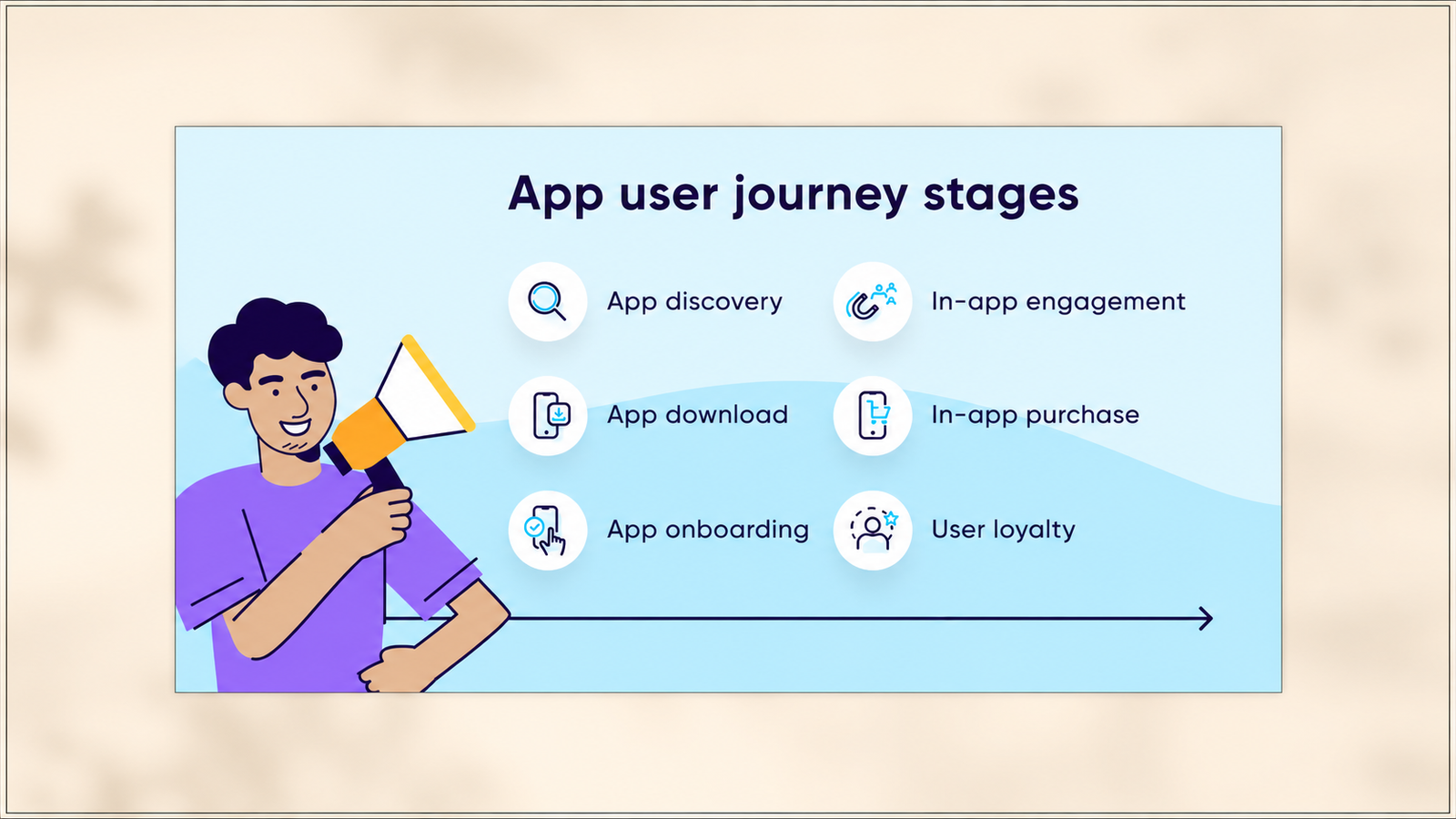
The campaign has to be contextually relevant to what the user is currently doing. The engagement-context mechanism only produces an advantage if the campaign's content matches the reason the user is in that specific session. A campaign about a feature the user has no connection to, shown during a session where they are trying to do something unrelated, does not benefit from engagement context. It becomes an interruption inside a context that has nothing to do with it, which is a meaningfully worse position than an email the user can simply ignore in their own time.
The action has to be reachable in one step. The zero-friction mechanism only holds if the campaign's CTA genuinely requires no more than a single tap to progress. A campaign that requires the user to navigate through several additional screens after tapping the CTA has reintroduced the friction the format was supposed to eliminate, and the advantage over email narrows or disappears accordingly.
All three conditions have to be true together. A contextually perfect campaign shown to an inactive user reaches no one. A one-tap action shown out of context annoys rather than converts. An in-session, contextual campaign that then requires five more steps to complete loses most of its structural advantage at the exact point it should have converted.
Where the Advantage Disappears, and Actively Reverses
The conditions above are not just a checklist for maximising performance. Violating them does not simply produce a weaker version of the in-app advantage. It can produce an outcome measurably worse than email would have, because of what an irrelevant in-app interruption does to the session it appears in.
An email a user does not care about is ignored, deleted, or scrolled past with essentially no cost to the user's relationship with the product. It occupies a channel the user has already implicitly decided carries low stakes. An irrelevant in-app campaign served to the wrong segment does not get the same free pass, because it appears inside the product experience itself, at a moment the user is actively trying to accomplish something. It does not just fail to convert. It degrades the session the user is currently having, which is a materially different and more costly failure than an ignored email.
This is the asymmetry that a fixed 8x multiple obscures entirely: email's downside for a poorly targeted send is close to zero. In-app's downside for a poorly targeted send is negative, not zero, because the campaign consumed attention and screen space inside a session the user was already committed to and got nothing relevant in return. A team that reallocates budget toward in-app on the strength of an 8x figure, without matching investment in the targeting and suppression logic that keeps campaigns contextually relevant, will not land at a smaller positive number than expected. They can land in genuinely negative territory: measurably worse retention or session quality than the email-only baseline they replaced.
The Frequency Asymmetry
Email and in-app tolerate very different message frequencies, and applying an email-appropriate cadence to in-app campaigns is one of the most common ways teams unintentionally destroy the channel's advantage.
Email has a comparatively high tolerance for frequency because the cost of ignoring an unwanted email is close to zero for the user. A subscriber who receives a promotional email they do not want simply does not open it, and their relationship with the sender degrades only gradually, if at all, across many ignored sends.
In-app has a low tolerance for frequency because every campaign consumes a slice of the user's attention inside a session they are actively engaged in. Static banners see 8 to 12% engagement in the first week of a campaign, dropping to 2 to 3% by week three as users grow immune to repeated exposure, and this immunity effect compounds faster and more visibly for in-app formats than for email, because the user cannot simply skip past an in-app interruption the way they scroll past an unopened email in an inbox. A user who is shown too many in-app campaigns per session does not become gradually numb to the channel over months, the way an over-mailed email subscriber does. They can reach that fatigue point within a single week of aggressive frequency, because each exposure is happening inside active, attention-demanding sessions rather than a passive inbox they check on their own schedule.
The practical implication: a frequency cap appropriate for email, which can often tolerate several sends per week without meaningful damage, is far too permissive if applied to in-app campaigns. Limiting active in-app campaigns to a small number per session, and building genuine suppression logic that prevents the same user from receiving multiple unrelated campaigns in quick succession, is not a nice-to-have refinement. It is the specific safeguard that prevents the channel's structural advantage from collapsing under its own success.
The Format Advantage
Beyond context, friction, and attention, the two channels differ structurally in what they can actually contain, and this difference compounds the conversion gap independently of targeting or frequency discipline.
Email defaults to a largely linear, text-and-image format constrained by what renders reliably across dozens of email clients, many of which strip out interactivity, animation, and anything resembling a native app experience. GetResponse data shows a 4.84% CTR for image-based emails versus 1.64% for text-based ones, which demonstrates that even within email's own constraints, richer formatting produces measurably better results, but the ceiling on how rich that formatting can get is fundamentally lower than what a native app surface supports.
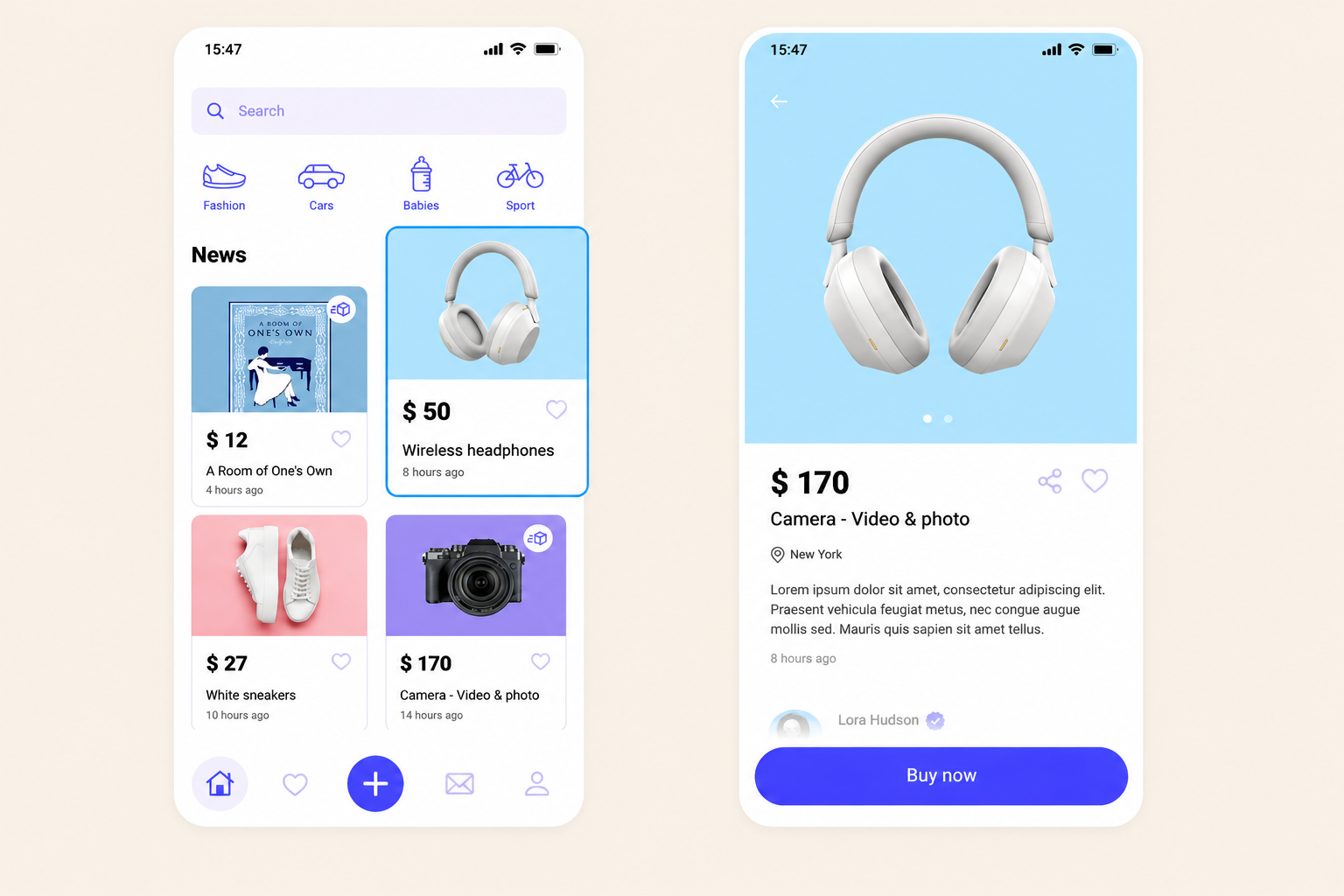
In-app campaigns render using the app's own native components: interactive elements, animation, gamification mechanics, video, and layout options that are genuinely part of the product's own design language rather than an approximation of it constrained by email client compatibility. In-app messages support rich media, interactive Scenes, and gamified preference collection that are simply not available in a channel built around static text and image rendering. This format gap matters for creative performance specifically: a campaign that can show a live progress animation, an interactive card the user swipes through, or a gamified reveal is working with attention-capture tools that a text-and-image email format cannot replicate regardless of how well-designed the email itself is.
The Combination Play: How the Two Channels Work as a System
None of the analysis above argues that email should be abandoned in favour of in-app. It argues that the two channels solve different problems in the same funnel, and treating them as competing rather than complementary is a misreading of what each one is structurally suited to do.
Push notifications and email are the tools for reaching a user who is not currently in the app, bringing them back into a session. In-app messaging is the tool for what happens once they arrive, guiding the user toward conversion inside that session. The comparison between push and in-app notification strategies in 2026 consistently lands on the same conclusion: businesses achieve the strongest ROI by combining the reach advantage of push and email with the contextual, personalised precision of in-app messaging, rather than choosing one channel exclusively.
The practical architecture: email (and push) exist to solve the re-engagement problem, pulling a lapsed or inactive user back into an active session. In-app exists to solve the conversion problem once that user has arrived, using the engagement-context, zero-friction, and full-attention mechanisms this article has covered. A team that uses email to bring a user back and then drops them into a session with no contextual in-app follow-through has solved half the problem and left the highest-leverage half of the funnel unaddressed. A team that tries to use in-app campaigns to solve the re-engagement problem is applying the wrong tool entirely, since in-app cannot reach a user who has not already opened the app.
Building the Budget Reallocation Case
A defensible business case for shifting budget from email to in-app conversion campaigns requires modelling two things separately: the conversion rate improvement and the downstream session or revenue value that improvement produces, using a holdout comparison rather than a before-and-after look at either channel in isolation.
Step one: establish the real, channel-specific baseline. Pull your own email CTR and, separately, your own in-app CTR for a comparable campaign type and audience, rather than assuming the borrowed 8x figure or even the general 3-to-20x range applies directly to your product. The formula for translating a conversion improvement into a revenue case runs from campaign to activation event to retention or conversion lift to LTV delta to annual revenue impact, and it requires your own numbers at every link, not an industry average.
Step two: run a holdout comparison, not a channel-switch comparison. Do not compare last quarter's email campaign performance against this quarter's in-app campaign performance and attribute the full delta to the channel switch. Run both channels against a randomised holdout group over the same window, for the same underlying campaign goal, so the comparison isolates the channel's actual causal contribution from seasonal variation, audience differences, or unrelated product changes happening in the same period.
Step three: model the frequency-adjusted cost, not just the conversion rate. Because in-app has a lower frequency tolerance than email, a like-for-like budget shift is not simply "spend the same amount, expect an 8x-ish return." A team needs to model the smaller effective campaign volume in-app supports per user per period, and weigh that constrained volume against the higher per-campaign conversion rate, rather than assuming the two channels scale identically per dollar spent.
Step four: include the downside risk of misapplication in the model, not just the upside. Given the asymmetry covered earlier, where a poorly targeted in-app campaign can produce a measurably worse outcome than the email baseline, the honest business case should include the cost of the targeting and suppression infrastructure required to keep campaigns contextually relevant, not just the projected conversion lift from the channel switch itself. A reallocation case that only models the upside and ignores the infrastructure cost of avoiding the downside is not a complete case.
Topics Not in the Brief That Teams Should Know
The AMP-email confusion that sometimes gets folded into the same "8x" claim. A separate, unrelated study found that AMP interactive emails produced an 8x increase in form submission conversion compared to standard HTML emails, from 0.4% to 3.7%. This is a real result, but it compares two different email formats against each other, not in-app against email at all. Because this study also happens to produce an "8x" figure, it occasionally gets conflated with the Airship in-app case study in secondary sources, compounding the confusion this article opened with. Teams citing an 8x statistic should confirm which specific study, and which specific comparison, they are actually referencing before repeating it.
Attribution windows differ meaningfully between the two channels. Email conversion is typically measured against a multi-day attribution window, since a user may open an email and convert hours or days later through a separate session. In-app conversion is frequently same-session, which means the two channels' reported conversion rates are sometimes measuring different time horizons even when both are labelled simply "conversion rate." A rigorous comparison should specify and match the attribution window on both sides, not compare a same-session in-app number against a seven-day-window email number without noting the difference.
In-app campaigns cannot be the sole channel for time-sensitive external events. Because in-app can only reach users already in an active session, any campaign tied to a genuinely time-sensitive external trigger, a price drop expiring in an hour, a limited inventory alert, still needs a re-engagement channel like push or email to pull inactive users back within the relevant window. In-app's conversion advantage does not extend to a reach advantage, and conflating the two is a separate mistake from the ones covered in the main body of this article.
Key Takeaways
The widely cited "8x" figure traces to a single Airship case study measuring in-app conversion against push notifications at one media company, not against email, and not as a cross-industry benchmark. The figure is real for what it actually measured. It is frequently misapplied when repeated as a universal in-app-versus-email constant.
The genuine in-app-versus-email comparison, built from independently sourced CTR benchmarks on both sides, shows in-app conversion typically running 3 to over 20 times higher than email CTR depending on where each channel's own performance lands within its normal range, with an 8x multiple sitting plausibly inside that real range even though it did not originate from this specific comparison.
Three mechanisms explain the advantage: engagement context (the user is already active in the product), zero friction to action (one tap versus open, read, click, and load), and full visual attention (the campaign is the only thing on screen, not one item in a scanned list).
The advantage depends on three conditions holding simultaneously: the user must be in an active session, the campaign must be contextually relevant to what they are currently doing, and the action must be reachable in a single step. Violating any one of these does not just reduce the advantage. It can produce an outcome worse than email, because an irrelevant in-app interruption degrades an active session in a way an ignored email does not.
Email tolerates a comparatively high message frequency because the cost of ignoring it is near zero for the user. In-app tolerates a much lower frequency because every campaign consumes attention inside a session the user is actively engaged in, and the resulting fatigue effect compounds within weeks rather than months.
The two channels are complementary, not competing: email and push solve the re-engagement problem of pulling a lapsed user back into a session, and in-app solves the conversion problem once that user has arrived, using mechanisms that only function while the user is already in the app.
The correct budget reallocation case is built from a team's own channel-specific benchmarks and a genuine holdout comparison, not a borrowed industry multiple, and it must model the frequency-adjusted cost and the targeting infrastructure required to avoid the downside risk, not just the projected upside.
Further Reading
From Digia Engage:
- The ROI of In-App Engagement: Business Case for Leadership — the full value chain and formula for translating a conversion improvement into an annual revenue case
- Mobile App Churn: 6 Behavioural Signals That Predict It 2 Weeks Before — the in-app CTR benchmark and banner fatigue data referenced throughout this article
- When NOT to Show a Nudge: Building a Suppression Logic — the suppression framework that prevents the frequency and relevance failures this article covers
- How to Know If Your Personalization Is Actually Working — the holdout group methodology required to build a defensible channel comparison
- In-App Surveys: How to Get a 30% Response Rate When Email Gets 3% — a parallel, independently sourced comparison for the survey-specific version of the in-app-versus-email gap
- Digia Engage Nudges — event-based, contextually-triggered in-app campaign infrastructure configurable without engineering tickets
External Sources:
- What Is In-App Messaging? Benefits, Best Practices, and CX Strategies for 2026 — Airship (the original 8x case study, sourced against push notifications specifically; rich media and interactive Scene capabilities)
- AMP Emails vs. HTML: Conversion Rate Analysis — Email on Acid (the unrelated AMP-versus-HTML 8x conversion study, included to distinguish it from the in-app comparison)
- Email Click-Through Rate Benchmarks 2026 — Geysera (MailerLite 3.6 million campaign dataset; bot-click contamination research from M3AAWG; image vs text CTR comparison)
- Click-Through Rate (CTR) in Email Marketing (2026 Update) — iPost (Salesforce and MailerLite benchmark ranges for email CTR)
- Push Notification v/s In-App Notification 2026: Key Differences — Doomshell (the combined-channel ROI conclusion and re-engagement versus conversion role division)
The event-based triggering, audience segmentation, and suppression logic required to keep in-app campaigns contextually relevant, and therefore convert at the advantage this article describes rather than backfire, is native to Digia Engage, configurable without engineering tickets after initial SDK integration. Book a demo to see how contextual targeting and frequency capping work together in a live in-app campaign, or read the suppression logic guide for the framework that prevents the exact failure mode this article covers.