Airship orchestrates mobile-first growth. Digia deepens the app.
Digia vs Airship: In-App Engagement
Airship spans native app and web experiences, cross-channel journeys, AI agents, wallet, and messaging. Digia Engage specializes in a focused mobile-native layer of widgets, gamification, stories, surveys, and video.
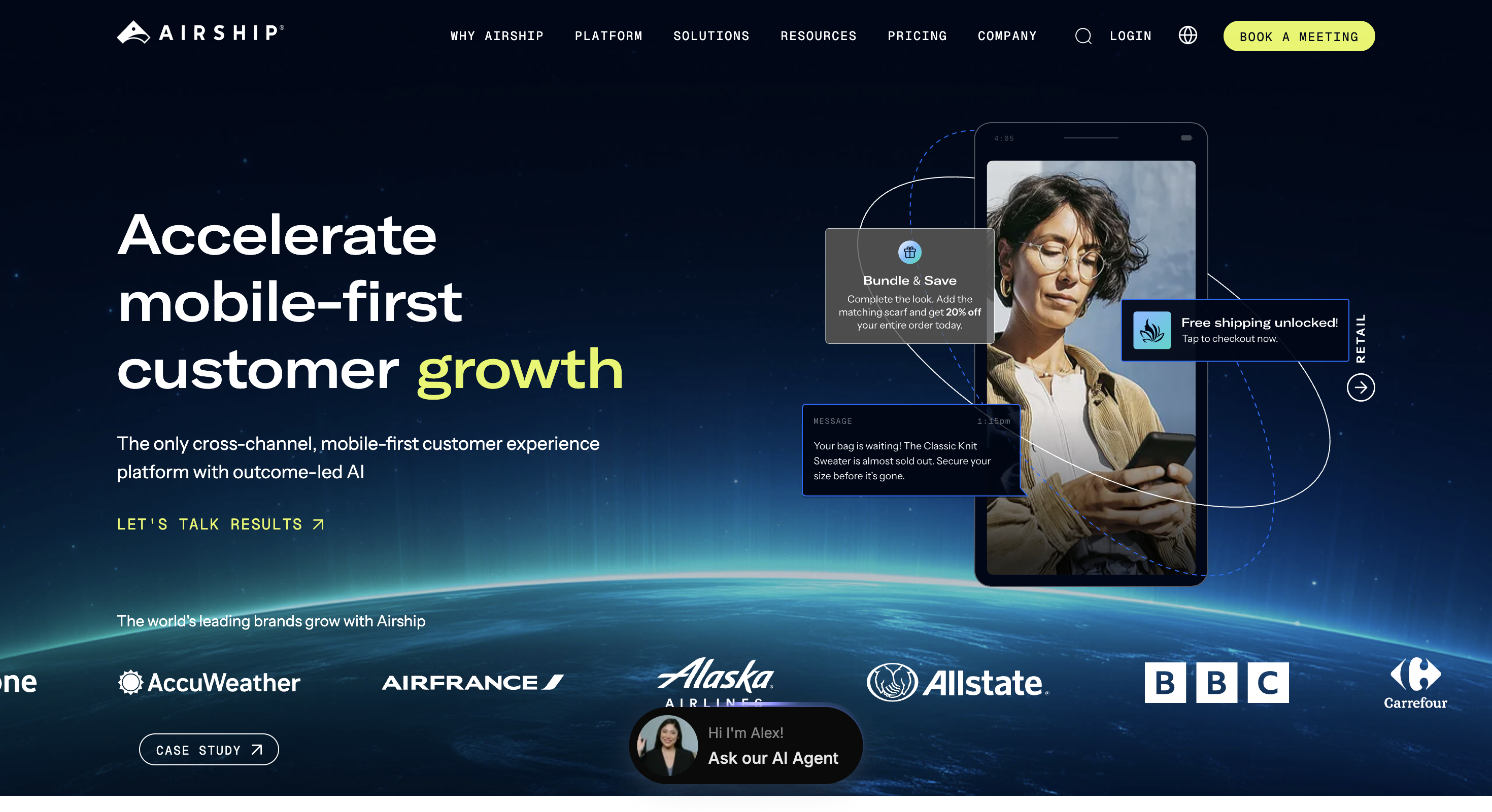
Airship is a cross-channel, mobile-first customer experience platform with native Scenes, embedded content, stories, surveys, automation, AI agents, wallet, and messaging. Digia Engage is a dedicated in-app layer built around rich mobile-native components. This comparison is based on Airship's published materials, not a hands-on Airship SDK test.
What this comparison found, in short
- Airship is a broad cross-channel customer experience platform with a particularly strong mobile-first identity, spanning app, web, push, SMS/RCS, email, wallet, and more.
- Its native Scenes are deep: multi-screen experiences, embedded content, custom views, branching, surveys, story mode, adaptive design, and AI-assisted creation.
- In-App Automation adds real-time, on-device behavioral triggers with banner, modal, fullscreen, and custom HTML message styles managed from the dashboard.
- Digia is narrower by design: a mobile-native rendering layer with widgets, stories, video, surveys, and native gamification that can sit beside an existing CEP.
How this comparison was put together
Airship claims on this page trace to Airship's own product pages. Broader competitor sections summarize each company's public homepage positioning. This is not a hands-on integration test, and unavailable public details are marked as such rather than guessed.
Disclosure. Digia sells Digia Engage and competes with Airship on mobile in-app engagement. This page was written by Digia, is not independent, and is not sponsored by or affiliated with any platform named here.
. Something out of date? Email info@digia.tech.
At a glance
Feature comparison across customer engagement platforms
| Feature / Capability | Digia Engage | Airship | Braze | MoEngage | WebEngage | Klaviyo | CleverTap |
|---|---|---|---|---|---|---|---|
| Best fit | Mobile teams already running a CEP | Large brands coordinating mobile-first experiences | Enterprises orchestrating journeys across channels | Consumer brands running AI-led engagement | Retention teams wanting journeys and CDP together | Commerce brands centered on B2C CRM | Retention teams combining engagement and analytics |
| In-app depth | Nudges, widgets, stories, surveys, video, native gamification | Scenes, embedded content, stories, surveys, branching, automation, Message Center | Slideups, modals, full-screen, multipage, surveys, Content Cards | Campaigns, cards, surveys, gamification templates | Layouts, carousels, inline content, HTML templates | In-app pop-ups plus mobile push | Messages, gamification, inbox, Native Display, Product Experiences |
| Authoring | Visual mobile-native builder with AI assistance | Visual Scene editor plus Scenes AI Agent | IAM editor, custom code, Canvas, BrazeAI | Visual creation with Merlin AI | Editable layouts plus custom HTML | Drag-and-drop message and flow builders | Advanced builder, templates, custom code, CleverAI |
| Gamification | Native scratch cards, spin-to-win, streaks, milestones, quizzes | No published native mechanic library | Custom implementation; no native mechanic library | Spin wheel and scratch card templates | Spin wheel and scratch card HTML templates | No published native mechanic library | Spin the Wheel and Scratch Card templates |
| Architecture | Dedicated rendering layer added to an existing CEP | Standalone mobile-first experience platform | Standalone enterprise engagement platform | Standalone engagement and analytics platform | Standalone CDP and engagement suite | Standalone B2C CRM | Standalone retention platform |
| Pricing | Custom quote | Custom quote | Not publicly listed | Custom quote | Custom quote | Free tier plus usage-based plans | Plan and usage dependent |
Airship vs Braze
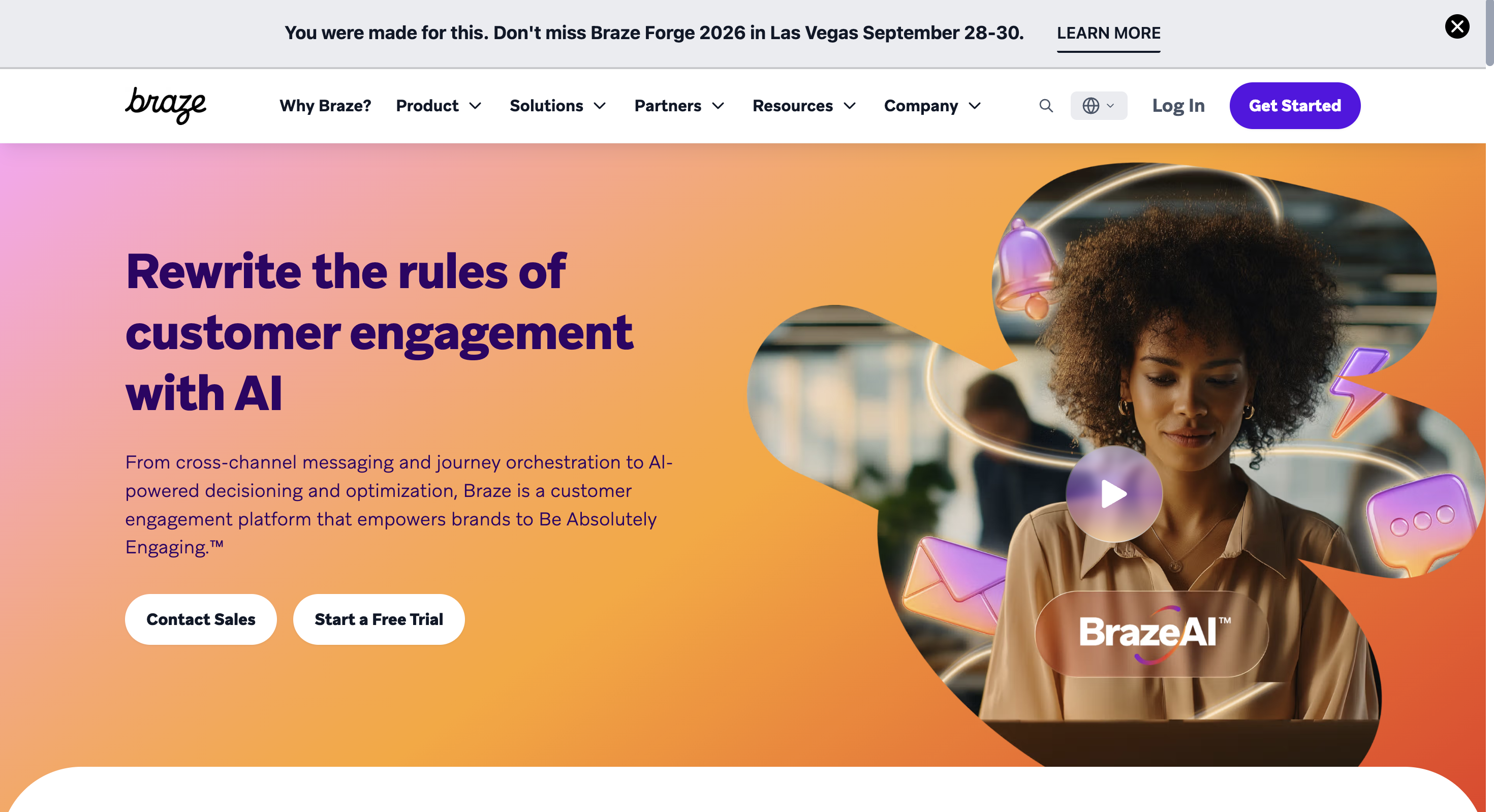
Both are broad enterprise engagement platforms. Airship makes native app and web experiences central; Braze makes Canvas orchestration and cross-channel decisioning central.
- Core scope: Both span data, journeys, AI, analytics, and messaging channels.
- In-app: Airship publishes native Scenes, embedded content, stories, surveys, branching, and automation; Braze publishes IAM formats and Content Cards.
- Mobile: Airship's platform identity is explicitly mobile-first.
- Digia difference: Digia is narrower, concentrating on a dedicated native component layer.
| Feature / Capability | Airship | Braze |
|---|---|---|
| Primary strength | Mobile-first experience orchestration | Enterprise journeys and AI decisioning |
| In-app approach | Scenes, embedded content, stories, surveys, automation | IAM editor, custom code, Content Cards |
| Gamification | No published native mechanic library | Custom implementation, no native library |
| Best for | Native app and web experience programs | Complex enterprise journey programs |
Choose Airship if:
Native mobile and web experiences are the center of the program.
Choose Braze if:
Enterprise Canvas orchestration and BrazeAI lead the decision.
Airship vs MoEngage
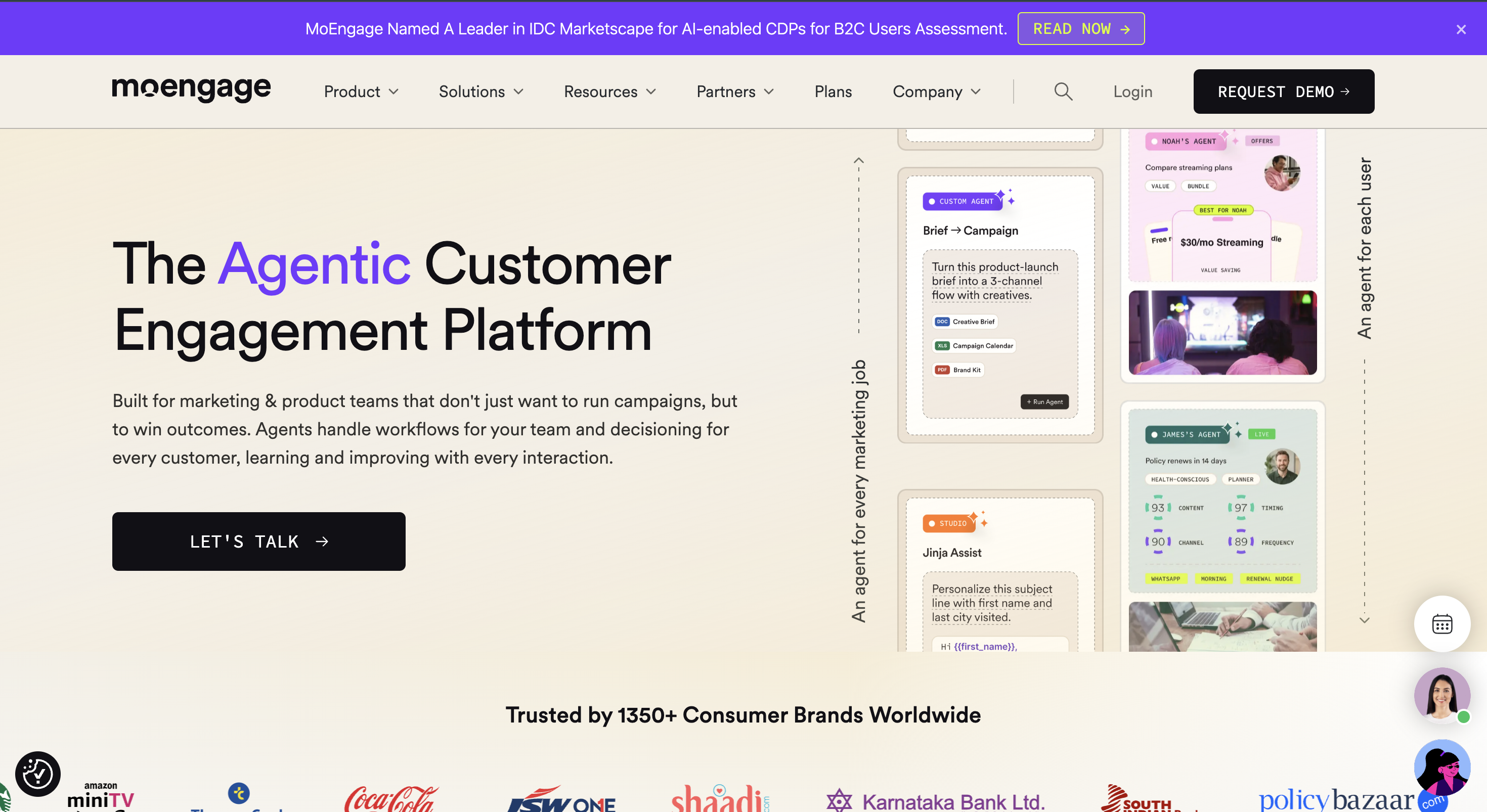
Airship emphasizes mobile-first experiences and native Scenes. MoEngage emphasizes AI-led engagement, analytics, and retention operations.
- Core scope: Both support segmentation, automation, analytics, AI, and multiple channels.
- In-app: Airship publishes Scenes, embedded content, stories, branching, and automation; MoEngage publishes campaign formats, cards, surveys, and gamification templates.
- AI: Airship publishes specialized agents for journeys, campaigns, Scenes, accessibility, and more.
- Digia difference: Digia specializes in a narrower library of mobile-native components.
| Feature / Capability | Airship | MoEngage |
|---|---|---|
| Primary strength | Mobile-first experiences and orchestration | AI-led engagement and analytics |
| In-app approach | Scenes, stories, embedded content, surveys, automation | Native layouts, templates, surveys, HTML |
| Gamification | No published native mechanic library | Spin wheel and scratch card templates |
| Best for | Mobile-first experience programs | Teams prioritizing MoEngage workflows |
Choose Airship if:
Native Scenes and mobile-first orchestration fit your program.
Choose MoEngage if:
Its analytics and AI-led campaign workflow fit better.
Airship vs Klaviyo
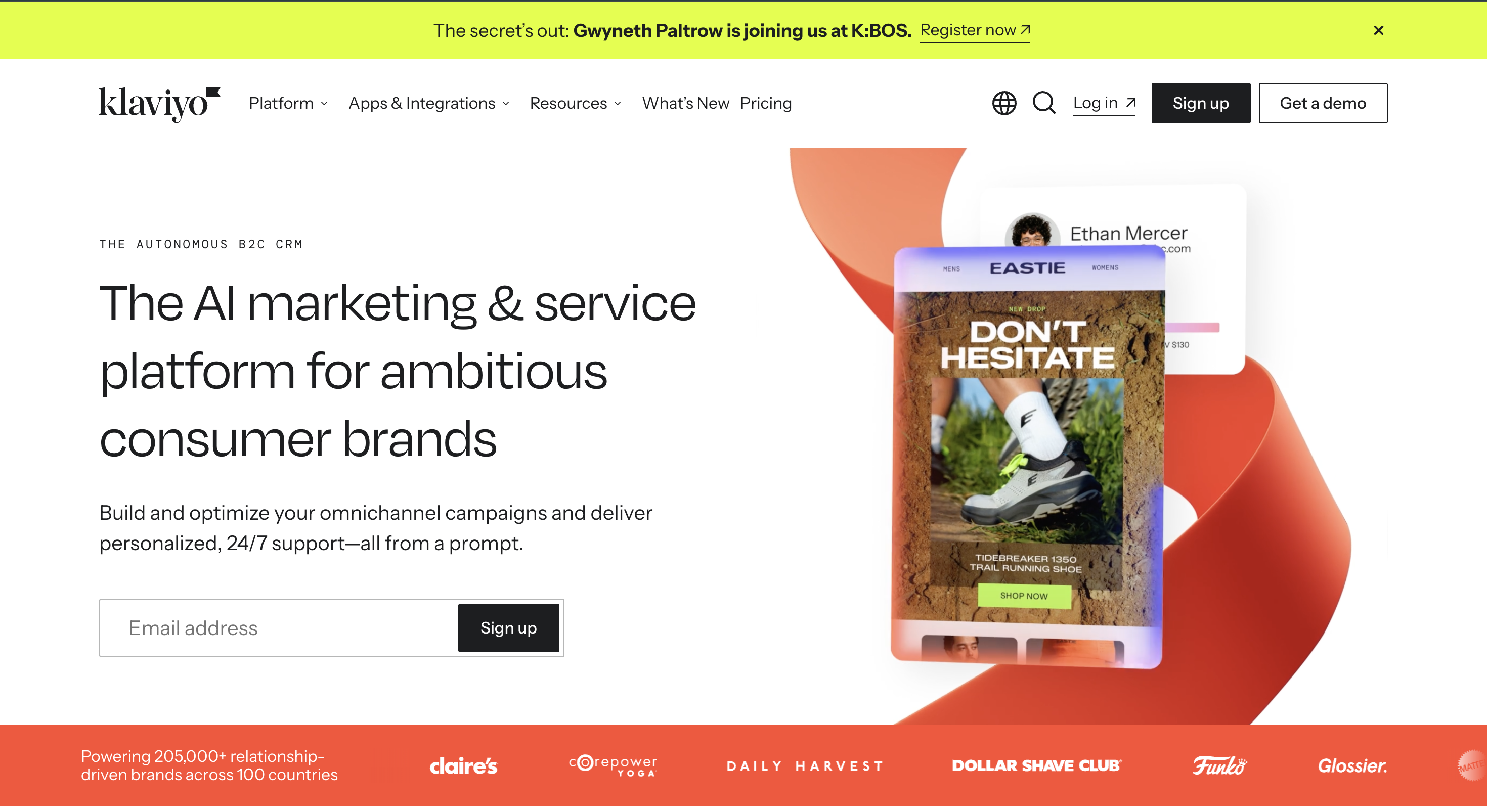
Airship is a mobile-first customer experience platform. Klaviyo is a B2C CRM centered on commerce relationships, email, SMS, data, and service.
- Core strength: Airship centers app experiences and cross-channel journeys; Klaviyo centers commerce relationship marketing.
- In-app: Airship publishes a much broader native in-app surface; Klaviyo publishes mobile push and in-app pop-ups.
- Commerce: Klaviyo is more explicitly aligned with store data and commerce service workflows.
- Digia difference: Digia supplies a specialized mobile-native layer alongside either platform.
| Feature / Capability | Airship | Klaviyo |
|---|---|---|
| Primary strength | Mobile-first experiences and orchestration | B2C CRM, commerce, email, SMS, service |
| In-app approach | Scenes, stories, embedded content, surveys, automation | Pop-ups and mobile push |
| Gamification | No published native mechanic library | No published native mechanic library |
| Best for | App-led experience programs | Commerce relationship teams |
Choose Airship if:
Native app experiences and mobile journeys are central.
Choose Klaviyo if:
Commerce data, email, SMS, and service are the center of the stack.
Airship vs WebEngage
Airship foregrounds mobile-first experience orchestration. WebEngage foregrounds its Retention OS, journeys, analytics, and customer data layer.
- Core scope: Both manage segmentation, journeys, analytics, and outbound channels.
- In-app: Airship publishes native Scenes, embedded content, stories, and branching; WebEngage publishes layouts, inline campaigns, and HTML templates.
- AI: Airship publishes a family of goal-oriented customer experience agents.
- Digia difference: Digia adds a dedicated native component library without replacing either platform.
| Feature / Capability | Airship | WebEngage |
|---|---|---|
| Primary strength | Mobile-first experiences and orchestration | Retention automation, journeys, CDP |
| In-app approach | Scenes, stories, embedded content, surveys, automation | Layouts, inline content, custom HTML |
| Gamification | No published native mechanic library | Spin wheel and scratch card HTML templates |
| Best for | Mobile-first experience programs | Teams centered on WebEngage journeys |
Choose Airship if:
Native app experiences and cross-channel mobile journeys lead.
Choose WebEngage if:
Its Retention OS workflows better fit your stack.
Airship vs CleverTap
Airship emphasizes native mobile-first experiences. CleverTap combines lifecycle engagement, retention analytics, and Product Experiences.
- Core scope: Both span data, analytics, orchestration, experimentation, and engagement channels.
- In-app: Airship publishes Scenes, stories, embedded content, surveys, and automation; CleverTap publishes an advanced builder, gamification, Inbox, Native Display, and Product Experiences.
- Optimization: Both support experimentation, but package the experience layer differently.
- Digia difference: Digia focuses narrowly on ready-to-use mobile-native components.
| Feature / Capability | Airship | CleverTap |
|---|---|---|
| Primary strength | Mobile-first experience orchestration | Retention analytics and product optimization |
| In-app approach | Scenes, stories, embedded content, surveys, automation | Builder, gamification, inbox, Native Display |
| Gamification | No published native mechanic library | Spin the Wheel and Scratch Card templates |
| Best for | Native app and web experience programs | Lifecycle and product optimization teams |
Choose Airship if:
Native Scenes and mobile-first orchestration are central.
Choose CleverTap if:
Lifecycle analytics, gamification templates, and Product Experiences fit better.
Architecture, not just features
Where Digia and Airship actually diverge
Full mobile-first platform vs dedicated rendering layer
Airship spans journeys, customer data, analytics, AI, channels, app and web experiences, wallet, and more. Digia focuses specifically on the mobile-native in-app rendering layer.
Source [1]: Airship homepageBoth have deep native experiences
Airship Scenes support native multi-screen flows, embedded content, stories, surveys, branching, custom views, and adaptive design. Digia differentiates through its ready-to-use widget, video, and gamification library.
Source [2]: Airship, ScenesEmbedded content is a shared strength
Airship can embed Scenes directly within app and web content. Digia includes native inline widgets as a core surface in its dedicated experience layer.
Source [4]: Airship Docs, ScenesDifferent AI territory
Airship publishes agents for campaigns, journeys, Scenes, recommendations, accessibility, and brand guidelines. Digia's AI is scoped to in-app segmentation, creative generation, and review.
Source [1]: Airship homepageAutomation vs component library
Airship In-App Automation responds on-device to behavioral triggers in real time. Digia concentrates on a catalog of ready-to-use native experience components and campaigns.
Source [3]: Airship Docs, In-App AutomationCoexistence depends on stack strategy
Airship can own the broad mobile-first experience platform. Digia is most useful when a team wants to keep another CEP and add a focused native rendering layer.
Side by side
Digia vs Airship, in-app
| Dimension | Airship | Digia Engage |
|---|---|---|
| Core architecture | Standalone mobile-first customer experience platform | Dedicated in-app rendering layer for an existing CEP |
| In-app authoring | Visual Scene editor plus Scenes AI Agent | Visual mobile-native component builder |
| Inline content | Embedded native Scenes and custom views | Native inline widgets in the core in-app layer |
| Gamification | No published native mechanic library | Scratch cards, spin-to-win, streaks, milestones, quizzes |
| Video and stories | Story mode and media-capable native Scenes | Purpose-built PiP, full-screen, story-style video and stories |
| Surveys | Native Scene surveys, NPS, branching, and forms | Purpose-built native surveys and feedback experiences |
| Off-app channels | Push, SMS/RCS/MMS, email, wallet, web, and more | Uses the channels of the connected CEP |
| Pricing | Custom quote | Custom quote |
Choose Digia if:
You already have a CEP and want a specialized native layer for widgets, video, stories, surveys, and a broader gamification library.
Choose Airship if:
You want a broad mobile-first platform for native app and web experiences, cross-channel journeys, AI agents, wallet, and messaging.
FAQ
Common questions
Is Digia a replacement for Airship?
They overlap more directly on native in-app experiences than Digia does with many CEPs. Airship is much broader across journeys, channels, wallet, data, analytics, and AI; Digia is a focused mobile-native rendering layer designed to sit beside an existing CEP.
Does Airship support no-code native in-app experiences?
Yes. Airship publishes a visual editor for native Scenes across app and web, including multi-screen flows, embedded content, branching, surveys, stories, and AI-assisted creation.
Source [2]: Airship, Scenes
Does Airship support embedded app content?
Yes. Airship Scenes can be embedded directly within app or web content, and custom native views can be embedded inside a Scene.
Source [4]: Airship Docs, Scenes
Does Airship support stories and surveys?
Yes. Scenes can run in story mode with automatic transitions and can include surveys, NPS questions, forms, confirmation screens, and branching paths.
Source [4]: Airship Docs, Scenes
How does Airship In-App Automation work?
Messages are cached on device and displayed immediately when configured behavioral conditions occur. Airship documents banner, modal, fullscreen, and custom HTML styles managed from its dashboard.
Source [3]: Airship Docs, In-App Automation
When should a team choose Airship?
Choose Airship when you want a broad mobile-first platform spanning native app and web experiences, journeys, AI, wallet, and cross-channel messaging. Choose Digia when you want a specialized component layer on top of the CEP already in place.
Sources cited on this page
- Airship homepage (cross-channel, mobile-first positioning, channels, no-code experiences, and AI agents): airship.com, accessed August 2026.
- Airship, Scenes (native multi-screen experiences, embedded content, branching, surveys, stories, and AI authoring): airship.com/capabilities/scenes, accessed August 2026.
- Airship Docs, In-App Automation (real-time on-device triggers, banners, modals, fullscreen, custom HTML, and dashboard management): airship.com/docs/guides/features/messaging/in-app-automation, accessed August 2026.
- Airship Docs, Scenes (embedded content, custom views, surveys, stories, branching, and adaptive design): airship.com/docs/guides/features/messaging/scenes, accessed August 2026.
- Airship Docs, Messaging (push, in-app, Message Center, email, SMS/RCS, and live updates): airship.com/docs/guides/features/messaging, accessed August 2026.
- Braze homepage (current customer engagement positioning): braze.com, accessed August 2026.
- MoEngage homepage (current agentic engagement positioning): moengage.com, accessed August 2026.
- WebEngage homepage (current Retention OS positioning): webengage.com, accessed August 2026.
- Klaviyo homepage (current B2C CRM positioning): klaviyo.com, accessed August 2026.
- CleverTap homepage (current customer lifetime value positioning): clevertap.com, accessed August 2026.
Want deeper mobile-native in-app engagement?
See how Digia adds widgets, gamification, stories, surveys, and video alongside the customer engagement platform you already run.