Appcues is a standalone system. Digia renders inside the CEP you already run.
Digia vs Appcues: In-App Engagement
Appcues coordinates product adoption across web, mobile, email, and push from its own Workflow builder. Digia is built specifically to render inside the CleverTap, MoEngage, or WebEngage integration you already have. The architecture difference is what decides which one fits.
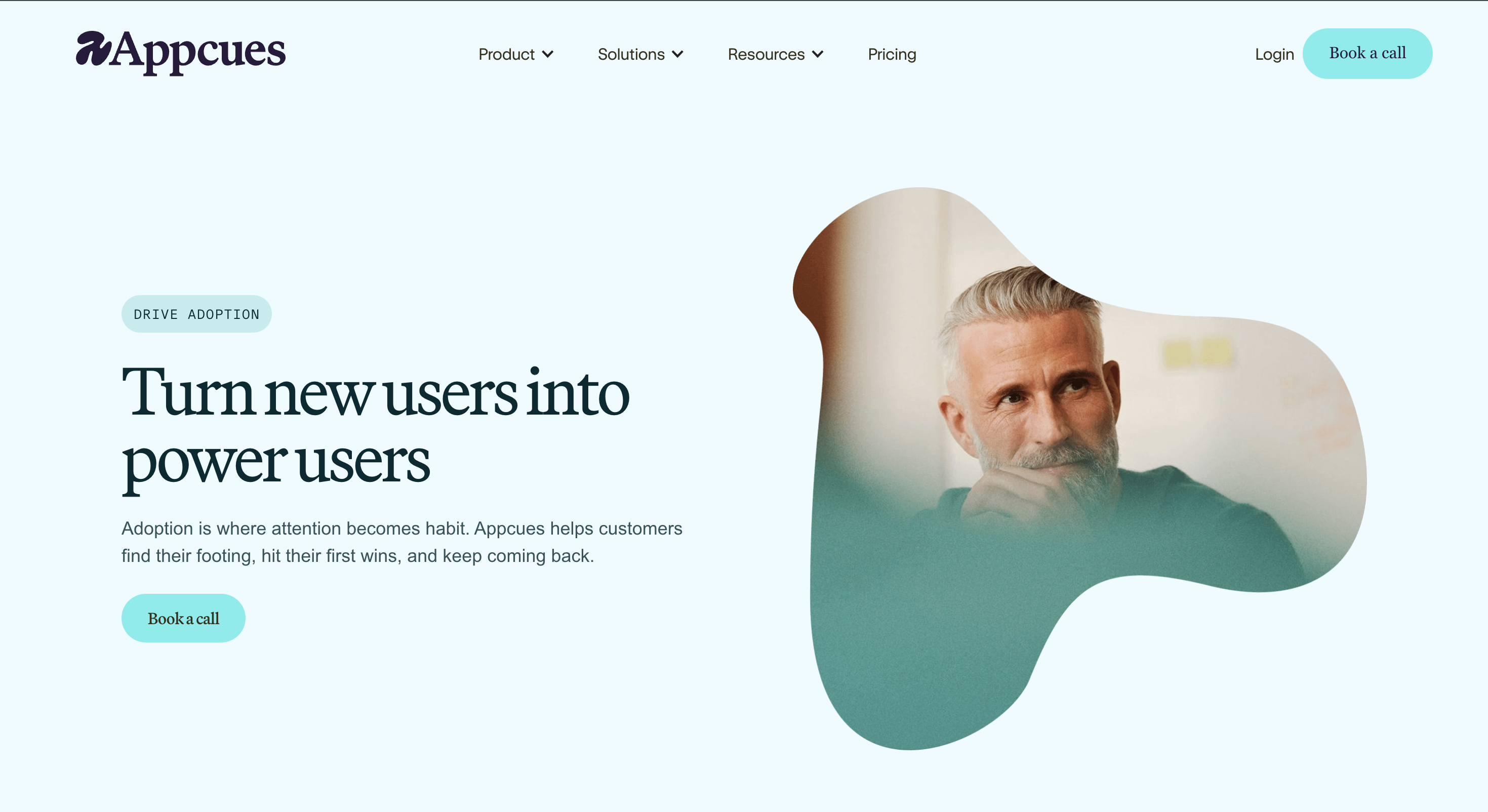
Appcues is a product adoption platform founded in 2013 and used by teams like HubSpot, G2, and Wayfair, running guided Flows, Embeds, and in-product surveys across web and mobile, connected to email and push in one workflow builder. Digia Engage is an in-app engagement layer built to plug directly into the customer engagement platform (CEP) you already run, reusing existing segments and events instead of adding a new data layer. This page compares the two on architecture, mobile format depth, AI, and pricing, using Appcues' own published materials wherever available.
What this comparison found, in short
- Appcues operates as a standalone product adoption platform across web, mobile, email, and push. Digia is built to render inside the CleverTap, MoEngage, or WebEngage integration you already run.
- Appcues ships native SDKs for iOS, Android, React Native, Flutter, and Ionic, but its mobile format library is narrower than its web library: Flows, Embeds, and surveys, with no native gamification, story, or video formats.
- Appcues does not publish web or mobile pricing on its own site as of this review. Third-party aggregators report Essentials from $249/month and Growth from $879/month for web, billed annually; mobile pricing is quote-only. Digia also does not publish list pricing and quotes per account.
- Digia's AI layer covers three specific jobs: natural-language segmentation, creative generation, and pre-launch campaign review. Appcues' AI assistance sits at the platform-targeting level and is not broken out as a separate published feature set.
How this comparison was put together
Every claim about Appcues on this page traces to Appcues' own published documentation, product pages, or Trust Center. The one exception is pricing: Appcues does not publish web or mobile pricing on appcues.com as of this review, so pricing figures here are sourced from a third-party aggregator (Vendr) and marked accordingly. Every claim about Digia traces to Digia's own published product pages. This is not a hands-on SDK integration test of Appcues, and it is not billed as one.
Scope and limitations. Latency, uptime, and rating figures on both sides are self-reported (Digia) or aggregated from public review platforms (Appcues' G2 rating) and have not been independently re-measured here. Where a row in the table below has no confirmed public figure for one side, it is marked "not published" rather than filled in with a guess.
Disclosure. Digia sells Digia Engage, which competes with Appcues on mobile in-app engagement. This comparison was written and published by Digia. It is not independent, and it is not sponsored by or affiliated with Appcues. It differs in method from Digia's SDK-tested comparisons, such as the MoEngage comparison, which is based on a direct integration test rather than published materials alone.
Compiled by the Digia team. . Something out of date? Email info@digia.tech and we'll correct it.
At a glance
Feature comparison across in-app engagement tools
| Feature / Capability | Digia Engage | Appcues | Pendo | Plotline |
|---|---|---|---|---|
| Best fit | Mobile teams already running a CEP | Teams coordinating adoption across web, mobile, email, and push | Teams wanting analytics, replay, feedback, and guides together | Teams wanting standalone mobile-first in-app engagement |
| In-app messaging | Nudges, widgets, stories, surveys, video, gamification | Flows, Embeds, surveys, modals, slideouts, tooltips | Lightboxes, tooltips, walkthroughs, polls, NPS | Modals, banners, tooltips, stories, video, gamification, bottom sheets |
| No-code builder | Visual dashboard with AI segmentation, creative generation, review | Visual web builder and separate mobile builder | Visual Design Studio for guides | Full no-code builder with Figma import and AI |
| Analytics | Reuses connected CEP analytics | Flow, checklist, goal, and adoption analytics | Retroactive analytics, replay, funnels, paths | Campaign analytics, funnels, cohorts, replay |
| Gamification | Scratch cards, spin-to-win, streaks, badges, quizzes | Not published as a native format | Not published as a native mobile format | Scratch cards, spin wheel, quizzes, streaks, milestones, games |
| Mobile support | iOS, Android, React Native, Flutter | iOS, Android, React Native, Flutter, Ionic | Native and broad cross-platform SDK support | Mobile-first native and cross-platform support |
| Off-app channels | Works through existing CEP channels | Email and push in one Workflow builder | Primarily web and in-app | Push, email, WhatsApp, RCS |
| Pricing | Custom quote | Web reported from $249/month; mobile quote-only | Free tier; paid tiers quote-only | Starter from $499/month |
Appcues vs Pendo
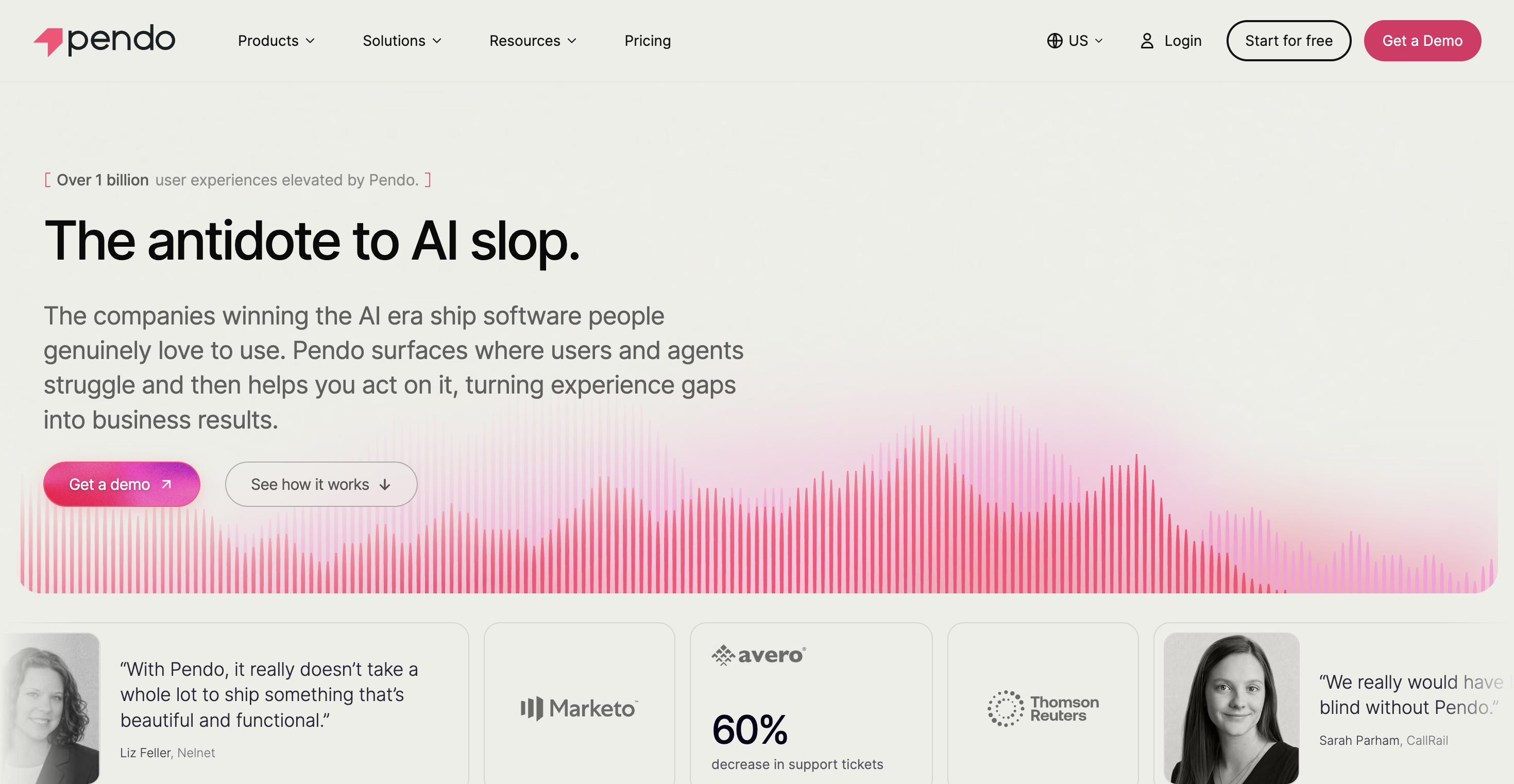
Appcues is onboarding- and workflow-first across web, mobile, email, and push. Pendo is analytics-first, combining retroactive product analytics, session replay, feedback, and guides.
- Core strength: Appcues centers on guided adoption workflows; Pendo centers on product analytics and behavioral insight.
- Mobile experiences: Appcues publishes Flows, Embeds, surveys, modals, slideouts, and tooltips. Pendo publishes lightboxes, tooltips, walkthroughs, polls, and NPS.
- Analytics: Appcues tracks flows, checklists, goals, and adoption. Pendo adds retroactive analytics, funnels, paths, replay, and frustration signals.
- Cross-channel: Appcues connects in-product experiences with email and push. Pendo is primarily analytics, feedback, and in-app or web guidance.
| Feature / Capability | Appcues | Pendo |
|---|---|---|
| Primary strength | Onboarding and connected adoption workflows | Product analytics, session replay, feedback, and guides |
| Mobile formats | Flows, Embeds, surveys, modals, slideouts, tooltips | Lightboxes, tooltips, walkthroughs, polls, NPS |
| Analytics | Flow, checklist, goal, and adoption analytics | Retroactive analytics, funnels, paths, replay, frustration signals |
| Best for | Teams prioritizing guided onboarding | Teams wanting analytics and guidance together |
Choose Appcues if:
You prioritize guided onboarding and connected adoption workflows across in-product experiences, email, and push.
Choose Pendo if:
You want deep product analytics, session replay, frustration signals, and in-app guidance in one platform.
Appcues vs Plotline
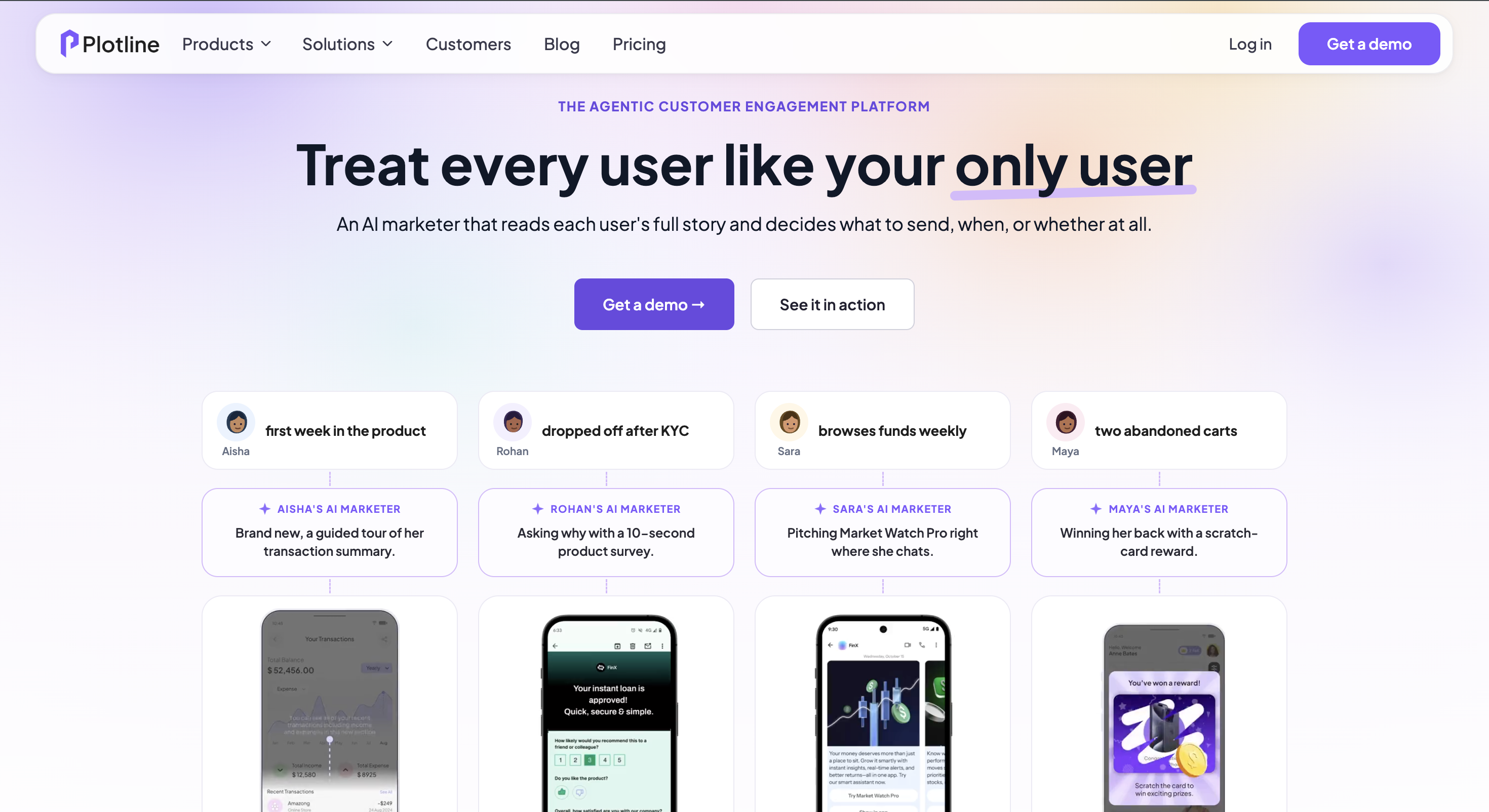
Appcues focuses on product onboarding and adoption workflows. Plotline focuses on mobile-first in-app engagement, no-code experimentation, and gamification.
- Experience building: Appcues provides web and mobile builders for onboarding patterns. Plotline publishes a full no-code builder with Figma import and AI.
- Format depth: Plotline adds stories, video, bottom sheets, and gamified experiences beyond Appcues' published mobile set.
- Gamification: Appcues does not publish gamification as a core native format; Plotline publishes scratch cards, spin wheels, quizzes, streaks, milestones, and games.
- Experimentation: Plotline publishes A/B/n and multivariate testing plus feature flags, while Appcues emphasizes onboarding workflow and adoption.
| Feature / Capability | Appcues | Plotline |
|---|---|---|
| Primary strength | Onboarding and adoption workflows | Mobile-first engagement, experimentation, and gamification |
| Mobile formats | Flows, Embeds, surveys, modals, slideouts, tooltips | Modals, banners, tooltips, stories, video, bottom sheets, gamification |
| Gamification | Not published as a core native format | Scratch cards, spin wheel, quizzes, streaks, milestones, games |
| Best for | Teams prioritizing guided onboarding | Teams prioritizing rapid mobile in-app iteration |
Choose Appcues if:
You prioritize guided onboarding and connected adoption workflows.
Choose Plotline if:
You prioritize mobile-first in-app engagement, gamification, and no-code experimentation.
To be clear: Appcues holds a strong 4.6 / 5 rating across 340+ G2 reviews, with reviewers consistently praising its visual builder and support team, and it's trusted by companies like HubSpot, G2, and Wayfair. For teams whose product experience starts on the web and extends to mobile, and who want in-app, email, and push run from one connected platform, Appcues' model is a genuinely reasonable fit. This page is about a specific tradeoff: mobile-native format depth and an architecture that sits on top of the CEP you already run, versus a standalone multi-channel platform.
Architecture, not just features
Where Digia and Appcues actually diverge
Standalone system vs. rendering layer
Appcues runs as its own standalone product adoption platform, coordinating in-app, email, and push from a single connected Workflow builder. Digia is built to render inside the CEP integration you already have, reusing the segments and events you manage in CleverTap, MoEngage, or WebEngage rather than adding a second data layer.
Source [2]: Digia Engage homepageFormat library
Appcues' own mobile documentation lists Flows (modals, slideouts, floating and anchored tooltips), Embeds, and in-product surveys as its mobile format set. Digia organizes a wider mobile-native territory into five product lines: nudges, widgets, surveys, gamification, and in-app video, including formats like stories and picture-in-picture video that Appcues does not publish as available on mobile.
Source [4]: Appcues, "Mobile experiences overview"Where mobile-native depth sits
Appcues ships native SDKs for iOS, Android, React Native, Flutter, and Ionic, so mobile coverage is real and actively maintained, not an afterthought. But by Appcues' own account, its initial engineering focus was building a solid native foundation for Flows and Embeds, and gamification mechanics like scratch cards or spin-the-wheel are not part of the published feature set on any platform. Digia's format library, including gamification, is native to mobile from the ground up.
Source [3]: Appcues, "Installing Appcues in Mobile Applications"Setup speed, honestly compared
Appcues' mobile install is a native SDK integration, similar in shape to Digia's. Digia's own published numbers put SDK integration at around 20 minutes and a first live campaign inside 24 hours. Appcues does not publish a comparable time-to-first-campaign figure for mobile as of this review.
Source [2]: Digia Engage homepageEngineering involvement
Both platforms assume a one-time engineering integration, an Appcues mobile SDK install or a Digia SDK install into your CEP setup, after which campaign building runs no-code from each platform's dashboard for growth and product teams.
Source [3]: Appcues, "Installing Appcues in Mobile Applications"Pricing model
Appcues does not publish web or mobile pricing on appcues.com as of this review. Third-party benchmarks report web pricing at three tiers: Essentials from $249/month, Growth from $879/month, both for 2,500 MAU billed annually, and custom Enterprise pricing. Appcues' own documentation states mobile pricing is available on request rather than published. Digia also does not publish list pricing and instead quotes per account based on user volume, connected channels, and impression count.
Source [6]: Vendr, Appcues pricing benchmarkBased on Appcues' published product and documentation pages, August 2026.
At a glance
Digia vs Appcues, side by side
Capabilities compared as of August 2026, based on Appcues' published documentation and, for pricing only, a third-party aggregator. Both products change over time, so if something below is out of date, we'd genuinely like to know.
| Dimension | Appcues | Digia Engage |
|---|---|---|
| Core architecture | Standalone product adoption platform across web, mobile, email, and push | Renders inside the CEP integration you already run (CleverTap, MoEngage, WebEngage) |
| No-code builder | Visual WYSIWYG builder for web; separate mobile builder for Flows and Embeds | Visual dashboard, AI segmentation, AI creative generation, AI campaign review |
| Mobile platform support | Native SDKs for iOS, Android, React Native, Flutter, and Ionic | Native support for iOS, Android, React Native, and Flutter |
| Mobile format library | Flows (modals, slideouts, tooltips), Embeds, in-product surveys | Tooltips, bottom sheets, banners, stories, PiP/full-screen video, inline widgets, gamified overlays |
| Gamification | Not a published format on any platform | Scratch cards, spin-to-win, streak tracking, milestone badges, quizzes |
| In-app trigger latency (self-reported) | Not publicly benchmarked as of this review | Sub-100ms, per Digia's published figures |
| Off-app channels | Email and push, natively orchestrated in one Workflow builder | Push, email, WhatsApp, RCS, via CEP integration |
| Mobile SDK footprint | ~1MB added to app download, ~3MB added to install (iOS), per Appcues' own spec | Under 2MB, per Digia's published spec |
| Pricing | Not published on appcues.com; third parties report web pricing from $249/month (Essentials). Mobile pricing is quote-only | Custom quote based on user count, channels, and impression volume |
| G2 rating (self-reported by Appcues' review base) | 4.6 / 5 (340+ reviews) | Not independently listed on G2 as of this review |
| Compliance | SOC 2 Type II, ISO 27001, GDPR, CCPA | GDPR, SOC 2, ISO 27001 |
Which one fits
Choose based on your architecture, not just your feature list
Choose Digia if:
You already run CleverTap, MoEngage, or WebEngage and want the in-app layer to render inside that setup, reusing your existing segments and events instead of standing up a second data layer. You also want mobile-native gamification, stories, and video formats that Appcues doesn't publish as part of its mobile format set.
See Digia in actionChoose Appcues if:
Your core product is a web app with mobile as a supporting surface, and you want one connected Workflow builder to run in-app, email, and push together, backed by a well-reviewed support team and a 14-day free trial you can start without a sales call.
Visit AppcuesAlready on Appcues and evaluating a switch for mobile?
Because Digia is built to render inside your existing CEP rather than stand alone, teams typically keep Appcues for web onboarding, or keep their CleverTap, MoEngage, or WebEngage setup for outbound channels, and evaluate Digia specifically against Appcues' mobile in-app layer. That's a scoped, side-by-side evaluation rather than a full platform migration, and it's the fastest way to see which architecture actually fits your product.
FAQ
Common questions
Is Digia a replacement for Appcues, or does it work alongside it?
Digia and Appcues overlap on the in-app engagement layer specifically, though Appcues also covers email and push natively while Digia relies on your existing CEP for those channels. Teams evaluating a switch are typically replacing Appcues' mobile in-app layer with Digia's, while either keeping Appcues for web onboarding or keeping their CEP for outbound messaging.
What is the main architectural difference between Digia and Appcues?
Appcues operates as a standalone product adoption platform that coordinates in-app, email, and push from its own Workflow builder. Digia is built specifically to render inside the CEP integration you already run, reusing the segments and events you manage in CleverTap, MoEngage, or WebEngage instead of adding a second data layer.
Source [2]: Digia Engage homepage
Does Appcues support native mobile apps the same way Digia does?
Appcues ships native SDKs for iOS, Android, React Native, Flutter, and Ionic, so mobile support is real and actively maintained. Its mobile format library is narrower than Digia's, covering Flows, Embeds, and surveys, without native gamification, story-format nudges, or in-app video, formats Digia was built around from the start.
Source [4]: Appcues, "Mobile experiences overview"
Which platform is cheaper, Digia or Appcues?
Neither company publishes web or mobile pricing that allows a direct dollar comparison. Third-party aggregators report Appcues' web pricing starting around $249/month for the Essentials tier, billed annually, with mobile pricing quoted separately on request. Digia also quotes per account rather than publishing list pricing, so an accurate comparison depends on getting quotes for your specific usage from both.
Source [6]: Vendr, Appcues pricing benchmark
Does Digia have gamification like Appcues?
Digia has native gamification, including scratch cards, spin-the-wheel, streak tracking, quizzes, and milestone rewards. Appcues does not publish gamification as part of its feature set on web or mobile as of this review.
Source [4]: Appcues, "Mobile experiences overview"
How was this comparison put together?
Every claim about Appcues on this page traces to Appcues' own published documentation, product pages, or trust center, except for pricing, which Appcues does not publish and which this comparison sources from a third-party aggregator (Vendr), disclosed accordingly. Every claim about Digia traces to Digia's own published product pages. This is not a hands-on SDK integration test of Appcues, and it is not billed as one.
What are the best Appcues alternatives for in-app engagement specifically?
Teams comparing Appcues typically also look at Pendo, Userpilot, Chameleon, and WalkMe, though those are largely web-first digital adoption platforms rather than mobile-native in-app layers. Digia is a narrower comparison: a dedicated mobile in-app engagement layer rather than a full multi-channel adoption suite, so it's best compared to Appcues on mobile format depth and architecture rather than on web feature breadth.
Sources cited on this page
- Appcues, G2 product reviews (Appcues' G2 rating, review count, and reported strengths/complaints): g2.com/products/appcues/reviews , accessed August 2026.
- Digia Engage homepage (Digia's own published product specs, AI features, and performance figures): digia.tech , accessed August 2026.
- Appcues, "Installing Appcues in Mobile Applications" (Appcues' own published mobile SDK footprint, platform support, and tech specs): docs.appcues.com/mobile-installation-overview/installing-the-mobile-sdk , accessed August 2026.
- Appcues, "Mobile experiences overview" (Appcues' own published list of mobile format types (Flows, Embeds, surveys, push)): docs.appcues.com/mobile-installation-overview/mobile-overview , accessed August 2026.
- Appcues Trust Center (Appcues' own published compliance certifications (SOC 2 Type II, ISO 27001, GDPR, CCPA)): trust.appcues.com , accessed August 2026.
- Vendr, Appcues pricing benchmark (Third-party aggregated Appcues web pricing (Essentials, Growth, Enterprise tiers); Appcues does not list these figures on its own site as of this review): vendr.com/marketplace/appcues , accessed August 2026.
This comparison does not include a hands-on SDK integration test of Appcues. See How this comparison was put together above for scope and limitations.
See also: Digia vs Plotline · Digia vs MoEngage · Digia vs WebEngage · Digia vs Braze
Ready to see native in-app rendering on top of your existing CEP?
Book a demo and we'll walk through gamification, widgets, and how Digia connects to CleverTap, MoEngage, or WebEngage without a new data layer.