


TL;DR: Continuous testing in CI/CD helps engineering teams release software faster without sacrificing reliability. Instead of treating testing as a final stage before deployment, modern pipelines validate code continuously through unit tests, integration tests, smoke tests, release gates, and production monitoring. By combining automated validation, observability, progressive delivery, and rollback strategies, teams can detect issues earlier, reduce deployment risk, and ship updates confidently at scale.
Modern software teams are expected to release features faster than ever before. Customers expect continuous improvements, businesses demand shorter delivery cycles, and competition leaves very little room for slow release processes. In this environment, releasing software once every few weeks is no longer considered fast. Many engineering teams now deploy multiple times a day.
This shift has fundamentally changed how quality assurance works. Traditional testing strategies were designed for slower release cycles where teams had time for long regression phases before deployment. In a CI/CD environment, that model quickly becomes a bottleneck. If testing cannot keep pace with development velocity, deployments slow down, feedback loops become longer, and engineering teams lose confidence in the release process.
Continuous testing solves this problem by embedding testing into every stage of the software delivery pipeline. Instead of treating testing as a final checkpoint before release, modern teams validate quality continuously from development to production. The objective is not simply to catch bugs. The objective is to create enough confidence that teams can ship rapidly without introducing instability into production systems.
“The faster the release cycle becomes, the more important rapid feedback becomes.”
Continuous testing is what allows modern engineering teams to maintain both speed and reliability at the same time.
Understanding Continuous Testing in CI/CD
What Continuous Testing Actually Means
Continuous testing is the practice of executing automated validation throughout the entire software delivery lifecycle. Every code commit, pull request, build, deployment, and production release becomes an opportunity to validate application behavior.
In traditional workflows, testing usually happened after development was complete. QA teams would manually verify features near the end of the release cycle. That approach worked when deployments happened monthly or quarterly. It becomes unsustainable when applications are updated continuously throughout the day.
Continuous testing shifts quality validation earlier and distributes it across multiple layers of the pipeline. Unit tests validate business logic immediately after code changes. Integration tests confirm services communicate correctly. End-to-end tests verify user workflows, while production monitoring validates real-world application behavior after deployment.
The entire process is designed around rapid feedback. Developers should know within minutes whether a change introduced instability. Faster feedback reduces debugging complexity, improves developer productivity, and prevents small issues from becoming expensive production incidents later.
Why Testing Must Match Deployment Velocity
As release frequency increases, slow testing becomes one of the biggest obstacles to delivery speed. Pipelines that require hours to validate changes eventually create frustration across engineering teams. Developers begin bypassing checks, delaying merges, or manually approving deployments simply to maintain release velocity.
Continuous delivery only works when testing systems are optimized for speed and reliability. That does not mean removing test coverage. It means distributing validation intelligently across the pipeline so every stage provides the right level of confidence without unnecessary delay.
The goal is not to run every possible test before every deployment. The goal is to identify meaningful risks as early as possible while allowing low-risk changes to move quickly through the system.
Real-World Example: Amazon’s High Deployment Frequency
Amazon is widely recognized for its large-scale continuous deployment practices. Engineering teams at Amazon deploy code changes frequently throughout the day using highly automated testing and deployment pipelines.
This level of deployment speed is only possible because testing, validation, and monitoring are deeply integrated into the delivery pipeline. Automated testing allows teams to detect failures quickly while reducing the risks associated with frequent releases.
The following table highlights how testing strategies typically evolve as deployment frequency increases:
| Deployment Frequency | Traditional Testing Approach | Continuous Testing Approach |
|---|---|---|
| Monthly releases | Large manual QA cycles | Automated validation with selective manual checks |
| Weekly releases | Scheduled regression testing | Layered automated testing |
| Daily releases | Partial automation with bottlenecks | Fully integrated CI/CD testing |
| Multiple releases per day | Unsustainable traditional QA | Continuous monitoring and automated validation |
Teams that successfully adopt CI/CD understand that testing is no longer a separate activity from delivery. Testing becomes part of delivery itself.
Where Testing Fits Inside the CI/CD Pipeline
Testing During Pull Requests and Pre-Merge Validation
The first layer of continuous testing usually begins before code is merged into the main branch. At this stage, the objective is to prevent unstable code from entering shared environments where it can affect other developers or deployment pipelines.
Pre-merge validation typically focuses on fast and highly reliable checks. These validations often include unit tests, static code analysis, linting, dependency scans, and lightweight integration testing. The emphasis here is speed because developers need immediate feedback during code review.
If pre-merge pipelines take too long, developer productivity drops significantly. Engineers spend more time waiting for validation than writing code. This is why mature CI/CD systems prioritize fast feedback loops during the early stages of development.
Strong pre-merge testing also improves collaboration across engineering teams. Developers gain confidence that new contributions meet baseline quality standards before reaching production pipelines.
Integration Testing During Build Stages
Once code is merged, pipelines move into deeper validation stages where the system is tested as a connected application rather than isolated components.
Integration testing validates communication between services, APIs, databases, caching systems, queues, and infrastructure dependencies. These tests are naturally slower than unit tests because they involve real application interactions rather than isolated functions.
This stage becomes especially important in distributed architectures and microservices environments where small failures in service communication can create major production incidents. Many CI/CD pipelines also execute container validation and infrastructure compatibility checks during this stage.
Unlike unit tests, integration tests focus less on implementation details and more on system behavior. Their purpose is to confirm that independently developed components function correctly together.
Production Testing and Post-Deployment Validation
Modern engineering teams increasingly treat production as an active validation environment rather than the final destination after testing is complete.
Post-deployment testing validates application health immediately after release. Smoke tests confirm critical workflows remain functional, while monitoring systems track latency, error rates, infrastructure health, and customer experience metrics.
This approach acknowledges an important reality of modern software delivery. Some issues only appear under real production conditions. Traffic patterns, regional infrastructure differences, third-party dependencies, and scaling behavior are difficult to replicate accurately in staging environments.
Instead of relying entirely on pre-production validation, modern CI/CD systems focus on rapid detection and containment of failures after deployment.
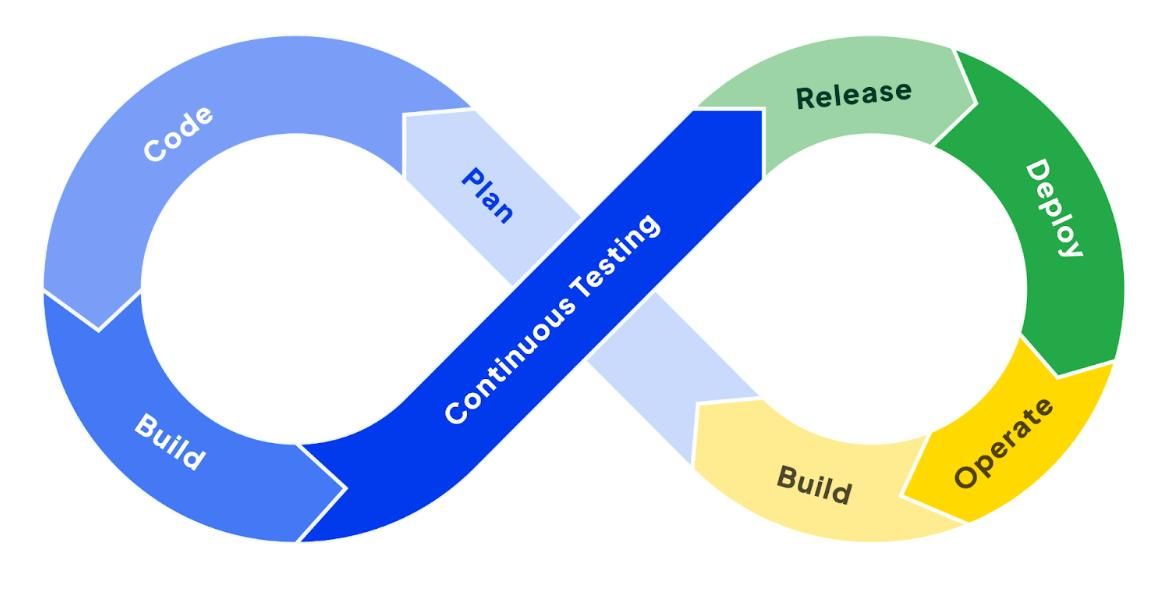
Pre-Merge vs Post-Deploy Testing
What Should Be Tested Before Merge
Pre-merge testing should focus on high-confidence validation that prevents immediate instability from entering the shared codebase. Critical business logic, authentication systems, API contracts, and core workflows should usually be validated before deployment pipelines continue.
The challenge is balancing confidence with speed. Running exhaustive regression suites before every merge quickly slows development velocity. Most mature engineering teams instead focus on identifying the smallest set of highly reliable tests capable of catching meaningful failures early.
Effective pre-merge testing usually prioritizes reliability over breadth. Small but stable test suites provide significantly more value than large pipelines filled with flaky or redundant validations.
What Is Better Tested After Deployment
Certain validations become more effective after deployment because they depend heavily on real infrastructure and production conditions.
Performance testing, observability validation, geographic routing behavior, CDN interactions, scaling characteristics, and third-party integrations are often more accurate in production environments than staging systems. Progressive delivery strategies allow teams to test these scenarios safely without exposing all users to potential instability.
Canary deployments, blue-green deployments, and feature flags have dramatically changed how post-deployment testing works. Teams can now release features gradually, validate behavior using real traffic, and roll back changes instantly if problems appear.
This reduces deployment risk while maintaining rapid release velocity.
Balancing Speed and Confidence
One of the most common mistakes in CI/CD adoption is attempting to maximize testing at every stage. While that sounds safer in theory, it usually creates pipelines that are too slow to support continuous delivery effectively.
Continuous testing is fundamentally about optimization. Fast tests run constantly. Broader validation runs selectively. Monitoring continues after deployment. Every layer contributes confidence without unnecessarily slowing the pipeline.
The following table demonstrates how testing depth is commonly distributed across CI/CD systems:
| Pipeline Stage | Primary Goal | Typical Test Types |
|---|---|---|
| Pre-merge | Fast developer feedback | Unit tests, linting, static analysis |
| Build stage | System validation | Integration tests, API testing |
| Pre-deployment | Release confidence | End-to-end workflows |
| Post-deployment | Production verification | Smoke tests, monitoring, canary analysis |
Successful CI/CD pipelines are designed around risk management rather than maximum test volume.
Smoke Tests vs Full Regression Suites
The Role of Smoke Testing
Smoke tests exist to answer one important question quickly: “Is the application fundamentally operational?”
These tests focus on validating the most critical workflows in the system. User authentication, payment processing, API availability, navigation flows, and database connectivity are common examples.
Because smoke tests are intentionally lightweight, they execute quickly and provide immediate feedback after deployments. This makes them highly valuable in fast-moving CI/CD pipelines where rapid validation is essential.
Smoke testing is especially important in production environments because it acts as the first layer of defense after release.
Why Full Regression Suites Still Matter
Although smoke tests provide speed, they cannot validate every possible interaction within a complex application. Full regression suites remain important for identifying edge cases, workflow conflicts, and unexpected side effects introduced by new changes.
Regression testing becomes even more critical in enterprise systems, legacy applications, and highly regulated industries where software behavior must remain predictable across large interconnected workflows.
The challenge is scalability. As applications grow, regression suites often become increasingly slow and expensive to maintain. Many engineering teams eventually reach a point where running full regression validation before every deployment becomes impractical.
To solve this, mature organizations often separate regression testing into scheduled or risk-triggered execution rather than using it as a blocking requirement for every release.
Building a Sustainable Test Pyramid
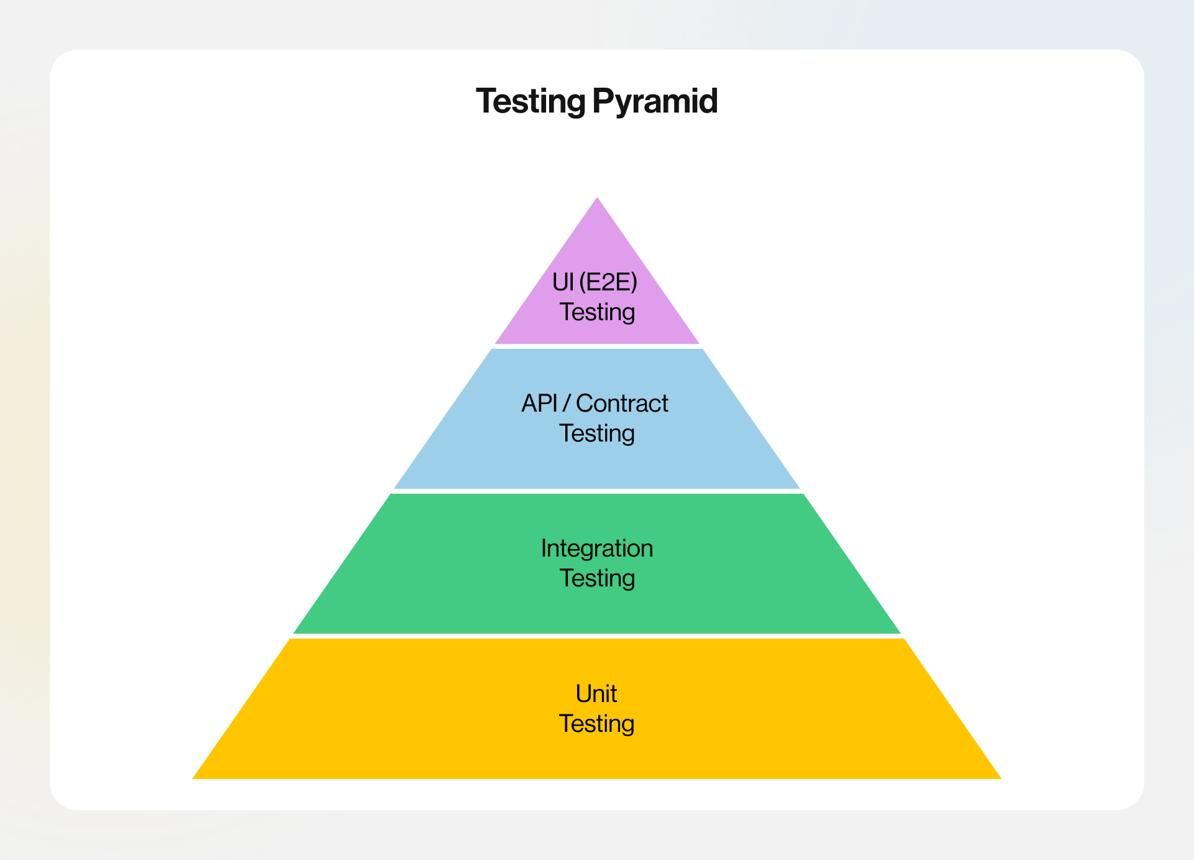
One of the most effective ways to scale continuous testing is by structuring validation around the testing pyramid.
At the base of the pyramid are fast and reliable unit tests. Integration tests sit above them and validate service interactions. End-to-end tests occupy the top layer and focus on complete business workflows.
The testing pyramid encourages teams to maximize fast automated validation while minimizing dependency on slow and brittle UI testing.
| Test Type | Speed | Reliability | Maintenance Cost |
|---|---|---|---|
| Unit Tests | Very fast | High | Low |
| Integration Tests | Moderate | Medium to high | Medium |
| End-to-End Tests | Slow | Lower | High |
Teams that ignore this balance often end up with pipelines dominated by fragile end-to-end automation that slows releases significantly.
Building Effective Release Gates
Understanding Release Gates
Release gates are automated checkpoints that determine whether a deployment can safely continue through the pipeline. These gates help engineering teams enforce quality standards consistently without relying on manual approvals alone.
A release gate may stop deployment if automated tests fail, security vulnerabilities are detected, performance thresholds degrade, or infrastructure health checks indicate instability.
The purpose of release gates is not to slow deployments. Their purpose is to prevent high-risk changes from reaching customers without validation.
Common Release Gate Strategies
Modern release gates combine multiple layers of technical and operational validation. Test pass rates, security scanning results, deployment health metrics, observability data, and infrastructure readiness checks are commonly included in automated release decisions.
Some organizations also integrate business metrics into deployment gates. Conversion rates, checkout success rates, and latency thresholds may determine whether canary deployments expand further across production traffic.
The strongest release gates are measurable, automated, and difficult to bypass under pressure.
Avoiding Pipeline Bottlenecks
Poorly designed release gates can easily become one of the biggest bottlenecks in CI/CD systems. Excessive manual approvals, unstable validation environments, and redundant testing layers slow deployments dramatically.
Effective release gates are adaptive rather than rigid. Low-risk deployments may move automatically through the pipeline, while higher-risk releases trigger deeper validation workflows.
This allows organizations to maintain rapid delivery without compromising production stability.
“A good release gate protects reliability without punishing deployment speed.”
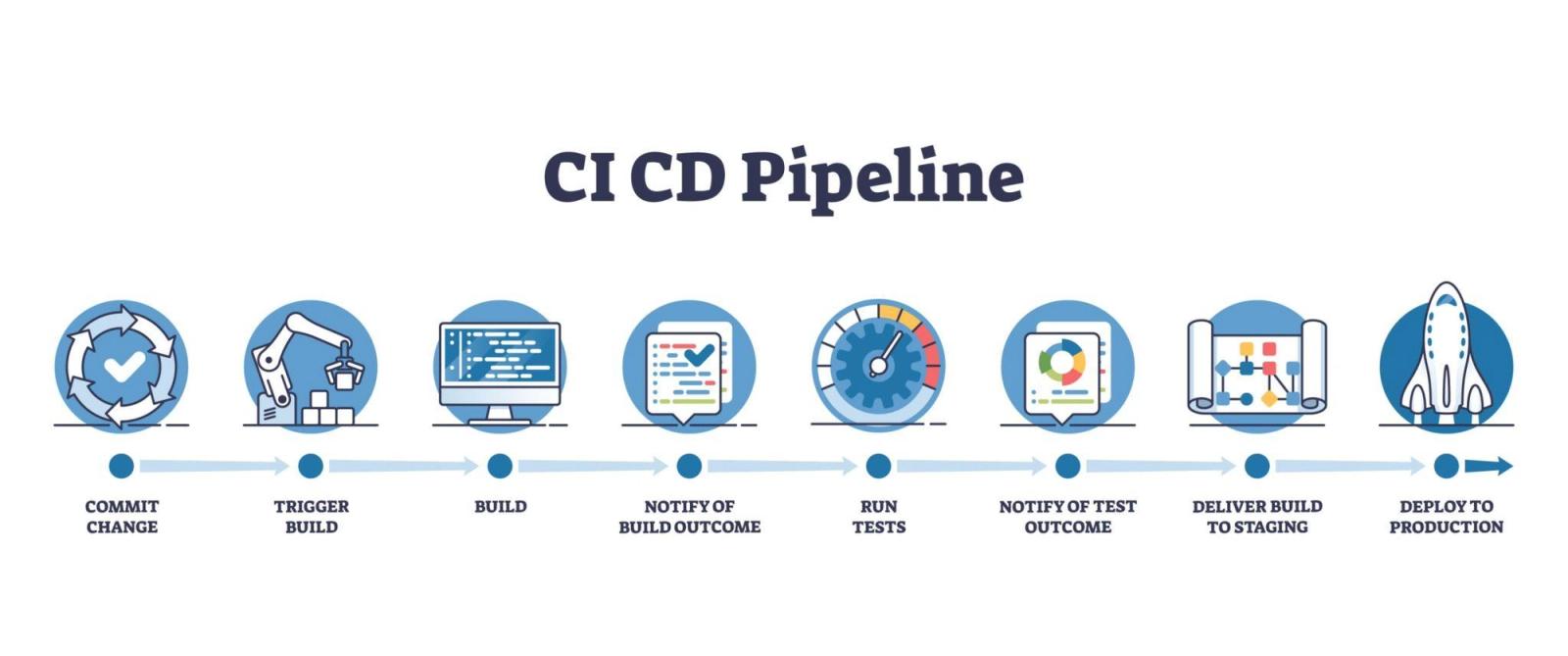
Scaling Continuous Testing Without Slowing Delivery
Parallel Test Execution
As systems grow larger, pipeline duration becomes a major operational challenge. Running all tests sequentially can increase validation time from minutes to hours.
Parallel execution solves this problem by distributing test workloads across multiple environments simultaneously. Instead of waiting for one suite to complete before another begins, pipelines validate multiple services and workflows at the same time.
This significantly reduces feedback delays while preserving test coverage.
Risk-Based Test Selection
Modern CI/CD systems increasingly rely on intelligent test prioritization. Instead of executing every test for every deployment, pipelines select validations based on the specific risks introduced by code changes.
Frontend updates may trigger UI-focused testing, while infrastructure modifications may trigger deployment verification or security validation. This targeted approach improves pipeline efficiency without reducing confidence.
Risk-based testing becomes particularly valuable in large enterprise systems where exhaustive testing may take several hours to complete.
Managing Flaky Tests
Flaky tests are one of the fastest ways to damage trust in automation. When pipelines fail inconsistently, developers begin ignoring alerts and treating failures as noise.
Continuous testing depends heavily on reliability. Engineering teams must continuously maintain test quality by improving isolation, removing unstable dependencies, monitoring failure patterns, and simplifying brittle assertions.
Stable automation builds trust. Unstable automation creates deployment fatigue.
Monitoring and Validation After Release
Observability as Part of Testing
Modern testing strategies extend far beyond pre-production environments. Observability has become a critical part of continuous validation.
Metrics, logs, traces, and monitoring systems help engineering teams understand how applications behave under real-world conditions. Synthetic monitoring validates key workflows continuously, while real-user monitoring captures customer experience across devices and regions.
Together, these systems provide visibility that traditional testing environments often cannot replicate accurately.
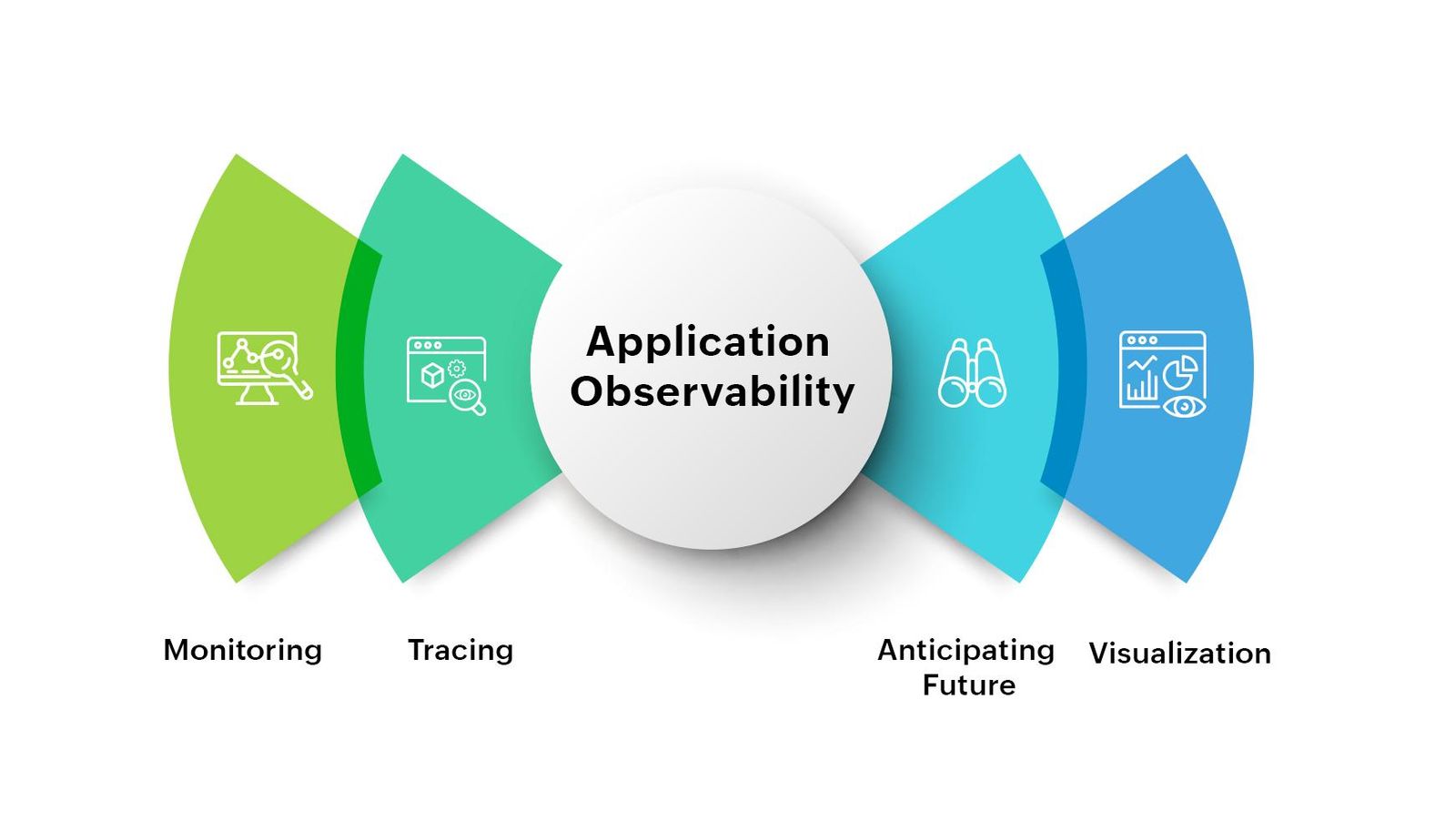
Detecting Failures Before Customers Report Them
High-performing engineering organizations focus heavily on rapid failure detection. Instead of assuming all defects can be prevented before release, they optimize for fast identification and recovery when issues occur.
Error tracking platforms, anomaly detection systems, distributed tracing, and infrastructure monitoring allow teams to respond quickly before incidents affect large portions of the user base.
This operational visibility is one of the biggest reasons modern organizations can deploy continuously without compromising reliability.
Common Challenges in Continuous Testing
Flaky Infrastructure and Environment Drift
One of the less discussed challenges in CI/CD testing is environment inconsistency. Applications may behave differently across local development systems, staging environments, and production infrastructure.
Containerization, Infrastructure as Code, and ephemeral testing environments help reduce these inconsistencies by creating standardized deployment conditions throughout the pipeline.
Without environment consistency, even strong automation strategies can produce misleading results.
Test Data Management
As automated testing scales, managing reliable test data becomes increasingly complex. Shared databases, stale datasets, and inconsistent records can create false failures that reduce confidence in the pipeline.
Mature engineering teams invest heavily in isolated test environments, synthetic datasets, and automated cleanup strategies to maintain reliable validation conditions.
Test data management is often overlooked during CI/CD adoption, but it has a major impact on automation stability.
Security Testing in CI/CD
Security validation is now an essential part of continuous testing. Vulnerability scanning, dependency analysis, secret detection, and infrastructure security checks are increasingly integrated directly into deployment pipelines.
This approach is commonly referred to as DevSecOps, where security becomes part of continuous delivery rather than a separate late-stage review process.
Embedding security validation early reduces risk while preventing security reviews from delaying deployments later.
How Modern Teams Ship Without Fear
Fast Feedback Loops Create Confidence
The faster teams receive feedback, the easier it becomes to isolate and fix issues. Continuous testing shortens the distance between introducing a bug and discovering it.
This improves developer productivity, reduces debugging complexity, and creates stronger confidence across engineering organizations.
Rapid feedback is one of the foundational principles behind successful CI/CD adoption.
Progressive Delivery Reduces Deployment Risk
Modern deployment strategies are designed around controlled exposure. Instead of releasing updates to all users immediately, teams gradually increase rollout percentages while monitoring system health.
Feature flags, canary deployments, and automated rollback systems make deployments safer by limiting the impact of potential failures.
This changes the entire psychology of software releases. Deployments stop feeling dangerous because failures become easier to contain and recover from.
Real-World Example: Netflix Uses Automated Canary Deployments
Netflix uses automated canary deployments to reduce the risk of production releases. Instead of deploying updates to its entire infrastructure immediately, Netflix first releases changes to a small subset of servers and traffic.
The company uses its automated canary analysis platform, Kayenta, to compare the performance of the new release against the existing production version. Metrics such as latency, error rates, and system health are continuously analyzed before expanding the rollout further.
If abnormalities are detected, Netflix can automatically stop or roll back the deployment before it affects a larger user base. This approach allows Netflix to maintain rapid release velocity while reducing deployment risk at scale.
Automation Creates Predictable Delivery
Ultimately, continuous testing is not about running more tests. It is about building predictable delivery systems that engineering teams can trust consistently.
Reliable pipelines reduce deployment anxiety because validation is built directly into the release process. Teams gain the confidence to ship faster because testing, monitoring, rollback strategies, and observability work together as a unified system.
Conclusion
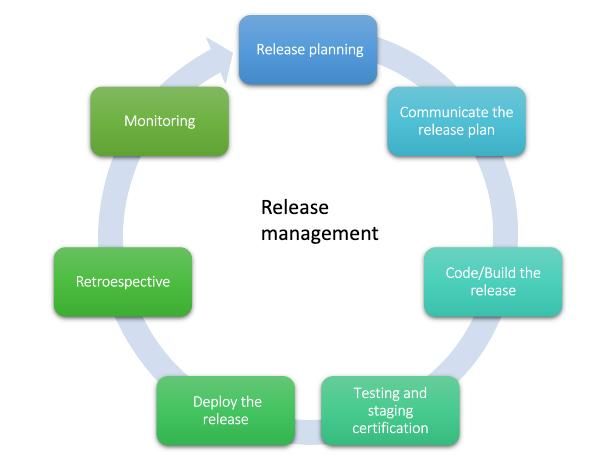
Continuous testing is not just about automating tests inside a CI/CD pipeline. It is about building a delivery system that can sustain rapid releases without sacrificing reliability. As deployment frequency increases, testing can no longer exist as a final stage before production. Validation must happen continuously across development, integration, deployment, and production monitoring.
Modern engineering teams do not rely on a single layer of testing for confidence. They combine fast feedback loops, layered automation, release gates, observability, progressive delivery, and rollback strategies to reduce deployment risk. This allows teams to detect failures earlier, recover faster, and release changes with greater confidence.
The real value of continuous testing lies in predictability. Reliable pipelines reduce deployment anxiety, improve collaboration across teams, and make software delivery more stable even as systems become larger and more complex. Instead of slowing releases down to avoid risk, modern CI/CD practices focus on managing risk intelligently throughout the entire delivery lifecycle.
Shipping without fear does not come from testing more. It comes from creating systems that make fast releases safe, observable, and consistently reliable.
Further Reading and References
- Automated Canary Analysis at Netflix with Kayenta
- Google SRE Workbook – Canarying Releases
- Continuous Integration by Martin Fowler
- What is CI/CD? by Red Hat
Ready to ship in-app experiences without waiting on releases?