


TL;DR: Here's the deal. Most engagement platforms focus entirely on *when* to reach users, but they completely miss what those users actually experience once they're inside the app.
The tools are for different jobs. Braze is built to orchestrate huge, cross-channel messaging campaigns at scale. Digia, on the other hand, is all about shaping the actual in-product experience, using server-driven UI and real-time nudges to guide people along.
This marks a big change. Engagement is no longer about the messages you send around the product; the real uses comes from directly influencing the user's journey within it.
Customer engagement isn't just about messaging anymore.
For years, the whole game was about the channel, really just a question of how well you could orchestrate push notifications, email, SMS, and in-app messages across the customer journey. But that's old thinking. As product-led growth matured, a totally different layer of engagement started to matter a lot more: the kind that happens inside the product itself.
And that shift is exactly why a comparison between Digia and Braze is so interesting.
While both companies play in the broader engagement space, they start from completely different assumptions about where engagement happens and what actually creates value.
Braze tackles engagement by orchestrating channels. The platform is built to help teams launch customer journeys across all the classic touchpoints, email, push, SMS, you name it, using a toolkit of segmentation, automation, and personalization. The numbers are staggering. Braze supports over 2,000 brands, powers more than 7.8 billion monthly active users, and processes trillions of actions every year with its 170+ partner integrations.
Digia operates on a different layer. The company isn't primarily focused on outbound communication; it's all about influencing user behavior through nudges, contextual overlays, gamification, and server-driven UI. Forget improving messages about the product. Their whole philosophy is about shaping the experience *inside* the product itself, a model they explore in their Server-Driven UI for Engagement framework.
The distinction sounds subtle. But it's not. One approach is built around coordinated communication, carefully timed messages, campaigns, and outreach designed to guide user interaction from the outside.
The other centers engagement on behavioral moments right inside the product, focusing on how people experience, discover, and interact with features in real time. This difference is everything. It defines where each platform gives you an edge and ultimately shapes whether your engagement is driven by external communication or by the internal product experience itself.
What is Digia?
Digia is a customer engagement platform with a different philosophy. The core idea is that real connection shouldn't be trapped in channels like email, push, or SMS. Digia extends that interaction deep into the product experience itself, using tools for server-driven UI, dynamic personalization, experimentation, and contextual in-app messaging.
What really sets it apart is the server-driven approach. This is a big deal. It means brands can modify in-app experiences, layouts, campaigns, and personalized touchpoints without relying on a full app release for every little change. For mobile-first teams seeking faster iteration, that kind of agility is everything.
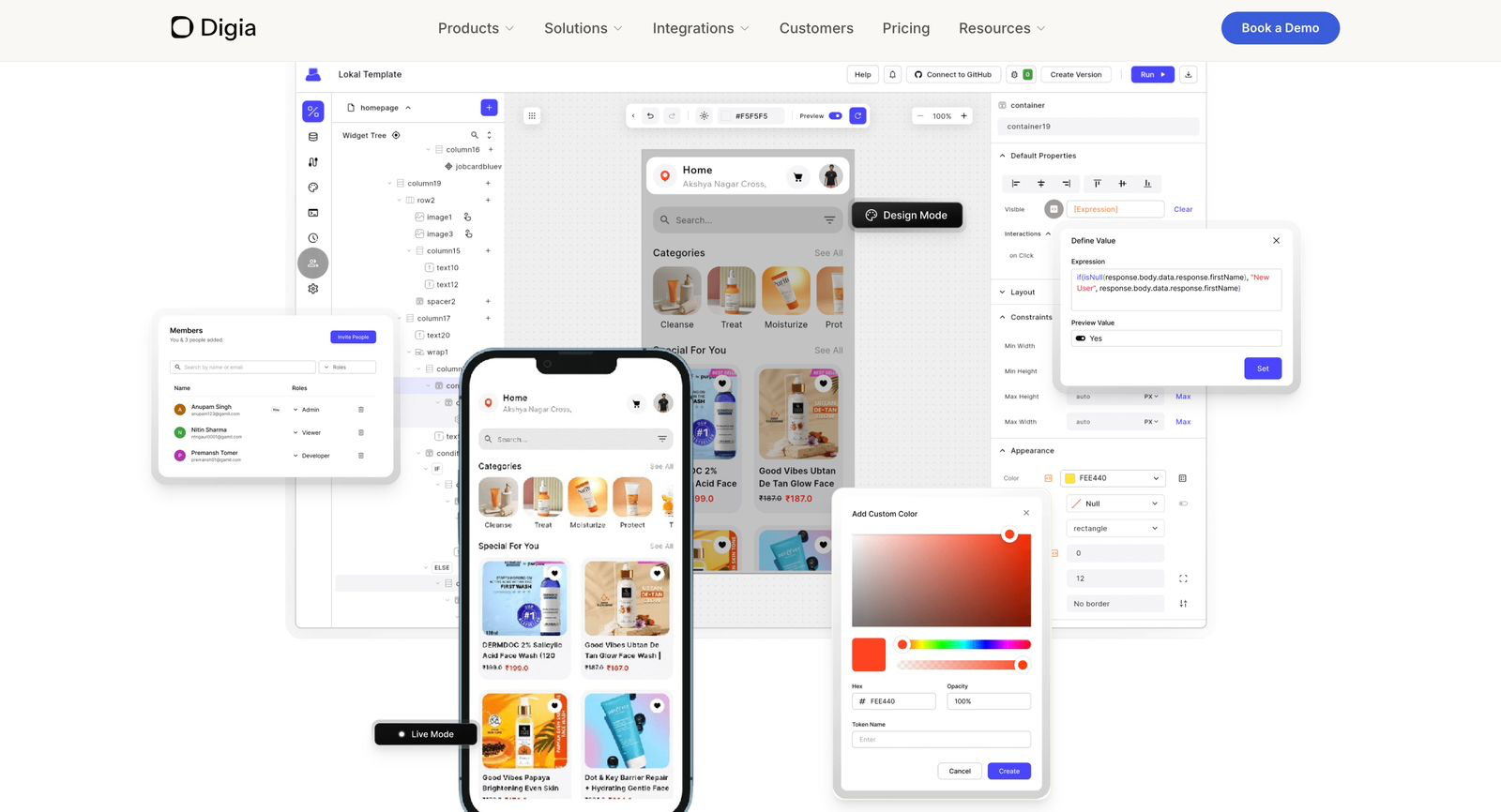
Product-led companies love it. Why? Because it lets them tightly connect customer engagement to everything that matters: improving the app experience, improving retention, and running all their experiments.
What is Braze?
So, what's Braze? It's an enterprise customer engagement platform built for brands that need to manage messaging across tons of different channels at once. The platform pulls together everything you'd expect: messaging automation, customer data activation, journey orchestration, and even deep experimentation tools, all while integrating with the tools you already use.
What's it famous for? Personalization. Braze lets brands coordinate engagement across every channel, email, mobile push, in-app messaging, SMS, by tapping directly into behavioral and real-time customer data.
It's a powerhouse for bigger companies. Its real strength is helping large organizations manage complex, cross-channel lifecycle campaigns that have to plug into a much wider marketing technology stack.
Key Strengths of Digia
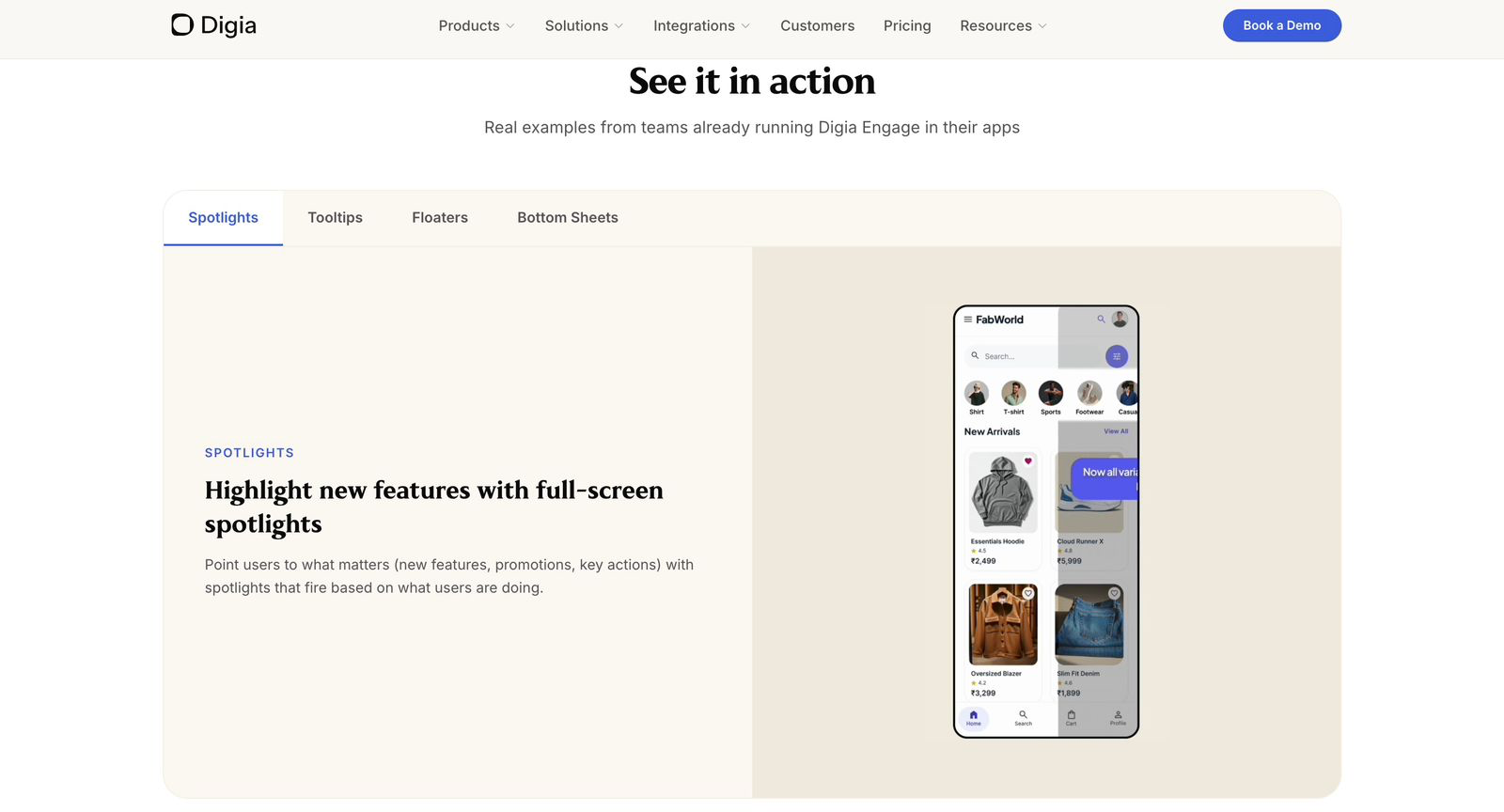
Digia has one major strength. It merges engagement and product experience, which means brands can personalize the actual interfaces themselves instead of just treating messaging as a separate marketing layer slapped on top.
The whole thing is built on a server-driven UI. This architecture is what lets teams experiment faster and launch products sooner, all without getting stuck in those endless engineering deployment cycles.
Then there's the flexibility. It's a huge deal. Teams can rapidly iterate on just about everything, onboarding flows, promo modules, engagement prompts, you name it, which is exactly why it's so attractive for groups that need to move fast and personalize on the fly.
Don't forget the cost. It's a major selling point for organizations that want serious, enterprise-level innovation but can't stomach the matching enterprise-scale budget.
Key Strengths of Braze
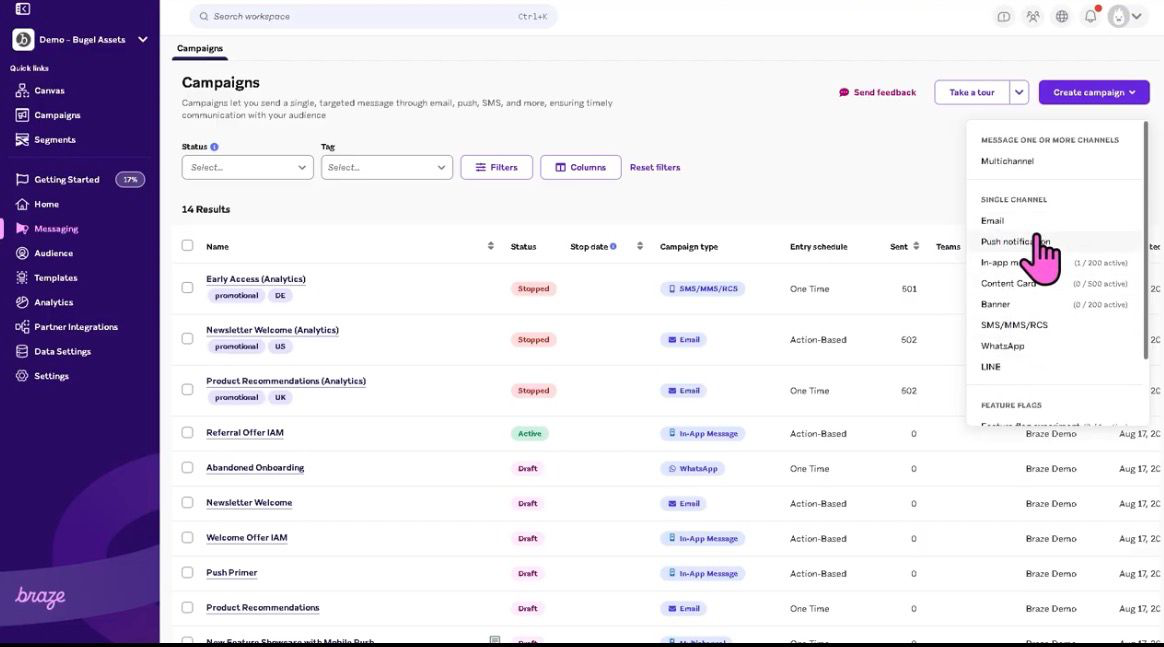
Braze's strengths are its depth, scale, and maturity. Simple as that. Its journey orchestration is widely seen as one of its biggest advantages, giving a huge leg up to brands managing complex customer lifecycles across many different channels. The platform lets teams design, automate, and improves user journeys with a high degree of precision.
It also stands out elsewhere. We're talking about its deep integrations, advanced analytics, and segmentation tools, all built on an infrastructure that's genuinely ready for the enterprise. This gives organizations that operate across regions, business units, or large-scale retention programs the stability they need to support truly sophisticated and scalable engagement strategies.
Engagement Across Channels and Engagement Inside the Product
The Digia versus Braze debate isn't about features. It's about philosophy. They represent two fundamentally different models for user engagement, and even though both platforms aim to drive growth and retention, they come at the problem from distinct angles that shape how everything is designed and delivered.
Braze's whole model is built on one assumption: engagement unfolds across multiple touchpoints over time. Think about it. A user might first discover a product in one context, then return later through an email or push notification, and gradually move through a lifecycle shaped entirely by coordinated messaging across all their channels.
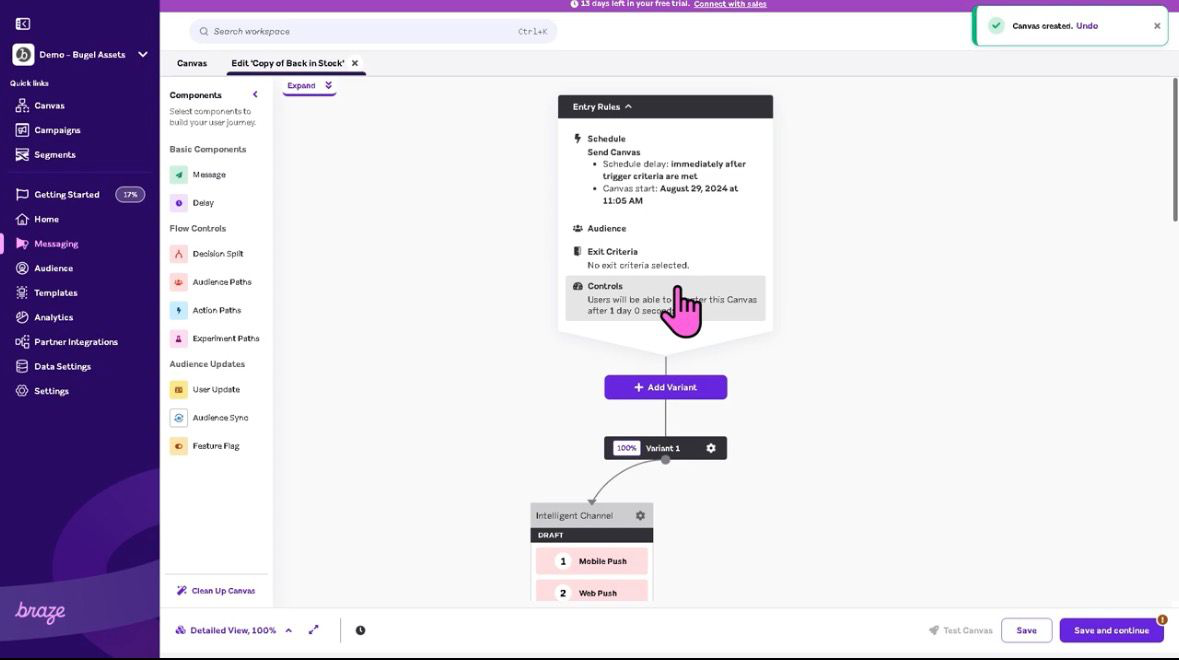
In this model, orchestration *is* the engagement layer. That's Braze's home turf. Its core tools, like the Canvas journey builder and its segmentation engine, are designed from the ground up to support these scattered engagement patterns, where keeping users relies on perfectly timed, coordinated journeys instead of isolated, in-product nudges.
Digia sees it differently. The whole idea is that the moments that really drive growth, when users are onboarding, finding new features, building habits, or even bailing at key spots, actually happen inside the product itself. Engagement isn't some layer you add on top. It's baked right in.
So what does that change? The engagement layer stops being just about sending messages; its job is now to guide what users are doing, right as they're doing it.
“Communication around the product and engagement inside the product are not competing ideas, they are different layers of modern growth infrastructure.”
Pricing and Cost Considerations
Price is a huge factor. When you compare Digia and Braze, it's often the most practical difference, especially for growing teams that are trying to find the right balance between powerful features and just getting things done.
Braze is an enterprise play. Its pricing is completely customized, based on your scale, the channels you use, monthly active users, and specific product modules, which makes it a beast for large programs but a lot for smaller, leaner teams to handle.
Of course, the investment can pay off. For companies that use its entire orchestration ecosystem, the value might totally justify the price tag, but that initial cost is always a major part of the conversation.
Digia is seen differently. It's all about flexibility and efficiency, a huge advantage for teams that want to run experiments, engage users inside the product, and get moving quickly without a massive enterprise budget.
But pricing isn't just the sticker price. The true cost of ownership is so much more: think implementation effort, how much you'll need from engineering, operational overhead, and how long it takes to actually see results.
This is where things get tricky. The real comparison moves beyond that initial cost and into a much more important question: how efficiently can your team actually adopt and scale the platform?
A high price tag isn't a dealbreaker. A more expensive platform can deliver incredible ROI through smart automation and scalability, ultimately saving your team a ton of resources.
Then again, speed creates its own value. An agile platform helps you win by cutting down deployment friction and letting your team experiment, iterate, and learn on the fly.
"The true cost of an engagement platform isn't just what you pay for the software, but what it costs to operate, adapt, and create value from it."
The question isn't about cost. It's about figuring out which platform will create a stronger return for the specific growth model you have, because that's the only metric that really matters.
“The true cost of an engagement platform is not just what you pay for the software, but what it costs to operate, adapt, and create value from it.”
When you get down to it, the pricing question isn't really *Which platform costs less?*
It's about which platform creates a stronger return for the growth model you actually have.
Breadth and Depth Create Different Strengths
Braze's biggest strength is its breadth. It connects channels in a way almost nothing else does, letting teams coordinate everything across push, email, SMS, WhatsApp, and in-app messaging from one single dashboard.
Why does that matter? Engagement today isn't a single-channel thing. It's a journey that unfolds across many touchpoints, and you need consistent, well-timed communication to guide people through it all.
A deep ecosystem reinforces that breadth. With integrations for platforms like Segment, Snowflake, and Amplitude, Braze plugs right into a company's wider marketing tech stack and just works.
And on top of that, there's the AI. Its expanding decisioning layer can personalize at a massive scale, generating a ridiculous number of message variations and inferences to make engagement strategies feel truly adaptive.
That's one type of sophistication. Digia's approach, however, is completely different: its strength lies in the depth it creates within the actual product experience itself.
It's built to influence what users do while they're already active. Think nudges, spotlights, walkthroughs, and dynamically configurable UI, all designed to shape behavior inside the app, not pull people back from external channels.
The logic is simple: if the conversion happens inside your product, then the engagement should happen there, too. Its focus on server-driven flexibility changes the whole operating model for teams, since they can configure and tweak experiences on their own without having to wait for a traditional app release cycle.
This gives teams a totally different way to run experiments. It isn't just a minor improvement, it's a fundamental shift in how engagement is designed and delivered from the ground up.
SDK Integration: Data Pipelines vs In-Product Experience Control
When a user opens an app, two things happen.One system gets busy figuring out who they're, what they do, and when to reach them again. While Another is simultaneously preparing to shape what that user actually sees, how they navigate the interface, and how their entire experience evolves in real time.
Braze's SDK integration handles the first part. It's built for collecting user data, tracking events, and opening up communication lines through channels like push notifications, email, and various in-app messages.
The whole setup is about identification. It captures user behavior and configures data pipelines so your messages can be triggered at the perfect moment on whatever device they're using.
Digia's SDK, on the other hand, tackles the second approach. Its entire purpose is to influence what happens while someone is actively *inside* the product, letting your team render UI elements, think nudges, walkthroughs, or dynamic components, directly within the app.
This is a big deal. The integration creates a dynamic layer that allows teams to modify and ship new in-app experiences without having to wait around for the next formal app store release.
So what's the difference in practice? It's pretty clear: Braze prepares the system to decide *when* and *where* to communicate, while Digia prepares the system to control *what* the user actually experiences inside the product.
For a deeper look at how each platform approaches its setup, you can explore their official SDK integration guides:
Braze Integration Overview | Digia SDK Integration
A Comparison at a Glance
| Dimension | Digia | Brave |
|---|---|---|
| Core Engagement Model | In-product engagement | Omnichannel orchestration |
| Primary Strength | Behavioral influence | Lifecycle journey automation |
| Real-Time Nudges | Strong | Moderate |
| Cross-Channel Messaging | Moderate | Strong |
| Server-Driven UI | Strong | Limited |
| Enterprise Integrations | Focused | Extensive (170+) |
| Typical Ownership | Product / Growth Teams | CRM / Lifecycle Teams |
| Experimentation Style | Interface-led | Journey-led |
How the Tradeoffs Usually Show Up in Practice
When you're looking at them in the real world, the differences between Digia and Braze feel more like tradeoffs than clear wins.
Braze's complexity comes from its sheer depth. You're managing a ton of different channels and trying to juggle complicated segmentation strategies with countless workflows, it takes a huge amount of operational effort just to keep it all running. That's the price of scale.
The trade-off with Digia is breadth. It's brilliant at in-product engagement, but it absolutely doesn't aim to replace your full-scale lifecycle orchestration tool; it's designed to complement it by focusing on influencing user behavior inside the product itself.
“Breadth introduces complexity. Focus introduces limits. The key is choosing where complexity is worth carrying.”
What This Means for Modern Growth Teams
Here's the thing: they're not competitors. Digia and Braze aren't really competing tools at all; they're different layers of the modern engagement stack, each one handling a totally separate part of how you build and keep users hooked.
Braze makes a ton of sense. If your team's world revolves around lifecycle marketing and hitting users on every channel imaginable, it just clicks. But what about teams obsessed with the in-product experience itself? That's where Digia comes in, it's a better choice for anyone focused on nailing onboarding or using behavioral design to shape what users do inside the app, moment by moment.
Lots of companies just use both. They set up a hybrid model where one layer handles all the communication *around* the product (think emails and push notifications) while the other layer actually shapes user behavior *inside* it. This approach reflects how user engagement itself is changing.
Final Perspective
People compare Digia and Braze constantly. It's an easy mistake to make, since they both work in the "engagement" space, but this comparison misses a deeper distinction in how they actually approach the problem. Their core philosophies shape entirely different ways of working.
Braze's view is that engagement is something you orchestrate from the outside, relying on a symphony of coordinated messaging and lifecycle journeys that unfold across different channels over a long period of time.
Digia's different. They treat engagement as something embedded directly *in* the product, designed to influence user behavior in real-time as the interactions are actually happening.
Neither approach is better. They're just improved for completely different kinds of problems. The real decision, then, isn't about picking a platform at all, it's about choosing an engagement model that truly aligns with how your product grows and the way your users behave.
Key Takeaways
- They're not the same thing.
Braze and Digia play in totally different parts of the engagement stack, which is why a feature-for-feature comparison completely misses the point. - Braze is all about the journey.
Think of it as the conductor for your external channels, email, push notifications, SMS, that sort of thing, and it really shines when you're connecting with users over a long period of time across all those touchpoints. - Digia is different.
It's laser-focused on what happens inside the product, letting teams shape user behavior during a live session and influence decisions at the precise moment they're being made, not hours before or days after. - The real difference isn't about capability.
It's about philosophy: where does value actually get created? Braze is built to improve the communication around the product, while Digia is all about improving the experience within it. - So what's Braze good at? Scale.
It was built from the ground up for large teams that need to manage incredibly complex, multi-channel communication strategies for the entire user lifecycle. - Digia's superpower is speed.
It gives teams the flexibility to experiment, ship new in-app experiences, and iterate on them constantly, all without having to wait in line for the next engineering release cycle. - It isn't a question of "better" or "worse."
The trade-off is breadth versus agility, where Braze introduces deep orchestration and Digia just massively reduces the friction between having an idea and getting it live. - The pricing tells the story.
Braze is positioned as a serious enterprise investment, built for companies thinking about long-term scale.
Further Reading and References
- Digia vs Shorebird: Code Push vs Server-Driven UI
- Braze Scale & Infrastructure Metrics
- Braze Technology Partners
- Digia Engage Documentation
- Server-Driven UI for Engagement (Digia)
- Braze Customer Engagement Review 2026