


TL;DR: Plotline and Digia both want to boost mobile engagement. But that's where the similarities end. Plotline's whole game is about no-code experiences and letting teams experiment fast, whereas Digia is built for native engagement: giving groups deep, server-driven control right inside the app.
Mobile engagement is a different game now. For ages, most platforms just stuck to the basics, you know, tooltips, walkthroughs, and push notifications to point people in the right direction. Those methods aren't dead, of course. But today's apps need something deeper, a kind of real-time interaction that feels like it's baked right into the product itself.
This shift is a huge deal on mobile. Users there have ridiculously high expectations for slick interactions and immediate responses, they simply demand an intuitive experience that never gets blocked by a clumsy overlay or tutorial. Guidance isn't the point. So what's? It's about actively shaping how a person experiences the product while they're deep in the flow, not after the fact.
And this is where the comparison between Digia and Plotline really heats up. While both platforms want to boost mobile engagement and help with product adoption, they tackle the problem with totally different philosophies on everything from user control to the nitty-gritty of the technical implementation. Their approaches are worlds apart.
Digia: Building Engagement Directly Into the Product
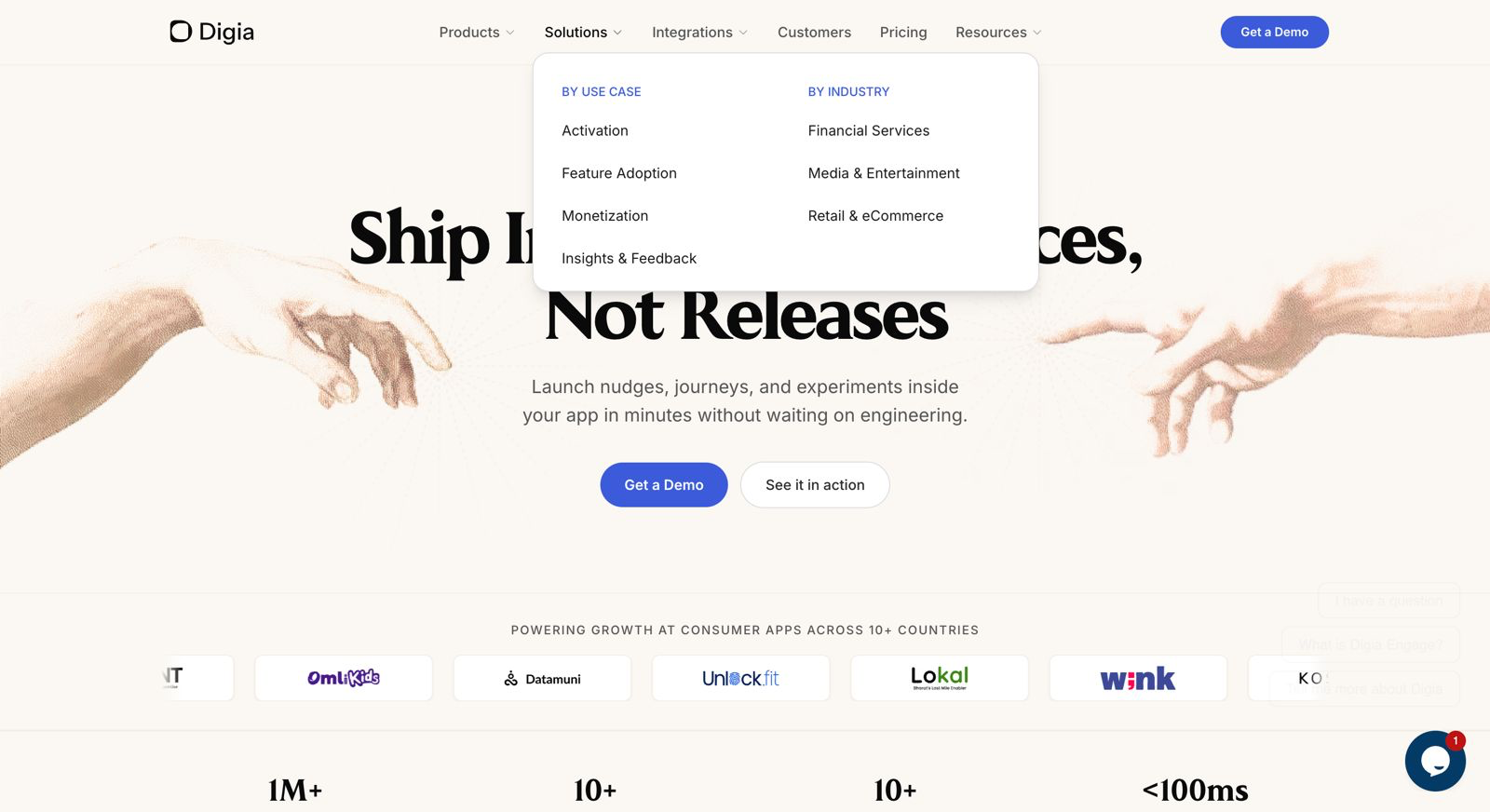
Digia does things differently. Its whole system is built around native in-app engagement and a server-driven UI, which means you aren't just tacking on onboarding guides over your existing interface. You're building experiences that feel like they actually belong in the product.
How does it work? It's all SDK-based. This setup allows product and growth teams to update onboarding flows, engagement widgets, and other UI patterns on the fly, completely skipping the usual app store release cycle. That kind of freedom lets them react to what users are doing right now and constantly improve the experience.
But the native feel is what's really striking. Digia focuses on creating deep product experiences with features like floating widgets, stories, PiP videos, and contextual nudges that never feel like cheap, external overlays. They just blend in. This makes them incredibly effective, especially for mobile-first applications.
Plotline: Rapid No-Code Engagement for Mobile Apps
Plotline helps teams build in-app experiences quickly. It's a no-code platform designed for getting all sorts of things live, onboarding flows, tooltips, walkthroughs, banners, and engagement campaigns, without bogging down the engineering department for every little change.
Its biggest advantage is speed. Product and growth teams can create, test, and improve user experiences rapidly, which makes Plotline an obvious choice for companies focused on heavy experimentation or just nailing their activation and onboarding performance.
But moving fast is only half the picture. Plotline also dives deep into personalization and targeting, which allows teams to segment users based on their behavior and then hit them with contextual experiences designed to improve adoption and keep people around. This flexibility is what helps companies constantly refine their onboarding journeys and engagement flows.
So what's the tradeoff? It's all about technical depth. Rather than focusing on complex native rendering architecture and server-driven interaction systems, Plotline is built for rapid product iteration with significantly less operational headache.
Digia’s Strength: Native Interaction and Real-Time Control
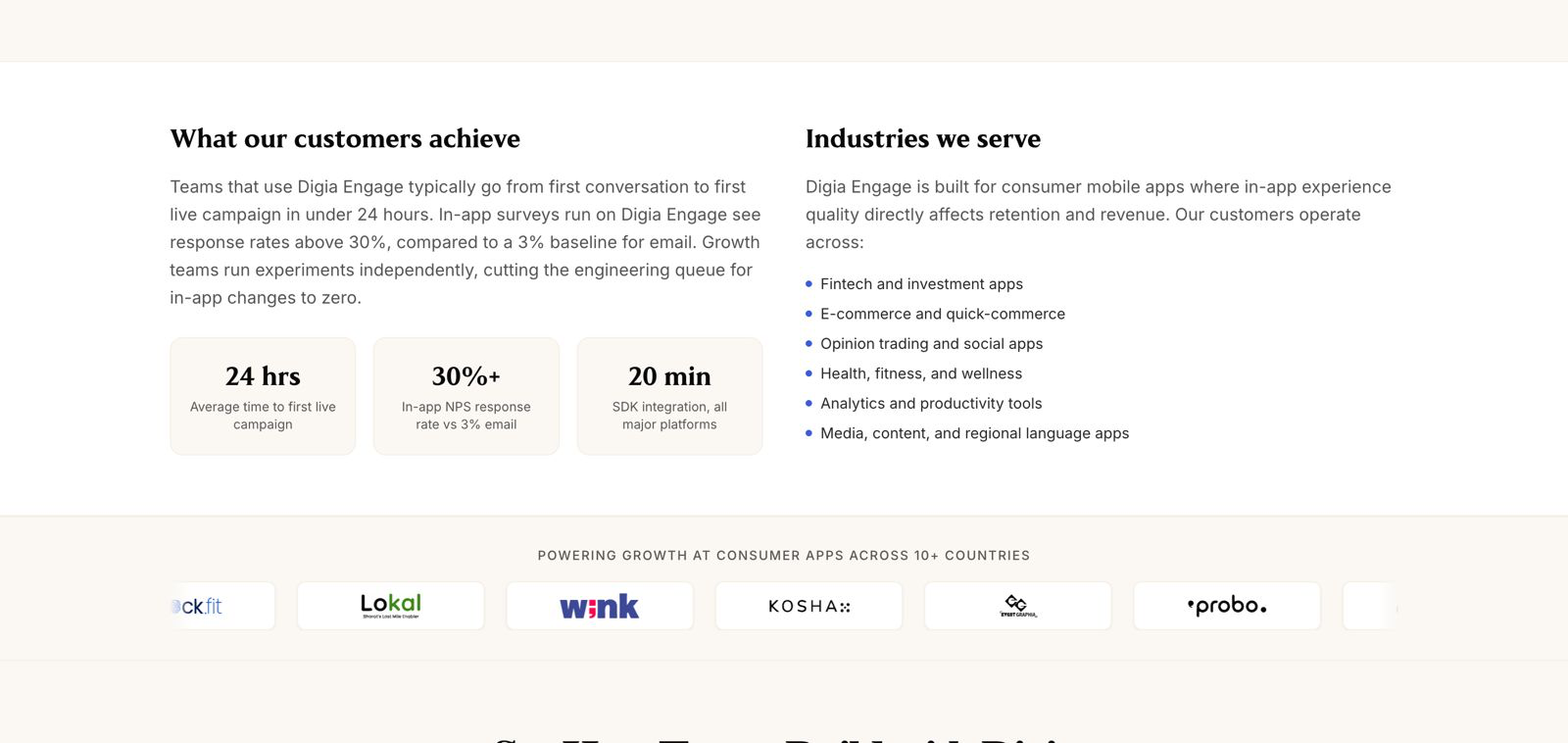
Digia's power is its integration. It's not just a layer on top; because UI elements are rendered natively right inside the app, the whole thing feels totally smooth and part of the product's world. Nothing feels bolted on.
The server-driven design is key. It gives teams incredible real-time control over how people are using the app, letting them launch updates, tweak onboarding, or test new ideas whenever they want, no waiting for the app store. Companies can adapt to user behavior on the fly, keeping everything feeling sharp.
So where does Digia really shine? It's most effective for products where the quality of every tap and swipe is what keeps people coming back for more, which is why it's such a natural fit for mobile-first apps. Think ecommerce, fintech, or streaming: anywhere the experience is everything.
Plotline’s Advantage: Speed and Experimentation
Plotline is fast. That's the whole point: teams can roll out new onboarding flows and engagement campaigns on their own schedule, all without the constant back-and-forth with developers. It just slashes implementation headaches and helps everyone move quicker.
And because it's a no-code environment, anyone can use it. Seriously. Product managers and growth teams can build out entire experiences, from start to finish, without having to pull engineering resources for every tiny tweak or last-minute idea.
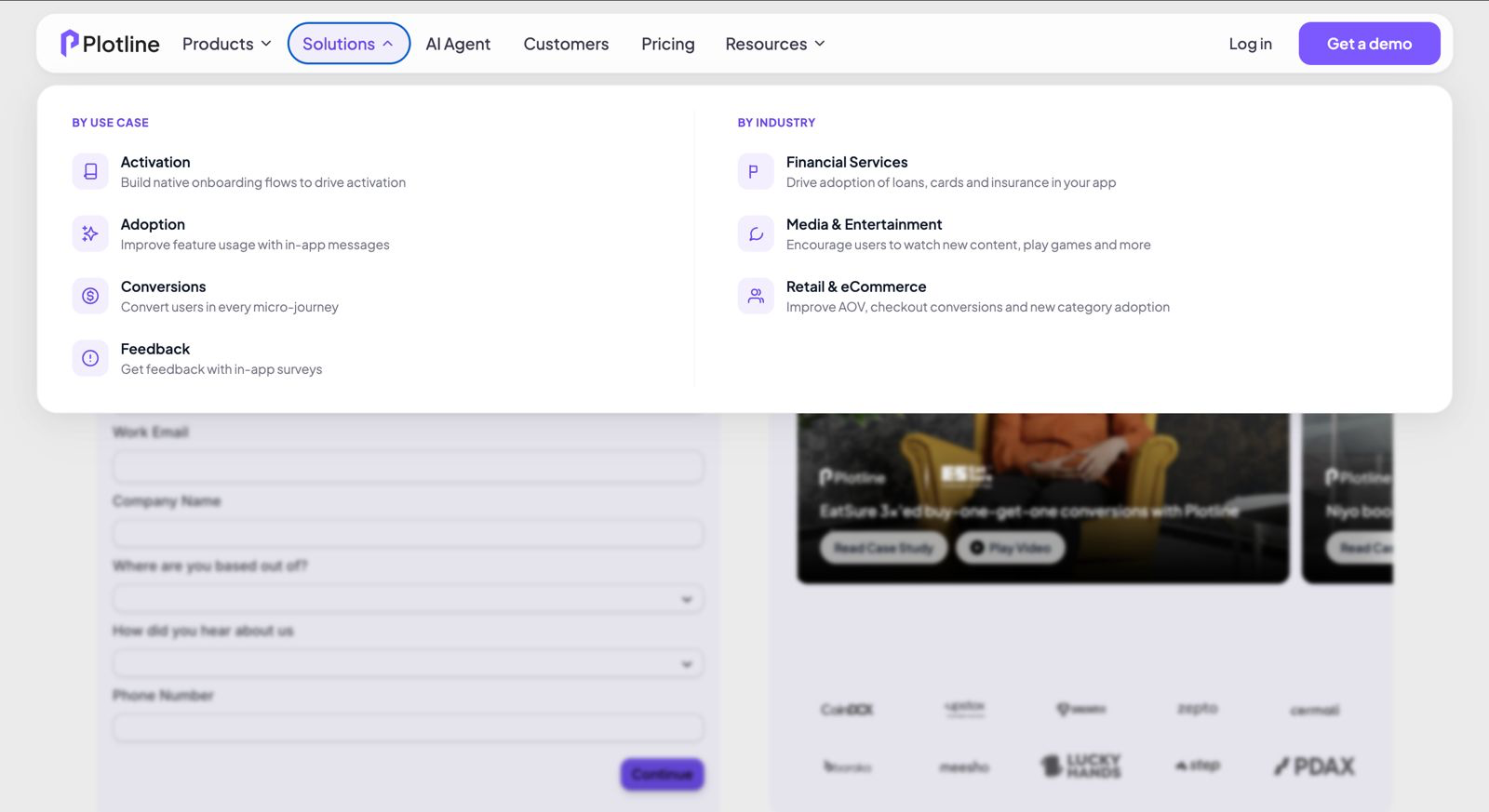
This thing is built for experimentation. So what's the sweet spot? It's a huge help for companies that need to seriously improve their onboarding funnels and boost key activation metrics, but it also works wonders for just helping people discover the most useful features.
The Core Difference: Native Depth vs No-Code Agility
Plotline is fast. That's the whole point: teams can roll out new onboarding flows and engagement campaigns on their own schedule, all without the constant back-and-forth with developers. It just slashes implementation headaches and helps everyone move quicker.
And because it's a no-code environment, anyone can use it. Seriously. Product managers and growth teams can build out entire experiences, from start to finish, without having to pull engineering resources for every tiny tweak or last-minute idea.
This thing is built for experimentation. So what's the sweet spot? It's a huge help for companies that need to seriously improve their onboarding funnels and boost key activation metrics, but it also works wonders for just helping people discover the most useful features.
"One platform reduces friction in launching experiences. The other reduces friction inside the experience itself."
Pricing as a Signal of Product Strategy
Pricing is a signal. It tells you what a company actually cares about, and looking at Digia versus Plotline makes that difference crystal clear.
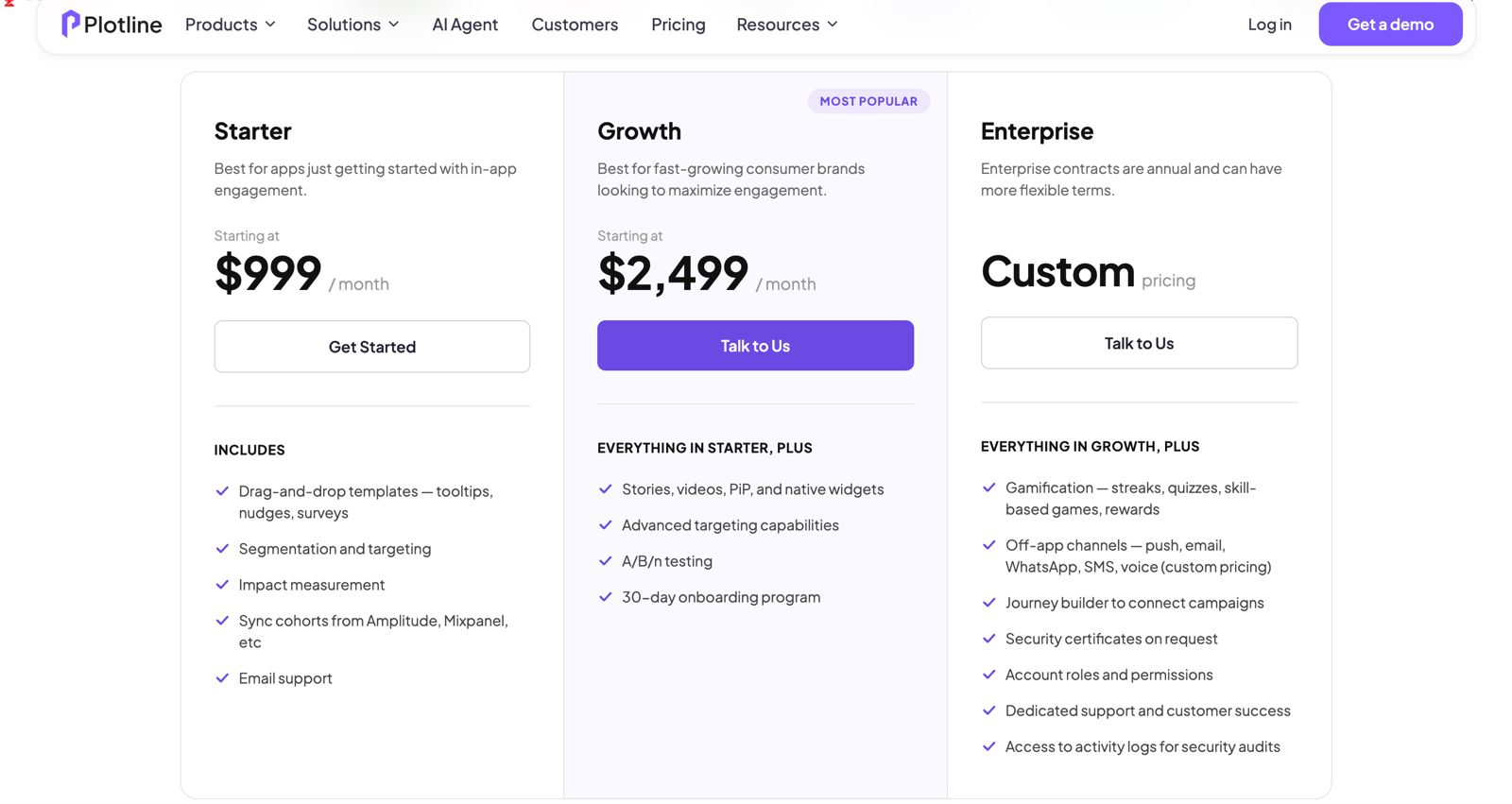
Plotline's pricing is straightforward. It's built around monthly active users (MAUs) and impressions, and the Starter plan at $499/month gets you all the essentials for onboarding: think nudges, tooltips, and basic segmentation. Pay more, and you unlock the advanced stuff, PiP videos, A/B testing, native embeds, journey builders, and better support.
Digia goes a different way. No fixed prices. Instead, you get a custom quote based on a whole mix of things like your user count, engagement goals, your channels, and impression volume. This approach is for companies needing deep, native in-app control for the long haul, not just some lightweight onboarding tools.
So what does this tell us? This split reveals exactly how each company views growth. Plotline is built for shipping fast and experimenting at scale, whereas Digia is focused on helping you build deeper product interactions with real-time control over the entire experience.
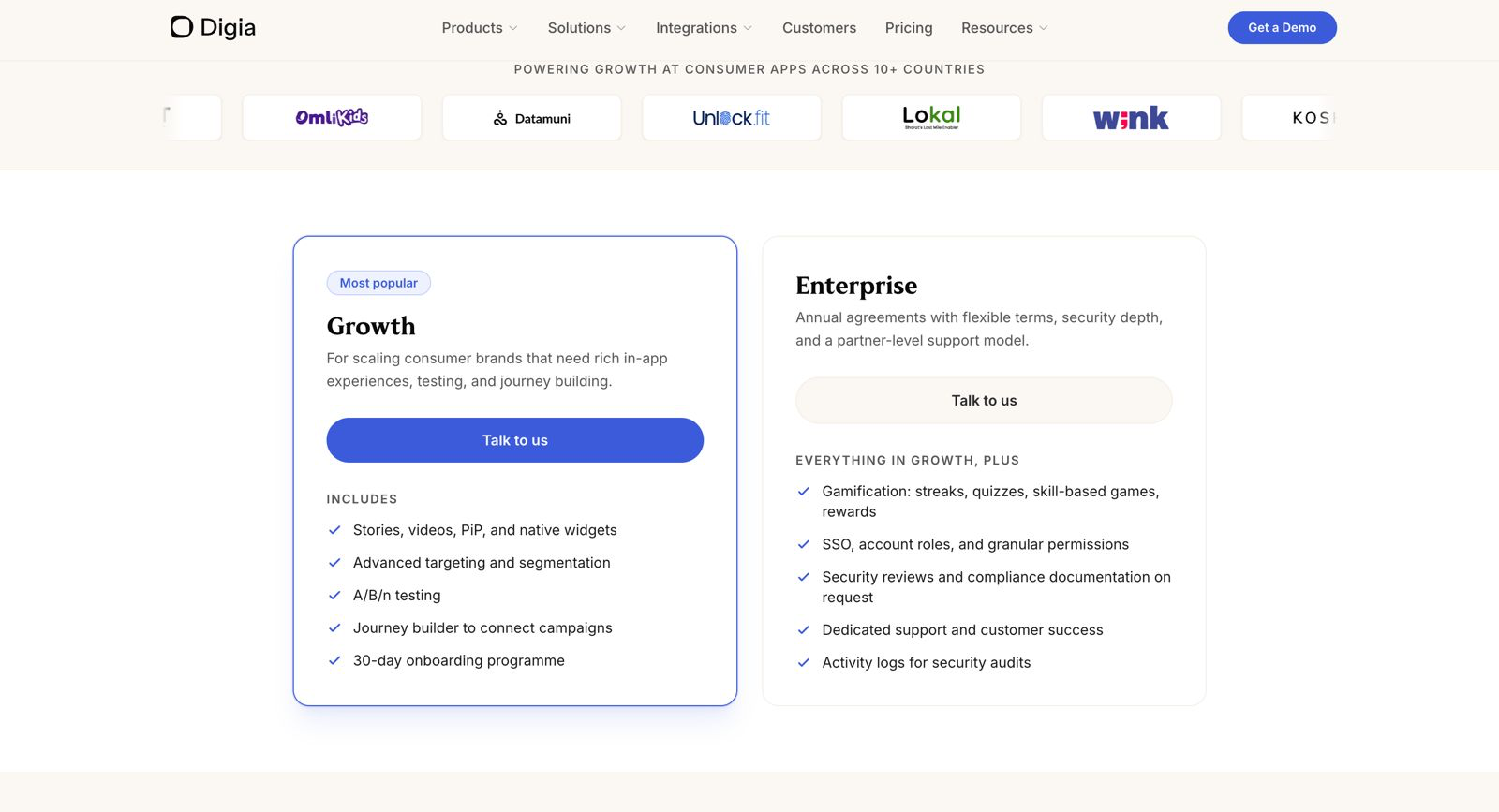
"One platform prices around experimentation velocity. The other prices around experience depth."
Mobile Engagement Needs More Than Messaging
Mobile engagement is different now. It isn't just about push notifications or simple onboarding flows anymore. Users expect products to actually adapt to what they're doing, offering helpful interactions that don't constantly get in the way.
This really matters on mobile. On a small screen, where attention is already split a dozen ways, traditional pop-ups and static guides feel incredibly intrusive if they aren't woven directly into the interface.
So how do they differ? Digia built its tool around these mobile-first principles with things like native rendering and a server-driven UI, whereas Plotline, which definitely supports mobile engagement, finds its real strength in experimentation velocity, not deep interaction architecture.
Flexibility vs. Simplicity in Product Experience Design

Plotline is all about speed. Their entire system is built around no-code tools and targeting that lets teams whip up new onboarding flows, nudges, banners, and entire user journeys in what feels like no time at all.
Digia plays a different game. It's built for flexibility and depth, giving your team granular control over the final product, how an experience actually looks, feels, and responds to users.
You're really looking at two different philosophies. One values raw speed, faster deployment, and constant experimentation, while the other is much more focused on long-term experience quality and just how responsive the product feels in a user's hands.
Integration Shapes Product Control
Integration is everything. The way an engagement platform plugs into your product is what ultimately dictates the amount of control your team has over the final user experience.
Plotline's model is all about speed. It's built for fast deployment and campaign orchestration, which means your teams can experiment on the fly without ever having to bog down your engineers.
But the real difference is control.
Digia plays a different game. Its SDK architecture hooks in much deeper, giving you stronger command over how engagement actually appears inside the product, think richer interaction patterns and server-driven updates.
So what's the choice? Plotline helps teams move faster, but Digia gives them the tools to support and shape a truly fundamental, much deeper product experience.
Breaking It Down: A Side-by-Side View
| Dimension | Digia | Plotline |
|---|---|---|
| Core Focus | Native in-app engagement | No-code onboarding and engagement |
| Platform Strength | Mobile-first interaction | Rapid experimentation |
| UI Experience | Native rendering | Overlay and workflow driven |
| Customization | Deep control | Fast no-code iteration |
| Engineering Dependency | Moderate | Low |
| Best Fit | Experience-driven mobile apps | Growth-focused onboarding optimization |
Where Each Platform Starts to Break Down
| Aspect | Digia | Plotline |
|---|---|---|
| Setup | Requires SDK integration | Easier no-code setup |
| Flexibility | Higher complexity | Limited deep customization |
| Platform Focus | Mobile-first | Onboarding and activation focused |
| Learning Curve | Requires product strategy alignment | Easier for non-technical teams |
The tradeoffs between Digia and Plotline are less about which platform is objectively stronger and more about which philosophy fits the product strategy. Plotline prioritizes operational speed and onboarding experimentation, while Digia prioritizes interaction quality and native product engagement.
What This Means for Teams Building for Growth
The Digia versus Plotline comparison tells a bigger story. It shows a real shift in product-led growth. We've moved beyond just guiding users through a fixed set of steps when they first sign up. Today, the focus is on dynamically shaping interactions while people are actually in the product.
Plotline is a natural fit for growth teams that live and breathe experimentation, especially those trying to perfect user activation and onboarding. Digia is different. It's for groups focused on the long game: think deep retention, native interactions, and making the mobile-first experience feel absolutely smooth.
As mobile apps evolve, the split between an "onboarding system" and the core product experience is getting harder to ignore.
Integration Depth Changes What Teams Can Build
Integration architecture matters more than most teams realize. The way a platform connects with a product directly affects how much control teams actually have over onboarding, personalization, experimentation, and long-term engagement.
Plotline is designed for lightweight implementation and fast deployment. Its integration model focuses on helping teams launch onboarding experiences, nudges, walkthroughs, and engagement campaigns quickly without creating major engineering overhead. That simplicity is a huge advantage for companies prioritizing experimentation velocity and operational speed.
Digia takes a much deeper SDK-first approach. Instead of primarily layering experiences on top of the interface, Digia integrates directly into the product experience itself through native rendering and server-driven UI infrastructure. This gives teams stronger real-time control over how engagement appears, behaves, and adapts inside the app.
The difference becomes especially important in mobile-first products where responsiveness and interaction quality directly influence retention. Plotline reduces friction in launching experiences. Digia reduces friction inside the experience itself.
For a deeper understanding of how each platform handles implementation and setup, refer to their official SDK documentation:
Plotline SDK Documentation | Digia SDK Integration Documentation
The Bigger Picture: Choosing the Right Engagement Layer
Make no mistake. While Digia and Plotline both operate in the mobile engagement ecosystem, they're built to improve completely different layers of the user's journey.
What's the difference? Plotline is built for rapid onboarding and letting teams test things quickly without getting bogged down. Digia is about something else entirely: giving you precise control over native interactions so the app feels incredibly responsive.
So which should you choose? The right tool really depends on one thing: whether your company prioritizes faster deployment and experimentation or building a much deeper form of engagement that's integrated directly into the product experience.
What Stands Out
The core difference boils down to one thing: speed versus depth of control. Plotline is built for rapid activation, focusing entirely on no-code onboarding and experimentation that lets non-technical teams get things live in a hurry. It's fast. Digia, on the other hand, is built for truly immersive mobile product engagement, using native in-app interactions and server-driven campaigns for much deeper control. One platform champions operational agility, while the other champions interaction quality.
Further Reading and References
- Digia vs Braze: Customer Engagement Comparison
- Plotline Official Website
- Plotline Product Experience Platform
- Plotline Mobile Onboarding and User Engagement
- Digia Official Website
Ready to explore which engagement platform fits your growth strategy best?
Need to launch onboarding flows fast? Go with Plotline. It's built for quick experiments and gives growth teams a no-code way to manage mobile engagement, which makes it an incredibly efficient choice.
But if your goal is to fundamentally shape how users experience the product itself, using native interactions and a server-driven UI, then Digia provides a much more integrated and powerful approach.