





TL;DR: Gamification in mobile apps is not about making your product feel like a game. It is about applying the psychological mechanics that games have always used to drive habit formation, reward anticipation, and loss aversion in the context of a real product goal. This article covers the science behind streaks, the variable reward logic that makes scratch cards and spin wheels work, how Indian and SEA consumer apps like CRED, Swiggy, and Jar have deployed these mechanics at scale, the difference between instant and deferred rewards, how progress bars drive completion behavior, where gamification goes wrong, and how growth teams run all of this without engineering dependencies.
What Gamification in Mobile Apps Actually Means
Gamification is the application of game-design mechanics, points, streaks, rewards, progress indicators, badges, and challenges, to a non-game product in order to drive specific user behaviors. The term gets used loosely, which is why the results are so uneven. Teams that add a badge system to their app and call it gamification are not doing the same thing as teams that design a daily streak mechanic with loss aversion at its core.
The distinction matters because gamification works when it maps a psychological principle to a product behavior you actually want users to repeat. It fails when it maps a psychological principle to nothing, or when it adds friction to a core flow rather than rewarding completion of one.
Apps using gamification see 47% higher retention rates in the first 90 days compared to non-gamified alternatives, and 73% of users are more likely to engage with gamified financial apps compared to traditional interfaces, according to Deloitte's 2024 Digital Banking Report. Those numbers hold because the underlying psychology is structural. They do not hold when a badge system is bolted onto a product that was not designed around behavior loops.
The five mechanics that consistently drive measurable retention outcomes in consumer mobile apps are streaks, instant variable rewards, deferred reward systems, progress bars, and challenge or quiz formats. Each operates on a different psychological lever. Most high-performing apps in India and SEA run all five simultaneously, layered by user segment and session state.
Streak Mechanics: The Psychology of Showing Up
A streak is a counter that increments when a user completes a defined action on consecutive days. The simplicity of the mechanic disguises how psychologically loaded it is.
Streaks operate on two core psychological levers: habit formation and loss aversion. Short, low-friction actions repeated daily create sticky behavior. Loss aversion, the principle that people are more motivated to avoid losing something than to gain something equivalent, is what turns a streak from a counter into a commitment device. A 30-day streak is not just a number. It is 30 days of identity investment. Breaking it has an emotional cost that acquiring it did not.
Duolingo's internal data showed that users offered a streak wager see a 14% boost in day-14 retention. The streak wager mechanic asks users to commit lingots (the in-app currency) to the promise of continuing their streak. The act of committing creates a psychological anchor that makes the habit harder to abandon. Duolingo grew its daily active users from approximately 5 million in 2020 to over 40 million by 2024, and the streak system was the central mechanic through which that growth in daily engagement happened. Their key metric was not 30-day retention. It was streak establishment rates at 7 days, because internal data showed that a 7-day streak predicted long-term retention better than any other leading indicator.
The design details that separate a streak mechanic that works from one that does not are three: the freeze mechanism, the recovery option, and the difficulty of the daily action.
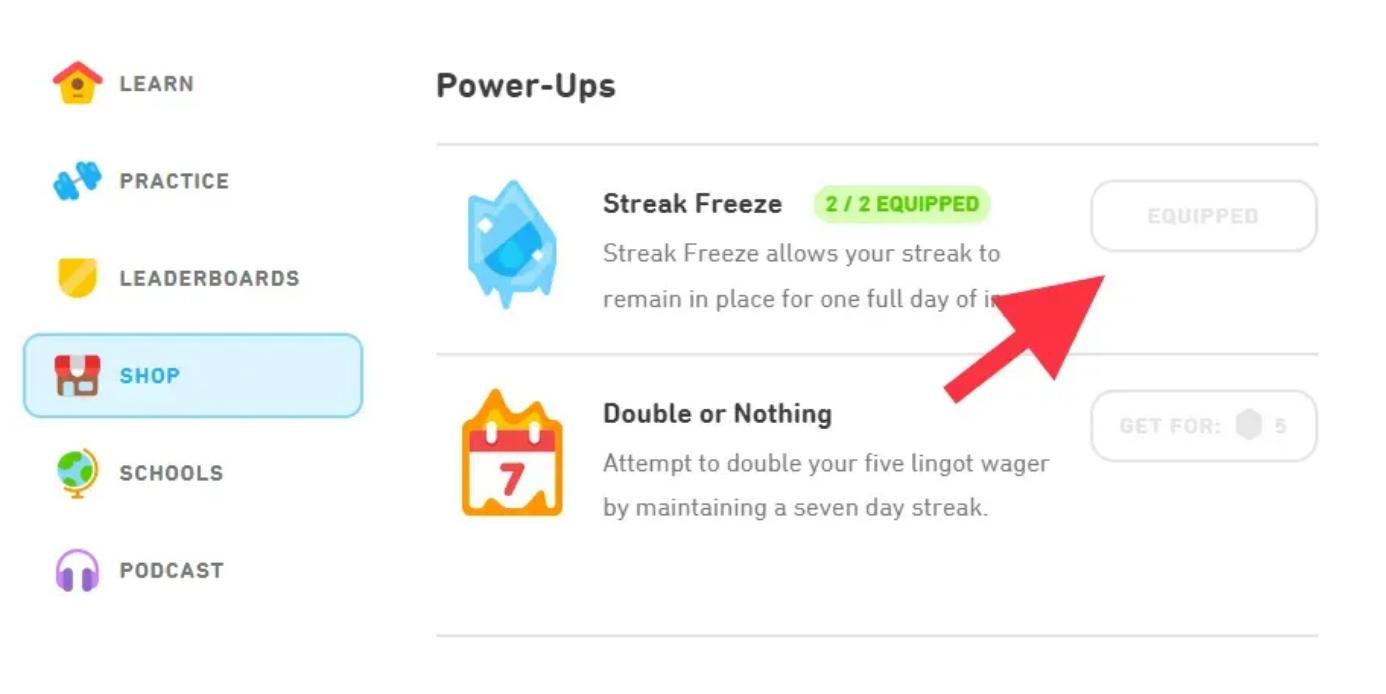
A freeze allows a user to protect a streak through a missed day. Without it, a single missed day destroys weeks of investment and the emotional response is resentment, not motivation to rebuild. Duolingo's streak freeze is one of the two design elements that most streak implementations lack, and its absence is the most common reason streak mechanics produce short-term DAU spikes followed by churn when the first interruption occurs.
The daily action must be low enough friction that a user on their worst day can still complete it. A 10-second action is defensible every day. A 20-minute action is not. Apps that set their streak action too high create a mechanic that works only for their most engaged users, which are the users who would have returned anyway.
Swiggy gamified its in-app experience through Swiggy Streaks, where users earn rewards for ordering on consecutive days, with seasonal mini-games including quiz-based offers and virtual scratch cards boosting both order frequency and session time. The streak action here is a purchase, which is a higher-friction action than a lesson completion. Swiggy compensates with higher reward value and cultural context, tying streak campaigns to IPL matches and other moments where ordering is already the expected behavior.
Variable Rewards: Why Scratch Cards and Spin Wheels Work
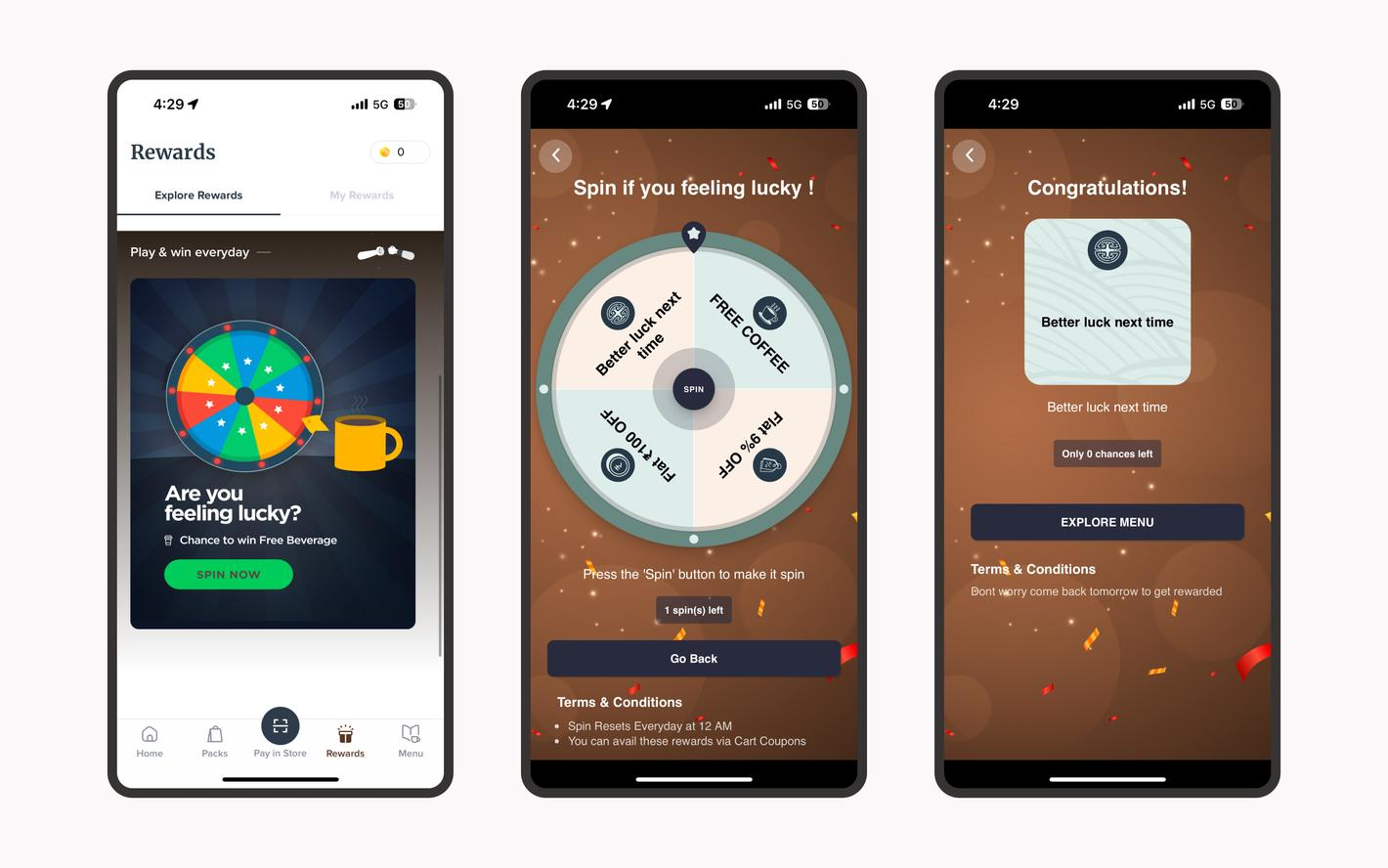
The psychological mechanism behind scratch cards and spin-to-win wheels is variable ratio reinforcement, the same schedule that makes slot machines effective. Variable ratio schedules are the most powerful reinforcement schedule in behavioral psychology because their unpredictability drives repeated engagement more than predictable rewards do. A user who knows they will receive 10 rupees for completing an action will complete the action when they need 10 rupees. A user who knows they might receive anywhere from 5 to 500 rupees will complete the action far more frequently, because each attempt carries the possibility of the best outcome.
Neuroscientific research confirms that dopamine release peaks during anticipation, not gratification. This is why the animation matters as much as the reward. A scratch card that reveals instantly is less psychologically effective than one with a brief animated reveal. The moment before the outcome is the dopamine moment. Design that extends that moment, through animation, a suspense beat, a "you're close" mechanic, amplifies the engagement loop without changing the reward distribution.
Scratch cards operate on a variable ratio schedule. Customers never know exactly when they'll win, but they know winning is possible. This uncertainty creates compulsive engagement, keeping customers coming back for "just one more try." The scratch interaction also creates a perception of agency. The user feels they are uncovering their prize rather than receiving it passively, and that sense of control increases both the emotional value of a win and the motivation to try again after a loss.
CRED built an entire retention loop on this mechanic. CRED's spin-to-win feature gives users 10 daily chances to win rewards including bitcoins and gift vouchers. Each spin is a variable reward event. The daily return driver is not the reward itself but the possibility of the reward. The spin also serves as the reason to open the app on days when no bill payment is due, which solves the core retention problem for a financial app whose primary function (bill payment) is inherently infrequent.
According to a BCG report, apps that effectively use gamification strategies experience up to 5 times higher retention and 3 times longer session durations. CRED's gamification architecture produced a user base that crossed 7.5 million and valuation of $4.01 billion in its early growth phase, in a market where the total Indian credit card user base was only 73.6 million, meaning their gamified engagement model captured a meaningful share of the entire addressable population.
Digia Engage's scratch card and spin-the-wheel mechanics are built as pre-configured native components with a configurable reward engine: probability weights, per-user limits, time windows, and coupon codes are all set from the dashboard. The mechanic launches without a code release and can be paused, adjusted, or retired the same way. Zepto used Digia Engage's quiz gamification to drive record session lengths during match-day campaigns, which is the same cultural anchoring approach Swiggy uses for IPL streaks.
Instant Rewards vs. Deferred Rewards
Gamification reward structures split into two categories that serve different retention goals.
Instant rewards deliver value immediately on action completion. A scratch card reveal after a transaction, a spin wheel after completing onboarding, a coupon that appears the moment a user hits a daily streak milestone. The psychological function is positive reinforcement of the exact moment of action. The user associates the completion of the target behavior with the reward delivery, which strengthens the likelihood of repeating the behavior.
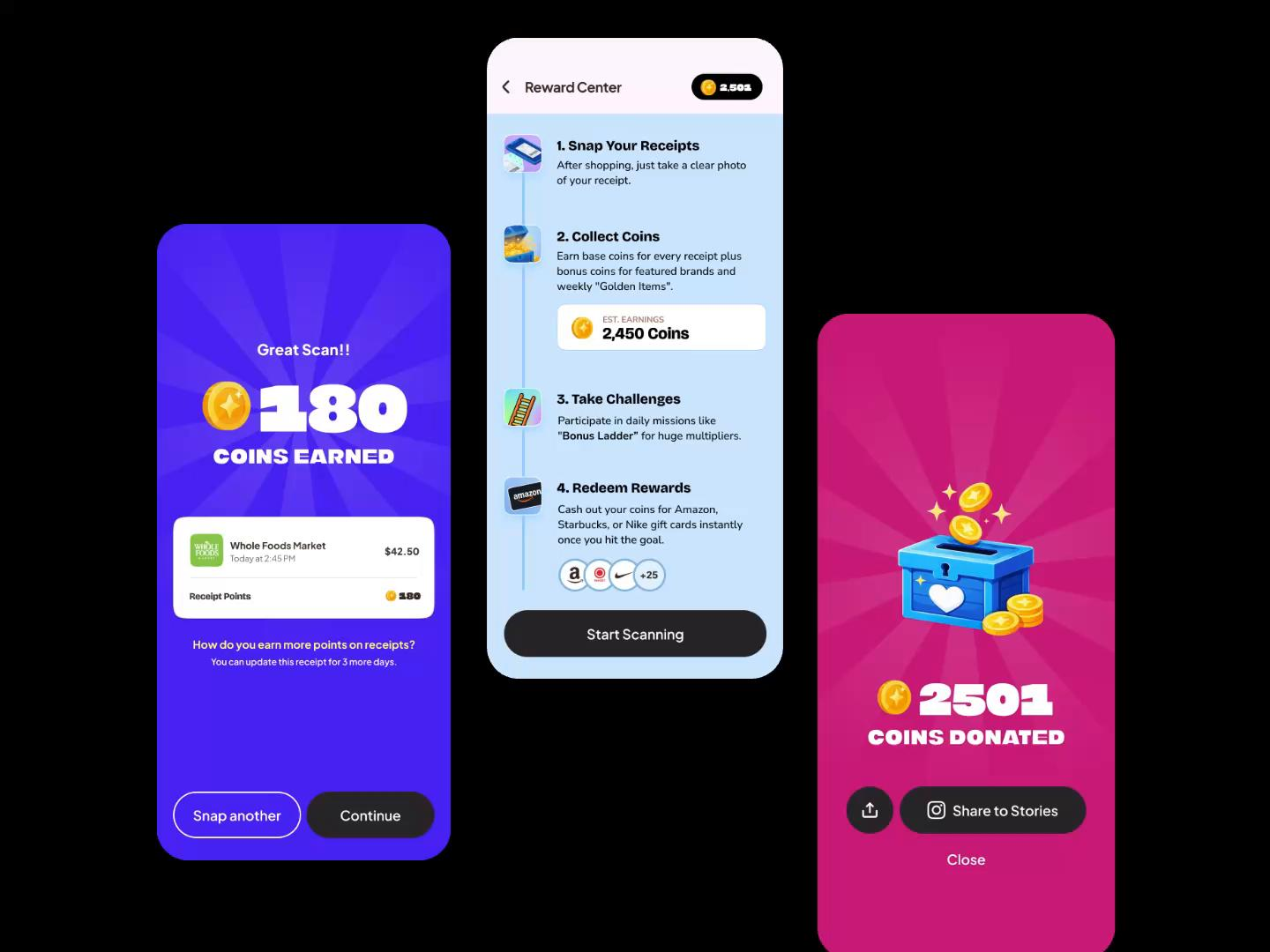
Deferred rewards accumulate over time and deliver value only at a threshold. CRED Coins work this way: each bill payment earns coins, which accumulate in an in-app wallet and can be redeemed for variable rewards in the CRED store. Each CRED coin carries a one-rupee face value and can be redeemed for fixed rewards like partner discounts or used to participate in variable reward games for additional prizes. The deferred structure creates a persistent reason to return: the growing coin balance is a psychological anchor that makes the app feel like it contains something valuable. The user is not just coming back for the next bill payment. They are coming back to see what their accumulated coins can unlock.
The most effective gamification architectures combine both. An instant reward fires on the action and provides immediate positive reinforcement. A deferred reward accumulates in parallel and creates a persistent return driver. Neither alone is as effective as both together.
The trap in instant reward design is over-frequency. If every user action triggers an instant reward, the reward loses its signal value. It becomes expected, then ignored. Variable reward schedules are more addictive than predictable ones precisely because the prediction cannot be formed. Instant rewards need to be calibrated for frequency so they remain surprising.
The trap in deferred reward design is too high a redemption threshold. If users calculate that their accumulation rate will take six months to reach a meaningful reward, the balance in their wallet stops feeling like an asset and starts feeling like a rounding error. The threshold needs to be achievable within a realistic usage window for the majority of active users, not just power users.
Progress Bars: The Completion Compulsion
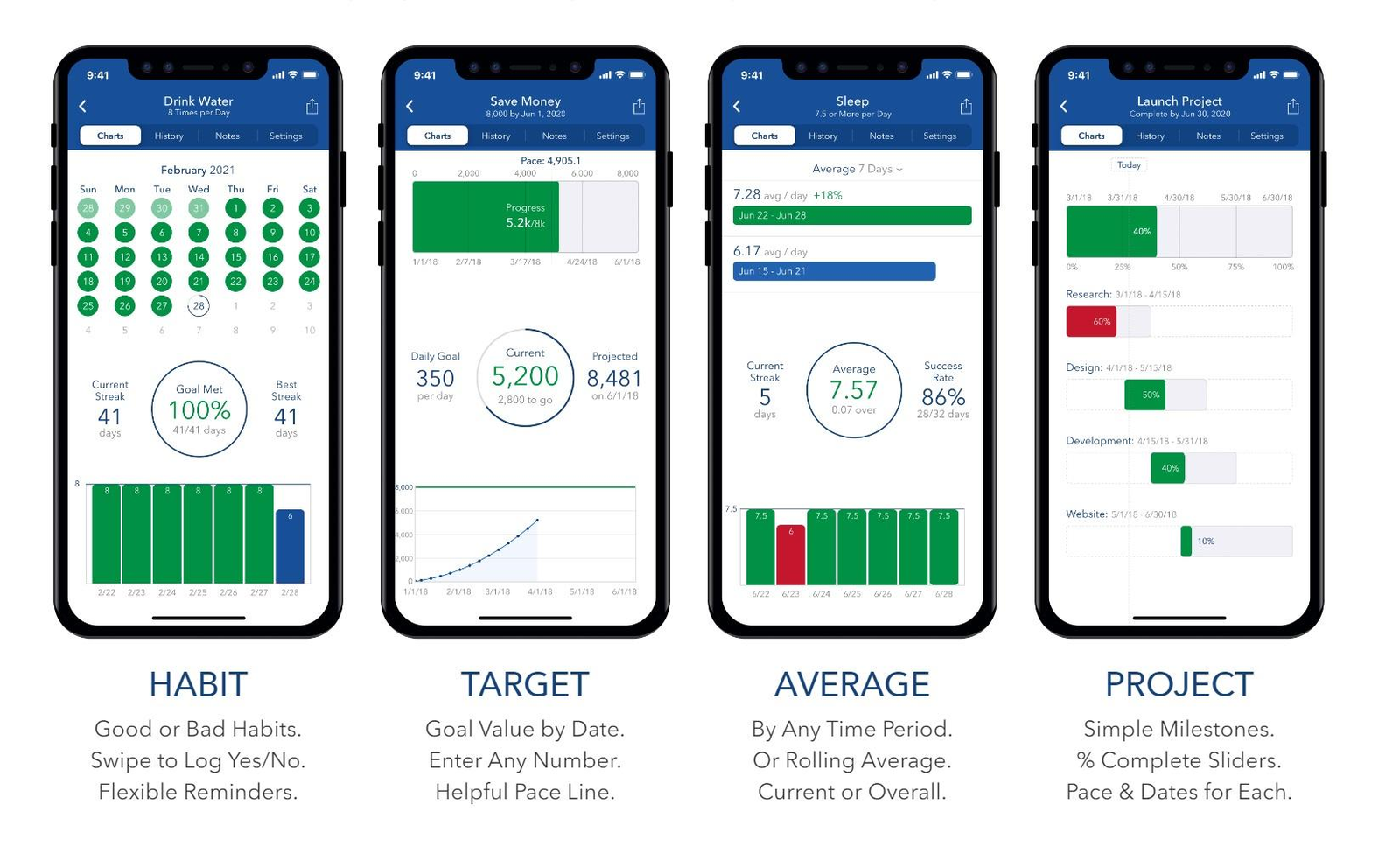
Progress bars and milestone trackers work on a principle called the Zeigarnik effect: people remember and are more motivated by unfinished tasks than completed ones. A progress bar that shows 60% completion creates a psychological pull toward 100% that a static prompt cannot. The visual representation of incompleteness is a motivational tool.
Jar, India's micro-savings app, uses a daily spin mechanic that functions as both an instant variable reward and a daily habit trigger. The daily action is low-friction (a single spin), the reward is variable (different savings bonuses), and the mechanic is tied to the core product behavior: saving. Progress visualization of the user's savings journey runs in parallel, showing how far along they are toward their saving goal. The two mechanics reinforce each other: the spin creates the daily habit, the progress bar creates the longer-term investment in the outcome.
Progress bars work best when they are specific and proximate. "You are 2 days from your next reward" is more motivating than "You have 2 out of 14 days completed." The same information is framed around the gap to the goal rather than the distance from the start. Milestone achievements celebrate cumulative progress, while streaks reward consistency. The two mechanics are not the same. A streak counter and a milestone bar serve different users at different points in their journey. New users need fast early wins, which means milestone markers at 1 day, 3 days, and 7 days. Long-tenured users need longer-horizon goals that acknowledge their accumulated investment.
Activation-stage gamification is the underused application of progress bar mechanics. A new user who sees an onboarding checklist at 40% completion on their first day has a different relationship with the app than one who sees a blank onboarding screen. The partial progress creates an obligation. Milestone rewards at each onboarding stage motivate new users through the steps that most commonly produce drop-off. The reward is the signal that the step mattered. The progress bar is the reminder that the journey is not finished.
Quiz and Challenge Formats
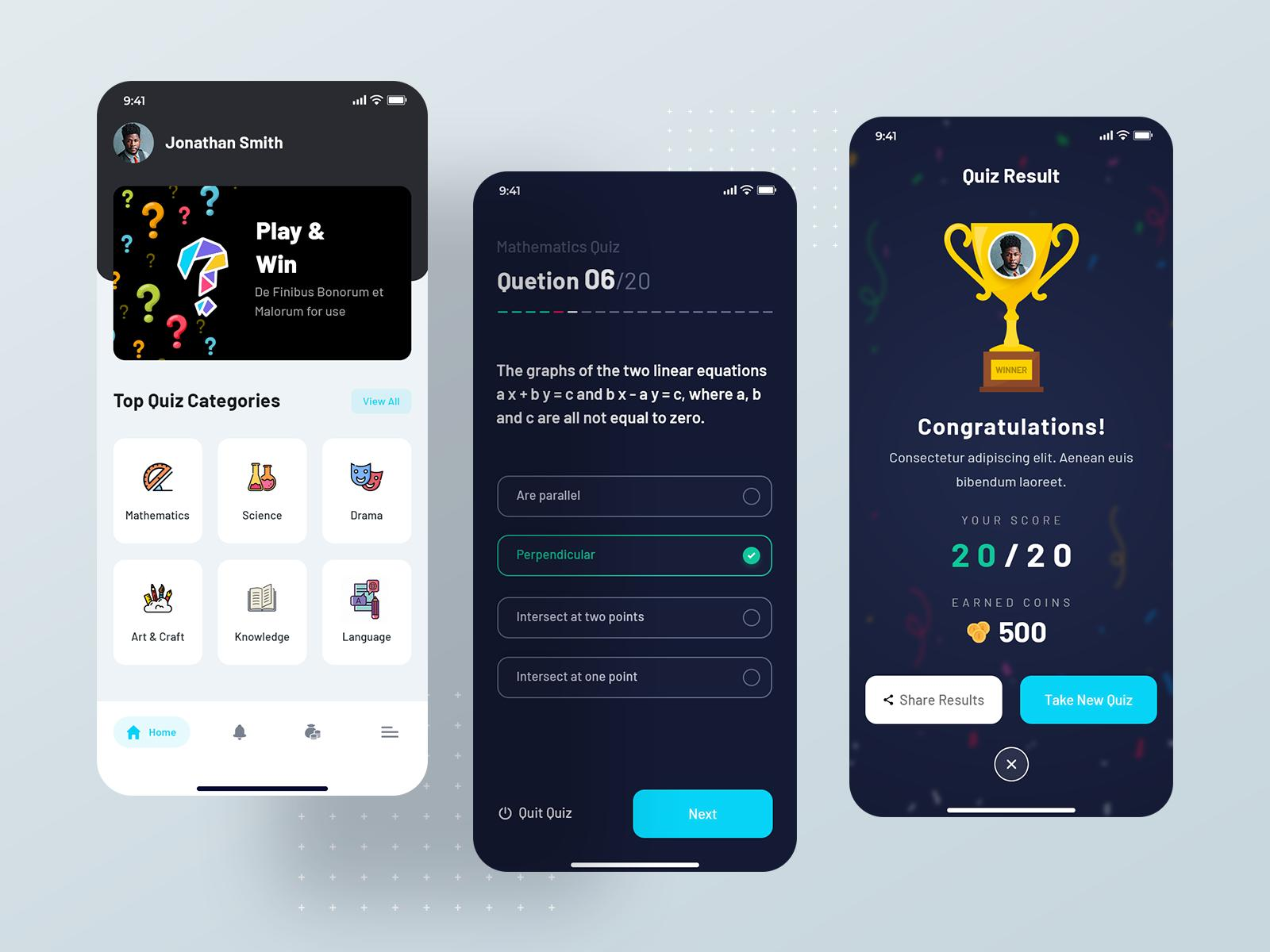
Quizzes and in-app challenges are the most underused gamification format in non-education apps, and the data on them is strong.
Zepto drove record session lengths during match-day quizzes using Digia Engage's quiz product. Swiggy's IPL campaign used daily cricket-themed quizzes to earn digital cards, tying quiz completion to a collection mechanic that drove both daily opens and order frequency. The quiz format works for retention in non-education apps because it ties time-in-app to an action that feels purposeful rather than passive. A user who answers five questions about a product category is engaging their attention actively, not scrolling passively.
Quizzes also serve a secondary function: product education. A fintech app that runs a weekly quiz on investment concepts is building financial literacy while driving daily opens. A health app that quizzes users on nutrition is reinforcing product value while creating a daily habit. Quizzes that educate users about the product while keeping them in the app create a mechanic where the engagement itself produces value for the user, which is the condition under which gamification builds long-term loyalty rather than short-term manipulation.
The design requirement for quiz formats is that the content stays fresh. A quiz with the same five questions will stop driving returns within a week. Quiz gamification needs a content pipeline or a dynamic question pool to sustain its engagement loop over time.
Leaderboards and Social Mechanics
Leaderboards introduce a competitive dimension that streak and reward mechanics cannot produce on their own. Where streaks exploit loss aversion (do not lose your progress) and variable rewards exploit anticipation, leaderboards exploit social comparison: the instinct to measure oneself relative to visible peers.
Duolingo's league system creates a competitive context users can realistically win. Users in a league see their ranking relative to a defined peer group, not relative to all 40 million daily active users. The reference group is small enough to feel winnable. Users who are near the promotion threshold (top 10 of their league) respond with significantly higher engagement than users who are safely mid-table, because the promotion threshold creates a proximate goal with social stakes attached.
CRED uses leaderboards across friend groups to drive competitive financial behavior, a mechanic that turns the socially awkward topic of credit card management into a comparative experience. Competitions and challenges among friends encouraged peer validation and competitiveness on CRED.
The design risk with leaderboards is that they produce two populations: users who engage competitively (a minority) and users who disengage because they see they cannot win (a majority). Segmented leaderboards (by skill level, tenure, or activity tier) address this by ensuring every user is competing against a reference group where they have a realistic chance of placing well.
Where Gamification Goes Wrong
Three failure patterns account for most bad gamification implementations.
The first is reward without behavior link. A badge or a spin wheel that fires regardless of whether the user completed a meaningful action trains users to expect rewards without contributing to the product's core loop. Over-reliance on rewards and gamification can lead to declining engagement as the novelty wears off, which is the failure mode of gamification that is not tied to genuine product value. The reward must be a response to an action the product needs users to take. If the spin wheel fires every time a user opens the app, it creates a reason to open the app, not a reason to use it.
The second is friction added to the core flow. Gamification mechanics that interrupt the primary user journey produce abandonment, not engagement. A scratch card reveal that appears before a transaction is complete will reduce transaction completion rates. The mechanic needs to fire after the valuable action, not before or during it.
The third is hollow streaks. A streak that resets to zero on a single missed day without any recovery mechanism will produce a predictable behavioral cycle: high engagement for the first two to three weeks, a missed day, immediate disengagement. The user's relationship with the product was built on streak pressure. When the streak breaks, the pressure is gone and with it the reason to return. Streak freezes and repair mechanics prevent streak-snapping frustration and are the difference between a mechanic that builds genuine habits and one that builds brittle daily logins that collapse at the first disruption.
The Engineering Independence Problem
The larger structural problem with gamification in most mobile teams is the same one that affects all in-app campaign types: every new mechanic, every seasonal campaign, every adjustment to a reward probability, requires an engineering ticket.
A Diwali spin-to-win campaign that needs three weeks of sprint cycles to launch arrives after Diwali. A streak mechanic that needs a new release to adjust the daily action threshold cannot be calibrated in response to early behavioral data. A quiz campaign tied to an IPL match needs to be live during the match, not two sprints after it.
Digia Engage's gamification mechanics, including scratch cards, spin wheels, quizzes, streak counters, and milestone rewards, are pre-built native components that growth teams configure entirely from the dashboard. Reward probability weights, per-user limits, time windows, audience targeting, and coupon codes are all set without a code change. The campaign launches without an app release, can be paused during a live campaign if the reward distribution is off, and the winner list exports directly from the dashboard.
CRED saw 40% daily active engagement from rewards-eligible users using Digia Engage's gamification layer. The growth team's ability to run, adjust, and retire that mechanic without clearing each change through an engineering sprint is the structural reason the number is achievable. A team waiting three weeks per iteration cannot run the volume of experiments required to find and optimize a mechanic that produces 40% daily engagement.
The integration takes under 20 minutes. After that, the growth team runs every gamification campaign from the dashboard. For an overview of what the in-app trigger layer looks like, the In-App Nudges product covers the underlying trigger architecture that gamification mechanics sit on top of.
Key Takeaways
- Gamification works when it maps a specific psychological principle to a specific product behavior. Streaks use loss aversion. Variable rewards use dopamine anticipation. Progress bars use the Zeigarnik effect. Each serves a different retention goal and works best when layered rather than used alone.
- Streak mechanics require three design elements to work at scale: a low-friction daily action, a freeze or recovery mechanism, and a reward structure that acknowledges long streaks with progressively higher value.
- Variable reward schedules (scratch cards, spin wheels) are more effective than predictable rewards because dopamine peaks during anticipation of a possible reward, not on receipt of a certain one. Animation and reveal pacing amplify this effect.
- The most effective gamification architectures combine instant rewards (immediate reinforcement of the target action) with deferred reward accumulation (persistent reason to return across sessions).
- Gamification fails when rewards are disconnected from meaningful product behaviors, when mechanics add friction to the core user flow, or when streak mechanics have no recovery mechanism for missed days.
- Growth teams that depend on engineering releases for every gamification campaign iteration cannot run the experiment volume required to find and optimize a high-performing mechanic. Dashboard-level control over reward rules, triggers, and audience targeting is the operational prerequisite for effective gamification.
Further Reading
From Digia Engage:
Gamification Feature Page, Digia Engage covers the full mechanic library including scratch cards, spin wheels, quizzes, streaks, milestone rewards, and the configurable reward engine, with examples from CRED and Zepto.
Scratch Cards and Spin-the-Wheel: Design Patterns That Drive Retention covers the specific design decisions, animation patterns, and probability configurations that separate high-performing variable reward campaigns from low-performing ones.
In-App Nudges, Digia Engage covers the trigger architecture that gamification mechanics sit on, including behavioral triggers, session-depth conditions, and audience targeting without engineering tickets.
External Sources:
Duolingo Gamification Case Study, Trophy is the most detailed analysis of how Duolingo's layered mechanic architecture produced 8x DAU growth between 2020 and 2024, with specific data on streak establishment rates as a leading retention indicator.
Fintech App Gamification Examples, Plotline covers CRED, CoinDCX, Revolut, and others, with data from Deloitte's 2024 Digital Banking Report on the 47% retention uplift from gamified fintech products.
Top 10 Gamification Examples in India, Novus Loyalty covers Swiggy's card collection campaigns, IPL-tied mechanics, and how order frequency spikes correlate with culturally anchored gamification events.
The Psychology Behind Scratch-Off Engagement, Priiize explains the behavioral psychology of variable ratio reinforcement schedules and why the anticipation moment before a reveal is the primary driver of return engagement.
Why Fintech Gamification is Your Secret Weapon, Netguru covers CRED's full gamification stack including the daily spin mechanic, CRED Coins accumulation system, and the psychological architecture that turned bill payment into a daily engagement event.
Digia Engage gives mobile growth teams a complete gamification layer: scratch cards, spin wheels, quizzes, streaks, and milestone rewards, all configurable from the dashboard without an app release. CRED saw 40% daily active engagement from rewards-eligible users. Zepto drove record session lengths during match-day quizzes. See how it works.