





TL;DR: Personalization has a ceiling. Below it, the app feels relevant. Above it, the app feels inconsistent, surveillance-like, and arbitrary. Most teams cross that ceiling without noticing because the metric that catches it is trust, and trust does not show up in a weekly dashboard. This article covers what over-personalization looks like from a user's perspective, the psychological mechanisms that explain it, the specific types that cause the most damage, how segment proliferation compounds the problem operationally, why personalization before product-market fit is an expensive distraction, and the calibration principle that produces better long-term results than maximum adaptation. Sourcing note: Specific statistics are attributed to their sources throughout. Where claims are based on established UX research principles rather than a single study, that is noted.
Personalization, as an idea, is straightforwardly good. Users who see content, features, and flows that match their actual behaviour and context get more value from the app faster. They reach the outcomes they came for without navigating through content that does not apply to them. Retention goes up. Engagement goes up. The data, across dozens of studies and platform experiments, supports this.
The problem is not with personalization as a concept. The problem is with what happens when teams treat personalization as an axis where more is always better, and drive that axis as far as the technology allows. At a certain point, the relationship between personalization precision and user experience inverts. The app stops feeling relevant and starts feeling unreliable. The user stops experiencing it as a product that understands them and starts experiencing it as a product that behaves unpredictably.
That inversion point is what this article is about. Identifying it, understanding why it happens, and building a personalization strategy that stays on the right side of it.
What Over-Personalization Looks Like to a User
Users do not diagnose over-personalization. They do not open the app, observe an aggressively tailored interface, and think "this product has exceeded the optimal personalization threshold." What they experience is something more diffuse and harder to articulate: the app feels strange. It behaves in ways that do not match their expectations. What was on the home screen yesterday is not there today. The navigation order has shifted. A feature they used last week is now two taps deeper than it used to be.
None of these individual observations necessarily triggers conscious concern. But they accumulate. The user develops a low-level sense that the app is not quite stable, that they cannot rely on their knowledge of how it works. They spend more cognitive effort on navigation and less on the tasks they came to complete. When an interface behaves in ways that do not match a user's expectations, confusion and errors increase, often leading to drop-offs.
The specific signs of over-personalization in the user experience:
Inconsistency that reads as arbitrariness. A user who encounters a personalised home screen on Monday and a different personalised home screen on Wednesday does not know which version is correct. Both feel partially wrong. When apps change gesture behavior or structural elements across sessions, users often experience higher uninstall rates within the first seven days. The personalization was intended to feel adaptive. To the user, it feels unstable.
Recommendations that reveal what the app knows. When a recommendation surface demonstrates detailed knowledge of a user's behaviour across contexts they did not consciously associate with the app, the response is often discomfort rather than appreciation. Psychological research shows that when consumers feel their privacy is invaded, trust is damaged even if the personalization itself is useful. The recommendation did not fail on relevance. It failed on felt surveillance.
Content narrowing that feels like restriction. When the algorithm tightens the content shown to a user based on engagement signals, the user begins encountering the same types of content repeatedly. The app's range feels smaller. The filter bubble effect, coined by Eli Pariser and extensively studied since, describes how personalization algorithms can trap users in increasingly narrow information silos, delivering only what the system predicts they want and filtering out content that might be equally valuable but less statistically likely. Users do not always articulate this as a personalization failure. They describe it as the app "getting boring" or "always showing the same stuff."
Behaviour the user never requested. When personalization changes elements the user did not ask to have changed, it produces a specific kind of friction. The user had a workflow. The workflow no longer works the same way. There is no obvious reason why. According to UX research from eleken, personalization causes additional challenges when users find the content irrelevant, redundant, or unhelpful, and too much of it can make users think a service compromises their privacy.
The Predictability Contract: Mental Models and Why Breaking Them Is Expensive
Every time a user opens an app, they carry a mental model of how it works. That model is built from every prior session: where the navigation tabs are, what happens when they tap a specific element, how content is organised, what the home screen looks like. The model is not conscious, in the sense that users are not actively reciting it. It operates as a prediction engine. The user opens the app and immediately knows where to look for what they want, because their mental model predicts the layout.
Mental models reduce the cognitive effort required to use an interface. When an interface behaves the way users expect, tasks feel easier and faster. When expectations are broken, friction appears regardless of how visually polished the design is. The time lost to confusion is real time, not a theoretical UX cost. Users who have to re-orient themselves every session are spending time on navigation rather than on the product's core value.
This is what personalization breaks when it is applied too aggressively: the predictability contract between the app and the user. The user's mental model was built on the assumption that the app works a certain way. When the app adapts frequently and significantly, that model becomes less reliable as a predictor. Each session starts with a small re-orientation cost. Over time, that slow erosion of confidence means users feel the product is harder to use than it should be, even if they can technically complete tasks.
The research on interface consistency supports this at the structural level. A navigation that changes its structure, position, or labels between sections destroys the user's mental model and requires them to relearn the system on every page. The same principle applies when personalization is the mechanism driving those changes. If the layout shifts because of a segment update rather than a product redesign, the user experiences the same confusion either way. The reason for the change is invisible to them.
The critical distinction that most personalization strategies miss: there is a difference between personalizing the content within a stable structure and personalizing the structure itself. Personalizing content (what the home screen recommends, which offers are surfaced, which articles appear in a feed) works with the user's mental model. Personalizing structure (where core navigation items appear, what the primary flow looks like, which features are visible) works against it. The former adapts what the user sees. The latter changes what the user knows how to do.
Structural Over-Personalization: The Type That Causes the Most Damage
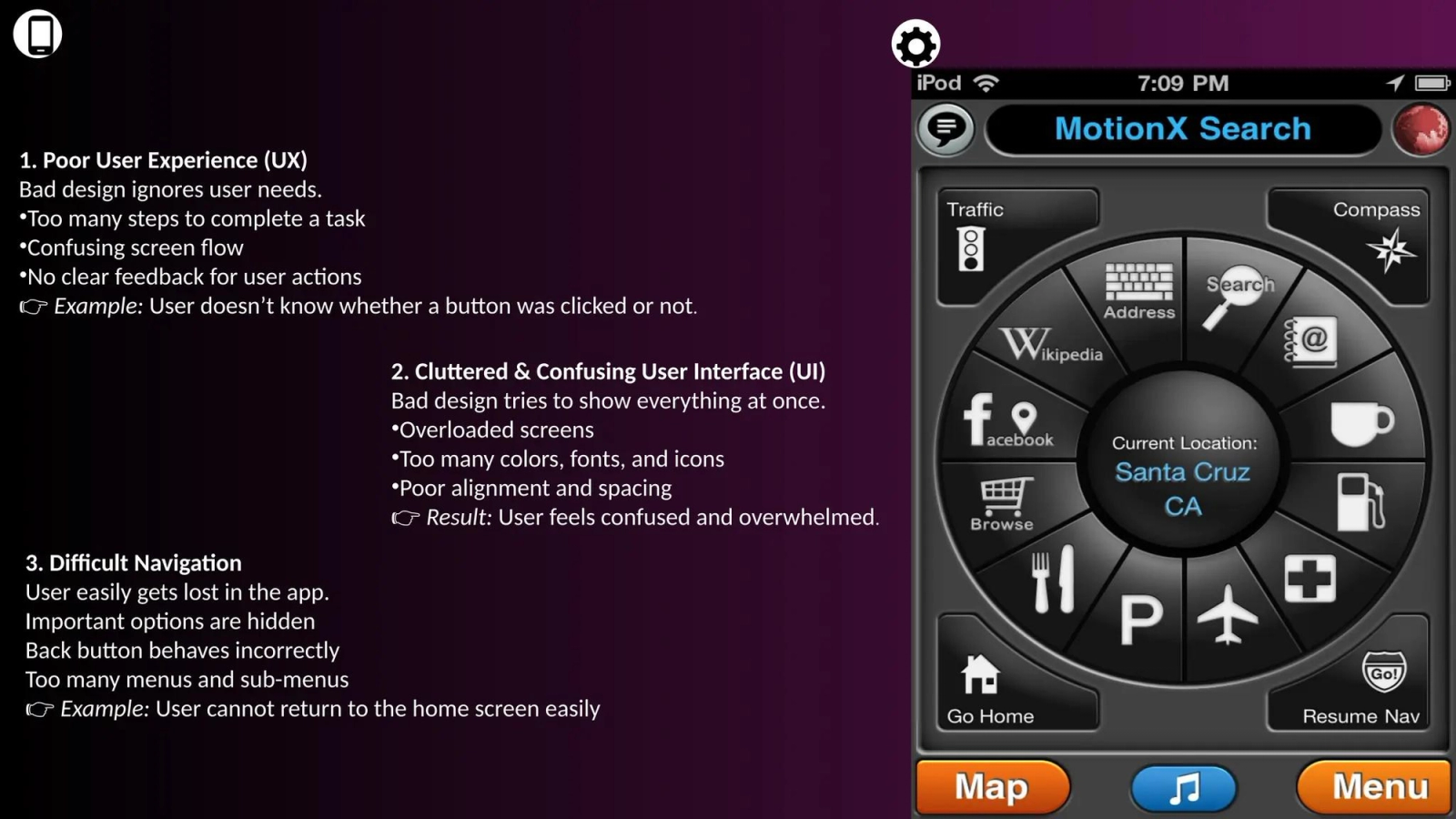
Structural over-personalization occurs when personalization logic is applied to the architecture of the app itself: navigation items, core flows, layout configurations, and primary CTAs. It is the most damaging form because it undermines the user's ability to rely on any learned behaviour.
A typical progression: a team identifies that users in segment A use feature X heavily, while users in segment B rarely use it. The team decides to surface feature X more prominently in segment A's navigation and deprioritise it in segment B's. This seems logical. Segment A users will find the feature faster. Segment B users will have a cleaner interface.
What the team does not account for: users in segment B who occasionally use feature X now cannot find it where it used to be. Users who move between segments because their behaviour changes encounter an interface that has shifted under them. Users who share a device or account across contexts see a layout that does not match their expectation. And users who are simply re-classified by the algorithm after a period of inactivity return to an app that looks unfamiliar.
When navigation behaves differently across screens or sessions, users must constantly relearn the system, which breaks mental models and reduces trust in the product. Trust, once damaged in this way, is slow to recover. The user's relationship with the product shifts from confident to cautious. They stop assuming the app will behave as expected and start verifying it, which adds friction to every interaction.
The rule of thumb for structural personalization: personalise the defaults but preserve the structure. A user can be shown a home screen that leads with features most relevant to their behaviour pattern, without moving core navigation items. A user can be shown a dashboard with their most-used metrics at the top, without altering the flow required to complete a core action. The structure remains stable and predictable. The content within that structure adapts. This preserves the mental model while still delivering relevance.
User-controlled customisation (allowing users to explicitly configure their own navigation, pin features, or choose their default view) avoids this problem entirely because the user is the author of the change. When users can pin, reorder, or hide features themselves, they create a personalised interface that reflects their preferences without experiencing the disorientation of adaptation they did not initiate. The key distinction: self-initiated change builds familiarity. Algorithm-initiated change creates surprise.
Content Over-Personalization: The Filter Bubble and the Serendipity Problem
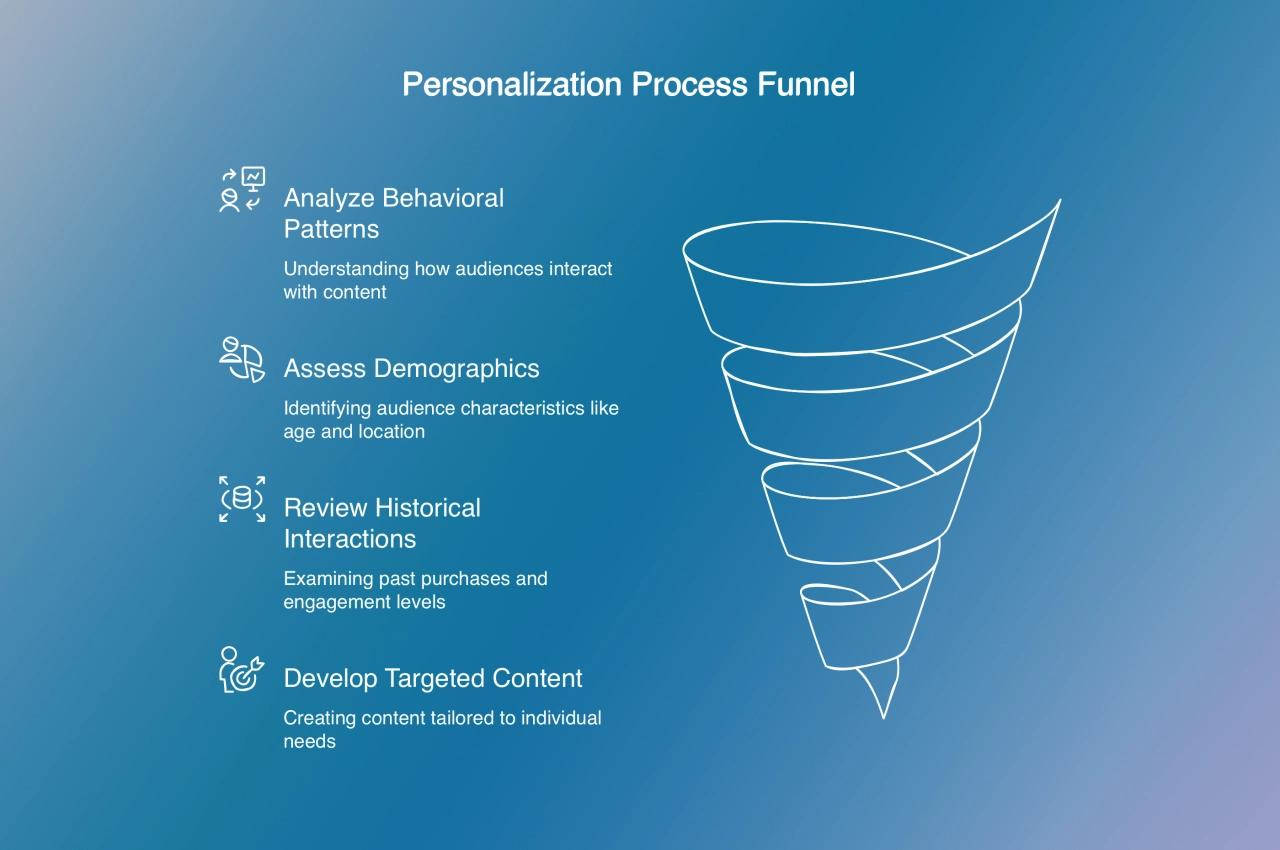
Content over-personalization is structurally different from structural over-personalization but produces its own category of damage. It operates not by making the app feel unreliable but by making it feel narrow.
The filter bubble, first described by Eli Pariser, refers to the state in which a user is exposed only to content that a personalization algorithm predicts they will engage with, progressively filtering out anything that falls outside their established preference pattern. As the system accumulates more data, the predictions become more precise and the bubble becomes smaller. Users see content that perfectly matches their demonstrated preferences and nothing else.
In the short term, this looks like success. Engagement rates are high. Users click on what they are shown. Time in app increases. The metrics are positive.
In the medium term, the bubble creates two problems. First, user satisfaction decreases as the feed becomes repetitive. Recommender systems hit a point of diminishing returns where showing users more of what they have previously engaged with produces less satisfaction, not more, particularly within a single session. Second, the app loses the ability to introduce users to value they did not know they wanted, which is one of the most powerful retention mechanisms available. Streaming services like Spotify have long used "discovery" playlists that mix familiar content with new material. Studies show that users are generally open to these small surprises and that they broaden what users encounter without reducing satisfaction.
The operational consequence of content over-personalization for product teams is that engagement metrics can look healthy right up until churn. Users who are bored by a narrowing feed do not complain in support tickets. They simply open the app less frequently. By the time that declining session frequency appears in the data, weeks of filter-bubble-driven narrowing have already accumulated. Behavioural churn signals typically appear weeks before headline retention metrics move, and content fatigue from over-personalization is one of the signals most teams are not watching.
The calibration for content personalization: reserve 15 to 25% of each content surface for items outside the user's established preference cluster. This is not guesswork. Research shows that incorporating elements of novelty or serendipity into recommendation systems, intentionally surfacing content slightly outside the user's usual preferences, broadens the range of content users encounter without reducing satisfaction. The exact percentage should be tested, but the principle is consistent across content categories and platforms: some deliberate friction against full personalisation is beneficial.
The Creepiness Threshold: When Personalization Signals That the App Knows Too Much

There is a specific category of over-personalization that triggers a stronger response than inconvenience or boredom: it triggers discomfort. Researchers call it the creepiness threshold, the point at which the accuracy or specificity of personalization signals to the user that the app has access to information or inference capabilities beyond what they consciously consented to share.
According to InMoment's CX Trends research, 75% of consumers find most personalization efforts "somewhat creepy". That is a remarkable figure. Three quarters of users, on the receiving end of personalization efforts from apps and brands, feel discomfort rather than appreciation. The gap between what personalization teams believe they are delivering (relevance, helpfulness) and what users experience (surveillance, manipulation) is wide, and it is not narrowing.
Qualtrics' 2026 research found that while 64% of consumers prefer personalised experiences, only 39% believe the benefits of sharing their data outweigh the privacy cost. The majority of users who say they want personalization are simultaneously unconvinced it is worth what it costs them in terms of privacy. This is the personalization paradox in quantified form: users want the output of personalization, but they are uncomfortable with the inputs required to produce it.
The triggers that reliably push users past the creepiness threshold are well-documented in the research:
Cross-context inference. When an app appears to know something that the user revealed in a different context, such as a conversation, a location visit, or an action on a different platform, the response is strong discomfort regardless of how accurate the inference is. Comfort levels drop sharply when systems connect information across unrelated apps or contexts without explicit permission.
Unexplained accuracy. When a recommendation is extremely accurate but carries no explanation of why it is being shown, users experience it as evidence of tracking rather than as evidence of relevance. Personalised content that clearly states its data source and rationale, for example "we're showing this because you viewed X", is more effective and less privacy-invasive than equivalent content with no explanation. The recommendation itself is not the problem. The opacity around it is.
Inference of sensitive attributes. When personalization logic draws on or implies knowledge of sensitive personal circumstances, health states, financial situations, or relationship changes, the reaction is particularly strong. The "creepiness to value ratio" is continuously being evaluated by users, who make intuitive judgments over whether personalization feels helpful or like surveillance.
Too-soon inference. When a user performs a single action (views a product, reads an article, visits a location) and immediately receives recommendations anchored to that action, the rapid inference reads as active monitoring rather than passive learning. The speed of the inference is itself the signal that something uncomfortable is happening.
The practical implication for product teams: personalization transparency is not a privacy compliance checkbox. It is a trust mechanism. Users who understand why they are seeing what they are seeing are significantly more comfortable with the personalization than users who receive equally accurate recommendations with no visible reasoning. This is why in-app explanations ("because you recently..." or "based on your interest in...") are not just UX niceties. They are what separates personalization that builds trust from personalization that erodes it.
Gartner predicts that by 2026, 75% of consumers will refuse engagement with personalization efforts they consider invasive. Teams that cross the creepiness threshold are not just producing a bad experience in the moment. They are training users to disengage from the personalization channel entirely.
Segment Proliferation: What Happens When the Micro-Segment Count Gets Too High
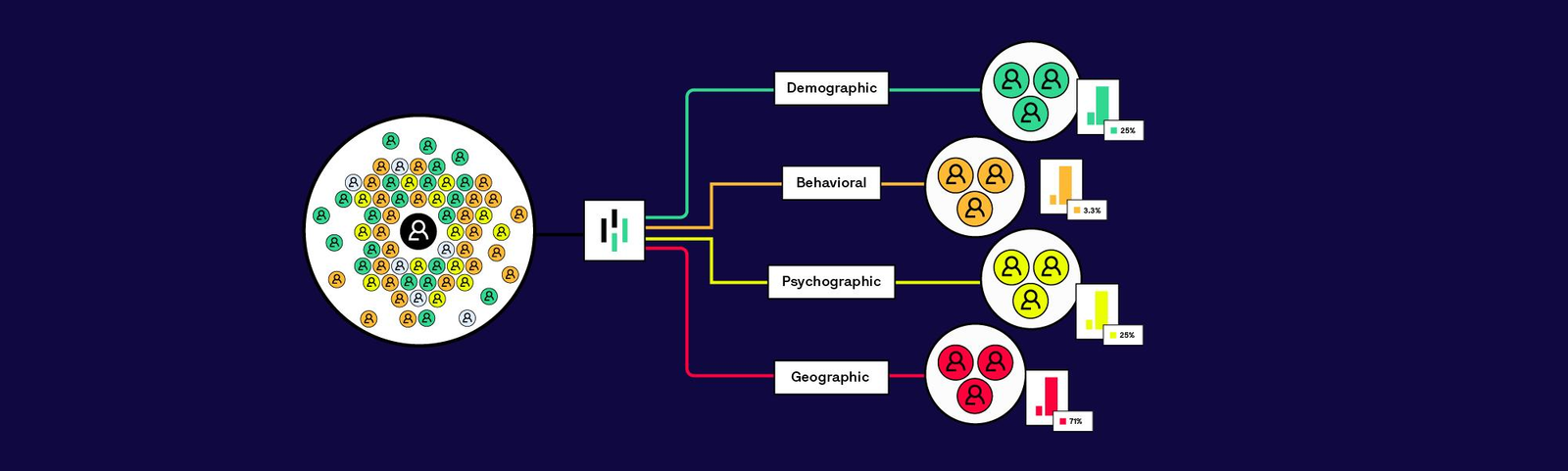
Segment proliferation is the operational face of over-personalization. It is what the system looks like from the inside when a team has been running a personalization strategy without governance for long enough.
It starts reasonably. A team builds segments for new users, activated users, and lapsed users. Then they add high-value users and at-risk users. Then fintech app users vs. e-commerce users, because the app serves both. Then regional segments for different markets. Then behavioural segments based on feature usage. Then lifecycle stage segments. Then RFM segments. Over 18 months of growth, the team has 60 active segments, dozens of associated campaigns, and no clear picture of which users are in which segments at any given time or which campaigns they are receiving.
The failure modes from segment proliferation:
Conflicting campaigns. When a single user qualifies for multiple segments running different campaigns simultaneously, they receive contradictory messages. A user who is in the "activate second feature" campaign and the "re-engagement offer" campaign at the same time receives both, which tells them the app does not have a coherent view of their relationship with it. Activating cohorts across channels without ensuring mutual exclusivity produces conflicting messages across touchpoints, which breaks the consistency that makes communication feel purposeful rather than scattered.
Users falling through the gaps. When segments are defined by strict criteria, users whose behaviour places them between definitions receive no personalization at all. A user who is not active enough for the "engaged user" segment and not inactive enough for the "re-engagement" segment is in neither campaign. They receive the generic fallback experience, which is frequently worse than no campaign at all because it demonstrates that the system has data on the user but is not using it productively.
Maintenance overhead that slows iteration. When every campaign requires a new set of filters, segments, or rules, execution slows to a crawl. What started as a handful of simple segments evolves into dozens of micro-groups, each with its own creative, offer, and timing logic. The team that built the segments is now spending the majority of its time maintaining them rather than running new campaigns. The personalization system has become a constraint rather than a capability.
Statistical fragility. Micro-segments with small populations do not generate statistically reliable data. If a segment is too small, it lacks statistical power, meaning you cannot confidently measure differences or outcomes. A team measuring the performance of a 200-user segment is measuring noise, not signal. Decisions made on that data are made on coincidence. Campaigns optimised against it are optimised against a statistical artefact.
The governance principle for segment management: every segment should be auditable against four criteria. Does it contain enough users to produce statistically meaningful performance data? Does it differ from adjacent segments in a way that justifies a distinct campaign? Is it owned by a specific team member who is responsible for its maintenance? And has it produced a measurable outcome in the last 90 days that justifies its continued existence? Segments that fail any of these criteria should be merged or retired.
Bloomreach's research on segmentation strategy notes that while you could technically generate hundreds of micro-segments, effective strategies balance precision with actionability, ensuring that segments remain large enough to drive meaningful business results. The goal is not maximum granularity. The goal is actionable precision, and these are not the same thing.
Personalization Before Product-Market Fit: Why the Sequencing Matters
There is a specific context in which over-personalization is most damaging and most common: early-stage apps that have not yet established product-market fit. Teams in this context frequently invest in sophisticated personalization infrastructure because personalization is associated with engagement and retention, and engagement and retention are the metrics the team needs to show improvement in.
The problem is that personalization, in an app that has not found its core value proposition, masks the signal that the team most needs to see.
Product-market fit shows up in consistent, unprompted return usage from users across a broad population. Users who come back repeatedly without being nudged or incentivised, because the product solves a problem they have. When personalization is applied before this pattern exists, it can produce return visits that are driven by the personalization mechanics (relevant content, targeted reminders, tailored offers) rather than by core product value. The metrics look like product-market fit signals. The underlying dynamic is not.
Teams that apply personalisation before confirming repeat usage behaviour may mistake personalisation-driven engagement for genuine product traction. A user who returns to the app because of a well-timed personalised notification is not the same as a user who returns because the product solved a problem. Cohort analysis that does not separate personalisation-touched users from organic returners cannot distinguish between the two.
The operational cost compounds this. Building and maintaining a personalisation layer requires engineering resources, data infrastructure, and ongoing campaign management. For an early-stage team, these are resources that could be applied to product iteration, to finding and fixing the gaps in the core value proposition. Personalisation technology requires extensive development resources, creates integration points that become additional failure surfaces, and demands ongoing technical maintenance that diverts engineering from core product development.
The sequencing argument is straightforward. The core product should be reliable and valuable enough that a broad cohort of users returns without personalisation. Once that is established, personalisation deepens and sustains that retention. Applied in the reverse order, personalisation conceals the product's weaknesses from both the team and from investors, while consuming the resources needed to address those weaknesses.
This does not mean early-stage apps should do nothing. Basic lifecycle messaging, onboarding guidance, and feature education are appropriate at any stage. The distinction is between engagement operations (communicating with users to help them find value) and personalisation infrastructure (building adaptive systems that tailor the experience to inferred preferences). The former is necessary from day one. The latter earns its investment after the core retention signal is established.
The Data Quality Problem: Personalizing on Bad Signals
A dimension of over-personalization that most articles omit is the data quality problem. Personalization is only as good as the data it operates on. When the data is thin, stale, or structurally biased, the personalisation it produces is wrong, and wrong personalisation is often worse than no personalisation.
Thin data occurs when a user is new or has a limited interaction history. Personalization applied to new users on the basis of first-session signals produces highly uncertain inferences. A user who browses a single category once has told the system very little, but the system treats that one signal as meaningful and begins restricting their experience accordingly. The personalization reflects the first session rather than the user's actual preferences, and may actively introduce them to a narrower version of the product than a non-personalized new user experience would have shown them.
Stale data occurs when the personalization system is operating on historical signals that no longer reflect the user's current context. A user who used a fintech app primarily for savings during a period of financial stability and then shifted to loan management after a life event will continue to receive a savings-focused personalised experience long after that context has changed, unless the system is actively refreshed. The personalisation is accurate to a past version of the user that no longer exists.
Structurally biased data occurs when the training data for personalisation models reflects the behaviour of the users who were active during a specific period, campaign, or acquisition channel, rather than the broader user base. A model trained on the behaviour of users acquired through a specific promotional campaign will personalize for the profile of that campaign's audience, not for users acquired through other channels. The results feel personalised but are based on a systematically skewed signal.
These data quality problems are not fixable by adding more data. They require understanding what the data represents and what it does not, and building personalisation systems that degrade gracefully when signal quality is low, defaulting to broader, safer experiences rather than to precise but incorrect ones.
The A/B Testing Trap: When Personalisation Experiments Prove the Wrong Thing
Personalisation strategies are typically validated through A/B tests: a personalised variant versus a control. The personalised variant almost always wins on the metrics measured in the test window. Engagement is higher. Click rates are higher. Conversion in-session is higher.
What A/B tests of personalisation rarely capture is the trust cost that accumulates outside the test window. A test that runs for two weeks measures the immediate effect of personalization on user behaviour. It does not measure the effect on the user's relationship with the product over six weeks or six months. The user's mental model, their comfort with the interface, and their sense of the app's stability are not captured in a two-week engagement measurement.
Research on perceived accuracy of personalised advertising shows that while perceived accuracy positively predicts initial engagement, it also predicts surveillance concerns and privacy-protective behaviors when the accuracy crosses the creepiness threshold. The short-term experiment captures the engagement signal. The medium-term consequences of surveillance perception are not visible in the same dataset.
Teams that rely exclusively on A/B test results to validate personalisation decisions are measuring the right things on the wrong timescale. Holdout groups maintained over 30 to 90 day windows, with retention as the primary metric rather than in-session engagement, give a more accurate picture of whether personalisation is building the relationship with the user or gradually eroding it.
The Calibration Principle: Where to Start and How to Add Precision
The calibration principle is the alternative to the "more is better" personalisation approach. It starts with fewer, broader segments and higher-confidence personalization, and adds precision only as data quality and team capacity warrant it.
In practice, this means:
Start with lifecycle stage, not behavioural micro-segments. New users, activated users, and lapsed users are three segments that cover the vast majority of the personalisation decisions that matter in most apps. The personalisation decisions within these segments are high-confidence: new users need onboarding guidance, activated users need feature discovery, lapsed users need a reason to return. Adding micro-segments before these three stages are well-served produces complexity without proportional benefit.
Personalize content before structure. Adjusting what users see within a stable interface delivers relevance without breaking mental models. Adjusting the interface itself delivers relevance at the cost of predictability. The former should be the default. The latter should be a considered decision with explicit measurement of its effect on trust-related metrics, not just engagement.
Preserve serendipity at every content surface. Reserve a portion of every content surface for items outside the user's established preference cluster. Test the percentage rather than assuming it. The goal is the narrowest serendipity window that still produces broadening of user behaviour over time.
Make personalization legible. Wherever a recommendation or personalised element appears, include a brief explanation of the signal behind it. Transparent personalisation that shows its reasoning is more trusted, more effective, and less likely to trigger the creepiness response than equivalent personalisation without explanation. This is not a significant engineering investment. It is a copy and display decision.
Give users control. Providing users with control over personalisation, allowing them to indicate preferences, reset recommendations, or opt out of specific types of adaptation, builds trust because it allows people to establish the level of personalisation on their own terms. A user who can see and modify how the app adapts to them is a user who trusts the adaptation system. A user who cannot see or modify it is a user who is a potential creepiness threshold breach away from disengagement.
Measure trust proxies, not just engagement. The metrics that capture the trust cost of over-personalisation are not standard engagement metrics. They are return visit rate without a campaign trigger (organic return), feature usage breadth over time (are users accessing more of the product or less?), and qualitative feedback from high-value users about their experience of the app's consistency. These do not appear in a standard dashboard. They require explicit measurement.
Topics Not Covered in the Brief That Teams Should Know
The cold-start problem and its personalisation failures. New users have no history. Personalisation systems that do not handle the cold-start gracefully (by defaulting to editorial curation, popular content, or explicit preference collection) produce a poor first experience that is blamed on the product but is actually a personalisation infrastructure failure. The first session should be guided by explicit data collection (preference onboarding) rather than inferred signals, because inferred signals from a single session are too weak to produce useful personalisation.
Personalisation debt. Like technical debt, personalisation debt accumulates when decisions are made quickly without documenting the assumptions behind them. A segment built on one team's behavioural hypothesis, without documentation, is a liability when the team turns over. The new team inherits a system they cannot audit. Over time, micro-segments lose their rationale and become orphaned campaign logic that no one wants to retire, but that continues to affect the experience of real users. Personalisation debt, like technical debt, compounds until it is paid down explicitly.
Shared devices and account switching. Personalisation systems built on individual user profiles produce incorrect results for users who share a device or switch between accounts. A family member who uses a shared device receives personalisation targeted at a different person's behaviour profile. A user who switches between a personal and a work profile encounters two differently personalised experiences that may conflict. These are edge cases in individual markets but become common patterns at scale.
The personalisation-accessibility tension. Adaptive interfaces that reorganise content and navigation based on usage patterns can conflict with accessibility requirements. Users who rely on screen readers or assistive technology build specific muscle memory around interface structure. When that structure changes based on personalisation logic, the accessibility experience degrades. Teams rarely audit personalisation decisions against accessibility requirements. They should.
Zero-party data as an alternative architecture. Zero-party data, information that customers choose to share explicitly because they understand and accept the value exchange, is the foundation for personalization that does not trigger the creepiness response. Asking users directly what they want, through preference onboarding, explicit feature selection, or in-app surveys, produces higher-quality personalisation signals than inference from behaviour, builds trust through transparency, and eliminates the cross-context inference problem entirely. Digia Engage's survey products support explicit preference collection as part of the onboarding and ongoing engagement flow, which is one of the most underused personalisation inputs available to product teams.
How Digia Engage Approaches Personalisation Calibration
The personalisation problems described in this article are operational as much as they are conceptual. Teams that want to implement calibrated personalisation need infrastructure that supports lifecycle-stage targeting, content personalisation within stable structures, serendipity injection, and explicit preference collection, all from a single operational layer.
Digia Engage's in-app nudges and widgets fire on real user events with audience filters that allow targeting by lifecycle stage, behaviour, and user properties, without requiring teams to build or maintain complex micro-segment logic from scratch. Campaigns can be configured against broad lifecycle stages and refined as data accumulates, rather than front-loading the segment complexity.
The survey module supports in-app preference collection at high-signal moments, providing explicit user input that supplements behavioural inference rather than replacing it. In-app NPS surveys on Digia Engage see a 30% or higher response rate, compared to a 3% baseline for email, which means the explicit preference data is both available and reliable.
Inline widgets allow content personalisation within stable structural templates: the layout stays consistent and predictable while the content within it adapts to user context. This is the structural stability plus content adaptability combination that the calibration principle requires.
A/B testing across campaign variants allows teams to test personalisation decisions against holdout groups, with retention as a configurable primary metric. The infrastructure to test on the right timescale is available. Using it requires a deliberate decision to measure trust outcomes rather than session-level engagement alone.
Key Takeaways
Over-personalization produces a specific failure mode: the app feels unreliable, arbitrary, and increasingly narrow, rather than relevant and responsive. The metric that captures this failure is trust, and trust does not appear in a standard engagement dashboard.
The predictability contract between users and apps is built on the assumption that the app will behave consistently. Structural personalisation that changes navigation, layout, or core flows breaks this contract. Content personalisation that operates within a stable structure does not.
The creepiness threshold is crossed when personalization accuracy implies access to information or inference capability that the user did not consciously consent to share. Transparent personalisation, with visible reasoning, avoids this. Opaque personalisation triggers it.
Content over-personalisation produces filter bubbles: feeds that become narrower over time, producing boredom and decreased session depth, even as individual recommendation accuracy improves. Deliberate serendipity injection is the calibration against this dynamic.
Segment proliferation produces conflicting campaigns, users falling through the gaps, statistical fragility, and maintenance overhead that slows the team. Segments should be audited against actionability, statistical significance, ownership, and recent outcome, and retired when they fail any criterion.
Personalisation before product-market fit masks the signal teams most need: whether the core product produces organic return visits. The resources spent on personalisation infrastructure before PMF would be better applied to product iteration.
The calibration principle: start with lifecycle-stage targeting and content personalisation within stable structures. Add precision as data quality and team capacity grow. Preserve serendipity. Make personalisation legible. Give users control. Measure trust proxies, not just engagement.
Further Reading
From Digia Engage:
- Reducing Churn with Behavioral In-App Interventions — the churn signals that over-personalisation can mask, and how to read them in data
- When NOT to Show a Nudge: Building a Suppression Logic — the companion piece on where personalised engagement crosses into over-messaging
- Digia Engage Surveys — in-app preference collection for zero-party data personalisation
- Digia Engage Nudges — lifecycle-stage targeting with event-based triggers and audience filters
- Digia Engage Widgets — content personalisation within stable structural templates
- Behavioral Segmentation in Practice — the upstream segmentation work that makes personalisation calibration possible
External Sources:
- What Is Overpersonalization in UX and How to Avoid It? — Eleken (UX consequences of over-personalization and mitigation approaches)
- The "Creepiness Threshold": Where AI Personalization Turns From Delight to Dystopia — Medium (personalization paradox and the psychological mechanism behind surveillance anxiety)
- Personalization Has a Creep Threshold and You've Probably Crossed It — DMNews (75% of consumers find most personalisation efforts creepy; InMoment CX Trends data)
- When AI Personalization Feels Like Surveillance — CMSWire (Qualtrics 2026 research: 64% prefer personalisation, only 39% think the privacy trade-off is worth it)
- The Dark Side of Personalization — Customer Experience Dive (the creepiness-to-value ratio and where brands cross it)
- Mental Model in UI/UX: Designing Interfaces That Match How Users Think — UInica (why interface consistency preserves mental models and personalisation-driven change breaks them)
- The A-Z of UX: M is for Mental Models — UX Centric (how mental models form and why slow erosion of confidence is harder to detect than immediate UX failures)
- How Algorithmic Personalization Creates Filter Bubbles — Informacni gramotnost (filter bubble mechanics, serendipity as the corrective, Spotify Discovery as a working example)
- Filter Bubble — Wikipedia (Pariser's original definition and the research literature on algorithmic content narrowing)
- Data Segmentation Done Right: Avoiding the Trap of Too Much Information — Emarsys (segment proliferation failure modes and how to audit and retire segments)
- Segmentation Strategy in the Age of Autonomous Commerce — Bloomreach (the precision vs. actionability balance and why micro-segment count should be limited)
- Personalization vs. Privacy: Marketing Strategies in the Digital Age — Journal of Marketing and Social Research (peer-reviewed; transparent personalisation rationale reduces privacy-invasiveness)
- Perceived Accuracy of Personalization, Perceived Surveillance, and Privacy Cynicism — Taylor and Francis (academic research: accuracy predicts both engagement and surveillance concerns; creepiness drives privacy-protective behaviour)
- When Personalization Backfires — Medium (Deloitte: 69% of consumers stop business with brands using data unethically; Gartner: 75% will refuse invasive personalisation by 2026)
- Personalization Marketing Fails: Why Companies Struggle in 2025 — Uniform (personalisation technology overhead and the engineering cost before PMF)
Calibrated personalisation, delivering lifecycle-stage-appropriate content within stable structures, with explicit preference collection and transparent reasoning, is what Digia Engage is built to support. Book a demo to see how the targeting and survey layer works together, or explore the full product suite to understand what personalisation without engineering overhead looks like in practice.