


TL;DR: Scratch cards and spin-the-wheel are two of the most effective in-app mechanics for driving engagement and retention, because they exploit variable ratio reinforcement, the same psychological schedule that makes slot machines impossible to put down. This article covers the neuroscience behind why they work, the difference between how each mechanic functions as a retention tool, specific Indian app examples including CRED, Jar, Nykaa, and Google Pay, the implementation decisions that separate mechanics that build long-term habits from ones that feel cheap, and how to deploy both without writing a single line of code. Sourcing note: Statistics are cited by source throughout. Where a specific data point comes from a published study or report, the source is linked.
Most engagement problems in mobile apps are not content problems. The content is fine. The product is fine. The problem is that routine app interactions carry no emotional charge. Paying a bill, checking a balance, browsing a catalogue, tracking an order: these are useful actions, and users complete them, and then they leave. Nothing about the experience gives them a reason to think about the app again until the next utilitarian need arises.
Scratch cards and spin-the-wheel mechanics change that arithmetic. They inject a moment of emotional activation into interactions that would otherwise be neutral. The user completes an action, and then something happens that is not entirely predictable. The outcome is revealed. The wheel stops. The card is scratched. For a moment, the experience is not about the task. It is about what comes next.
That moment, brief as it is, is psychologically significant. It is the reason CRED saw 40% daily active engagement from rewards-eligible users with its daily spin-the-wheel mechanic. It is the reason Google Pay's scratch card system, tied to every eligible UPI transaction, helped it rapidly build a dominant position in India's crowded payments market. It is the reason Jar, with over 4 crore Indian users, makes "daily spins, daily rewards" a core part of its savings habit loop.
None of these apps stumbled into these mechanics. Each one made a deliberate design decision based on a well-understood psychological mechanism. This article explains that mechanism, then covers when to use each mechanic, how to implement both without dev effort, and what the failure modes look like when teams get the design wrong.
Why These Two Mechanics Work: The Psychology of Variable Ratio Reinforcement
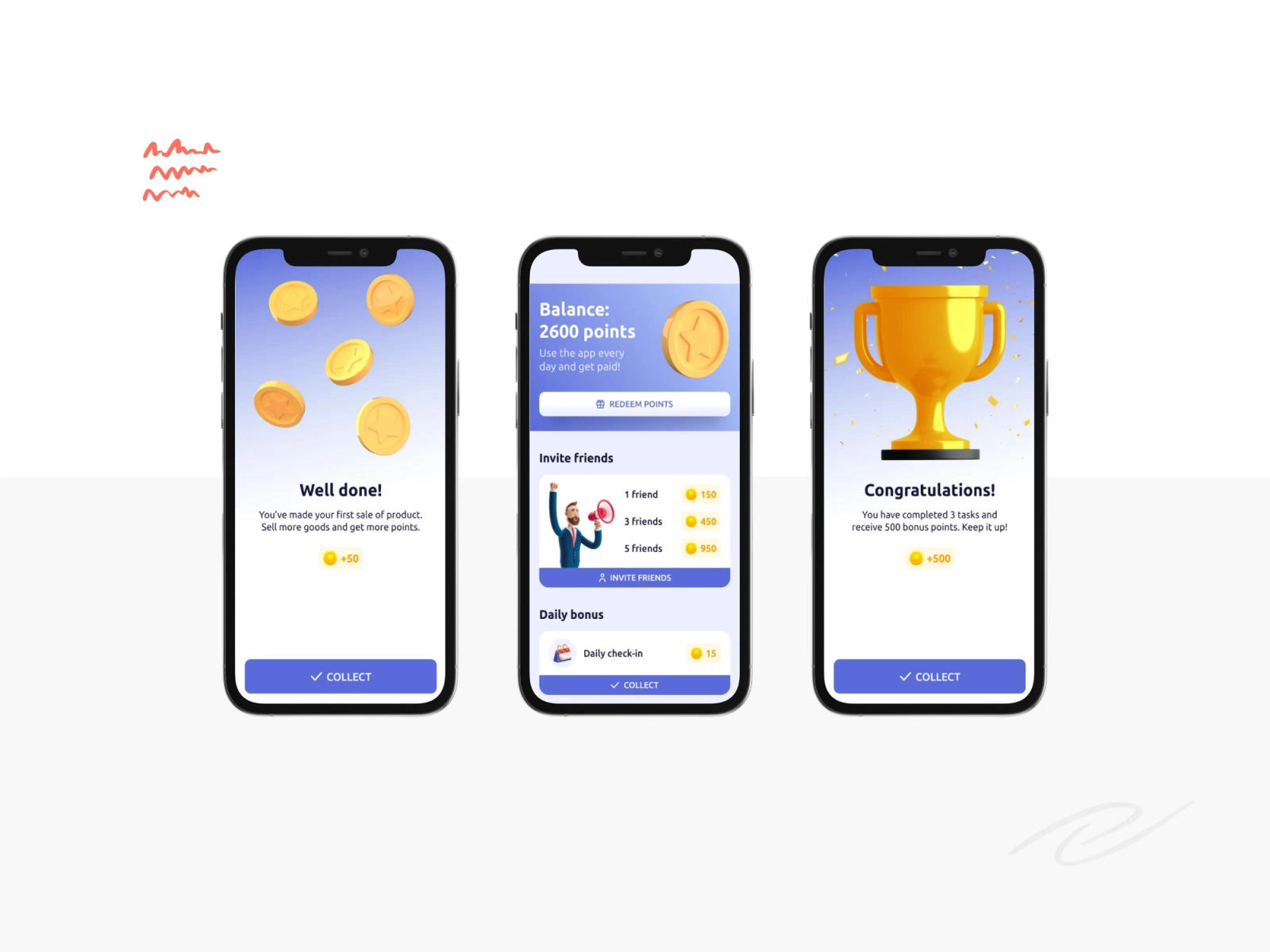
The psychological foundation for both scratch cards and spin-the-wheel is not complicated, but it is counterintuitive. The intuitive assumption is that users respond most strongly to reliable rewards: if you know a reward is coming, you show up for it. The data says the opposite.
In a series of experiments in the 1950s, psychologist B.F. Skinner tested different reward schedules on rats pressing levers. One group received a food pellet every time they pressed. The other group received pellets on a variable schedule: sometimes after one press, sometimes after ten, sometimes after three. The rats on the variable schedule pressed the lever far more frequently and with more persistence, even when rewards were not forthcoming. The unpredictability was not a frustration. It was the driver.
This is the variable ratio reinforcement schedule. It is the most powerful partial reinforcement schedule identified in behavioural psychology, producing high and steady response rates with little pause after reinforcement. The pattern transfers directly to human behaviour. A salary paid on the same date every month does not produce the same behavioural intensity as a scratch card that sometimes yields nothing and sometimes yields a significant reward. The unpredictability drives repeated play far more effectively than guaranteed rewards.
The neuroscience explains why. Dopamine release peaks during anticipation, not during gratification. The moment before the scratch card is revealed, the moment the wheel is still spinning, is the peak dopamine moment. The reward itself is secondary. This is why research on scratch card psychology shows that anticipation can be more rewarding than the reward itself, with the neurological response making the experience pleasurable regardless of the outcome.
There is a second psychological mechanism at work alongside variable ratio reinforcement: the endowment effect. Once a user receives a scratch card, they psychologically "own" the potential reward before they scratch it. The card in their possession has value to them that is disproportionate to its actual expected value. This is why users who receive scratch cards are more likely to complete an action they were considering anyway: the pending reveal creates a pull toward completion that a static discount code does not.
Both mechanics also exploit a third psychological effect: the near miss. When the wheel stops one segment away from the big prize, the brain responds almost as intensely as it would to a win. The "near miss" effect produces nearly as much dopamine as an actual win, which reinforces continued engagement. Spin-the-wheel implementations that show the wheel slowing near high-value prizes are deliberately engineering this response.
Understanding these mechanisms matters not just for building effective campaigns but for building responsible ones. Neuroscientific research confirms the parallels between variable ratio reinforcement in games and in gambling. The same architecture that drives slot machine engagement drives scratch card and spin-wheel engagement. That does not make these mechanics unethical by default, but it does mean teams should implement them with intention: rewards tied to genuine user actions, probability disclosed where possible, and win-loss ratios set to produce a positive cumulative experience rather than an extractive one. The ethical boundary between gamification that motivates positive behaviour and dark-pattern gamification that exploits vulnerability is transparency and user control. Teams that stay on the right side of that boundary produce long-term retention. Teams that cross it produce short-term engagement followed by trust damage.
Scratch Cards: How They Work as a Retention Mechanic
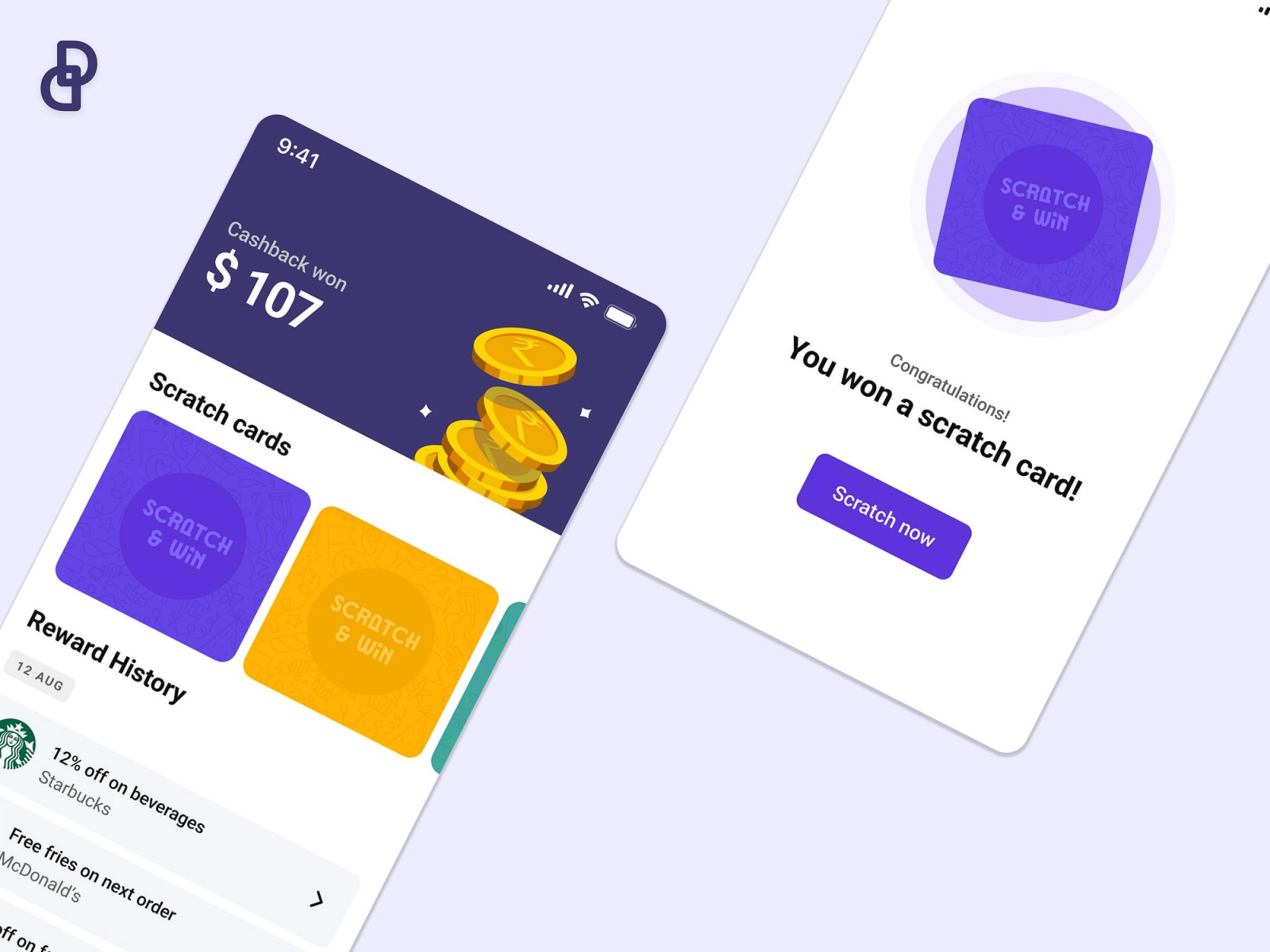
A scratch card in a mobile app is a reveal mechanic. The user completes a qualifying action, receives a card, and reveals the outcome by scratching (swiping or tapping across the card surface). The reward or outcome is hidden until the reveal. The interaction takes about three seconds. The psychological impact of those three seconds is disproportionate to their duration.
Scratch cards work best as a loyalty and retention mechanic because they are tied to actions the user has already completed. The card is a reward for something done, not a promise of something to come. This means the card reinforces the preceding action rather than motivating a future one. Post-action reinforcement is one of the most effective methods for habit formation, because it creates a positive feedback loop around the specific behaviour you want to repeat.
The hook model described by Nir Eyal captures this pattern: trigger, action, variable reward, investment. The scratch card slot is the variable reward phase, positioned immediately after the action phase, before the investment phase. When implemented correctly, the scratch card creates a complete habit loop in a single session.
What scratch cards are best used for:
Scratch cards fit loyalty contexts better than acquisition contexts. The reason is mechanical: a scratch card requires a qualifying action before it fires. New users have not yet completed enough actions to earn a card in the first session. Scratch cards directed at users who have just installed the app and made their first transaction work well for activation, because they reward the first conversion event. After that, they are most effective as a recurring reward for users who are already engaged: after each transaction, after each session, after each referral, or after each specific action that represents core usage.
The Indian fintech context illustrates this pattern clearly. Google Pay's scratch card system ties card delivery to every eligible UPI transaction. The action is the transaction. The card is the post-action reward. Users who make more transactions earn more cards. The system creates a direct incentive loop: transact more, receive more chances at variable rewards. The Observer Research Foundation characterised this as a variable-reward mechanism that converted payment behaviour from a rational choice into a compulsive habit, which is exactly what variable ratio reinforcement produces when it is well-executed.
Paytm's scratch card and cashback points system has been studied in the context of UPI adoption, with research showing that gamification elements directly improve customer engagement, repeat transaction frequency, brand loyalty, and user satisfaction. The key finding: the effect is strongest when the scratch card is tied to a specific action rather than distributed randomly over time.
Scratch card implementation decisions that matter:
The win-loss ratio is the most consequential configuration decision. A ratio that produces too few wins makes the mechanic feel like a tax on user attention. A ratio that produces wins too frequently removes the unpredictability that drives engagement. For most contexts, a ratio in the range of 1 win per 3 to 5 cards maintains the variable ratio effect while ensuring users experience enough wins to stay engaged. The specific ratio should be tested, not assumed.
The value of wins matters independently of frequency. A card that always reveals a 2% discount does not trigger the dopamine response that a card with a variable range of outcomes does. The prize pool should include at least one high-value outcome, a cluster of mid-value outcomes, and a majority of low-value or no-value outcomes. The high-value outcome makes the mechanic feel genuinely rewarding. The low-value majority keeps cost per campaign predictable. Users accept losing most scratch cards when they know a meaningful win is possible.
The timing of delivery should be immediate, within the same session as the qualifying action. Delayed reward delivery breaks the habit loop because it disconnects the action from the reward in the user's memory. A card delivered 24 hours after the qualifying action does not reinforce that action. It feels like a separate event. Same-session delivery is the technical requirement for effective scratch card habit formation.
Expiry creates urgency without requiring countdown timers or aggressive nudges. Google Pay's scratch cards expire in 7 days if not scratched. This is a reasonable window that creates mild urgency without feeling punitive. A card with no expiry has no pull. A card that expires in one hour feels adversarial. The 5 to 7 day window hits the functional range for most apps.
Spin-the-Wheel: How It Works as an Acquisition and Re-Engagement Mechanic
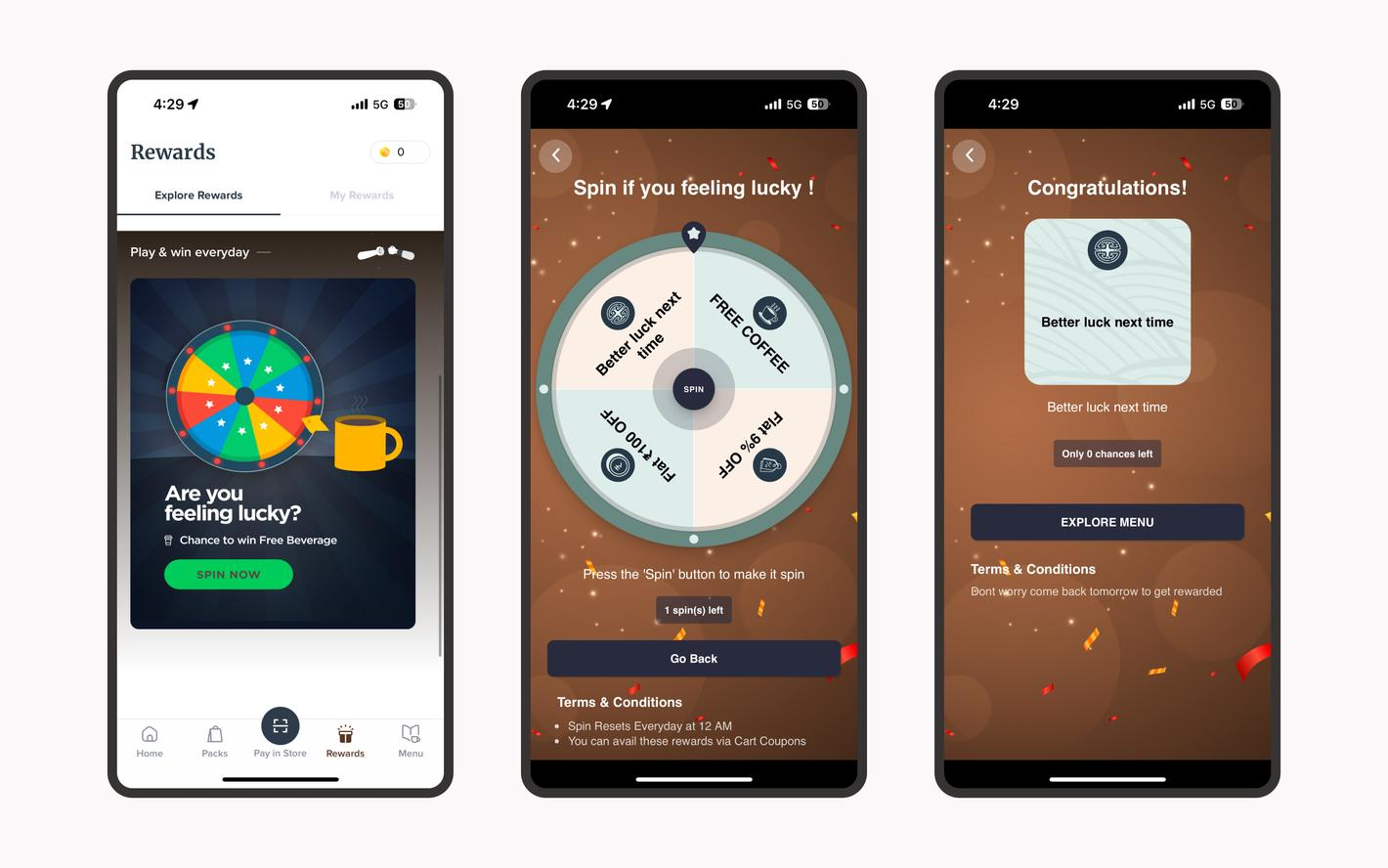
Spin-the-wheel is structurally different from scratch cards in one important way: the reveal is animated and interactive. The user actively initiates the spin. They watch the wheel turn. They see it slow. They observe where it lands. The interaction is participatory in a way that scratching is also participatory, but the spin adds a duration: there are several seconds between initiation and outcome during which the user is fully engaged in watching.
This duration is the mechanic's core advantage. It extends the anticipation window, which extends the dopamine build-up. The spinning action builds suspense and engagement in a way that a static reveal does not. The user's perception that they actively participated in the outcome (even though the outcome is pre-determined) increases their emotional investment in it.
Because spin-the-wheel does not require a prior action to trigger it (though it can be configured to do so), it is more flexible than scratch cards in the contexts where it can be deployed. It fires well on acquisition, where a user who has just installed the app or created an account receives a spin as a welcome reward. It fires well on re-engagement, where a lapsed user who returns to the app is greeted with a spin opportunity. It fires well on campaigns tied to specific dates (festive seasons, app anniversaries, launch events) where the wheel becomes a time-limited mechanic that creates FOMO around return visits.
Indian app examples that demonstrate each use case:
CRED uses spin-the-wheel as a daily engagement mechanic, offering users up to 10 chances per day to spin for rewards including bitcoins, gift vouchers, and exclusive offers. The spin is available from the "Club" section of the app, accessible without completing a specific action first. This positions it as a daily pull: a reason to open the app even on days when the user has no bill to pay or transaction to make. The result is that CRED's spin mechanic drives daily active engagement from users who would otherwise be passive between bill payment cycles, which for most credit card users means 30-day intervals. The wheel converts a monthly utility into a daily habit.
Jar, India's no.1 digital gold savings app, ties its spin mechanic directly to transactions. Every transaction on Jar earns a spin on the Wheel of Savings, with outcomes including doubling the saved amount or winning cashback. This is spin-the-wheel used as a transaction reinforcement mechanic, structurally similar to scratch cards in its action-reward loop but with the extended visual engagement of the spinning animation. The message is explicit in Jar's product copy: "spend more to save more, and win more money." The mechanic turns each transaction into both a financial action and a game move.
Nykaa deploys spin-the-wheel primarily for new user sign-ups and during sales events. The typical rewards are discount coupons or free samples. This is spin-the-wheel in its acquisition context: a new user who spins and wins a discount has now received personalised value from the app before making a single purchase. The spin functions as a first-value moment, accelerating time-to-conversion by giving the user a concrete reward to redeem.
Spin-the-wheel implementation decisions that matter:
The number of spins per session or per day defines the mechanic's habit-formation potential. CRED's 10 daily spins is a high number that maximises daily return visits but risks devaluing individual spins. For most apps, 1 to 3 daily spins maintains the mechanic's perceived scarcity, which sustains its perceived value. When every user can spin 10 times a day, a single spin carries less emotional weight than when each user receives one per day.
The visual design of the wheel directly affects perceived fairness and excitement. Prize segments that vary in size (smaller segments for higher-value prizes, larger segments for more common outcomes) visually communicate the probability distribution to the user. This is both accurate and effective: users who understand that the premium prize segment is smaller do not feel cheated when they do not win it, but they remain engaged by the near-miss effect when the wheel slows near it. A wheel with equal-sized segments feels less authentic because it does not map to the actual probability distribution.
The social sharing moment immediately after a win is an acquisition amplifier that most teams underuse. A spin result screen that makes it easy to share "I just won X on [App]" on WhatsApp or Instagram turns each winner into an organic acquisition channel. The viral coefficient of a well-designed spin-the-wheel mechanic can meaningfully reduce paid acquisition costs during campaign periods.
Prize pool configuration follows the same logic as scratch cards: one high-value anchor, several mid-value outcomes, a majority of low-value or small discount outcomes. The high-value anchor (a free month of premium, a significant cashback, a featured product) makes every spin feel like it could matter. The majority of outcomes being modest keeps budget predictable. Some teams configure guaranteed-win spin wheels: every spin produces some outcome, even if most outcomes are low-value. Guaranteed-win mechanics reduce the frustration of no-win outcomes but also reduce the dopamine spike that comes from winning against a non-guaranteed pool.
Scratch Cards vs. Spin-the-Wheel: Which Mechanic for Which Moment
Both mechanics exploit the same psychological foundation, but they perform differently across user lifecycle stages. The decision of which to use is a function of when in the user journey the mechanic fires and what behaviour you are trying to reinforce.
Use scratch cards when:
The user has just completed a core action and you want to reinforce that action immediately. Post-transaction, post-payment, post-referral, post-first-purchase: these are scratch card moments. The card is a receipt for the action, made exciting. The mechanic works best when it is earned, not given freely, because earned rewards create stronger action-reward associations than free rewards.
The campaign is ongoing and tied to recurring usage. A daily scratch card for daily app opens, a card per transaction for payment apps, a card per order for e-commerce: these create predictable habit loops. The user knows a card is available and the variable outcome creates the pull for return visits.
The user base is established and you are reinforcing retention rather than driving acquisition. Scratch cards presuppose a user who has something to do in the app. They are not effective as a cold-traffic mechanic.
Use spin-the-wheel when:
You are driving acquisition or re-engagement and need to deliver first value before the user has completed a qualifying action. A welcome spin for new installs, a return spin for lapsed users after 7 or 14 days of inactivity, a spin tied to a festive campaign that draws dormant users back to the app: these are spin-the-wheel moments.
You need a time-limited mechanic with visible scarcity. Festive season campaigns, IPL seasons, Diwali sales, app anniversary events: these benefit from spin-the-wheel's visual energy and its natural framing as a limited-time opportunity. WebEngage explicitly positions spin-the-wheel as the mechanic for festive season campaigns, where the visual excitement of the spinning wheel matches the seasonal energy of the campaign.
You want a mechanic that drives social sharing. The spin animation and the win reveal are more shareable than a scratched card. The visual drama of the wheel is a natural social object in a way that a static scratch reveal is not.
The combination approach:
CRED runs both mechanics concurrently: the daily spin for habitual engagement and scratch cards tied to specific purchase events within the CRED store. This is the right architecture for mature apps with large, active user bases. The spin handles daily return visits. The scratch card handles transaction reinforcement. Neither mechanic cannibalises the other because they fire in different contexts.
For apps earlier in their lifecycle, starting with one mechanic and expanding to the other is the lower-risk approach. Teams that run both simultaneously before they have the data to differentiate targeting and timing are more likely to produce mechanic fatigue than retention lift.
The Festive Season Amplifier: Why These Mechanics Outperform Push Notifications During Peak Periods
India's festive season (Navratri through Diwali, typically October to November) represents the highest-intensity commercial period for consumer apps across fintech, e-commerce, and media. Every app runs aggressive campaigns. Push notification volumes spike across the ecosystem. User attention is fragmented across competing notifications from dozens of apps simultaneously.
In this context, in-app gamification has a structural advantage over push notifications: it captures users who are already in the app rather than competing for attention in a crowded notification layer. A user who opens an e-commerce app during Diwali and is greeted by a spin-the-wheel opportunity is already in the funnel. The mechanic deepens the session and increases conversion probability without competing with any other app's push strategy.
WebEngage's gamification data shows that users who engage with gamified content are more likely to return during campaign periods and that gamified in-app mechanics directly increase conversion rates by incentivising users to complete purchases. The mechanic creates a reason to stay in the app and a reward for doing so.
Industry statistics show that companies using gamified tactics see a 48% increase in customer engagement and a 22% rise in retention rates. During festive periods, when baseline engagement is already elevated, the uplift from gamification compounds: you are applying an engagement multiplier to an already-engaged audience.
The practical execution for festive campaigns: a time-limited spin-the-wheel that fires on the home screen for any user who opens the app during the campaign period, with a prize pool that includes festive-themed rewards (products, significant discounts, exclusive access). The wheel's daily availability during the campaign period creates a daily pull, turning a 30-day Diwali campaign into a 30-day daily engagement driver rather than a one-time event.
The Reward Hub: The Mechanic Nobody Builds First
Both scratch cards and spin-the-wheel produce rewards. Those rewards need to live somewhere in the app that users can access, track, and redeem. Most teams implement the game mechanic without implementing an adequate reward hub, and then wonder why redemption rates are low.
The reward hub is a persistent in-app screen where users see their accumulated rewards, their pending scratch cards, their spin results, and their redeemable prizes. It serves three functions. First, it makes reward accumulation visible, which creates a sense of growing value that motivates continued engagement. Second, it reduces redemption friction: users who can find and redeem their rewards in one place redeem more rewards than users who have to navigate a fragmented experience. Third, it creates a daily check-in habit independent of other game mechanics, because users return to check whether they have unclaimed rewards.
Digia Engage's gamification module includes a persistent reward hub where users can view and claim all rewards, ensuring nothing goes uncollected. This is a detail that matters more than it appears. An unclaimed reward is not just a missed redemption. It is a psychological weight: the user knows they have something in the app they have not yet collected, which creates a low-level pull toward the next session.
Metrics That Actually Tell You If the Mechanic Is Working
The wrong metrics for scratch cards and spin-the-wheel are impressions delivered and total spins or scratches. These are activity metrics, not outcome metrics. They tell you the mechanic is running, not whether it is working.
The metrics that matter:
Day N retention rate by cohort exposed to the mechanic vs. holdout. A scratch card that drives a 5% lift in Day-7 retention in the exposed cohort versus the control group is a retention mechanic that is working. A scratch card that produces high spin volume but no retention lift is entertaining users without retaining them.
Session depth change. Users who engage with the mechanic in a session should show higher session depth (more actions completed, more screens visited) in that session than matched users who did not engage. If session depth is flat or lower for mechanic-engaged users, the game is replacing app usage rather than extending it.
Core action rate in the 48 hours following mechanic engagement. For a payment app, the core action is a transaction. For a savings app, it is a savings deposit. For an e-commerce app, it is a purchase. If users who engaged with the mechanic show higher core action rates in the following 48 hours than matched controls, the mechanic is reinforcing the right behaviour.
Reward redemption rate. A redemption rate below 40% on won rewards typically signals friction in the reward collection flow, not disinterest in the rewards themselves. Fix the flow before adjusting the prize pool.
Session return rate on mechanic-available days. For daily mechanics like CRED's daily spin, the metric is whether users who have an available spin return on the day it is available at a higher rate than baseline return rates. This is the most direct test of whether the mechanic is producing the daily habit it is designed to create.
BCG research cited in analyses of CRED's strategy notes that apps using effective gamification strategies experience up to 5 times higher retention and 3 times longer session durations. These are long-term cohort outcomes, not first-session metrics. Teams that evaluate gamification mechanics based on first-session performance alone are measuring the wrong thing.
What Goes Wrong: Failure Modes That Teams Hit Repeatedly
The too-frequent win problem. When win rates are set too high to "make the experience positive," the variable ratio effect collapses. If users win 80% of the time, the 20% non-win outcome becomes the unexpected event. The mechanic loses its pull because the outcome is too predictable. Keep win rates in ranges that maintain genuine unpredictability. This is counterintuitive but well-documented in behavioural psychology.
The low-value prize pool problem. A wheel that can only land on 5%, 10%, or 15% discounts does not feel like a game. It feels like a slightly annoying discount selector. The prize pool needs a visible high-value outcome, even if that outcome has a very low probability. The high-value segment is what makes the wheel feel worth spinning.
The no-action-required spin problem. Spin-the-wheel mechanics that fire without requiring any qualifying action train users to open the app for the spin, collect the reward, and leave. This produces DAU numbers that look good and session quality numbers that are terrible. A qualifying action requirement (complete one transaction, log one activity, open a specific feature) ensures the mechanic is extending core usage rather than replacing it.
The orphaned reward problem. Rewards that users win but cannot easily find or redeem produce a specific kind of frustration that damages trust in the mechanic and in the app. Every scratch card and spin-the-wheel campaign needs a clear path from win to reward collection, surfaced prominently in the app and communicated via a single follow-up notification (not a campaign series).
The copy-paste campaign problem. Running the same prize pool, the same frequency, and the same trigger for months on end produces mechanic fatigue. Users who have seen the same wheel with the same segment values stop feeling the anticipation that makes the mechanic work. Prize pools should rotate on a schedule, with seasonal and topical relevance where possible. The xtremepush analysis of spin-to-win mechanics notes that reward timing and customisation are where most gamification implementations fail.
Ethical Implementation: Where the Line Is
The variable ratio reinforcement architecture used by scratch cards and spin-the-wheel is the same architecture studied in the context of gambling addiction. Researchers have drawn explicit parallels between loot box mechanics in games, casino slot machines, and variable-reward in-app mechanics. The Observer Research Foundation described Google Pay's scratch card system as a "weaponisation of cashbacks" and flagged gambling-adjacent design concerns. Tamil Nadu's state government excluded certain cashback programmes on lottery prohibition grounds.
These are real risks. The question for product and growth teams is not whether variable ratio reinforcement is powerful (it is), but whether the specific implementation is ethical.
The criteria for ethical implementation, per current research and regulatory trends:
Transparency about probability. Users should be able to understand the approximate likelihood of different outcomes. This does not mean publishing a detailed probability table, but it means not designing the visual presentation to actively deceive users about their odds (for example, showing a near-miss outcome that was pre-determined rather than genuinely close).
Rewards tied to positive user behaviours. Scratch cards that reward on-time bill payments, savings deposits, or completed financial actions are incentivising behaviours that benefit the user. Mechanics that reward pure session starts without any substantive action are closer to slot machine architecture than to behaviour reinforcement.
Per-user limits. Unlimited daily spins or unlimited scratch card delivery produces the intensity profile of a compulsive engagement mechanic rather than a retention mechanic. Daily limits and session caps are ethical guardrails that also produce better long-term retention, because they preserve the mechanic's novelty.
An accessible off-ramp. Users should be able to opt out of gamification mechanics without losing access to core app functionality. This is both an ethical requirement and a trust signal: users who know they can turn the mechanic off are more likely to trust the mechanic when they choose to keep it on.
Implementing Both Without Writing Code: How Digia Engage Handles This
The technical barrier to scratch cards and spin-the-wheel used to be significant. Building the scratch animation, the probability engine, the prize pool configuration, the reward hub, the expiry logic, and the targeting layer from scratch required weeks of engineering time and a full release cycle for each update.
Digia Engage's gamification module includes scratch cards, spin-the-wheel, slot machines, treasure chests, and mystery boxes as pre-built templates, with new formats added every quarter. Each mechanic is configurable from the dashboard: probability weights, per-user limits, time windows, coupon codes, and prize pool composition are all set without touching the codebase. The reward hub is included. Winner export is included. A/B testing across mechanic types is supported.
Campaigns are built and published from the dashboard and go live without an app release. That means a festive season spin-the-wheel campaign that needed to be live by Diwali morning can be configured, reviewed, and launched on the day of, not in the release cycle that closed six weeks earlier. Growth teams that run on Digia Engage report shipping gamification campaigns on daily cycles, adjusting prize pools and trigger logic between sessions based on the previous session's data.
Triggers fire on specific events, screens, or user actions, with audience filters to narrow who sees each mechanic. A scratch card that fires only for users who have just completed their third transaction, a spin-the-wheel that fires only for users who have been inactive for 7 or more days, a festive wheel that fires only for users in specific geographic segments: all of these targeting combinations are set in the dashboard without engineering involvement.
The integration with CleverTap, MoEngage, and WebEngage means that existing segmentation and event data in the CEP already in use carries over directly. Growth teams do not need to rebuild targeting logic in a new platform. The segment "users who have completed KYC but not made a first investment" that already exists in MoEngage becomes the target audience for a first-investment scratch card campaign in Digia Engage without any data duplication or re-mapping.
For the specific implementation path:
The screen-level trigger should place the mechanic at the moment of maximum contextual relevance: immediately after transaction confirmation for payment apps, at the home screen after login for daily-habit apps, on the sale landing page for e-commerce apps. The trigger fires in under 100ms of the qualifying event, which keeps the reward experience feeling immediate rather than delayed.
The prize pool configuration should start conservative and adjust based on redemption and retention data. Teams that set win rates by intuition and never adjust based on data are not running a gamification mechanic. They are running a lottery with unvalidated parameters.
The reward hub should be surfaced in the main navigation from day one of the campaign, not buried in a settings section. Reward discoverability is the single highest-impact fix for low redemption rates in teams that have already built the mechanic.
Where Scratch Cards and Spin-the-Wheel Sit in the Broader Gamification Architecture
Both mechanics are components of a larger gamification system, not standalone solutions. Digia Engage's gamification architecture covers scratch cards, spin-the-wheel, slot machines, streak trackers, milestone badges, and quizzes, all from a single dashboard.
Scratch cards and spin-the-wheel handle the moment of surprise and reward. Streak mechanics handle the habit formation side of retention, using loss aversion to motivate consecutive-day behaviour. Milestone badges handle the long-arc progression that keeps users engaged across weeks and months, not just sessions. Quizzes handle education and feature discovery, keeping users in the app while improving product comprehension.
A complete gamification architecture uses each of these mechanics in the context where it performs best. Scratch cards and spin-the-wheel are the highest-intensity, highest-engagement mechanics in that system. They produce the strongest emotional activation. They are also the most resource-intensive to configure well and the most prone to the failure modes described above.
Teams that want to start somewhere should start with one mechanic, one trigger, and one prize pool. Measure retention impact versus a holdout group. Adjust. Add complexity only when the base layer is working. The apps that get gamification wrong do so by launching a full gamification ecosystem before they have validated that any single mechanic produces measurable retention lift.
Key Takeaways
Scratch cards and spin-the-wheel both exploit variable ratio reinforcement, the most powerful behavioural reinforcement schedule identified in psychology. The dopamine response peaks during anticipation, not gratification. This is what makes both mechanics produce sustained engagement rather than one-time novelty.
Scratch cards are loyalty and retention mechanics. They work best when tied to specific completed actions, delivered immediately in the same session, with variable prize pools that include at least one high-value outcome. They reinforce the actions you most want users to repeat.
Spin-the-wheel is an acquisition and re-engagement mechanic, as well as a seasonal campaign driver. It works in cold-traffic contexts where no prior qualifying action has been completed, and in re-engagement contexts where the spin is the welcome-back moment for lapsed users.
Indian apps demonstrate both mechanics at scale. CRED's daily spin drove 40% daily active engagement from rewards-eligible users. Jar ties every transaction to a wheel spin. Nykaa uses the wheel for new sign-ups and festive sales. Google Pay's scratch card system helped build a dominant UPI position. Each implementation reflects deliberate design decisions about trigger, timing, prize pool, and frequency.
Ethical implementation requires probability transparency, rewards tied to positive user behaviours, per-user limits, and an accessible opt-out. The same architecture that drives healthy engagement can produce compulsive behaviour when limits are absent and transparency is withheld.
Both mechanics are deployable in Digia Engage without engineering involvement, from probability weights and prize pool configuration to trigger logic and audience filters. Growth teams go from campaign concept to live mechanic in hours, not release cycles.
Measurement should focus on Day N retention lift versus holdout, core action rates in the 48 hours post-engagement, and session depth, not on impressions or total spins. The mechanic's value is in what users do after engaging with it, not in the engagement itself.
Further Reading
From Digia Engage:
- Gamification Templates and Mechanics — scratch cards, spin-the-wheel, slot machines, streak trackers, and milestone badges, configurable from the dashboard without engineering involvement
- Gamification and Retention: Streak, Reward, and Retention Mechanics That Actually Work — how streak mechanics complement scratch cards and spin-the-wheel in a complete gamification system
- Reducing Churn with Behavioral In-App Interventions — the upstream churn signals that gamification mechanics can address
- Designing Non-Annoying Nudges: Frequency, Placement, and Context — how to pair gamification mechanics with nudge systems without creating friction
- CleverTap Integration — using existing CEP segmentation to target gamification campaigns
External Sources:
- Variable Rewards in Product Design — Appcues (Skinner's variable ratio reinforcement and its application to mobile product design)
- Spin the Wheel Gamification: Boosting Engagement and Conversions — Plotline (CRED, Jar, and Nykaa case studies with implementation guidance)
- Gamification in CRED: Why Should the FinTech Industry Leverage Gamification? — Customer Glu (CRED's spin mechanics and coin system in detail)
- Psychology Behind Scratch Cards — VeeCard App (endowment effect, anticipation, and dopamine in scratch card design)
- Gamification Mechanics: Spin-to-Win, Scratch Cards, and Prediction Games as Acquisition Tools — XtremePush (how each mechanic maps to different acquisition and engagement goals)
- Unlock the Power of Gamification This Festive Season — WebEngage (festive season gamification with 48% engagement increase and 22% retention lift data)
- The Weaponisation of Cashbacks on UPI by Google Pay — Observer Research Foundation (ethical analysis of Google Pay's scratch card architecture)
- Dark Side of Gamification: Ethical Challenges in UX/UI Design — Medium (dark pattern risks in gamification and ethical implementation guidelines)
- Gamification Statistics 2026 — WiFi Talents (85% consumer preference for gamified loyalty, 47% retention lift, 95% marketer ROI within 12 months)
- Gamification Strategies to Boost Mobile App Engagement — Storyly (22% average retention improvement from mobile app gamification)
- How CRED Became India's Most Addictive Fintech App — StudioKrew (BCG data: 5x retention and 3x session duration from effective gamification)
- Influence of Gamification on UPI Adoption and Sustained Digital Payment Behavior in Indian E-Commerce — European Economic Letters (peer-reviewed study on gamification's role in UPI adoption and habit formation in India)
Scratch cards and spin-the-wheel are live in Digia Engage's gamification module today, with probability weights, per-user limits, prize pool configuration, and reward hub delivery all managed from the dashboard, no engineering ticket needed. Book a demo to see a live mechanic configured for your specific use case, or see the full gamification template library to explore every mechanic currently available.