


TL;DR: Mobile apps rarely fail under perfect conditions. They fail under weak networks, low-end devices, interruptions, background restrictions, and real-world instability. Effective mobile testing focuses on resilience, recovery, and reliability under chaos, not just performance in controlled environments.
Most mobile applications are tested in environments that look nothing like the environments where they are actually used.
Inside development pipelines and QA labs, applications usually run on stable Wi Fi connections, powerful devices, fresh operating systems, and predictable user flows. There are no interruptions during payment processing, no unstable network handoffs during authentication, and no battery optimization systems aggressively terminating background tasks. Everything appears smooth because the environment itself is controlled.
Real users operate under entirely different conditions.
They interact with applications while commuting through low coverage areas, multitasking across apps, using aging devices with limited storage, or switching between unstable mobile networks. Notifications interrupt active sessions, incoming calls pause transactions, and background restrictions silently interfere with synchronization systems. In many cases, the surrounding environment becomes more important than the application itself in determining whether the experience feels reliable.
This gap between controlled testing and real-world usage is where many mobile failures emerge. Applications that pass internal QA often struggle in production because mobile systems are inherently unstable. Networks fluctuate constantly, devices vary dramatically in capability, and operating systems continuously prioritize battery preservation over application continuity.
Mobile performance is not defined by how fast an application behaves under perfect conditions. It is defined by how reliably it survives imperfect ones.
Testing under real conditions is ultimately an exercise in resilience engineering. The goal is not simply to confirm that features work correctly in ideal environments. The goal is to understand how the application behaves when the environment becomes unpredictable.
The Reality of Mobile Environments
One of the biggest misconceptions in mobile development is the assumption that production conditions are close enough to testing environments for standard QA processes to catch most reliability issues. In reality, mobile ecosystems introduce layers of instability that are difficult to reproduce consistently in controlled environments.
Unlike desktop systems, mobile applications operate inside constantly changing contexts. Connectivity strength shifts minute by minute. Background processes compete aggressively for memory and CPU resources. Users move between networks while sessions remain active. Operating systems suspend, delay, or terminate tasks unexpectedly to preserve battery life. Even physical conditions such as device temperature or storage availability can alter application behavior significantly.
This creates a category of bugs that rarely originate from isolated coding mistakes alone. Instead, failures emerge from interactions between environmental instability, timing conditions, hardware limitations, and unpredictable user behavior. A login system that appears flawless during internal testing may fail repeatedly once users move between Wi Fi and cellular data during authentication. A media upload feature that performs smoothly on flagship devices may collapse entirely on low memory phones where the operating system kills background tasks aggressively.
These are not edge cases. They are ordinary production scenarios.
The challenge is that most testing pipelines still prioritize ideal-condition validation rather than environmental realism. Applications are evaluated inside clean, repeatable environments even though the real world is chaotic by nature.
Why Reliability Matters More Than Benchmark Speed
Many teams optimize aggressively for measurable benchmark metrics such as startup time, frame rendering speed, or API latency under ideal conditions. While these metrics are valuable, they rarely reflect the experience users encounter daily. Users do not evaluate applications through engineering dashboards. They evaluate them through reliability.
An application that loads quickly but loses progress during interruptions feels broken. A payment flow that performs smoothly under stable networks but fails under weak connectivity feels unsafe. A messaging app that delays notifications because of aggressive background restrictions feels unreliable regardless of how polished the interface appears.
This becomes even more critical in industries where reliability directly affects trust and retention.
| Industry | Real-World Reliability Risk |
|---|---|
| Fintech | Duplicate payments and failed transactions |
| Healthcare | Delayed synchronization and missing records |
| E-commerce | Checkout failures during interruptions |
| Media Streaming | Playback instability under fluctuating bandwidth |
| Ride Sharing | GPS inconsistencies and network transition failures |
| Messaging | Delayed notifications and synchronization issues |
In practice, users often tolerate slightly slower applications more easily than unreliable ones. Stability creates confidence. Instability erodes it quickly.
That is why modern mobile testing increasingly focuses on degradation behavior instead of only ideal-condition performance. Teams are beginning to ask a different question. Instead of asking whether the app works under perfect conditions, they ask how gracefully it behaves once conditions begin to deteriorate.
Networks Are the First Layer of Chaos
Connectivity instability remains one of the most underestimated aspects of mobile performance testing. Development environments often conceal network problems because office internet connections are dramatically more stable than the networks users experience daily. Yet millions of users still operate under weak or inconsistent connectivity conditions.
Applications frequently encounter:
- Congested public Wi Fi environments
- Weak cellular coverage and unstable signal transitions
- High latency networks with intermittent packet loss
Even modern 5G environments are not consistently stable. Users move between towers while commuting, enter low coverage buildings, travel through underground transit systems, and switch between wireless networks continuously. Applications that appear smooth in stable testing environments may become frustratingly slow once latency increases or connectivity fluctuates unpredictably.
Bandwidth limitations are only one part of the problem. High latency creates an entirely different category of failures. A user may technically remain connected while still experiencing delayed responses, frozen loading states, inconsistent synchronization behavior, and duplicated actions caused by repeated user interactions during slow response cycles.
This is where many systems begin to fail behaviorally rather than technically. The backend may still function correctly, but the assumptions behind the user experience start collapsing under unstable communication patterns. Users tap buttons repeatedly because responses arrive too slowly. API requests overlap unpredictably. Loading states persist longer than expected, increasing the likelihood of navigation interruptions or duplicate submissions.
Ride-sharing platforms such as Uber operate inside highly unstable mobile conditions where connectivity changes constantly during active sessions. Drivers move between cellular towers, enter underground parking areas, lose GPS precision in dense urban environments, and switch between foreground and background states repeatedly during trips. Even small synchronization delays can affect ETA calculations, trip status updates, and live location accuracy. Systems operating at this scale are designed around recovery and continuity rather than assuming stable connectivity throughout the session.

Offline handling introduces another layer of complexity. Many applications still treat offline conditions as exceptional failures rather than expected states. As a result, users lose progress immediately when connectivity disappears mid-session. Modern mobile systems increasingly require persistent local state handling, deferred synchronization, retry management, and conflict resolution logic to maintain usability during temporary disconnections.
Applications that recover gracefully from connectivity loss feel substantially more reliable, even when failures occur.
Low-End Devices Expose Architectural Weaknesses
A major blind spot in mobile testing appears when teams develop primarily on premium hardware. Modern flagship devices conceal inefficiencies because they contain powerful processors, large memory capacity, advanced GPUs, and fast storage systems capable of absorbing performance overhead easily.
Low-end devices reveal the truth about application architecture.
Applications that feel smooth internally may become unstable or unusable once resource constraints increase. This is particularly important in regions where mid-range and entry-level devices dominate market usage. A rendering delay that feels insignificant on high-end hardware may create severe interface stuttering on constrained devices. Background synchronization systems that appear reliable during internal testing may fail repeatedly once memory pressure increases.
Resource limitations affect far more than visual smoothness. Limited RAM increases the likelihood of process termination, cache eviction, state loss, and forced activity recreation. Weak processors slow down image rendering, encryption tasks, list virtualization, and database operations. Storage pressure introduces additional instability through failed downloads, corrupted cache behavior, and interrupted media processing workflows.
Battery optimization systems create another major challenge. Modern operating systems aggressively prioritize power efficiency, especially across Android ecosystems where manufacturers implement highly customized background management policies. Applications may have synchronization jobs delayed, notifications restricted, or processes terminated entirely after brief inactivity periods.
Applications such as Instagram have historically optimized aggressively for lower-end Android devices because hardware constraints directly affect engagement and retention across emerging markets. Features that appear lightweight on premium devices may introduce rendering lag, memory pressure, delayed media loading, and UI instability on constrained hardware. Optimizing for lower-resource environments often improves overall application resilience across the broader device ecosystem.
These behaviors vary dramatically across manufacturers, which makes reproducibility difficult. Two devices running the same Android version may behave entirely differently because vendors modify battery management and background execution rules independently.
Testing only on clean emulator environments rarely captures these realities accurately.
Interruptions Define Mobile Usage Patterns
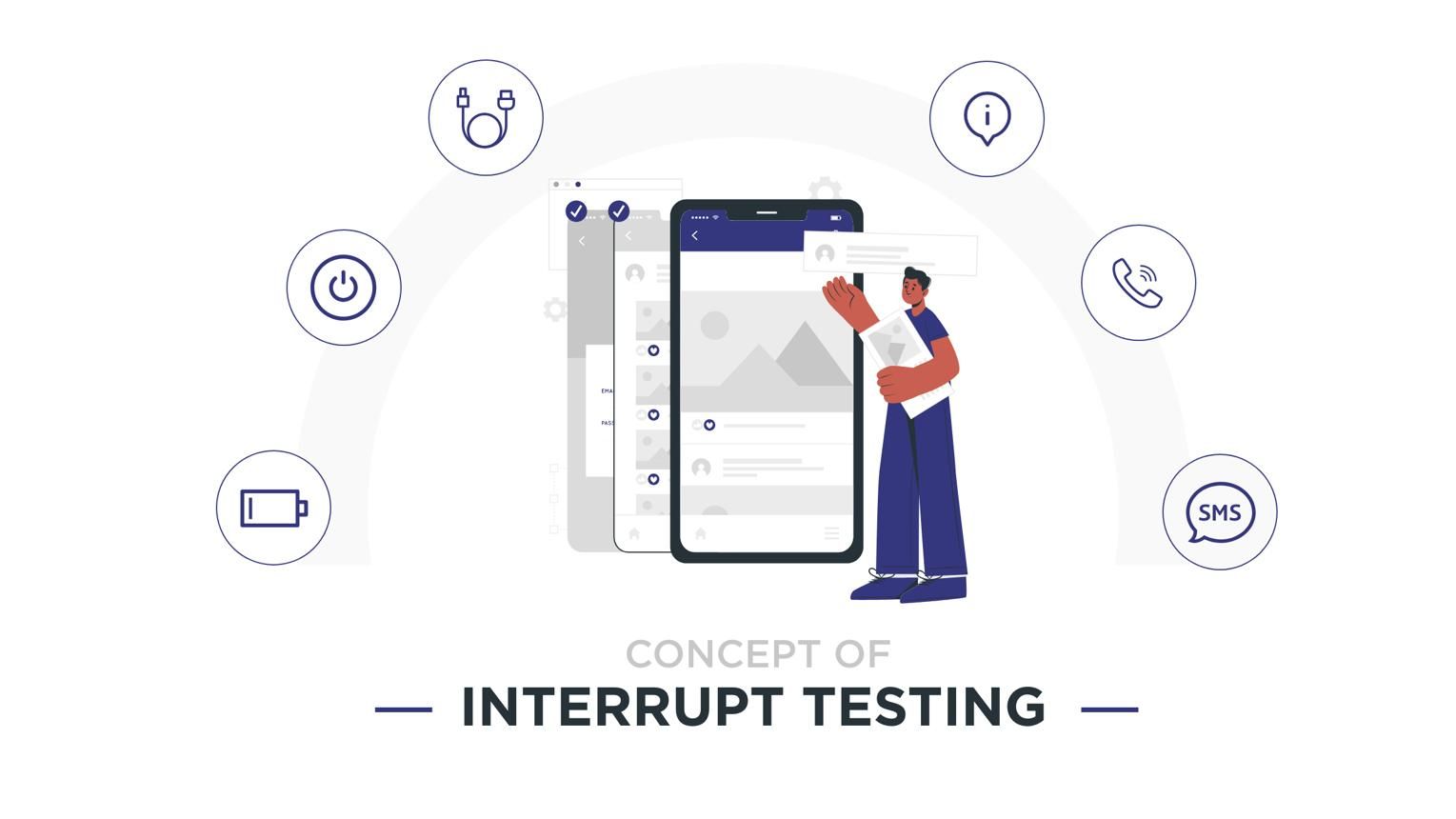
Mobile users rarely interact with applications continuously from beginning to end without interruption. Incoming calls, push notifications, permission dialogs, multitasking behavior, and screen locks constantly disrupt active sessions. These interruptions are not edge cases. They are fundamental characteristics of mobile usage.
Many applications fail because developers unintentionally assume uninterrupted execution. But mobile operating systems are designed specifically around interruption-driven workflows. Users frequently leave applications temporarily to copy verification codes, respond to messages, check notifications, or switch between services during ongoing flows.
A payment session interrupted by an incoming call may reset transaction state unexpectedly. A media upload interrupted during backgrounding may restart from the beginning instead of resuming correctly. A navigation flow interrupted by a permission dialog may lose progress entirely once the user returns.
These failures often emerge from state management assumptions rather than isolated feature defects. The application itself may technically function correctly, but lifecycle transitions expose hidden weaknesses in restoration logic, synchronization timing, and navigation consistency.
Background and foreground transitions are especially dangerous because operating systems may suspend execution, reclaim memory, delay background jobs, or terminate the application process entirely while it remains inactive. When users return, the application must reconstruct state reliably despite incomplete environmental continuity.
Many severe production bugs only appear during these lifecycle transitions.
Device Fragmentation Multiplies Complexity
Device fragmentation remains one of the defining challenges of mobile engineering, particularly within Android ecosystems where hardware diversity is enormous. Applications must operate across different screen sizes, processor capabilities, memory configurations, operating system versions, and manufacturer-specific software modifications.
Two devices running the same operating system may still behave differently because vendors customize notification delivery systems, battery optimization rules, memory management behavior, and background execution policies independently. This creates inconsistencies that are difficult to reproduce internally because the same workflow may behave reliably on one device while failing silently on another.
Environmental conditions further complicate performance behavior. Applications may degrade under high temperatures, low battery conditions, limited storage availability, congested cellular towers, roaming networks, or prolonged sessions that trigger thermal throttling. CPU performance can decrease significantly once devices overheat, especially in applications involving navigation, gaming, streaming, or continuous background processing.
This means mobile performance testing cannot focus exclusively on software correctness alone. Environmental degradation affects the application experience directly.
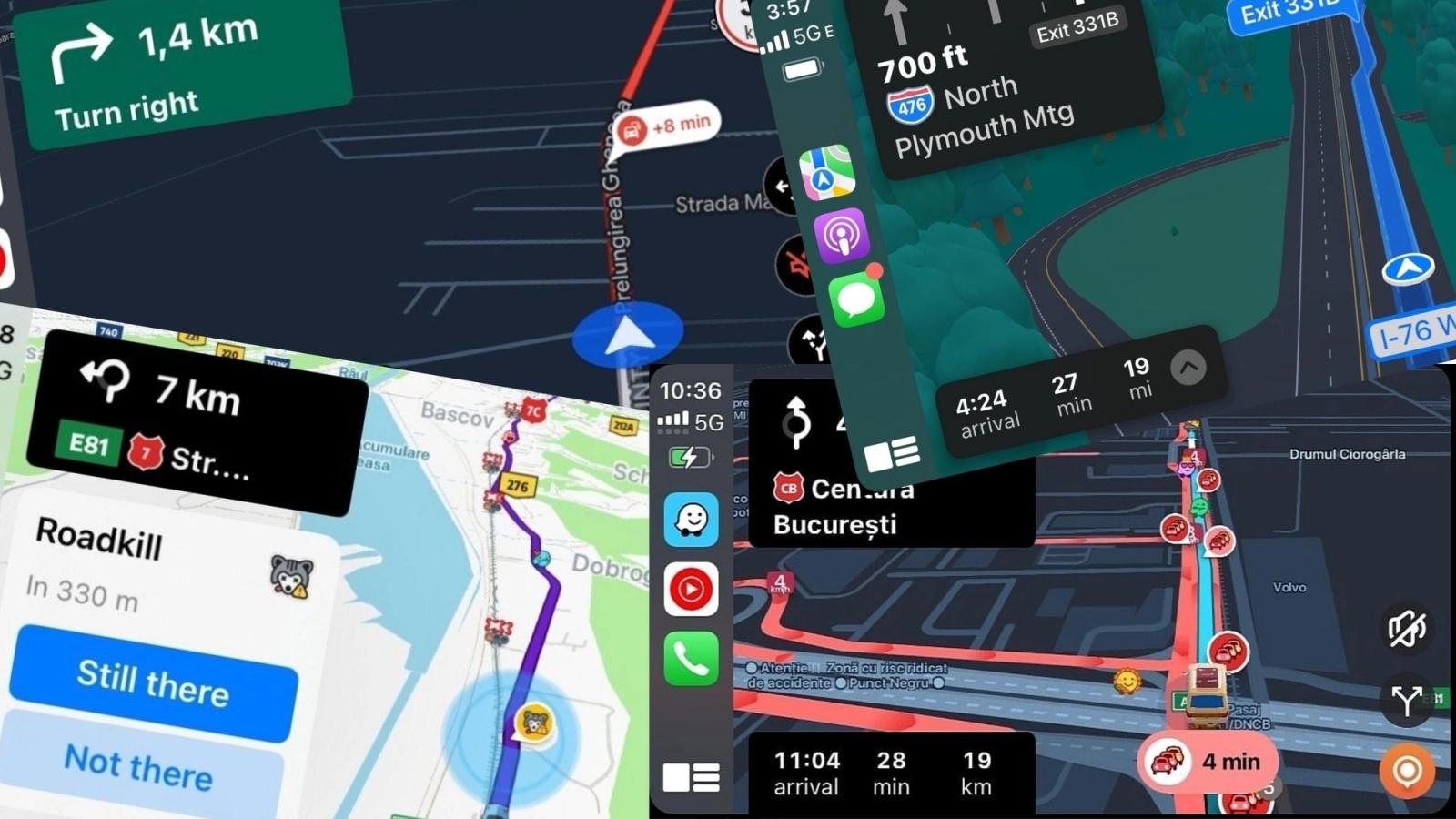
Navigation platforms such as Google Maps operate under prolonged real-world stress conditions involving continuous GPS usage, active rendering, thermal pressure, battery drain, and frequent background transitions. Applications running for extended sessions must account for performance degradation over time rather than optimizing only for short benchmark scenarios. Sustained reliability becomes significantly more important than temporary peak performance during these long-running workflows.
Observability Is Now Essential
Testing alone cannot reproduce every real-world condition consistently. This is why observability systems have become essential components of modern mobile engineering. Teams increasingly rely on production telemetry to understand how applications behave across diverse environments.
Crash analytics, session replay systems, real user monitoring platforms, performance tracing tools, and device health telemetry help identify patterns that synthetic testing often misses. Certain failures may occur only on specific chipsets, under low storage conditions, or during prolonged background execution cycles.
Without observability, many reliability issues remain invisible until users report them publicly.
Modern mobile engineering increasingly treats production itself as a continuous testing environment. Instead of assuming that pre-release QA will catch every issue, teams monitor real-world behavior continuously and refine resilience strategies based on production evidence.
This shift reflects an important reality. Mobile environments are too fragmented and unpredictable for isolated testing pipelines to capture fully.
Chaos Engineering Is Becoming Part of Mobile Testing
Traditional QA approaches focus primarily on validating expected functionality. Modern resilience testing introduces a different philosophy. Instead of avoiding instability, teams intentionally create it.
Testing environments increasingly simulate:
- Random network interruptions and delayed responses
- Forced background transitions and process termination
- Memory pressure, storage exhaustion, and lifecycle disruption
The objective is not simply to verify that the happy path works correctly. The objective is to understand how the application behaves once environmental conditions become hostile.
This approach resembles chaos engineering practices used in distributed backend systems. Mobile applications now require similar resilience strategies because they operate within equally unpredictable environments. Systems must recover gracefully from interruptions instead of assuming continuity.
Stable applications are not the ones that avoid failure entirely. They are the ones that recover predictably when failure becomes unavoidable.
That distinction is becoming increasingly important as mobile architectures grow more asynchronous, distributed, and interruption-heavy.
Measuring What Actually Matters
Traditional benchmark metrics provide only partial visibility into user experience. Startup speed and rendering performance remain important, but they rarely explain why users perceive applications as unreliable.
More meaningful reliability indicators include session recovery rates, crash-free sessions, retry success behavior after network failures, background task completion reliability, and responsiveness on constrained devices. These metrics reflect whether the application continues functioning predictably under degraded conditions rather than simply how fast it performs in ideal environments.
| Metric | What It Reveals |
|---|---|
| Crash-Free Sessions | Overall application stability |
| ANR Frequency | UI responsiveness under stress |
| Session Recovery Rate | Reliability after interruptions |
| Retry Success Rate | Resilience during connectivity failures |
| Background Completion Rate | Lifecycle management stability |
| Performance on Low-End Devices | Real-world accessibility |
These indicators align more closely with actual user frustration than synthetic benchmark measurements alone.
Conclusion
Mobile environments are fundamentally unstable. Applications operate inside constantly shifting combinations of weak connectivity, fragmented hardware ecosystems, operating system restrictions, environmental degradation, battery optimization systems, and unpredictable user behavior. These variables interact continuously, creating failures that rarely appear inside clean testing environments.
That is why mobile performance testing cannot remain limited to ideal-condition validation. Real quality emerges when applications are evaluated under stress, interruption, and instability. The most reliable mobile systems are not necessarily the fastest under perfect conditions. They are the systems that continue functioning predictably once conditions begin to deteriorate.
The teams building resilient mobile experiences understand that chaos is not an exception in mobile computing. It is the default operating environment.
And ultimately, users do not experience laboratory conditions.
They experience reality.
Further Reading and References
- Testing Mobile Apps for Real-World Network Conditions by Nakul Aggarwal
- How To Test Mobile Apps In Poor Network Conditions on EssentialDesigns
- The Network’s Role in Mobile App Testing Success from SDET
Ready to ship in-app experiences without waiting on releases?