


Everything appears stable before release. Test suites pass consistently, CI pipelines stay green, and QA approvals come through without resistance. From inside the team, the system feels predictable and well-tested. There is a quiet confidence that nothing critical has been missed.
That confidence often collapses when real users arrive. Edge cases emerge, flows break under real conditions, and issues appear in places that were supposedly covered. The problem is rarely a lack of testing. It is a misallocation of testing effort.
This is where the testing pyramid becomes relevant, and also where most mobile teams get it fundamentally wrong.
What the Testing Pyramid Actually Means And Why It Exists
The testing pyramid is not about how many tests you write. It is about how you structure feedback so that problems are found early, cheaply, and with clarity. It helps teams decide where to invest effort in a way that keeps development fast without sacrificing confidence.
At its core, the pyramid reflects a simple economic truth. Smaller, isolated tests are faster and cheaper to run, while broader, system-level tests are slower and more expensive to maintain. A well-balanced system relies heavily on fast feedback and uses slower validation only where it adds real value.
The shape of the pyramid matters because it determines how quickly teams can learn. A strong base of unit tests catches issues early when they are easiest to fix. Integration tests validate how parts of the system work together. End-to-end tests then confirm that critical user journeys function as expected.
The goal is not maximum coverage. The goal is fast, reliable feedback at the lowest possible cost.
When teams ignore this balance, testing becomes slower and less effective. Bugs are discovered later, debugging becomes harder, and confidence in the system starts to decline even as the number of tests increases.
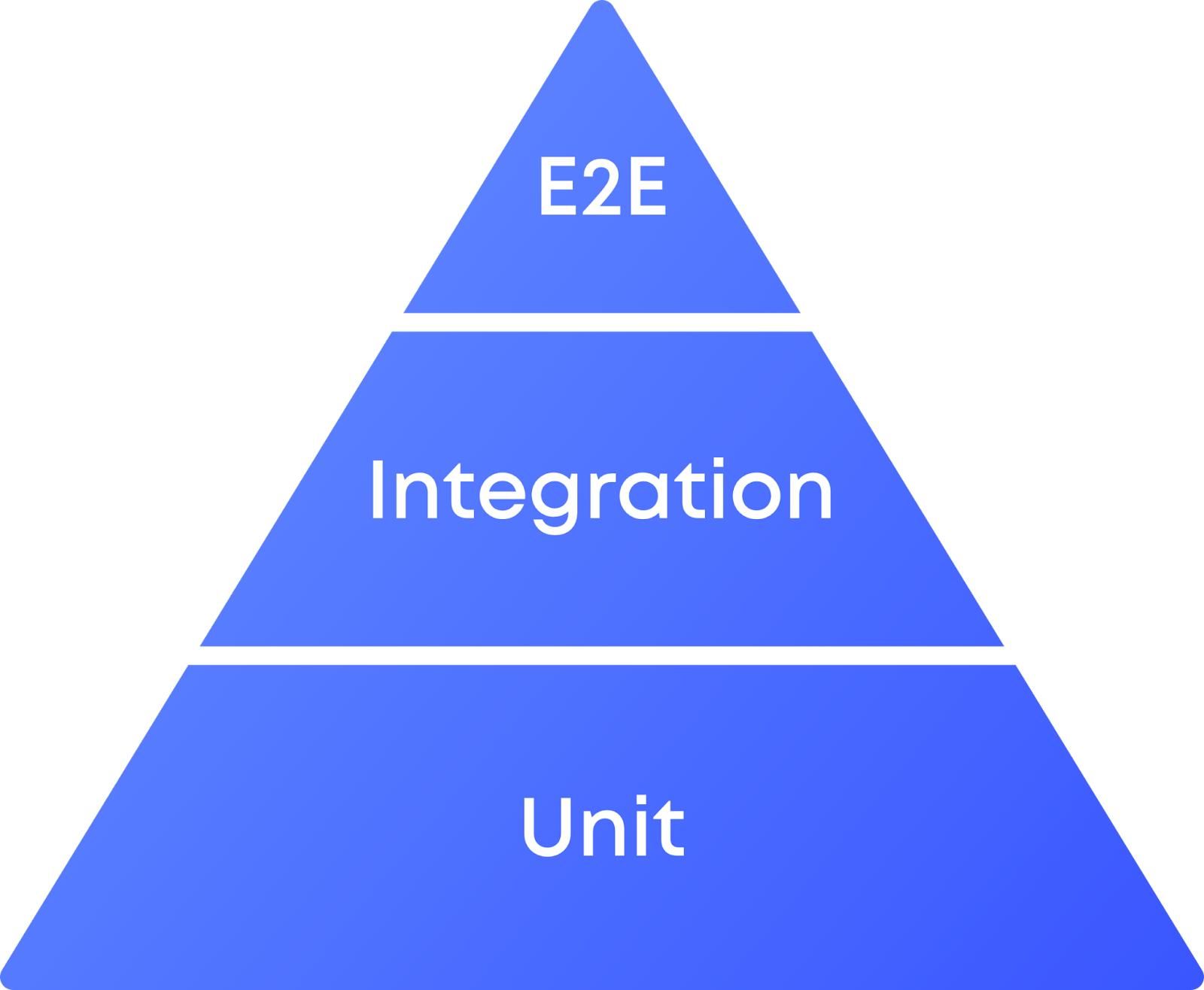
The Three Layers Explained Clearly
Unit Tests: Fast, Cheap, and Often Ignored
Unit tests focus on the smallest pieces of logic in isolation. They validate deterministic behavior without external dependencies. Because of this, they run extremely fast and fail with clear signals.
In mobile applications, these tests are often underutilized. Business logic frequently gets embedded inside UI layers such as ViewControllers or Activities, making it harder to isolate and test. This design choice quietly removes the foundation of the pyramid.
When unit tests are missing, every bug travels upward into more expensive testing layers.
Integration Tests: Where Real Behavior Starts Showing
Integration tests verify how different parts of the system work together. They validate APIs, databases, services, and internal modules interacting with each other. This is where incorrect assumptions and data inconsistencies start to surface.
For mobile apps, this layer is critical because many real-world issues arise from network interactions, caching behavior, or state management. Yet teams often skip or underinvest in this layer, jumping directly from unit gaps to end-to-end validation.
This creates a blind spot where most meaningful bugs actually live.
End-to-End Tests: High Confidence, High Cost
End-to-end tests simulate complete user journeys across the entire system. They provide the highest level of confidence because they validate real-world scenarios from start to finish.
However, this confidence comes at a cost. These tests are slow, fragile, and expensive to maintain. They depend on UI rendering, network conditions, device performance, and timing, all of which introduce variability.
Used strategically, they are powerful. Used excessively, they become the primary source of instability in the testing system.
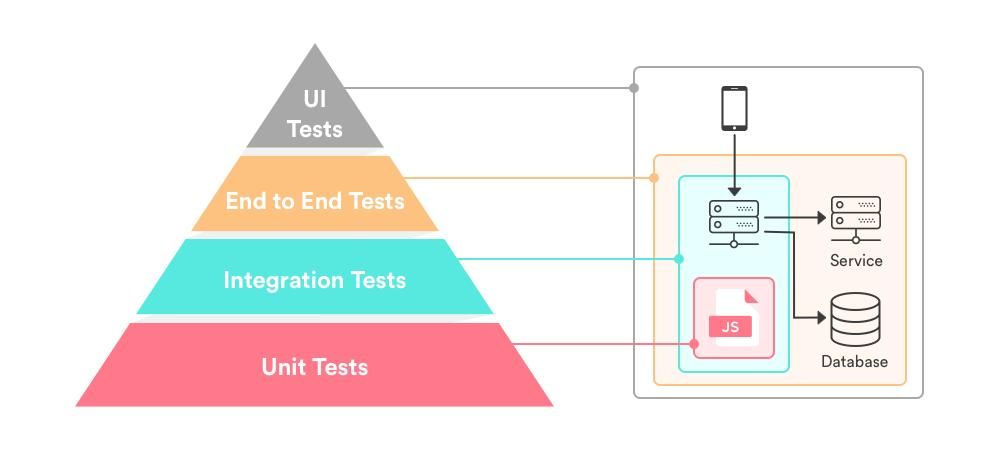
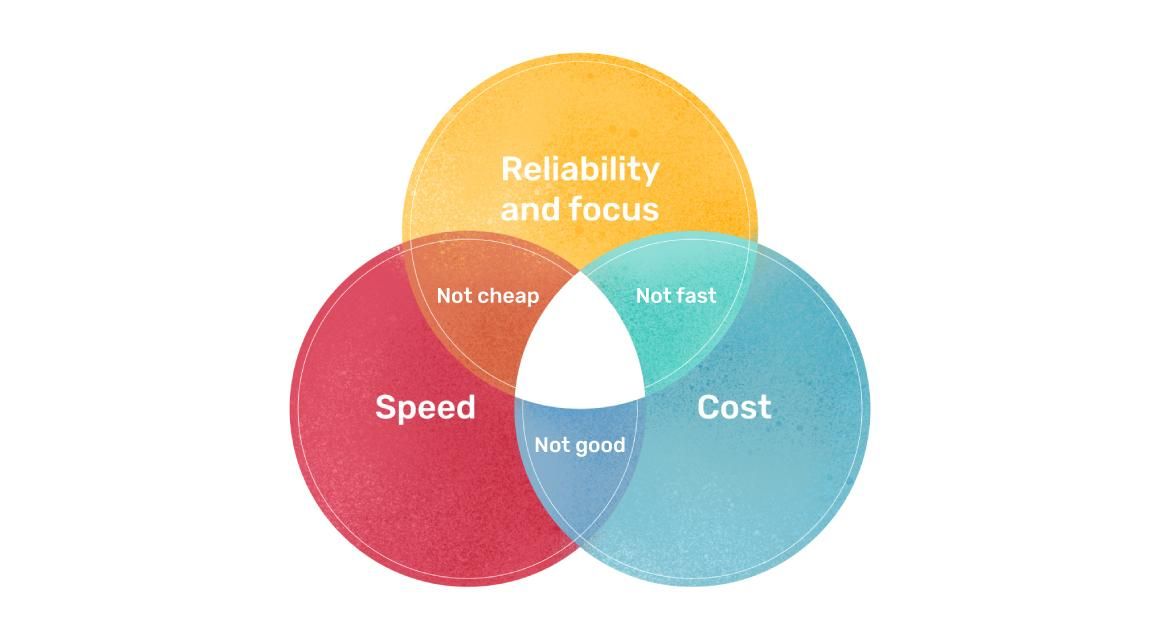
The Trade-Off Triangle: Cost vs Speed vs Reliability
Every test you write sits within a trade-off between cost, speed, and reliability. You cannot optimize all three at once. Faster tests are usually cheaper and more stable, but they cover less. Broader tests give more confidence, but they are slower and harder to maintain. The testing pyramid works because it balances these trade-offs instead of ignoring them.
Unit tests are fast and reliable because they run in isolation, making failures easy to detect and fix. Integration tests add more realism by validating how components interact, which introduces some cost but catches more meaningful issues. End-to-end tests provide the highest confidence, but they are slow, expensive, and more prone to instability due to external dependencies.
| Dimension | Unit Tests | Integration Tests | E2E Tests |
|---|---|---|---|
| Speed | High | Medium | Low |
| Cost | Low | Medium | High |
| Reliability | High | Medium | Variable |
| Debug Ease | Easy | Moderate | Difficult |
The key is not to favor one type of test over another, but to assign each layer the role it performs best. Fast tests should handle most validation so feedback remains immediate. Slower tests should be used selectively, only where full-system confidence is necessary.
The goal is not perfect testing. The goal is fast, meaningful feedback without unnecessary cost.
When teams rely too heavily on slower tests, feedback loops stretch, debugging becomes harder, and the entire development process slows down. A balanced approach keeps the system efficient while still ensuring critical flows are validated.
Where Most Mobile Teams Go Wrong
The Inverted Pyramid Problem
Most teams do not intentionally invert the pyramid. It happens gradually through small decisions. A missing unit test gets replaced with a higher-level test. An integration gap is covered by an end-to-end flow. Over time, the base weakens while the top grows heavier.
This inversion creates a system where validation becomes slower and more expensive. Every new feature requires updates across multiple high-level tests, increasing maintenance overhead.
The result is a testing strategy that looks comprehensive but behaves inefficiently.
Why End-to-End Tests Become the Default
End-to-end tests provide visible confidence. They resemble real user behavior, making them easier to explain to stakeholders. When something breaks, adding another E2E test feels like the safest response.
This leads to a pattern where teams rely on E2E tests as a primary safety net rather than a final validation layer.
If your confidence comes mainly from E2E tests, your system is already too expensive to validate.
The Hidden Cost of Too Many End-to-End Tests
Slower CI/CD Pipelines
As E2E test suites grow, build times increase significantly. What once took minutes can extend into long delays, slowing down development cycles and reducing team productivity.
Long feedback loops discourage frequent testing and reduce the effectiveness of continuous integration.
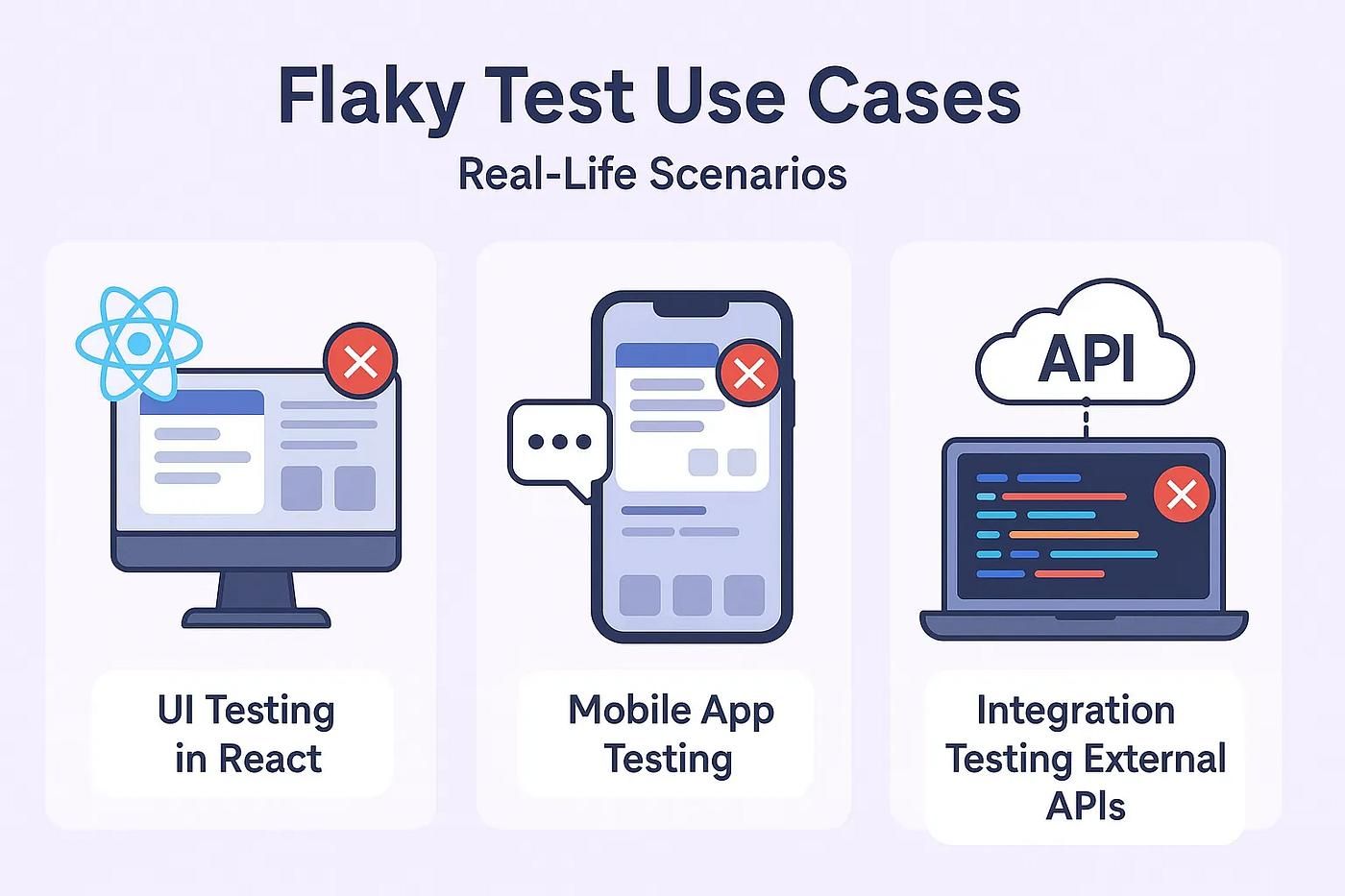
Flaky Tests and False Failures
E2E tests are sensitive to environmental conditions such as network latency, device differences, and timing issues. This introduces flakiness where tests fail without actual defects.
Flaky tests create noise, forcing teams to rerun builds and ignore failures. Over time, this erodes trust in the testing system.
Debugging Becomes Painful
When a unit test fails, the issue is usually localized and easy to identify. In contrast, E2E test failures require tracing through multiple layers of the system.
This increases debugging time and reduces development efficiency, especially when failures are intermittent or unclear.
Why Unit and Integration Tests Are Undervalued in Mobile
Mobile architectures often prioritize UI-driven development. Logic is tightly coupled with presentation layers, making isolation difficult. As a result, teams naturally lean toward higher-level testing.
However, most production issues are not UI failures. They are caused by incorrect logic, data inconsistencies, and unexpected interactions between components.
Unit and integration tests are specifically designed to catch these issues early, before they propagate into more complex layers.
What a Real-World Mobile Testing Pyramid Looks Like
A real-world mobile testing pyramid is not about removing end-to-end tests, but about keeping each layer focused on what it does best. The idea is to catch most issues early with fast tests, and use slower tests only where they truly add confidence.
In practice, the majority of tests live at the unit level, where core logic and business rules are validated quickly and reliably. Integration tests sit above this layer, ensuring that components, APIs, and data flows work correctly together. This is where many real-world bugs are caught before they become expensive.
End-to-end tests remain at the top, but in a limited and intentional way. They cover only critical user journeys such as onboarding or payments, acting as a final check rather than the primary safety net.
- Unit tests handle most validation at high speed
- Integration tests verify interactions and data flow
- E2E tests confirm a small set of critical user journeys
This balance ensures fast feedback, lower maintenance cost, and strong confidence without slowing down the entire system.
How to Rebalance Your Testing Strategy
Fixing an imbalanced testing pyramid does not require rewriting everything at once. It starts with small, intentional shifts in where and how you validate behavior. The goal is to move most of your confidence to faster, cheaper layers while keeping higher-level tests focused and minimal.
Shift Logic Down to Unit Tests
Most mobile apps hide business logic inside UI layers, which makes it difficult to test in isolation. The first step is to extract that logic into testable components such as view models, use cases, or service classes. Once logic is separated, unit tests become easier to write and significantly faster to run.
This shift reduces dependency on slower tests because core behavior is already validated at the lowest level. Over time, it creates a strong foundation where most bugs are caught early, before they reach more complex layers.
Strengthen the Integration Layer
Integration tests should validate how different parts of the system work together, not just whether they exist. This includes API communication, data transformations, caching behavior, and asynchronous flows. These areas are where many real-world issues actually occur.
Instead of jumping directly to end-to-end tests when something breaks, move that validation into integration tests. This keeps feedback faster while still covering realistic scenarios, making your test suite both efficient and meaningful.
Limit End-to-End Tests to Critical Paths
End-to-end tests should focus only on the flows that must always work, such as onboarding, login, payments, or other business-critical journeys. These tests act as a final layer of confidence, not the primary safety net.
Keeping this layer small reduces flakiness, improves pipeline speed, and makes failures easier to understand. It also forces teams to be deliberate about what truly needs full-system validation instead of testing everything at the highest level.
A Practical Example: Fixing an Inverted Pyramid
Consider a team that relies heavily on end-to-end tests for validation. Their pipelines are slow, often taking a long time to complete, and failures are frequent but unclear. Debugging becomes time-consuming because a single failure could originate from multiple layers such as UI, API, or data inconsistencies. Over time, every new feature adds more E2E tests, making the system even harder to maintain.
The team starts by analyzing where failures occur most often. Instead of patching issues by adding more E2E tests, they move those validations down to integration tests where possible. At the same time, they begin refactoring parts of the application to separate business logic from UI components, allowing that logic to be tested through unit tests.
Gradually, the reliance on end-to-end tests decreases. Pipelines become faster, failures become easier to diagnose, and the overall test suite becomes more stable. The key change is not the number of tests, but how they are distributed.
The result is a system that delivers faster feedback, reduces maintenance overhead, and builds confidence in a more efficient way.
Additional Considerations Often Overlooked
Test Data Management Matters
Even well-written tests can fail if the data behind them is unreliable. Inconsistent or shared test data often leads to flaky results and unclear failures, especially in integration and E2E layers. This makes debugging harder and reduces trust in the test suite.
Using controlled, predictable datasets and resetting state between runs keeps tests stable. When data is reliable, failures actually point to real issues instead of noise.
Device and Environment Fragmentation
Mobile apps run across a wide range of devices, OS versions, and network conditions. Trying to cover all of this with E2E tests alone quickly becomes slow and inefficient. It also increases flakiness due to environmental differences.
A better approach is to rely on unit and integration tests for most validation, and use targeted device testing only where it adds real value. This keeps coverage realistic without overloading the system.
Observability Complements Testing
Testing cannot cover every real-world scenario. Once the app is live, new issues will always emerge that were never seen in pre-release environments. Without visibility, these problems are hard to detect and understand.
Observability fills this gap by providing insights into crashes, performance, and user behavior. It extends your feedback loop into production and helps teams respond faster to unknown issues.
Key Takeaways: Fast Tests Catch More Bugs Than Slow Ones Ever Will
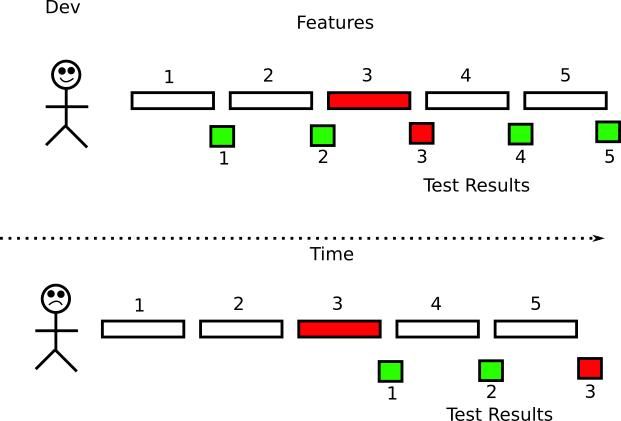
Fast tests are not just about execution time, they shape how quickly a team can learn and respond. When developers get feedback within seconds, they can validate assumptions immediately, fix issues early, and move forward with confidence. This creates a tight feedback loop where mistakes are corrected before they spread into larger parts of the system.
Slow tests break this loop. When feedback takes minutes or longer, issues are discovered later, often after multiple changes have been made. This makes debugging harder and increases the cost of fixing even simple problems. Over time, the team slows down not because they lack tests, but because their tests delay learning instead of accelerating it.
An effective testing strategy prioritizes fast, reliable signals. It ensures that most validation happens where feedback is immediate, and reserves slower tests only for scenarios where full-system confidence is truly necessary.
Conclusion: The Pyramid Is Not About Coverage It Is About Efficiency
The testing pyramid is often reduced to a visual guideline, but its real value lies in how it shapes development efficiency. It forces teams to think beyond coverage and focus on where testing effort delivers the most value. Writing more tests does not automatically lead to better quality. Writing the right tests at the right level does.
When the pyramid is inverted, the impact is not immediately obvious. Tests still pass, coverage may even increase, but the system becomes slower and harder to maintain. Build times grow, debugging becomes more complex, and confidence starts to decline despite having more tests in place.
Fixing this does not require a complete overhaul. It requires a shift in how teams think about testing. Instead of pushing validation upward into expensive layers, the focus should be on pulling it downward where it is faster and clearer. This shift reduces friction, improves feedback loops, and makes the entire development process more predictable.
In the end, the testing pyramid is not about enforcing structure. It is about enabling teams to move fast without losing control. When testing is aligned with efficiency, quality becomes a natural outcome rather than a constant struggle.