


TL;DR: Every new user is a data problem. Personalization systems need behavioral history to work, but users arrive before any history exists. The cold start is not just a technical inconvenience. It is the highest-stakes moment in the entire user lifecycle, happening precisely when you have the least signal. Teams that resolve it intelligently hold users. Teams that ignore it watch them leave in the first session and never come back.
What the Cold Start Problem Actually Is
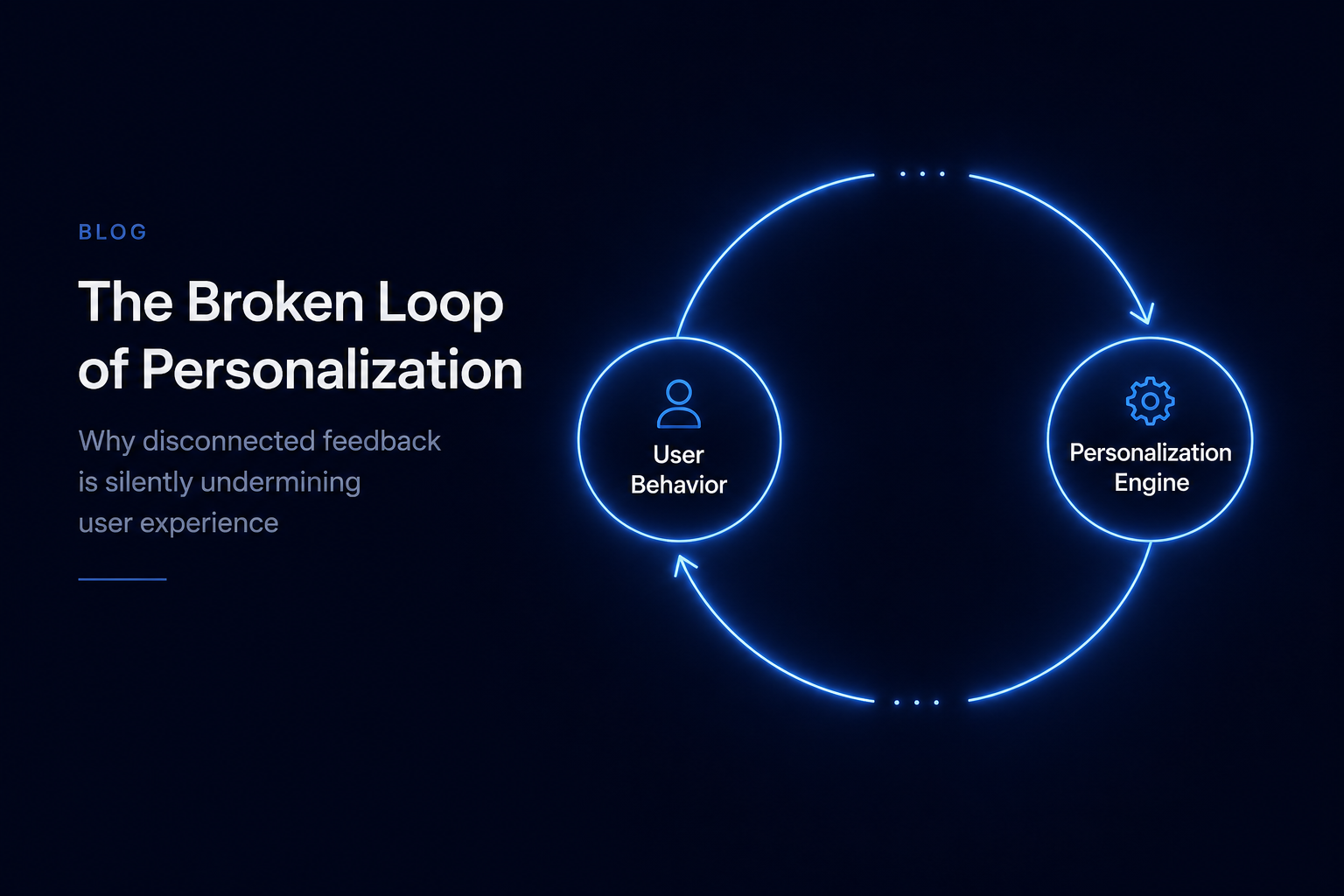
Personalization is a feedback loop. A user takes an action. The system records it. The system uses that record to decide what to show next. The experience gets more relevant. The user engages more. The loop compounds.
The cold start problem is what happens before that loop starts.
A new user arrives. They have not tapped anything. They have not browsed, purchased, skipped, rated, or lingered. Your system has no behavioral data attached to their profile. Every recommendation engine, every targeting rule, every behavioral segment you have built, none of it applies yet. The system has to show something, but it has nothing to go on.
This is the chicken-and-egg problem at the center of personalization: you need behavior to personalize, but you need to engage users before they have produced any behavior worth analyzing.
The problem has three distinct forms.
User cold start is the classic version. A specific person is new to your platform. Your system knows nothing about them individually.
Item cold start is different. A new piece of content, product, or feature enters your catalog without any interaction history. Your system cannot recommend it confidently because no one has engaged with it yet.
System cold start happens when an entirely new platform launches with neither users nor behavioral data at all. This is the ground-zero version of the problem that most early-stage teams face.
This article focuses primarily on user cold start because that is the version growth teams at established mobile apps encounter daily, with every new install.
Why It Is Worse Than It Sounds
The cold start is not just a personalization failure. It is a retention failure waiting to happen.
Research consistently shows that roughly 25% of users abandon a mobile app after just one use. The first session sets an expectation. If the app feels generic, confusing, or irrelevant, users form a belief: this product doesn't understand me. That belief is sticky. Re-engaging someone who left with a poor first impression costs significantly more than retaining them through that first session in the first place.
90% of users churn if they don't understand a product's value within the first week of signing up. The first session is where that understanding either forms or doesn't. Personalization is the mechanism that accelerates it. A user who sees content, flows, and prompts that match their intent reaches their "aha moment" faster than someone navigating a generic interface.
Apps that deliver personalized experiences see up to 30% higher retention rates. But personalized experiences require data. The cold start problem means the users who most need personalization to stay, the new users deciding whether to return, are precisely the ones your system knows the least about.
That is the real scope of the problem. It is not a data pipeline issue. It is a revenue and retention issue that starts in the first five minutes.
Strategy 1: Demographic and Acquisition Proxies
The first category of cold start signal does not come from the user's behavior inside your app. It comes from the metadata available at the moment they arrive.
Device and OS Signals
Device type carries weak but real signal. An iOS user on a high-end device is statistically different from an Android user on a mid-range device. App store behavior patterns differ by operating system. If your product has historically shown different feature adoption curves by device type, that history gives you a prior for new users before they tap anything.
Location and Language
Where a user is located tells you a lot about context. Time zone informs when to send a follow-up nudge. Region informs what content is locally relevant. Language preference is the most direct signal of all. Showing a user content in their language requires no behavioral data, just the device locale, and it dramatically improves first-session relevance.
Localization involves much more than just translating the UI. It means adapting offers, payment options, images, and even UX flow to local context and expectations. For apps operating across regions, getting this right at install is the baseline. Getting it wrong guarantees early churn regardless of what the personalization system does next.
Acquisition Channel and UTM Source
Where a user came from is one of the richest cold start signals available, and most teams underuse it.
A user who installed from a paid Facebook ad targeting runners is different from a user who came through an organic search for "meditation app." A user referred by an existing power user is different from one who saw your product in an app store editorial list. These acquisition sources are proxy signals for intent, and they are available before the user touches the app.
Connecting acquisition tags into the personalization layer from day one is how teams build multi-level personalization that works even before behavioral data exists. If you know a user came through a campaign targeting first-time investors, you can weight your cold start experience toward simplified financial onboarding before you have a single in-app event.
The Honest Limitation
Demographic and acquisition proxies are weak signals. They are better than nothing, sometimes significantly better, but they carry real error rates. A user who installed from a "fitness" ad campaign might be buying a gift for someone else. A user with a London IP might be a tourist. These proxies give you a starting point, not a conclusion. Their value is in narrowing the uncertainty, not eliminating it.
Strategy 2: Explicit Preference Collection
The most direct solution to the cold start problem is to ask.
This sounds obvious. It is also genuinely effective when executed well, and consistently botched when executed poorly.
When Asking Works
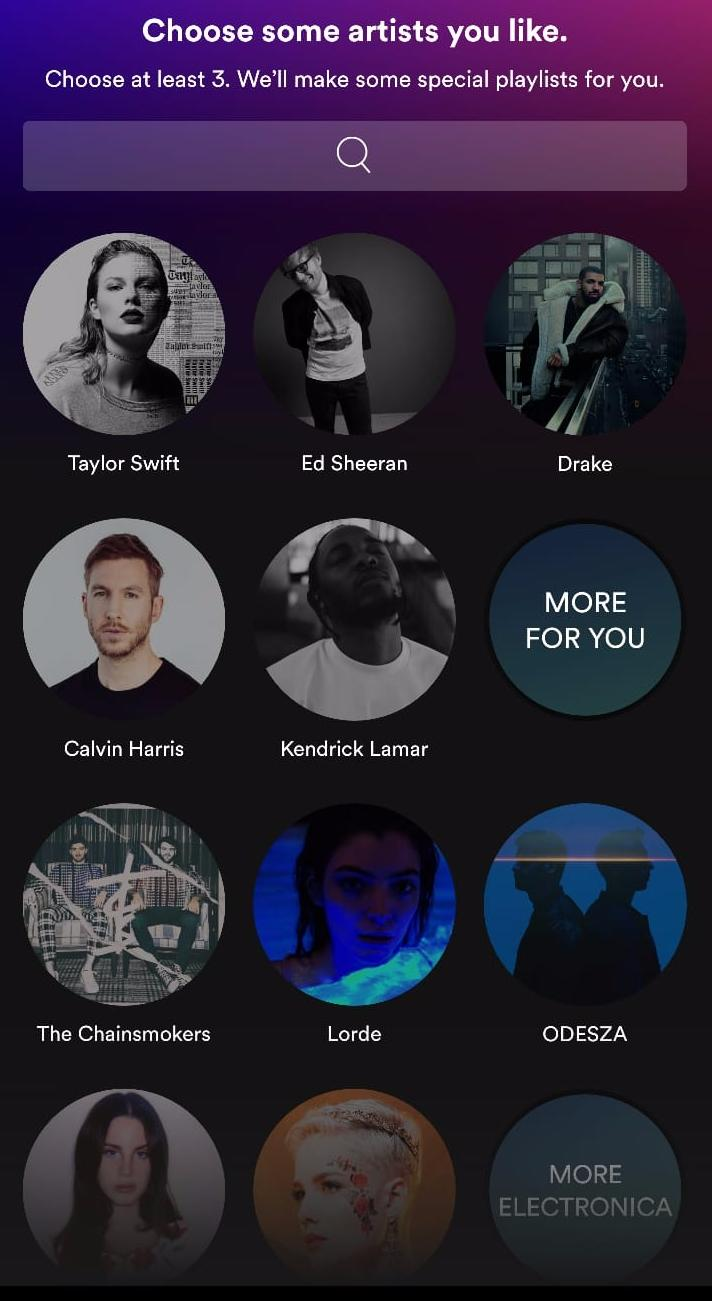
Netflix asks which genres you like. Spotify asks you to pick artists. Both platforms convert those answers into immediate personalization. The home screen changes based on what you said, and the system uses those stated preferences as a starting point until behavioral data accumulates.
83% of consumers are willing to share data for personalization if they see a clear benefit. The key phrase is "clear benefit." Users tolerate preference questions when the payoff is obvious and immediate, when answering a question about their goals visibly changes what they see on screen. They abandon onboarding flows when questions feel like data collection for the company's benefit rather than experience improvement for theirs.
The Design Constraint
One JTBD question at sign-up beats a five-question wizard. Users tolerate one; they bail on five. The research on this is consistent. More questions increase completion anxiety. If you cannot improve the experience with a single well-chosen question, adding four more will not compensate. It will just add friction.
The practical rule: explicit preference collection works when the question is low-effort, the connection between the answer and the experience change is obvious, and the ask happens at the moment the user is most willing to engage, typically right after they have completed sign-up and before they have seen any content.
Survey Products as a Cold Start Tool
In-app survey tools used at the right moment in onboarding serve a double function. They collect preference data for the personalization system and they signal to the user that the product is paying attention. A well-designed onboarding quiz that routes users into different feature paths achieves both goals simultaneously, data collection disguised as value delivery.
Digia Engage's survey product allows teams to deploy quizzes, emoji feedback, and NPS-style questions inside the app at the exact moment they will get the most useful response. For cold start specifically, a single-question preference quiz early in session one can dramatically narrow the personalization uncertainty before the user has tapped anything else.
Strategy 3: Cohort Cold Start
The third strategy does not rely on demographic proxies or explicit questions. It relies on pattern-matching between new users and existing behavioral clusters.
The Core Mechanic
Your platform already has warm users, users with behavioral history. Those users have sorted themselves into natural cohorts through their behavior: the casual browsers, the power users, the feature explorers, the transactional users who only open the app when they need something specific.
Cohort cold start assigns new users to the closest existing cohort based on early micro-signals, the first action they take, how deep they go in the first session, which feature they explore first. This is probabilistic, not deterministic. A new user who immediately navigates to the most advanced feature is assigned to the "power user" cohort. A user who reads every tooltip in the onboarding flow is assigned to the "learner" cohort. Neither assignment is certain, but both are better than treating every new user identically.
A prevalent strategy to address cold start in the total absence of usage data relies on metadata related to new users, demographic information collected during registration, combined with clustering of warm users. Cold users are then assigned to existing clusters by leveraging this metadata. The more sophisticated version adds early interaction data to that demographic prior, updating the cohort assignment in real time as the user produces their first signals.
What Counts as a Micro-Signal
The first tap is a signal. It tells you what the user was drawn to before any friction, recommendation, or prompt could redirect them. If your app has multiple entry points and a new user immediately goes to "trending content" rather than "for you," that tells you something about their confidence and intent.
Session depth is a signal. A user who reaches screen seven in their first session is different from one who bounced after screen two. The depth suggests investment, patience, and motivation that correspond to different behavioral cohorts.
The first feature explored is a signal. In a fintech app, a user who immediately goes to the portfolio overview behaves differently from one who goes to the transaction feed or the investment education section.
None of these signals is reliable in isolation. Together, they constrain the probability distribution across cohorts meaningfully, even within the first two minutes of a session.
Bandit Algorithms as a Cohort Assignment Mechanism
For teams with the engineering capacity to implement it, multi-armed bandit algorithms provide a principled way to handle cohort cold start. When explicit onboarding is not possible in production, bandit algorithms can be used to assign cold users to warm user segments based on early response patterns. The system tries different content treatments and updates the cohort probability distribution based on which treatments produce engagement, learning the user's segment through their responses rather than through stated preferences or demographic proxies.
Strategy 4: Content-First Personalization
The fourth strategy inverts the assumption. The first three strategies all try to learn something about the user before showing personalized content. Content-first personalization accepts that you know nothing and uses engagement behavior as the data collection mechanism.
The Logic
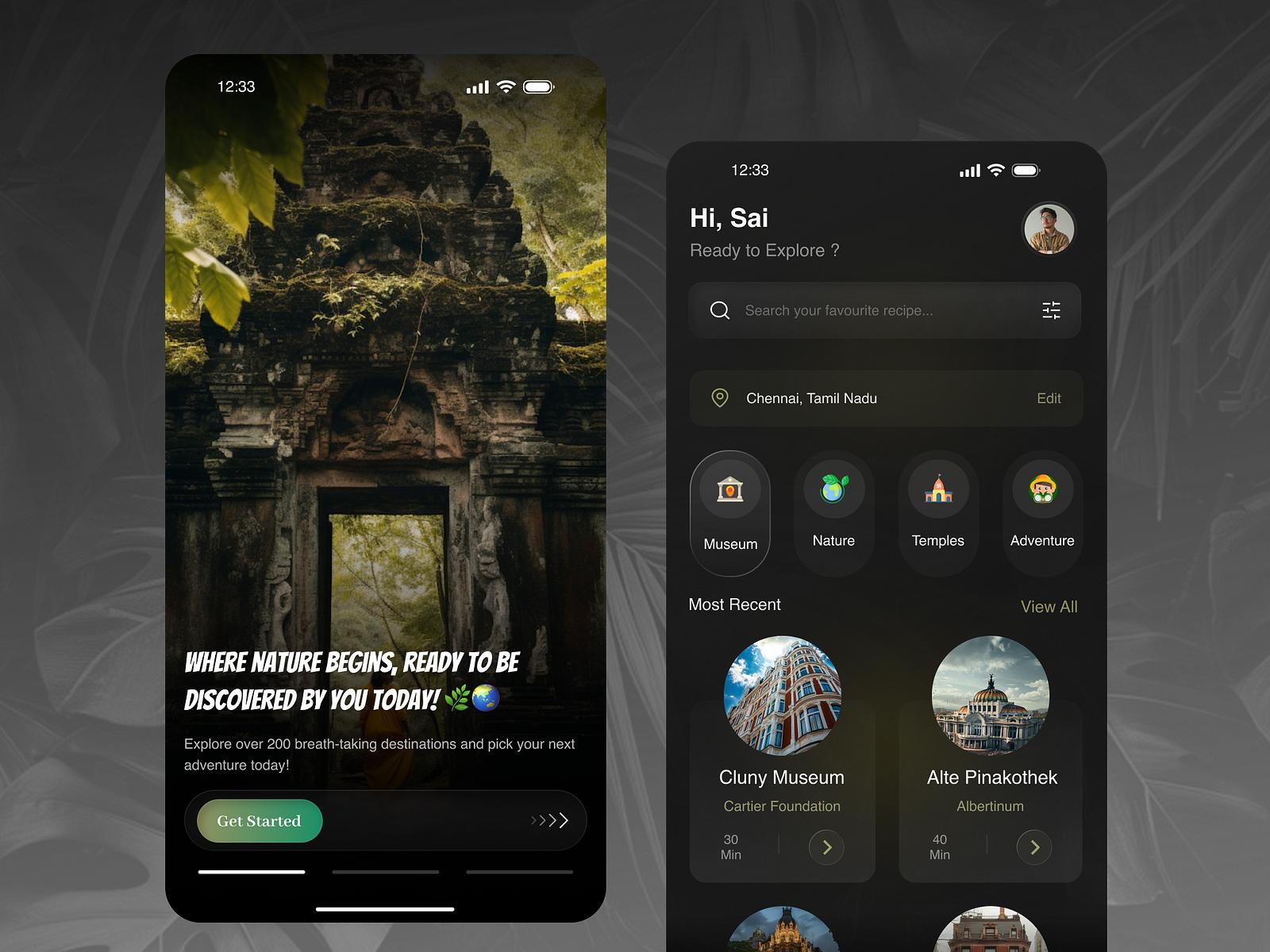
Show your highest-quality, most universally resonant content to every new user regardless of what you know about them. Then observe how they engage. That engagement data, what they linger on, what they skip, what they come back to, is your first real behavioral signal. Use it to update their profile and begin transitioning toward genuine personalization.
This works because strong content produces observable behavior even from users you know nothing about. A new user who reads a financial planning article to the end has told you something. A user who skips it immediately has told you something different. Neither required a preference question or demographic inference. The content itself generated the signal.
Choosing "Universal" Content
Content-first cold start only works if you have content that is genuinely engaging across a broad range of users, not just content that performs well on average. The distinction matters. Average performance can be driven by a narrow segment of highly engaged users pulling up the mean. What you need for cold start is content with a low variance in engagement across different user types.
This typically means: high-production content that demonstrates core product value, content that solves a concrete problem users arrived with, and content formats that require minimal prior knowledge of your product to consume.
Earning the Data Through Engagement
The framing shift in content-first personalization is that you are not inferring the user's preferences. You are earning the right to learn them by providing enough value to generate real behavior. This is why the "popular content" approach, showing globally trending items to every new user, often underperforms a more structured content-first approach. Popular content reflects what existing warm users engage with, not what cold users arriving with different contexts and intents will respond to.
A two-phase protocol, a static burn-in period with popular and diverse content followed by adaptive queries, shrinks the confidence region and drives data-efficient adaptation. The burn-in is not random. It is curated to maximize information gain about the user's preferences while also delivering genuine value.
The Transition Point: When Does Cold Start End?
This question is underasked. Most teams think about cold start as a binary, either you have data or you don't. The reality is more gradual.
Behavioral Depth as the Threshold
Cold start ends when the system has enough behavioral data to outperform prior-based personalization. The exact threshold varies by product complexity and recommendation architecture, but there are practical indicators.
The user has completed at least one full task cycle, not just navigated, but actually used the core feature the product exists to deliver. For a fintech app, that might mean completing a first transaction. For a content app, that might mean finishing a piece of content and then choosing the next one without a prompt.
The user has produced at least one negative signal, something they skipped, dismissed, or spent minimal time on. Negative signals are often more informative than positive ones because they reveal what the user's profile explicitly excludes.
The user has returned for a second session. Return behavior is one of the strongest signals that the cold start experience worked at all. A user who came back has already told you that the first experience met some threshold of relevance.
Spotify's research on user representation shows that onboarding signals, artists selected and language preferences set, remain influential in the recommendation system for several months before behavioral data fully takes over. The transition from cold start to warm personalization is not a single moment. It is a gradual weight shift from prior-based to behavior-based signals as the data accumulates.
The Risk of Premature Personalization
Switching to behavioral personalization before the data is sufficient is its own failure mode. A user who tapped on one piece of content gets an entire feed reconfigured around that single signal. The signal was noise. They tapped because the thumbnail was eye-catching, not because the topic represents their genuine interest. The personalized feed they now see is not more relevant. It is confidently wrong.
The practical solution is confidence thresholding: keep the system in a hybrid cold-start mode until the behavioral signal crosses a minimum confidence level, then transition gradually. Abrupt transitions between cold start content and fully personalized content create visible discontinuity in the user experience. Gradual transitions do not.
How AI Segmentation Changes Cold Start
The traditional cold start response required either explicit questions (preference surveys) or rule-based demographic proxies (users from X country see Y content). Both approaches are slow to configure and limited in resolution.
AI segmentation changes the inputs and the speed.
Natural Language Cohort Building
AI-driven segmentation allows teams to describe their audience in plain English and have the system build the segment automatically. For cold start specifically, this means you can define cohort assignment rules in conceptual terms, "users who showed high intent signals in their first session but haven't completed the core action," without building those rules manually in a query builder. The AI translates the intent into the underlying data logic.
Digia Engage's AI Segmentation feature works this way. Describe your target audience in a sentence. The platform builds the segment in seconds. For cold start scenarios, this means you can create nuanced cold user cohorts based on early micro-signals, first feature tapped, session depth, acquisition source, without writing a single query. The cohort exists and can receive targeted onboarding nudges within minutes of a user's first session.
Faster Cohort Inference from Minimal Data
AI models can analyze thousands of behavioral and contextual signals simultaneously to identify subtle differences between customer groups. For warm users, this produces high-confidence segments. For cold users, it produces the best possible inference from minimal data, combining device signals, acquisition source, early interaction patterns, and demographic metadata into a probabilistic segment assignment that is more accurate than any single signal alone.
Meta-learning approaches allow systems to transfer knowledge from previously learned tasks to new ones with limited data. In practice, this means the model has seen millions of user cold starts and learned which early signals predict which long-term behavioral patterns. A new user's first two taps are matched against that learned pattern library, producing an inferred segment assignment before the user has produced enough data for traditional collaborative filtering to function.
Real-Time Segment Updates
The cold start window is short. If cohort assignment only updates in batch processing runs, daily or hourly, the user has already moved through their first session on generic content before the system adjusts. AI-driven segmentation that updates in near real time allows the cohort assignment to refine as the user produces more micro-signals within their first session.
Real-time behavioral segmentation relies on machine learning algorithms that continuously analyze customer data to uncover patterns, clustering algorithms that group customers based on similar behaviors, and natural language processing that examines engagement patterns to detect emerging preferences. Applied to cold start, this produces a first session that gets progressively more relevant as the user engages, not one that snaps to a personalized state only on their second visit.
What Most Teams Get Wrong
Having covered the four core strategies, it is worth addressing the failure modes directly. Most cold start implementations fail for one of four reasons.
Overloading the Onboarding Flow
Teams confuse "gathering cold start data" with "asking the user as many questions as possible." The result is a long onboarding survey that drives abandonment before the user even sees the product. Empty states without guidance cause 84% of users to abandon within the first session. An overly demanding onboarding creates an empty state of a different kind. The user is gone before they have produced any data at all.
The correct approach limits explicit preference collection to the single highest-signal question your onboarding research identifies. Everything else comes from implicit signals.
Ignoring Acquisition Data
The UTM parameters, referral codes, and campaign IDs that arrive with a new install are almost never fully connected to the in-app personalization system. This is an architecture gap, not a data gap. The data exists. It is just sitting in an attribution platform while the in-app system defaults to generic content.
Closing this gap is one of the highest-leverage cold start improvements available to most growth teams, because it requires no user interaction and no machine learning, just a data pipeline connection.
Treating Cold Start as a One-Time Problem
Some teams solve cold start for the typical new user and stop there. But cold start is not just a new user problem. It recurs when an existing user explores a new part of the product they have never touched before. A long-time e-commerce user who navigates to a new subscription service category is in a cold start state for that category, even though the platform has years of their purchase history elsewhere.
Personalization systems that treat cold start as a phase rather than a recurring condition consistently underperform in cross-sell and upsell scenarios.
Premature Personalization Confidence
Showing a fully personalized feed based on two taps is often worse than showing curated universal content. The system has not earned the right to personalize yet. Acting on insufficient data produces confidently wrong recommendations, which erode trust faster than generic content does.
Privacy, Consent, and the Trust Boundary
Cold start personalization sits at an intersection that teams rarely address directly: how much inference is appropriate before a user has consented to personalization based on their behavior?
This is both a regulatory question and a product design question, and the answers are converging.
Explicit vs. Inferred Consent
Collecting a user's stated preferences through an onboarding survey is explicit data collection. The user knows what data they are providing. Inferring preferences from device type, location, and acquisition source is implicit. The user may not know it is happening.
GDPR, India's DPDP Act, and similar frameworks treat these differently. Inferred personalization based on technical metadata, device, location, session depth, generally falls under legitimate interest in most jurisdictions. Behavioral profiling that creates persistent records of individual actions typically requires explicit consent.
Teams building cold start personalization in regulated industries, fintech, healthcare, anything handling sensitive user data, need legal review of exactly what data feeds into their cold start inference layer and what disclosures their privacy policy covers.
Trust as a Product Metric
Beyond compliance, there is a pure product argument for transparency in cold start personalization. Users are more likely to choose and stay with platforms that offer better recommendations, but only when those recommendations feel earned rather than surveilled. The moment personalization feels invasive, when users sense the system knows too much from too little interaction, it triggers a trust response that can be harder to recover from than generic content ever was.
The practical guideline: keep cold start inference on contextual signals (device, location, acquisition, early taps) and explicit preferences (stated in onboarding). Avoid cold start logic that relies on cross-app tracking, social graph data, or inference mechanisms that would surprise users if disclosed.
Cold Start Across Product Categories
The four strategies above apply broadly, but their relative weight shifts significantly across different app categories.
Fintech Apps
Cold start in fintech carries higher stakes than most categories. Users arrive with financial goals they have not articulated and risk tolerances the system cannot measure from a tap pattern. Explicit preference collection is often the right primary strategy here. An onboarding question about investment experience or financial goal type is both low-friction and high-signal.
Demographic proxies are useful but limited. A user's location tells you their regulatory context. It does not tell you whether they are a sophisticated investor or a first-timer. That requires asking.
Content and Media Apps
Content-first personalization works best in media apps because the product's core value is the content itself. Showing excellent content to a cold user delivers immediate value while generating behavioral signal. The cold start experience in a media app should look like a curated editorial selection, not a generic feed. The curation hypothesis is that if you expose a cold user to ten pieces of high-quality, varied content, their response pattern will tell you more than any onboarding survey could.
Spotify's approach combines onboarding artist selection with demographic and behavioral signals, using onboarding data for months before it fully cedes to behavioral personalization. The key finding from their research: removing onboarding signals caused a 13.8% drop in recommendation quality on newly onboarded user clusters. Explicit preference data, even coarse artist selections, carries material signal well beyond the first session.
E-commerce Apps
E-commerce cold start can lean heavily on acquisition channel data. A user who arrived via a campaign promoting a specific product category has stated their interest through their click behavior before they ever opened the app. Showing that category prominently in their first session is not sophisticated personalization, but it is correct personalization, and it closes the cold start gap immediately.
Cohort cold start is particularly useful in e-commerce because purchase intent clustering from warm users is often well-defined. "Users who browse and immediately purchase" and "users who browse extensively across categories before purchasing" are reliably different cohorts. Assigning cold users to these cohorts based on their first browsing behavior in session one produces meaningful personalization faster than demographic proxies alone.
How Digia Engage Addresses Cold Start
The cold start problem is fundamentally a delivery problem as much as a data problem. Even teams that have solved the inference layer, identified the right cohort, inferred the right preferences, queued the right content, still need a system that can show that content inside the app in under a session, without an engineering ticket, and with the rendering quality that makes personalized content feel like part of the product rather than a bolted-on overlay.
This is where Digia Engage's in-app experience layer directly addresses the cold start workflow.
AI Segmentation for Cold Start Cohorts
Digia Engage's AI Segmentation allows growth teams to describe cold start cohorts in plain English, "new users who haven't completed their first core action and arrived via paid acquisition," and build a live segment in seconds. That segment can immediately receive targeted nudges, guided onboarding flows, or content recommendations without waiting for the data science team to build a query.
The natural language interface removes the bottleneck between identifying a cold start strategy and executing it. Teams that previously waited days for segments to be built can now test cold start approaches within hours.
In-App Surveys for Explicit Preference Collection
Digia Engage's survey product allows growth teams to deploy quizzes and preference questions at the exact moment in the onboarding flow where cold start signal is most valuable. A preference quiz that routes users into different onboarding paths can fire based on the completion of the sign-up event, run for the first session, and disappear automatically once the user has been assigned to a cohort.
The in-app placement matters. Email surveys sent after the first session collect responses from users who already decided to return. In-app surveys in the first session collect signal from the users most at risk, the ones still deciding whether to come back.
Nudges for Content-First Cold Start
Digia Engage's nudge product allows teams to surface specific content, features, or actions during the cold start window without a release cycle. If your cold start strategy is content-first, show universal high-value content, observe engagement, update the cohort assignment, you need a system that can surface that content based on real-time triggers and update what it shows based on the user's in-session behavior.
Nudges that trigger in under 100ms on qualifying events allow this loop to run within a single session. A user who engages with a nudge pointing to content A gets a follow-up nudge calibrated to that engagement. A user who dismisses it gets a different follow-up. The first session becomes a live personalization experiment rather than a static generic experience.
Works Alongside Your Existing CEP
Digia Engage integrates directly with CleverTap, MoEngage, and WebEngage. The segmentation and cohort logic you have built in your CEP feeds the trigger layer. Digia Engage handles what happens on screen, the rendering, the timing, and the interaction pattern. Teams do not need to rebuild their data infrastructure to add cold start personalization capability. They add the rendering layer on top of what they already have.
Key Takeaways
Cold start is the highest-stakes data problem in mobile apps. It happens with every new user, at the moment when personalization matters most, with the least available signal.
Four strategies address it: demographic and acquisition proxies (weak but immediately available), explicit preference collection (effective when low-friction and obviously useful), cohort cold start (assigning new users to existing behavioral clusters based on early micro-signals), and content-first personalization (earning behavioral data through engagement rather than inferring from nothing).
The cold start window does not end at a fixed time. It ends when behavioral data outperforms prior-based personalization, typically after a user has completed a core task, produced at least one negative signal, and returned for a second session.
AI segmentation changes cold start by enabling natural language cohort building from minimal data, faster inference from micro-signals, and real-time segment updates within the first session.
The most common cold start failures are overloaded onboarding flows, ignored acquisition data, treating cold start as a one-time rather than recurring problem, and premature personalization confidence from insufficient signal.
Privacy matters. Cold start inference on contextual signals is generally acceptable. Behavioral profiling without disclosure is not. In regulated industries, get legal review before shipping cold start logic.
The delivery layer is as important as the inference layer. Knowing what to show a cold user is half the problem. Showing it inside the app, in the right moment, without a release cycle, is the other half.
Further Reading
From Digia Engage:
- Mobile App Onboarding: Activation, Patterns, and Retention — the onboarding architecture that the cold start problem sits inside
- RFM Segmentation for Mobile Apps — what comes after cold start: segmenting users who have enough behavioral history to classify
- AI Segmentation on Digia Engage — natural language segment building for growth teams
- In-App Surveys — the explicit preference collection layer built for in-app deployment
- Nudges — real-time content and feature surfacing for the cold start window
External Sources:
- Cracking the Cold Start Problem in Recommender Systems — practitioner-level breakdown of clustering, meta-learning, and hybrid approaches
- A Semi-Personalized System for User Cold Start Recommendation, Deezer Research — the research behind how Deezer, Netflix, and Spotify handle new user recommendation
- Generalized User Representations for Large-Scale Recommendations, Spotify Research — how Spotify combines onboarding signals with behavioral data and when cold start ends
- Cold-Start Personalization Approaches, EmergentMind — current research landscape including meta-learning and active preference elicitation
- Mobile App Retention Statistics, Amra and Elma — the retention data context for why cold start matters
Digia Engage is the in-app experience layer for growth teams who want to solve cold start without waiting on engineering. AI Segmentation builds cold user cohorts from plain English. In-app surveys collect preference data in the first session. Nudges surface personalized content in under 100ms. Book a demo to see how it works inside your app.