


TL;DR: Most nudge strategy conversations focus on what to show, when to show it, and how to write it. The harder problem, and the one most teams underinvest in, is knowing when to stay completely silent. Over-nudging does not just produce diminishing returns. It actively erodes the trust that makes future nudges work at all. This article covers what engagement fatigue looks like in data before it shows up in uninstall rates, the psychological mechanism behind trust erosion, which user behaviors should block nudge delivery entirely, minimum recency rules between impressions, the specific screens and flows that should always be quiet, how to build a nudge blacklist, and how to test whether reducing frequency actually improves downstream outcomes.
The case for restraint: why this conversation rarely happens
Every in-app nudge that exists in a product was put there for a reason. Someone on the team identified a behavioral gap, a feature not being discovered, a flow being abandoned, a conversion opportunity being missed, and decided a prompt would help. That reasoning is often sound. The problem is that nudge decisions stack. Onboarding adds four. A product update adds two more. A retention campaign adds three. A monetization initiative adds another. Nobody sat down and decided to show users nine nudges in a single session. It happened because each decision was made in isolation.
The result is a product where nudges compete with each other for attention, interrupt users mid-task, and appear in the same screen position so often that users stop seeing them entirely. Habituation, the psychological mechanism behind banner blindness, results in a lower response to repeated messages within an interface. Once a user's brain categorizes a UI element as something to filter, it filters it automatically without conscious evaluation. The nudge exists on screen, but it no longer exists in the user's attention.
Restraint in nudge strategy is not about leaving engagement on the table. It is about preserving the attentional capital that makes nudges work in the first place. A quiet session where the user completes their intended task without interruption is not a missed opportunity. For many users, at many moments, it is the right product decision.
What engagement fatigue looks like in data before users leave
Engagement fatigue has a sequence. Users do not go from healthy engagement to uninstall overnight. The behavioral data shows a progression, and each stage is a window for intervention if teams know what to look for.
Dismissal rate spikes. The first data signal is a rise in immediate dismissal. When the same nudge, or a nudge in the same position, begins generating faster and more consistent dismissals, the user has learned to close it without reading it. Habituation causes users to consciously or unconsciously ignore UI elements that appear in predictable positions and formats. A nudge with a dismissal time under one second is not being evaluated. It is being pattern-matched and closed.
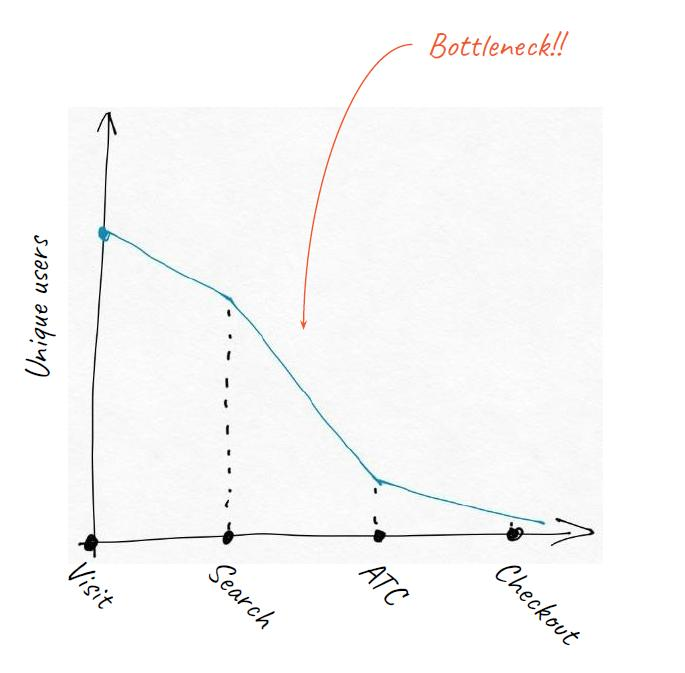
The threshold worth watching: if dismissal time on a nudge drops from three or four seconds to under one second across a cohort, the nudge has crossed from contextual guidance into noise. The content of the message has stopped mattering because the format has been categorized.
Notification opt-outs. Airship's benchmark data shows that 46% of users will opt out of push if they receive two to five messages in one week. While opt-out rates are most commonly tracked for push notifications, the same decay occurs for in-app message categories when users are given explicit control over them. An opt-out rate that is rising faster than the user base is growing is a direct signal that the message volume exceeds what the user considers acceptable.
The secondary signal is subtler: users who stop opting out because they have already opted out of everything cannot be recovered through channel volume. They are only recoverable through a period of demonstrated restraint.
Session shortening. Short or infrequent sessions are an early indicator that users are not finding enough value, or are encountering too much friction, to sustain their existing engagement pattern. When a user who previously spent six minutes per session begins averaging two, that is not necessarily a feature problem. It can be a nudge problem: interruptions are making the session feel less rewarding, so the user spends less time before the marginal cost of continuing exceeds the marginal benefit.
Mobile marketers should track early behavioral indicators like a drop in session frequency, less time spent in-app, or fewer core actions being completed as leading indicators of churn. These signals precede uninstall by days to weeks. By the time the uninstall event fires, the trust erosion has already happened.
Engagement metric divergence. A specific pattern worth setting up as a dashboard alert: a growing gap between nudge impression counts and nudge engagement rates, without any corresponding change in campaign targeting or content. If impressions are stable but click-through rates are declining on nudges that previously performed well, the audience has not changed. Their tolerance for that nudge format, frequency, or screen position has.
The trust erosion model: how over-nudging compounds
Over-nudging does not produce a linear decline in trust. The damage is cumulative and accelerating.
The first nudge a user dismisses carries no lasting cost. Users expect occasional prompts. The dismissal is neutral. But each subsequent unwanted nudge modifies the user's prior. After three dismissals, the user approaches the next nudge with a default posture of skepticism rather than openness. After five, the default posture is avoidance. The nudge is dismissed before any content evaluation happens.
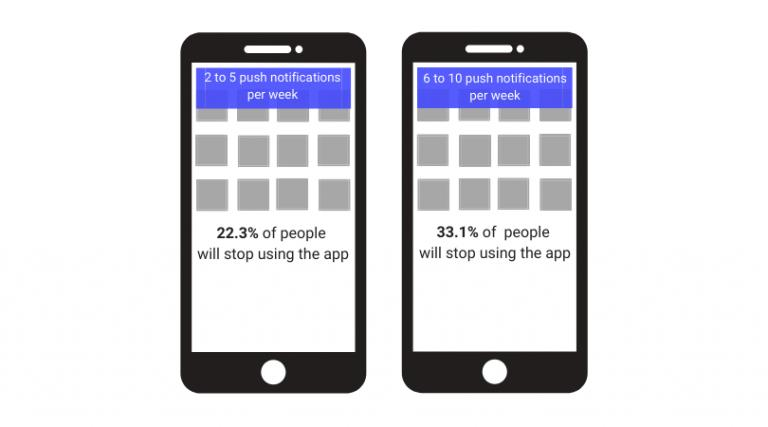
Overuse or irrelevant messaging can quickly erode user trust, causing notification opt-outs or app uninstalls. What that description leaves out is the mechanism: trust erosion is not just about the specific messages that caused the opt-out. It affects the user's response to all future messages from the same app, regardless of their quality. An app that has trained a user to dismiss on sight has lost the channel entirely.
The compounding mechanism works like this. Dismissal reduces attention. Reduced attention reduces the probability that a genuinely relevant nudge will be seen. A relevant nudge that goes unseen generates no engagement signal, which to the campaign system looks like a nudge that needed a higher frequency or a different placement. The team responds by increasing frequency or changing placement. Both interventions accelerate the dismissal pattern rather than reversing it.
Wohllebe et al. (2021) found that increased frequency of non-personalized notifications correlated directly with higher uninstall rates in a retail context. The relationship was not ambiguous. More frequency produced fewer retained users. Teams that respond to declining nudge performance by increasing nudge volume are applying the intervention that worsens the outcome.
The corrective model is the opposite of what most team instincts produce. When nudge engagement rates fall, the correct diagnostic question is whether the user has been over-messaged, not whether the message needs to be louder. A period of suppression, followed by a single well-timed nudge on a clear behavioral signal, consistently outperforms volume escalation.
Suppression triggers: behaviors that should block nudge delivery
A suppression trigger is a user behavior or state that should make a specific user ineligible for a nudge during a defined window, regardless of whether the campaign rules would otherwise qualify them. Building explicit suppression triggers is what separates a nudge system that degrades trust over time from one that builds it.
Recent dismissal of the same nudge. If a user dismissed a nudge in the last 24 to 48 hours, re-showing it in the same session or the following session accomplishes nothing productive. Users who find they are repeatedly shown the same prompt after dismissing it report feeling tricked or disrespected by the product. The suppression window should extend at minimum through the same session and most commonly through 48 to 72 hours after dismissal.
High-velocity dismissal pattern. A user who has dismissed three or more nudges in the current session has entered a dismissal mode. Continuing to show nudges to this user in the same session generates impressions without engagement and reinforces the dismissal habit. The suppression trigger here should be session-level: after three dismissals in a session, no further nudges for the remainder of that session.
Recent completion of the nudge's target action. A nudge promoting a feature that the user has already activated is not just wasted, it signals that the app does not know what the user has done. This is a trust signal in the negative direction: a product that nudges users toward actions they have already taken communicates that it is not paying attention to their behavior. Every nudge system should suppress any campaign whose conversion event has already been completed by the user.
Active high-engagement behavior. Users in the middle of a streak, a multi-step task, or an unusually long session are not candidates for interruption. The session is already producing the engagement outcome the nudge was trying to generate. Interrupting it creates friction in the best-case scenario. Any feature that benefits from regular use and creates positive habit loops should be left undisturbed when that habit loop is actively executing.
Recent post-conversion state. A user who just completed a purchase, investment, or sign-up is in a confirmation mindset. Showing them a promotional or feature discovery nudge in the immediate post-conversion window undermines the sense of completion and can register as the app immediately asking for something more before acknowledging what the user just did.
The recency rule: minimum gaps between nudge impressions
Frequency capping at a daily or weekly level is the industry baseline. It is also insufficient for preventing the specific patterns that generate fatigue.
Nudges fired on a fixed schedule underperform behavior-triggered nudges by 30 to 50%. The gap is not primarily about the relevance of the message. It is about the user's mental readiness for a prompt. A nudge that interrupts a user who is not in a receptive state creates resistance regardless of content quality.
The recency rule for in-app nudges should operate at four levels simultaneously:
Session-level recency. No more than one promotional or feature-discovery nudge per session for most apps. Transactional nudges, such as error alerts, confirmation messages, or task completion prompts, are exempt and should fire whenever triggered. The session cap applies to discretionary nudge types: feature tours, upsell prompts, survey requests, and re-engagement messages.
Post-nudge recency. After any nudge fires and is either engaged with or dismissed, the minimum gap before the next discretionary nudge should be long enough that the user has had at least one uninterrupted task completion. The specific time interval is less important than the behavioral gate: the user should have done something in the app before the next prompt appears.
Campaign-level recency. Any specific nudge campaign, regardless of session-level caps, should not show the same user the same message more than twice before a defined re-evaluation window. If a user has seen a specific nudge twice and not engaged, the nudge is not relevant to them at this point in their journey. Continuing to show it wastes the impression and contributes to the dismissal pattern.
Cross-channel recency. Customers do not experience channels separately. An email, a push notification, and an in-app message arriving within the same few hours do not register as three independent touchpoints. They feel like one brand that keeps showing up. If the user has received a push notification in the last four hours, the threshold for showing an in-app nudge should be higher, not treated as a separate channel with its own unrelated cap.
Sending push notifications to once a week can decrease unsubscribe rates by approximately 15% compared to daily sends. The principle scales to in-app nudges: lower frequency with higher per-nudge relevance consistently outperforms higher frequency with average relevance across most app categories.
High-stakes moments that should always be quiet
Some screens and states in a mobile app are so cognitively loaded, or so emotionally significant, that any non-essential nudge is the wrong decision. These moments do not benefit from suppression logic that requires triggering. They should be hardcoded off.
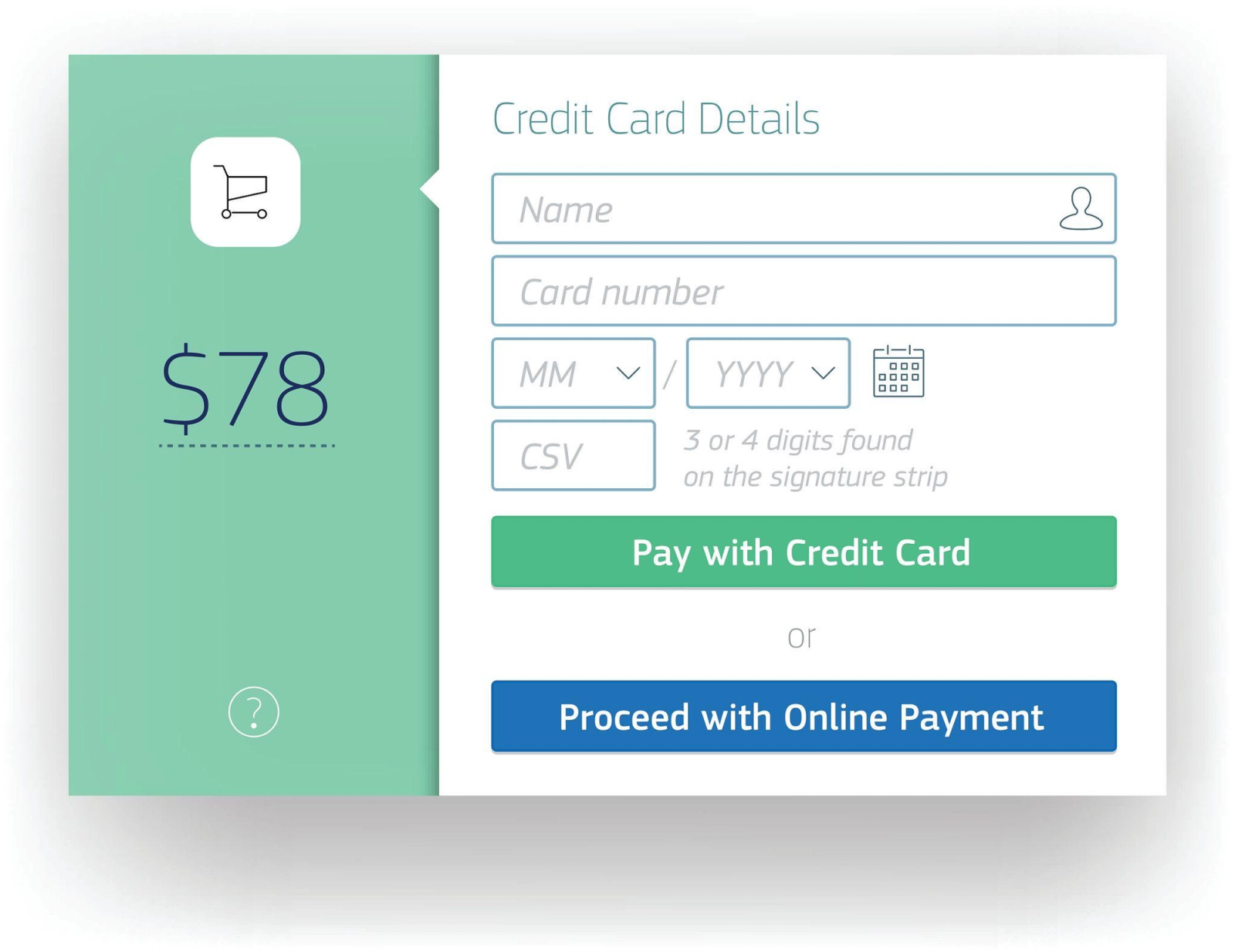
Active transaction and payment flows. A user who is entering card details, confirming a transfer, or completing an investment instruction is operating at the limit of their attention and trust. Any interruption to a payment flow creates cognitive friction that converts directly to abandonment. The Baymard Institute's checkout usability research is unambiguous: anything that pulls the user's attention away from the transaction at the moment of completion increases the probability they do not complete it. No promotional nudge, feature discovery prompt, or survey request belongs on or overlaid on a payment or transaction confirmation screen.
Error states. When a user encounters an error, whether it is a failed payment, a form validation failure, a network timeout, or a loading failure, their emotional state is already elevated. Users who hit unclear error messages respond with frustration, rage-clicking, and task abandonment. Showing an unrelated nudge to a user who is already frustrated by an error does two things: it adds additional cognitive load to a moment that already exceeds the user's capacity, and it reads as the app being indifferent to the problem the user is trying to solve. Error screens should exclusively contain the information and actions needed to resolve the error.
Identity verification and compliance flows. KYC steps, terms acceptance, two-factor authentication, and biometric verification require the user's full attention and carry a trust weight that no other part of the product does. A user who sees a promotional nudge while being asked to verify their identity is receiving a mixed signal about the seriousness of the flow they are in. These screens should be completely quiet except for the instructions and actions intrinsic to the verification step.
Immediately after a negative experience. If the app has just crashed, shown a broken state, failed to load content, or produced any experience that the user would rate negatively, the following session is not the time for re-engagement nudges. The user's prior toward the app has just been updated negatively. A nudge in this state is experienced through the lens of that negative update. The correct response is a clean, well-functioning session that rebuilds trust through performance, not through prompts.
During focused deep engagement. A user who has been in a session for more than ten minutes, or who has completed four or more sequential actions without interruption, is in a flow state within the product. The session is generating exactly the retention outcome that nudges are designed to produce. Interrupting it to show a feature discovery prompt is introducing friction in a moment that does not need it.
Building a nudge blacklist: states, screens, and sessions
A nudge blacklist is an explicit, documented list of conditions under which no nudge fires, enforced at the system level rather than left to individual campaign configuration. Teams that rely on campaign-level targeting to exclude bad moments will eventually ship a campaign that reaches a user in a bad moment, because campaign authors are focused on the audience they want to reach, not on the audience they want to protect.
A well-built nudge blacklist covers four categories:
Screen blacklist. A defined list of screen IDs or screen types that suppress all non-transactional nudges. The starting list for most apps should include: checkout and payment screens, error and failure states, identity verification screens, account deletion and offboarding screens, and any screen that contains a critical one-time action (such as a consent acceptance or a subscription confirmation).
State blacklist. User states that suppress nudge delivery regardless of screen. These include: users who are in an active real-time transaction (transaction status: pending), users whose last session contained an app crash, users who have dismissed three or more nudges in the last 24 hours, and users who have already completed the conversion event that any pending nudge is designed to produce.
Session blacklist. Session-level conditions that freeze nudge delivery for the remainder of the current session. These include: after the user has received one discretionary nudge already in this session, after the user has dismissed any nudge in this session, during the first 30 seconds of a session (let the user get oriented before showing them anything).
Cooldown blacklist. Time-based rules that suppress nudges following specific events. At minimum: 48 hours after a nudge dismissal for the same campaign, 24 hours after any system error visible to the user, and four hours after any other in-channel message, including push and email.
The practical implementation: Braze differentiates between frequency capping, which is a volume control, and message suppression, which removes specific users from specific messages based on defined conditions. The blacklist operates primarily as suppression logic rather than capping logic. The distinction matters because caps reset on a schedule. Suppression rules fire on conditions. A user in an error state at 11:59pm should not receive a nudge at midnight just because a daily cap reset.
Digia Engage's nudge system supports event-based triggers, per-campaign and per-user frequency controls, and suppression logic configuration from the dashboard without requiring engineering involvement. The operational principle is the same across any platform: the blacklist must operate at the user level, not just the campaign level, and the conditions it checks must include behavioral state and recency, not just segment membership.
Frequency capping vs suppression logic: they are not the same thing
This distinction is one of the most common points of confusion in nudge system design, and the confusion produces predictably bad outcomes.
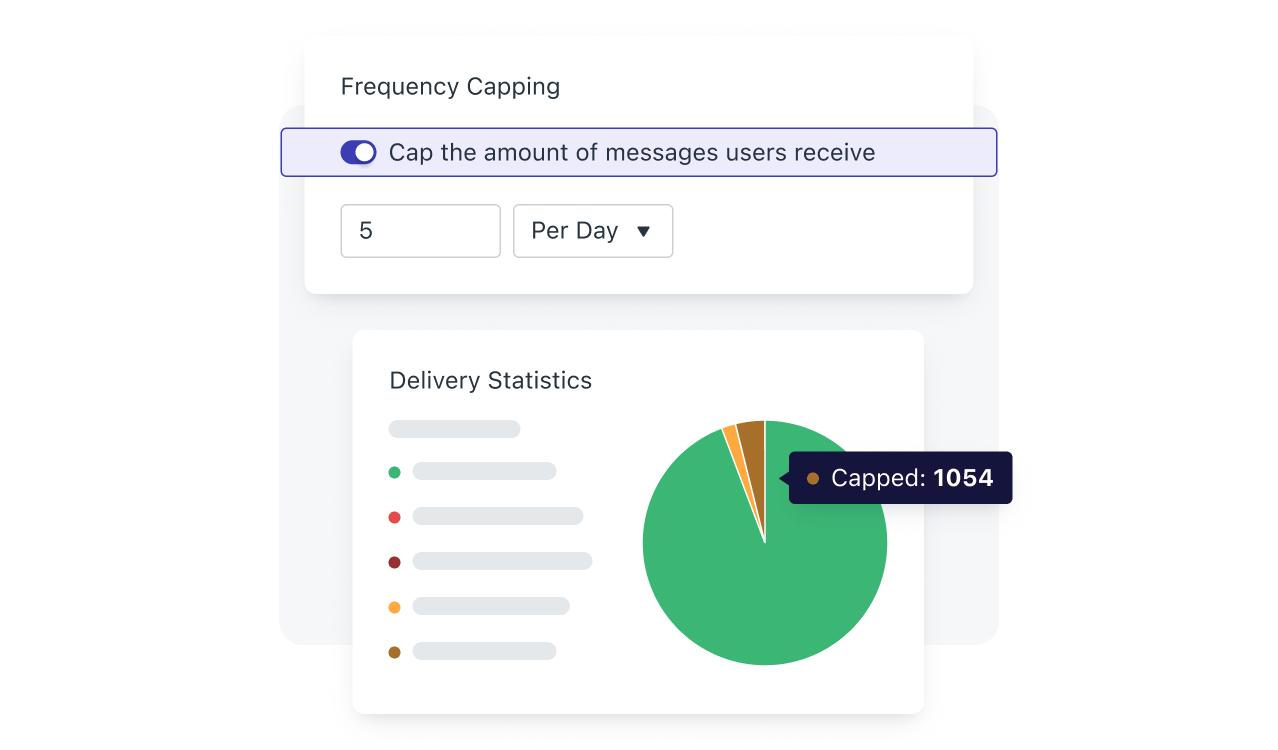
A team that relies only on frequency capping typically sets a rule like "no more than two in-app messages per day." This rule allows a user to receive two nudges during a checkout flow, two nudges immediately after dismissing the previous two, or two nudges in the first three minutes of a session. The cap is not wrong. It is just not doing the job that suppression logic does.
The operational mistake is treating a campaign-level cap as equivalent to a user-level suppression. A user who is enrolled in four active nudge campaigns, each with its own daily cap of one, can receive four nudges in a session from four different campaigns. Each campaign complied with its cap. The user received four nudges. A campaign-level cap of one nudge per session is not the same as a user-level cap of one nudge per session.
The architecture that prevents this: a global user-level cap applied across all campaigns, with priority logic determining which campaign fires when the cap is reached, combined with suppression rules that override both the cap and the priority logic under blacklist conditions.
Adobe's Real-Time CDP community has formally requested "audience fatigue detection" as a cross-channel mechanism that tracks user responsiveness across channels and automatically adjusts frequency caps or suppresses users from further campaigns until engagement improves. The underlying principle is sound whether or not a platform supports it natively: a user who has not engaged with any nudge across five consecutive sessions should be treated as a suppression candidate, not a frequency-cap candidate. The cap logic assumes the volume is the problem. The suppression logic recognizes that the timing, relevance, or trust baseline is the problem.
How to test whether reducing nudge frequency improves downstream outcomes
The intuition that fewer nudges means less engagement is usually wrong, but it requires a specific testing structure to prove it, because the outcome being measured is long-term retention rather than immediate click-through rate.
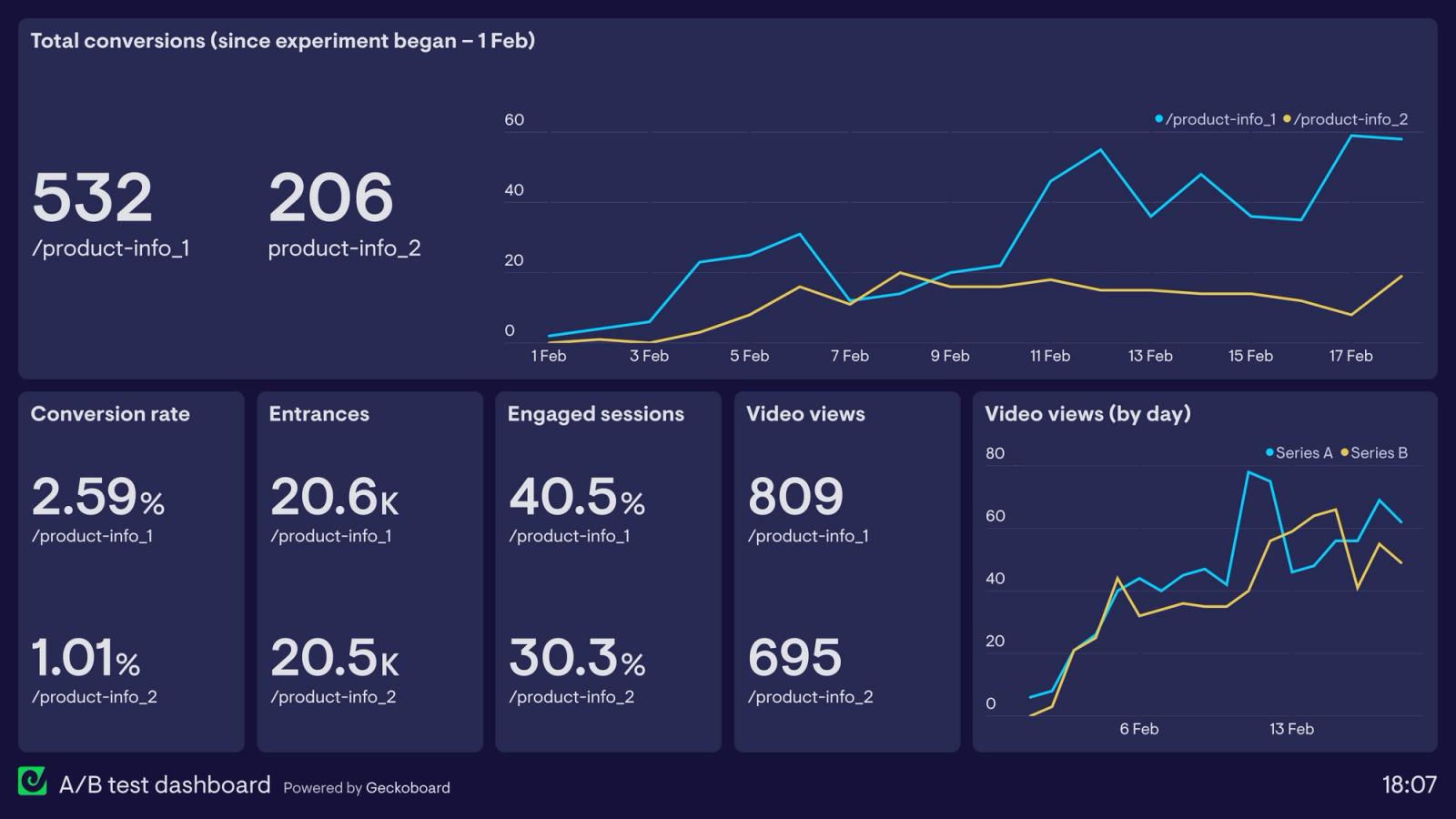
Set up a holdout on nudge volume, not nudge targeting. The standard A/B test in nudge strategy varies the content or timing of a specific nudge. Testing the effect of frequency reduction requires a different structure: a control group receiving the current nudge volume and a treatment group receiving a reduced volume, with both groups matched on behavioral segment, lifecycle stage, and historical engagement pattern. The nudge content should be identical. Only the frequency differs.
Choose the right measurement window. Nudge volume effects on trust are not visible in session-level data. The long-term effects of personalized vs. excessive notifications on app loyalty require tracking over a 30 to 90 day window to capture the retention signal clearly. A test that runs for seven days and reports on click-through rate is not measuring trust erosion. It is measuring immediate response to individual nudges, which is a different question.
Track the right downstream metrics. The metrics that reveal trust and retention effects from nudge frequency are:
Day 30 and Day 60 retention rates for nudge-exposed vs. reduced-nudge cohorts. A statistically significant retention lift in the lower-frequency group is a direct signal that the higher-frequency group was being over-messaged.
Notification opt-out rates over the measurement window. Reducing push notification frequency from daily to weekly can decrease unsubscribe rates by approximately 15%. If the treatment group shows lower opt-out rates, the base nudge volume was eroding the channel.
Nudge dismissal speed trends over the measurement window. If the control group shows accelerating dismissal times while the treatment group maintains steady or improving dismissal times, the control group is experiencing the habituation pattern described earlier.
Conversion rate on the specific nudge type being tested. Counterintuitively, reducing the frequency of a nudge often improves its per-impression conversion rate, because the users who see it are reaching it in a less fatigued state.
Test suppression rules separately from frequency reductions. Suppression logic and frequency capping have different effects on different user segments. A user who was being caught by a transaction-screen nudge has a different behavioral profile than a user who was receiving seven nudges per week. Testing the effect of adding transaction-screen suppression will show different outcomes than testing the effect of reducing from seven to three weekly nudges. Run these as separate experiments so the signals do not cancel each other out.
Control for the recency of other messaging. If the team also runs push notification or email campaigns, the frequency test needs to account for cross-channel volume. Customers experience a brand, not individual channels, and a push notification and an in-app nudge arriving in the same hour register as a combined volume, not as two separate one-per-channel decisions. A nudge frequency test that does not control for concurrent push volume may attribute a retention effect to in-app nudge reduction when the variable that moved was cross-channel total volume.
Key takeaways
Engagement fatigue is not an abstract risk. It has a specific behavioral signature in data, starting with faster dismissal times and rising opt-out rates, progressing through session shortening, and culminating in churn that registers weeks after the trust damage occurred.
The habituation mechanism behind banner blindness applies directly to in-app nudges: repeated messages in predictable positions and formats produce lower response as users develop automatic filtering behavior. Once a user has categorized a nudge format as something to close, the content of the nudge no longer reaches them.
Trust erosion from over-nudging is not linear. Each unwanted nudge makes the next nudge harder to land, regardless of its quality. The compounding effect means that teams responding to declining nudge performance by increasing volume are accelerating the problem they are trying to solve.
Suppression triggers should block nudge delivery when users have recently dismissed the same campaign, have dismissed three or more nudges in the current session, have already completed the target action, are in active high-engagement flow, or are in a post-conversion state.
Certain screens and states should be hardcoded as permanently quiet: payment and transaction flows, error states, identity verification flows, and the session following an app crash.
Frequency capping and suppression logic operate on different principles and need to be implemented separately. Capping controls volume. Suppression removes eligibility. Relying on campaign-level caps alone allows a user to receive multiple nudges per session from simultaneous campaigns.
Testing frequency reduction requires a 30 to 90 day measurement window focused on retention, opt-out rates, and dismissal speed trends, not on short-term click-through rates. The metric that reveals trust erosion is long-term retention, not per-nudge engagement.
Further reading
From Digia Engage
- Designing Non-Annoying Nudges: Frequency, Placement, and Context
- Contextual Nudges vs Global Campaigns: What Actually Works
- UI Patterns for Reducing Drop-Offs During Onboarding
- Nudges: Triggered In-App Experiences
Sources
- Banner blindness arises from users' intentional filtering of irrelevant visual elements; users consciously or unconsciously ignore UI elements in predictable positions - ClickAdu, What is Banner Blindness: Definition, Studies and Key Findings (December 2024)
- 46% of users will opt out of push if they receive 2-5 messages in one week; 32% will opt out at 6-10 messages per week - MobiLoud, 50+ Push Notification Statistics for 2025
- Overuse or irrelevant messaging can quickly erode user trust, causing notification opt-outs or app uninstalls - Zigpoll, How to Optimize Mobile App Push Notification Strategy
- Wohllebe et al. (2021): increased frequency of non-personalized notifications correlated with higher uninstall rates in retail context - ResearchGate, Mobile Apps in Retail: Effect of Push Notification Frequency on App User Behavior
- Short or infrequent sessions indicate users are not finding enough value; session frequency drop is an early churn indicator - Userpilot, Practical Strategies to Reduce App Churn (June 2025)
- Drop in session frequency, less time spent in-app, and fewer core actions being completed are leading behavioral indicators of churn - Business of Apps, How to Measure and Reduce App User Churn
- Nudges fired on fixed schedules underperform behavior-triggered nudges by 30-50%; trigger on what user just did, not on a calendar - Nvecta, In-App Nudges: 12 Examples and 6 Design Patterns (2026)
- Features that benefit from regular use and create positive habit loops should not be interrupted during active execution - Adapty, Mobile App Engagement Metrics to Track in 2026
- Apps that display 6-10 in-app messages weekly reported highest average session lengths; reflects apps that optimised relevance - OneSignal, Mobile App Benchmarks 2024
- Frequency capping is a volume control; message suppression removes specific users from specific messages based on conditions; they operate on different logic and serve different purposes - Braze, Frequency Capping: What It Is, How It Works and Best Practices (March 2026)
- Campaign-level cap of one nudge per session is not the same as a user-level cap; a user in four campaigns receives four nudges - Digia Engage, Designing Non-Annoying Nudges: Frequency, Placement, and Context
Want to build suppression rules, session-level caps, and behavioral trigger logic for your in-app nudges without an engineering ticket? See how Digia Engage handles frequency governance or book a demo.