


TL;DR: Personalization systems that only reinforce past behavior do not serve users. They shrink the user's world over time, assign them to a segment they can never escape, and produce an experience that becomes less useful the longer someone uses the product. The technical name for this is the filter bubble. The product failure it causes is segment lock-in. Recognizing how both work, and which system behaviors create them, is the first step toward building personalization that actually improves with time instead of calcifying around a snapshot of who the user was three months ago.
What the Filter Bubble Is in a Mobile App Context
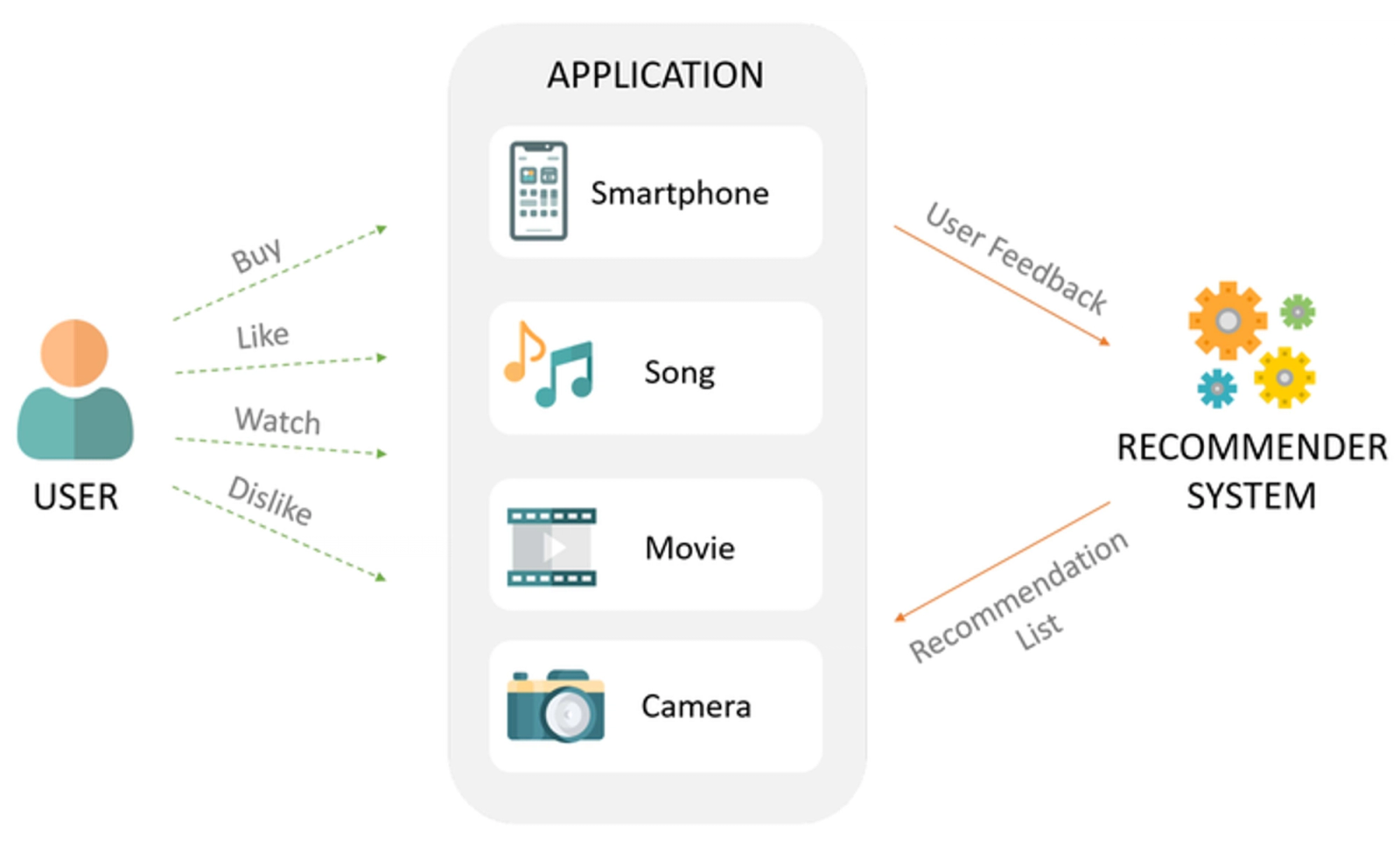
The term "filter bubble" was introduced by internet activist Eli Pariser in his 2011 book to describe the intellectual isolation that forms when algorithmic personalization only shows users content that aligns with their existing preferences. Pariser's concern was primarily civic. The same mechanism plays out with equal force in mobile products, with consequences that are commercial rather than political but just as real.
In a mobile app, the filter bubble takes a specific shape. The personalization system tracks what a user clicks, opens, purchases, or lingers on. It uses those signals to decide what to show next. Over time, the content surface narrows. A user who clicked on three investment articles gets an investment-heavy feed. A user who browsed sports apparel sees sports apparel everywhere. A user who opened a beginner workout plan in month one gets beginner workout content in month eight, long after they have moved past that stage.
The system is technically functioning. It is surfacing content correlated with past behavior. The problem is that past behavior is a record of what the user was interested in at a specific moment. It is not a prediction of what they will find valuable across their entire relationship with the product. When a personalization system treats historical behavior as permanent preference, it builds a box around the user.
A systematic review of filter bubbles in recommender systems defines this directly: when a user is stuck in a filter bubble, the algorithm shows them limited information that conforms with their existing beliefs or interests, by design, because the system optimizes for that match.
The filter bubble in a mobile app context has three components:
Content narrowing. The surface area of what a user sees shrinks toward a single topic, category, or behavior type. The product stops introducing the user to parts of itself they have not yet explored.
Preference freezing. The system treats early behavioral signals as ground truth about the user's preferences, even when those signals are months or years old. A user who was in an early adoption phase gets treated as if they are always in that phase.
Discovery failure. The user stops encountering features, content, or offers that could provide new value. The product becomes predictable in the wrong way. It reflects what the user already knew rather than expanding what they can do.
The Self-Reinforcing Loop
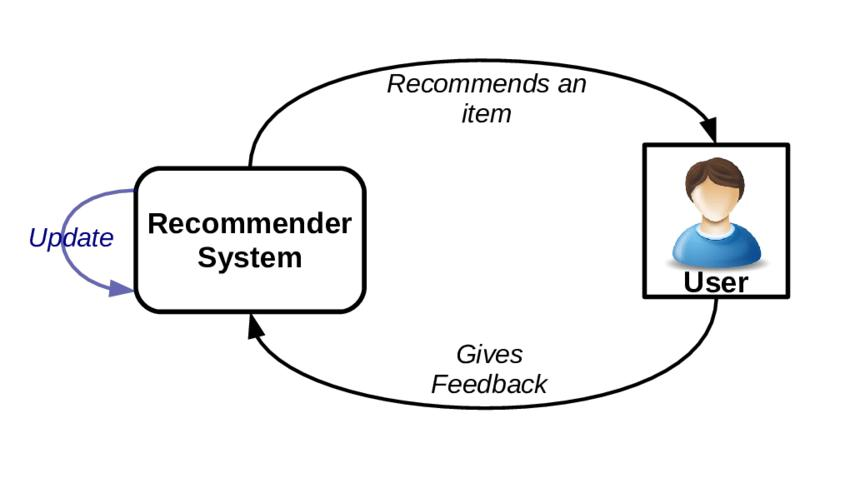
The filter bubble does not appear at launch. It builds through a feedback loop that compounds over time.
The sequence is straightforward. A user arrives and takes their first actions. The system records those actions and begins weighting its recommendations toward similar content. The user engages with what the system shows, because it is relevant to their established preferences. The system registers that engagement as confirmation and narrows further. The user only sees content in the narrow band the system has defined. The system now has no data about anything outside that band, because the user has had no opportunity to produce any.
This is the loop: behavior generates recommendations, recommendations generate behavior, behavior confirms recommendations, and the range of both shrinks in parallel.
Research into recommendation systems confirms this mechanism explicitly: personalization can impact both intra-user diversity (the range of content a single user sees) and inter-user diversity (the differences between users). Systems optimized for accuracy without diversity constraints tend to reduce intra-user diversity over time, even when predictive accuracy metrics remain high.
The data problem embedded in this loop is often invisible to the team running the personalization system. The system looks like it is performing well. Clicks are up. Open rates are healthy. Engagement metrics are positive. What the metrics do not show is that the user's experience has narrowed to the point where the app can only show them more of the same thing.
Research on long-term exploration value from a major short-form video platform found that standard A/B testing on exploration often measures neutral or even negative short-term engagement metrics while failing to capture long-term benefits. The loop hides its own cost until the cost becomes visible as churn, not as engagement decline.
Why This Happens: Short-Term Engagement as the Optimization Target
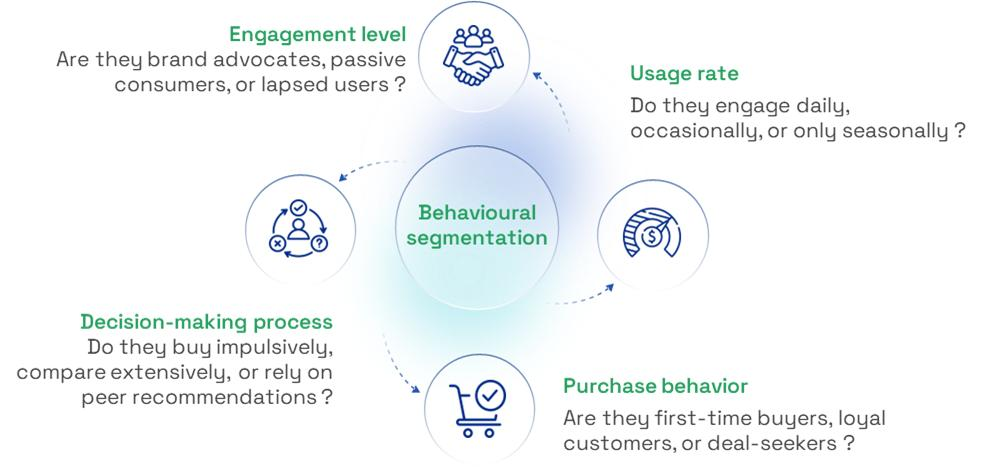
The filter bubble exists because most recommendation and personalization systems are optimized for the wrong signal.
Short-term engagement, clicks, opens, time in session, is measurable in real time. It is easy to build dashboards around. It correlates with revenue in the short run. Product teams can run A/B tests and see results in days. This makes short-term engagement the natural optimization target for systems that need to demonstrate value quickly.
The exploration-exploitation tradeoff research makes this tension precise: exploitation maximizes short-term user engagement by relying on proven preferences, while exploration gathers data on less-tested items to improve long-term recommendations. A system that only exploits what it already knows about a user cannot discover what else the user might value. But exploration reduces short-term engagement metrics, which makes it politically difficult to implement inside organizations tracking weekly or monthly numbers.
The result is that personalization teams face a structural incentive to optimize for the behavior that creates filter bubbles. Showing a user exactly what they have already clicked on produces the highest short-term engagement numbers. The cost of that optimization appears later, as reduced product discovery, declining feature adoption outside the narrow band, and eventually churn from users who have exhausted what the personalized surface is offering them.
Springer Nature research on recommender systems and societal well-being identifies the mechanism clearly: when relevance is equated with short-term preference matching, optimization may favor redundancy and narrow users' exposure, even when predictive performance remains high. Diversity becomes a peripheral concern rather than a property guiding the recommendation itself.
The deeper issue is that click-based engagement signals are an imprecise proxy for user value. A user who opens the same type of content twenty times in a row is producing twenty data points that all say the same thing. The system is not learning more about the user. It is confirming what it already knew. Accumulating more of the same signal does not produce better personalization. It produces more confident narrow personalization, which is a different problem.
Segment Lock-In: The Product-Level Failure
The filter bubble describes what happens to the content surface. Segment lock-in describes what happens to the user's identity inside the product's data model.
Segmentation is how most mobile teams organize their user base. Users get assigned to segments based on their behavior, lifecycle stage, acquisition source, demographic attributes, or some combination. Those segments determine which campaigns they receive, which onboarding flows they see, which nudges fire for them, and which offers they are eligible for.
The problem is that segments are usually static constructs built at a point in time. A user placed in the "new user" segment during onboarding does not automatically graduate out of it when they complete activation. A user placed in the "at-risk" segment after a period of inactivity does not get re-evaluated when they become active again. A user assigned to the "budget buyer" segment based on their first two purchases does not get reclassified when their behavior shifts toward premium products.
Research on static versus dynamic segmentation identifies this directly: a segment defined in March will misclassify a meaningful portion of the user base by May, and the interventions designed for those stale segments will fire at the wrong users. The gap between segment definition and current reality is not a data problem. It is a system design choice. Teams that review segments quarterly are accepting that most of their users will be misclassified for most of the year.
Dynamic segmentation research from Adjust confirms that static lists cannot adjust as users move across different levels of interest, intent, or activity. Traditional demographic or behavioral segmentation creates fixed lists that lose accuracy as user behavior changes.
Segment lock-in occurs when the segment assignment system has no mechanism to exit users from segments as their needs, behaviors, and contexts evolve. The user changes. The segment does not. The personalization system keeps treating the user as the person they were when the segment was defined, not the person they have become.
How Segment Lock-In Destroys the Product Experience
The consequences of segment lock-in are not theoretical. They produce specific, visible product failures.
Activation nudges for already-activated users. The most common example is a user who completed onboarding months ago still receiving nudges designed for new users. They have completed their first transaction, used the core feature multiple times, and are in the top quartile of engagement. The segment logic still classifies them as "unactivated" because segment membership was never updated. The nudge fires. It instructs them to do something they did six months ago. The user ignores it, or worse, it signals to them that the app does not actually know who they are.
Churn-risk campaigns sent to loyal users. Re-engagement campaigns designed for dormant users often fire on lifecycle triggers, for example, "no session in 14 days." A user who was genuinely dormant during a vacation returns to find a series of messages treating them as an at-risk churner. The campaign undermines the relationship rather than strengthening it.
Cross-sell failure from category narrowing. An e-commerce user who bought running shoes gets running-adjacent offers for months. The product has a cookware category they would likely purchase from, based on similar users' behavior, but the personalization system never presents it because the user's segment is defined by their first purchase category. The cross-sell opportunity disappears inside a category filter the system created for itself.
Feature discovery gaps. A user in a fintech app is classified as a "basic user" based on their behavior in month one. The platform has added three features since then that are directly relevant to that user's needs. The segment classification means those features are never surfaced to them. The user eventually churns because the app "stopped being useful," even though the useful functionality existed and was never shown to them.
Escalating irrelevance. Each of these failures compounds. A user who receives activation nudges after activation, gets churn-risk campaigns during a vacation, never sees cross-sell offers outside their first category, and never discovers relevant new features has a product experience that becomes demonstrably worse over time despite the app "personalizing" for them. The personalization is real. It is just locking them into an outdated version of themselves.
Research on algorithmic bias in mobile applications confirms: filter bubbles from content recommendation can directly influence user trust and long-term engagement. The breakdown is not dramatic. It is gradual, and it looks like natural churn from the outside.
The Predictability Cost: When Users Notice
There is a version of filter bubble damage that is less about irrelevance and more about trust.
Users who have been in a filter bubble for long enough start to notice the pattern. The same five content types rotating. The same categories surfacing in the same positions. The same type of offer appearing every time they open the app. The product has become entirely predictable, and not in the reassuring way that good product design is predictable. Predictable in the way that a machine running a program is predictable.
When users notice this, they draw a conclusion: the app is not actually paying attention to them. It is running an algorithm that no longer has anything new to offer. The perception erodes trust in the personalization system regardless of how technically accurate the recommendations are. A user who receives highly accurate recommendations of something they have seen twenty times has learned nothing about the app's ability to serve them. They have learned that the app is stuck.
PwC's 2025 consumer experience research found that 93% of consumers say a brand will lose their trust if it mishandles their data, even while many still want personalization. Showing users only what they have already seen is a form of data misuse, not in the regulatory sense, but in the product design sense. The user shared their behavioral data as a signal. The system responded by trapping them in that signal rather than using it to expand what they could do.
There is also a discovery cost that is separate from trust. A personalization system that only surfaces familiar content cannot create the "I didn't know the app could do that" moments that drive feature adoption and long-term engagement. Serendipity is not an accident in well-designed systems. It is the result of deliberate exploration logic that introduces users to parts of the product they have not yet encountered. Remove that logic, optimize purely for familiarity, and the product loses its capacity to surprise in useful ways.
Escape Mechanisms: What Actually Works
The filter bubble and segment lock-in are both solvable at the system design level. The solutions require accepting short-term metric trade-offs in exchange for long-term value, which is why teams that measure weekly engagement numbers resist them. The solutions work regardless.
Staleness Thresholds for Segment Membership
The most direct fix for segment lock-in is placing an expiration on segment membership.
A segment built on behavioral data from more than 90 days ago is describing who the user was three months ago. For rapidly evolving behaviors like app usage, that data has substantial decay. A staleness threshold is a rule that exits a user from a segment after a defined period without confirming behavioral signals. A user who has not produced the behavioral signals that define the "new user" segment within 30 days of installation should exit that segment automatically. A user who has produced "power user" signals in the last 60 days should hold their segment membership. A user who last produced "active buyer" signals 120 days ago should be reviewed.
Research on intraday personalization freshness found that reducing the personalization feedback loop from daily to intraday produced a statistically significant 0.47% increase in key engagement metrics on a major streaming platform. The benefit of more frequent segment re-evaluation compounds. Stale user features locked into daily batch cycles cause the personalization system to respond to who the user was yesterday rather than who they are now.
Staleness thresholds should be set per segment based on the behavioral half-life of the defining signals. Lifecycle segments, new, active, at-risk, churned, need re-evaluation more frequently than long-term behavioral segments like category preference. A practical implementation sets a maximum age for segment-defining events, a re-evaluation trigger when that age is reached, and a fallback segment for users whose signals are too old to classify accurately.
The segmentation research from Userpilot names the specific fix: behavioral triggers that update segment membership in real time rather than on a review cycle. When a user completes an activation event, they should exit the "unactivated" segment immediately. A segment defined in March will misclassify a meaningful portion of the user base by May.
Exploration Logic in Content Ranking
Staleness thresholds fix segment lock-in. Exploration logic fixes the content filter bubble.
An exploration ratio is a deliberate allocation within the content ranking system that reserves a fraction of the content surface for items outside the user's established preference band. If a user's behavioral history places them firmly in the "financial news" category, an exploration ratio might require that 10-15% of the content surface shows them items from adjacent categories, personal finance tools, business news, economic data, content the algorithm does not confidently predict they will engage with.
This is the exploration-exploitation tradeoff applied to personalization: exploitation maximizes short-term engagement by relying on proven preferences, while exploration gathers data on less-tested items to improve long-term recommendations. A system that never explores cannot discover whether the user's preferences have changed. It also cannot expand the user's awareness of what the product offers.
The exploration ratio should not be uniform. Research on transparent exploration in recommendation systems notes that items chosen for exploration frequently mismatch user interests, which is precisely why the exploration is needed. The mismatch data teaches the system what the user does not want, which is as valuable as knowing what they do. The calibration question is where to set the ratio. Too low and the system never escapes the filter bubble. Too high and users notice a drop in relevance quality. Most production implementations land between 10% and 20% for an exploration allocation, with the ratio decreasing for high-confidence users and increasing for users whose behavioral signals are becoming stale.
Multi-armed bandit algorithms provide a principled mechanism for managing this. Rather than setting a fixed exploration ratio, bandit approaches allocate exploration probabilistically based on the confidence of existing preference estimates. A user with highly consistent, recent behavior gets a lower exploration ratio. A user with sparse or aging signals gets a higher one. The exploration adapts to the quality of the data rather than treating all users identically.
Diversity Constraints in Content Surfaces
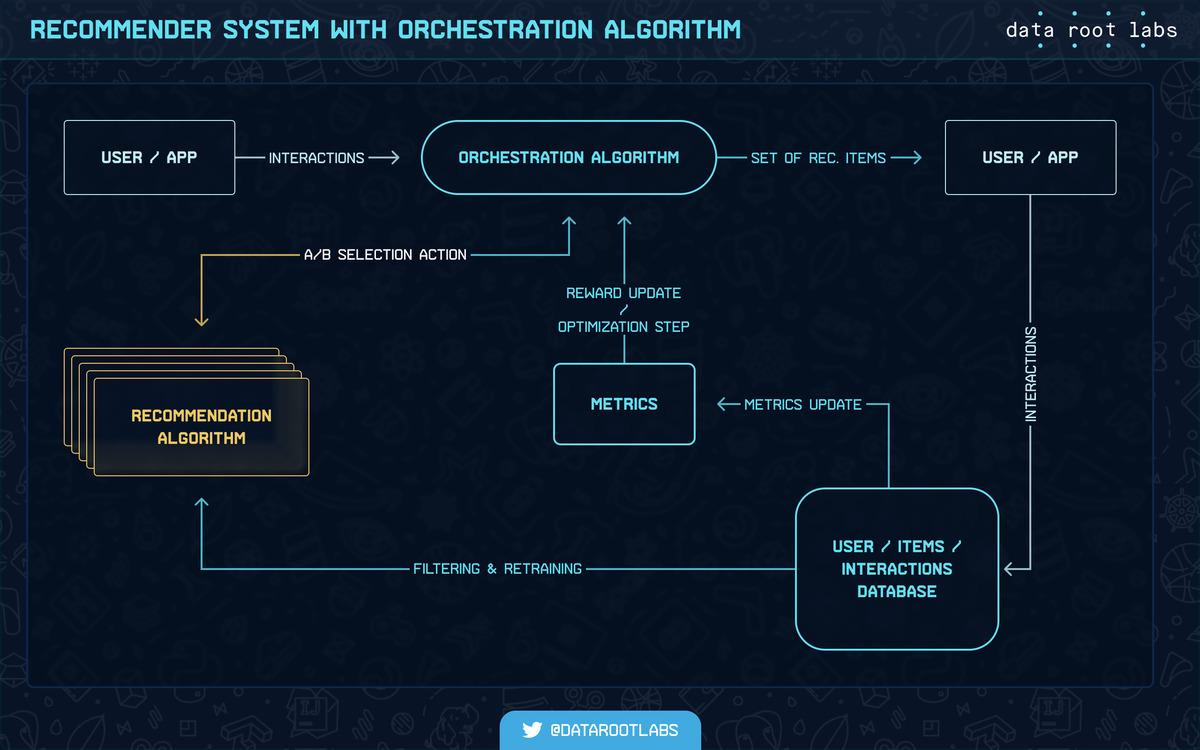
Exploration logic addresses how the ranking algorithm selects content. Diversity constraints operate at a different layer: they specify requirements for what the final content surface must contain regardless of what the ranking algorithm outputs.
A diversity constraint might specify that no single content category can occupy more than 40% of a feed. It might require that a minimum of three distinct content types appear in any list of ten recommendations. It might specify that at least one item from a category the user has not previously engaged with must appear in any session.
These constraints are applied at the re-ranking stage, after the core recommendation algorithm has run. They override the accuracy-maximizing output of the ranking model in favor of a surface that serves long-term discovery. Research on diversity in recommender systems identifies the practical limitation: diversity often appears as a peripheral re-ranking step layered onto an accuracy-optimized base model, which limits how much control it provides. The fix is treating diversity as a primary constraint in the ranking objective, not a post-hoc adjustment.
The product framing matters here. Diversity constraints are not about making the recommendation system less accurate. They are about optimizing for a different outcome: a product experience that expands rather than contracts over time. A user who discovers a feature through a diversity-constrained surface that the algorithm would not have shown them is producing new behavioral data, expanding the system's model of who they are, and getting value from a part of the product they would otherwise have missed.
Impression Suppression After N Exposures
The specific failure mode where users see the same content or offer repeatedly has a direct fix: suppression after N impressions.
Suppression logic tracks how many times a given piece of content, feature nudge, or offer has been shown to a user. When that count reaches a threshold, the item is removed from the eligible pool for that user. This prevents the system from showing the same activation nudge to a user who has already seen it six times and never responded, and it prevents the same product recommendation from appearing every time the user opens the app.
Suppression thresholds should be calibrated against response rate data. If a user has seen a feature promotion five times and engaged with it zero times, the probability that a sixth impression will produce engagement is low, and the cost of the sixth impression in terms of user frustration is real. The suppression threshold for a feature promotion might be 3-5 impressions with no engagement. For time-limited offers or content that changes frequently, the threshold can be higher.
Research on nudge suppression logic addresses this directly from a product design perspective. Suppression is not just a technical rule. It is a signal that the product respects the user's implicit feedback. A user who does not engage with a nudge after three impressions has told the system something. The system should listen.
Suppression interacts with segment staleness in a specific way. If a user's segment membership gets re-evaluated and they move to a new segment, their suppression history may or may not carry over, depending on whether the suppressed content is still relevant. A user who moved out of the "new user" segment should have their activation nudge suppression cleared if they later re-engage after a long absence, because the context has genuinely changed. Suppression should be context-aware, not permanent.
Applying This Inside Your Mobile App
The four mechanisms above, staleness thresholds, exploration ratios, diversity constraints, and suppression logic, address the filter bubble and segment lock-in at the system design level. Implementing them inside a live mobile app requires an in-app experience layer that can fire on real-time behavioral triggers, update what users see without a release cycle, and suppress content based on impression history.
Digia Engage's nudge product triggers on real behavioral events in under 100ms, which means suppression and exploration logic can operate within a session, not just between sessions. A user who has seen an activation nudge three times in the current session can have suppression kick in before the fourth impression fires, not after a batch processing run catches up the next morning.
Segment re-evaluation needs a system that can update segment membership when a defining event occurs, not on a fixed review schedule. Digia Engage's AI Segmentation allows growth teams to define cohort membership in natural language, "users who completed onboarding more than 60 days ago but haven't used feature X," and have the segment update automatically as users meet or exit the criteria. The staleness threshold becomes a parameter in the segment definition rather than a scheduled database job.
For diversity and exploration at the content surface, Digia Engage's Widgets product allows teams to update content blocks inside the app from a dashboard without a release cycle. Teams can adjust what content categories appear in which positions, test different exploration ratios, and override algorithm outputs with manually curated exploration content. The exploration logic is not just a data science problem. It requires a delivery layer that can change what users see in response to decisions made outside the app release cycle.
The suppression use case is handled directly by Digia Engage's suppression logic, which allows teams to define impression limits, engagement thresholds, and behavioral conditions that must be met before a nudge is eligible to fire. The implementation keeps suppression history at the campaign level, which means nudges targeting different segments carry independent suppression counters.
Digia Engage integrates directly with CleverTap, MoEngage, and WebEngage. The segment logic already running in those platforms feeds the trigger layer in Digia Engage. Staleness rules built in the CEP update which users qualify for which campaigns. Digia Engage handles what fires on screen, when, and with what suppression history. Teams do not need to rebuild their data infrastructure. They add the delivery and suppression layer on top of what they already run.
Key Takeaways
The filter bubble in mobile apps is what happens when a personalization system only surfaces content consistent with past behavior, narrowing the user's experience over time instead of expanding it.
Segment lock-in is the product-level consequence of static segmentation. Users assigned to a segment during onboarding or early behavior stay in that segment regardless of how their needs, behavior, and context evolve. The personalization system treats a snapshot as a permanent identity.
The self-reinforcing loop is the mechanism: behavior drives recommendations, recommendations drive behavior, and the range of both shrinks together until the system has no data about anything outside the narrow band it has created.
The root cause is short-term engagement as the primary optimization target. Systems optimized for clicks and opens produce filter bubbles by design, because the highest-engagement content is always the most familiar content. Long-term value requires a willingness to accept short-term metric trade-offs for exploration.
Four mechanisms address this:
Staleness thresholds set a maximum age on segment-defining behavioral events. Segments that depend on stale data get reviewed or exited automatically. Behavior from six months ago is not a reliable guide to personalization today.
Exploration ratios reserve a fraction of the content surface for items outside the user's established preference band. The exploration data teaches the system about preference evolution and surfaces parts of the product the user has not yet discovered.
Diversity constraints specify minimum requirements for content variety at the surface level. They operate as post-ranking rules that prevent any single category from dominating the user's experience.
Suppression after N impressions removes content from the eligible pool after it has been shown a defined number of times without producing engagement. Users who have seen the same nudge six times have communicated something. The system should record that communication.
The predictability cost is real and underreported. Users who notice that they always see the same content or offers lose trust in the app's ability to serve them. That trust erosion does not show up as a sudden engagement drop. It shows up as gradual churn from users who conclude the product has nothing new to offer.
Further Reading
From Digia Engage:
- The Cold Start Problem: How to Personalize When You Don't Have the Data Yet — the complementary failure mode: what happens before behavioral data exists, not after it calcifies
- Contextual Personalization: Adapting to the Moment, Not Just the History — how moment-based signals escape the filter bubble trap
- The Personalization Paradox: Adapting to Users Without Making the Product Unpredictable — the tension between personalization depth and user trust
- When NOT to Show a Nudge: Building a Suppression Logic — the suppression implementation that prevents the same nudge from firing indefinitely
- Behavioral Segmentation in Practice — how to build segments from raw event data so they do not lock users in from the start
- Personalization Experiments Using Dynamic UI Rendering — how to run controlled tests on personalization logic without shipping a release
External Sources:
- Filter Bubbles in Recommender Systems: Fact or Fallacy, arXiv — systematic literature review on the causes, evidence, and proposed solutions for filter bubbles in recommendation systems
- Long-Term Value of Exploration: Measurements, Findings and Algorithms, arXiv — production evidence from a major short-form video platform on how standard A/B testing fails to capture the long-term cost of under-exploration
- Filter Bubble or Homogenization? Disentangling Long-Term Effects of Recommendations, arXiv — research separating intra-user diversity effects (filter bubble) from inter-user diversity effects (homogenization)
- Inference Time Feature Injection for Real-Time Recommendation Freshness, arXiv — production evidence that reducing segment staleness from daily to intraday drives statistically significant engagement gains
- Dynamic Segmentation for App Marketers, Adjust — practical implementation guide on moving from static segmentation lists to real-time behavioral updates
Digia Engage is the in-app experience layer for mobile growth teams who need personalization that adapts to users rather than trapping them. AI Segmentation builds and updates behavioral cohorts from natural language descriptions. Nudges fire on real-time behavioral events in under 100ms. Suppression logic prevents the same content from showing after defined impression thresholds. Book a demo to see how it works inside your app.