

TL;DR: Spotify does not show upgrade prompts on a timer or at app launch. It shows them at the exact moment a user hits friction: a skipped-out playlist, an ad mid-deep-session, an offline download attempt that returns a locked icon. Each of these is a behavioral signal, and Spotify's system reads them as upgrade intent. This article breaks down the specific triggers Spotify uses, the behavioral mechanics behind each one, why the free-to-paid journey is designed as gradual friction build rather than a sudden wall, and what subscription apps can extract from the playbook without copying features they don't have.
Why Spotify Does Not Show Upgrade Prompts at App Launch
Most apps treat the upgrade prompt like a billboard. Put it somewhere visible. Show it early. Show it often. Get the message in front of users before they have any reason to leave.
Spotify does the opposite.
Spotify's freemium architecture is built on a principle that most product teams struggle to accept: users who are not frustrated are unlikely to upgrade. A user who just opened the app, started a playlist, and heard their first song is not a conversion candidate. That user is in enjoyment mode, not evaluation mode. Showing them an upgrade prompt at this point costs attention without producing a decision.
The app launch prompt is a structural mistake because it fires at the wrong psychological state. Spotify identifies that state very precisely, then waits for a different one.
The psychological state that precedes upgrading is not happiness. It is low-grade irritation with the free experience, combined with enough embedded habit that walking away costs more than paying. Spotify engineers that state deliberately. The upgrade prompt arrives after the irritation has built, not before it has started.
This is the foundational logic behind Spotify's upgrade nudge timing system, and it is different enough from standard growth thinking that it deserves to be pulled apart piece by piece.
The Free Tier Friction Architecture: What Spotify Deliberately Restricts
Before analyzing when upgrade prompts appear, it helps to understand what the free tier is designed to do. It is not a generously limited version of Premium. It is a carefully calibrated experience that gives users enough to get hooked and just enough friction to want more.
Spotify's ad-supported tier on mobile historically limited users to six skips per hour on mobile, forced shuffle mode on most content, played ads approximately every three to five songs, and blocked offline downloads entirely. The September 2025 Free Experience update partially relaxed the shuffle restriction by introducing on-demand listening up to a daily quota, but the core friction architecture remained: once the daily allowance runs out, the six-skips-per-hour limit returns, and ads continue regardless.
The restrictions are not random. Each one targets a specific desire that the paid tier then resolves.
Shuffle-mode restriction targets users who want control over what plays next. Skip limits target users who want to move past songs they dislike quickly. Ad frequency targets users who want uninterrupted listening during focused activities: commuting, working, exercising. Offline download restrictions target users who listen in low-connectivity environments.
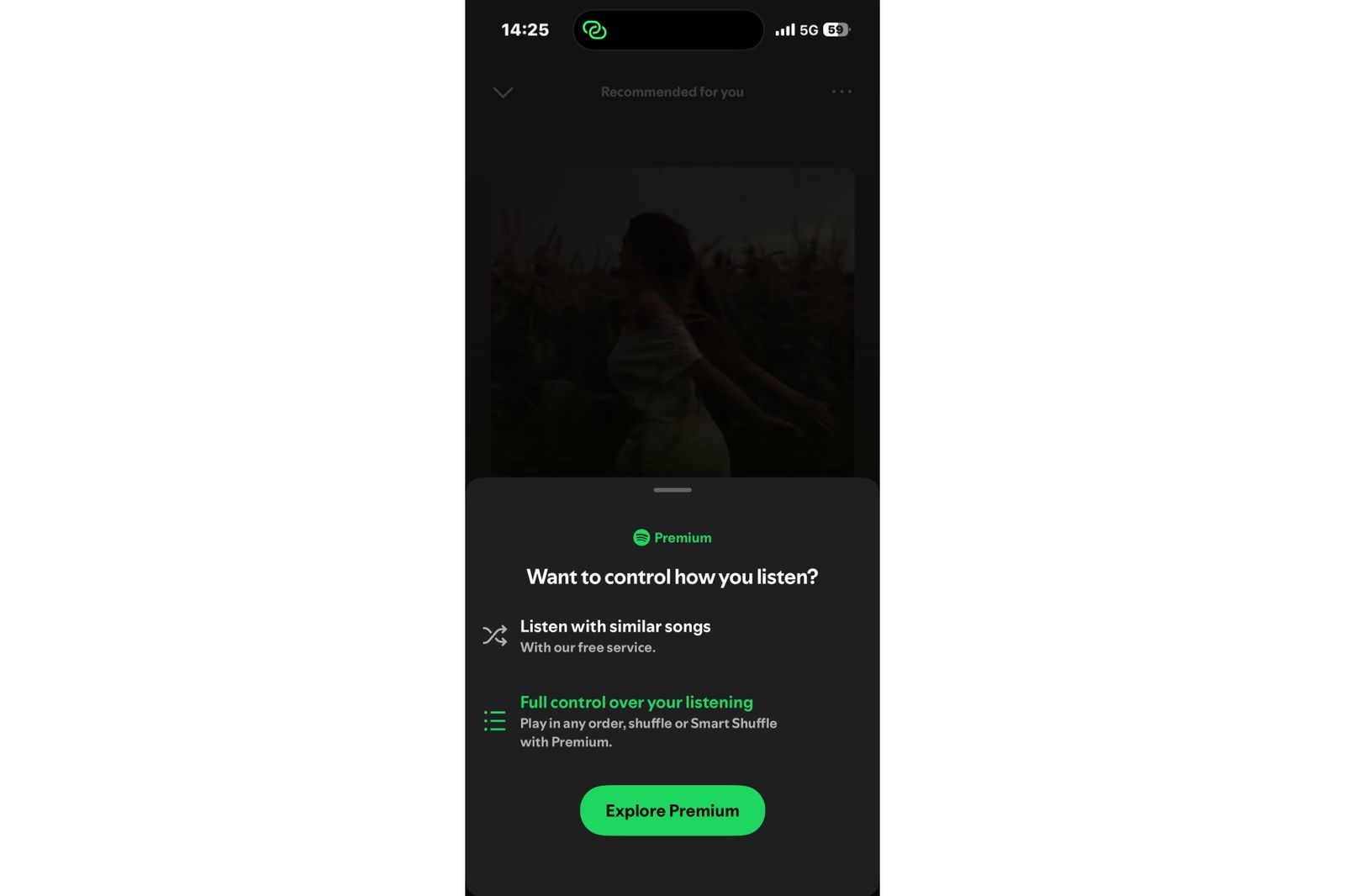
The four restrictions map cleanly to four Premium benefits. When a user encounters one of those restrictions, the benefit becomes concrete rather than hypothetical. They are not reading a features list on a pricing page. They are feeling the absence of something they want, in real time.
That is the moment Spotify's system acts.
The Six Specific Triggers That Fire Upgrade Prompts
Spotify's upgrade prompts are not on a clock. They are attached to behavioral events. Below are the six specific events that trigger them.
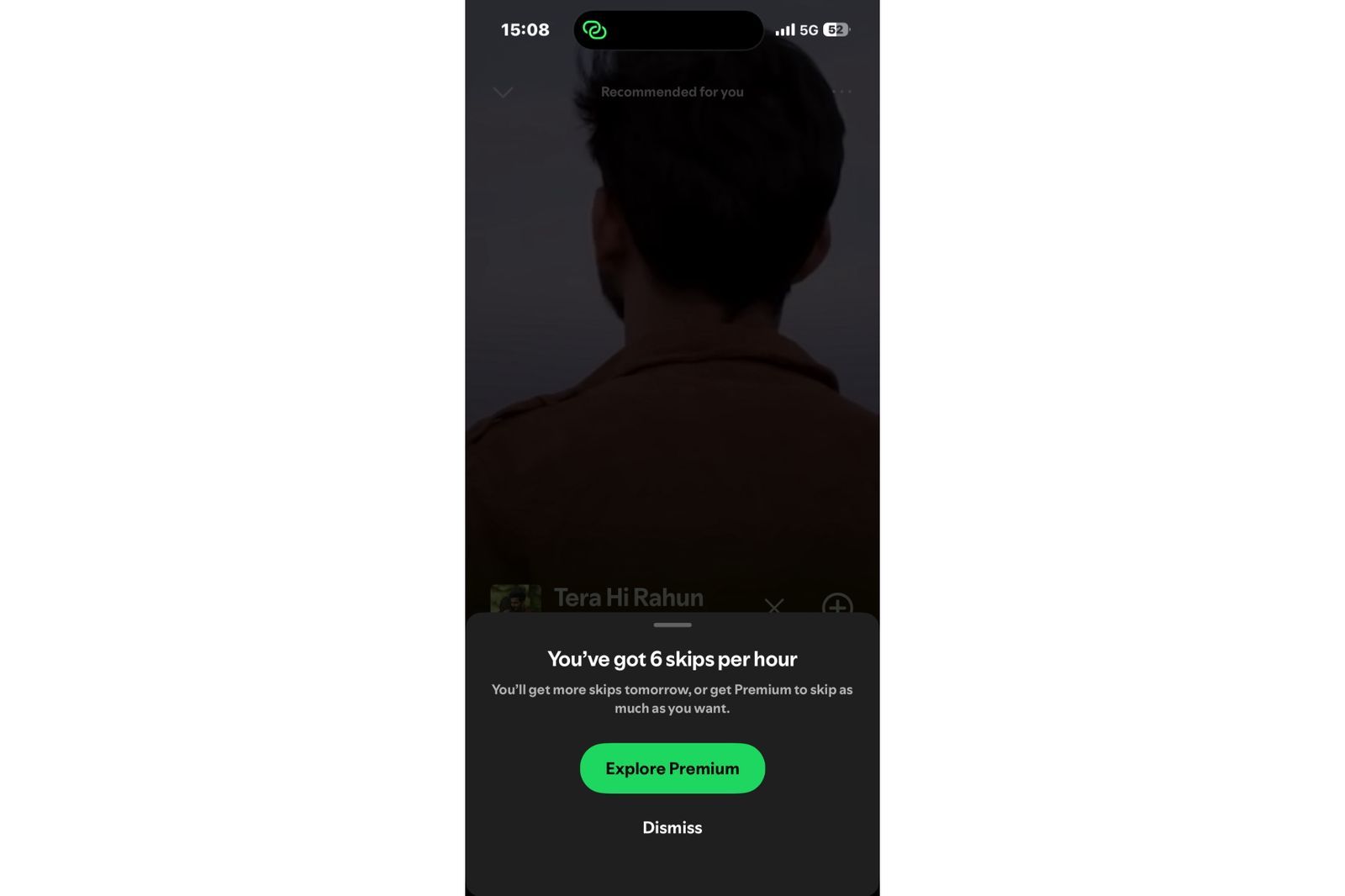
Skip limit reached. When a free user exhausts their six skips per hour on mobile, Spotify surfaces an upgrade prompt at the point of refusal. The user tapped skip. The system rejected the action and simultaneously offered the reason and the solution: Premium removes skip limits. The timing is precise because the user's desire to skip a specific song is live at that moment. They are not being asked to imagine wanting to skip. They just tried and failed.
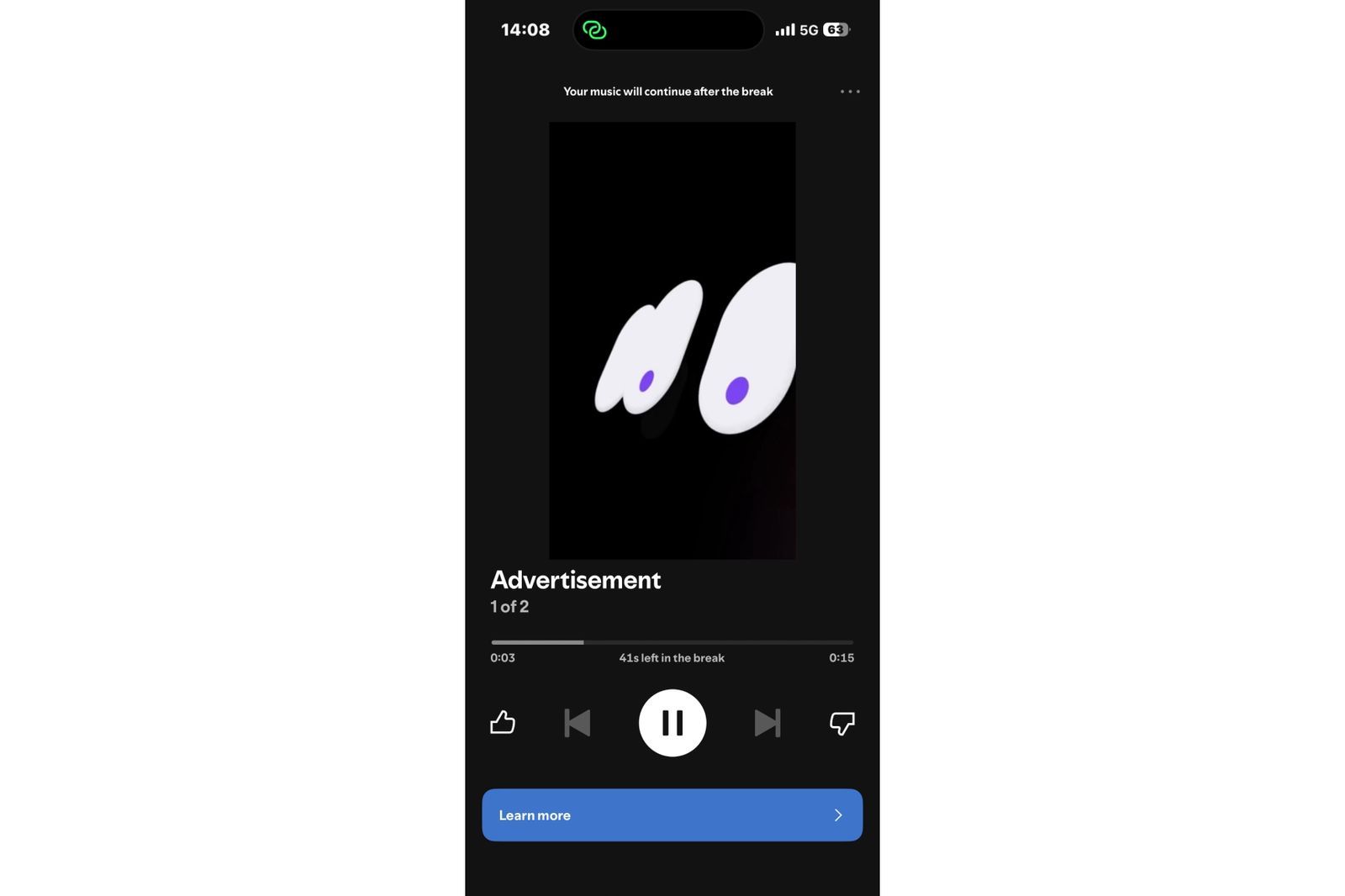
Consecutive ad plays in a high-engagement session. Spotify tracks session length and listening engagement. A user who has been listening for 40 continuous minutes and hits a third ad block in that session is in a different psychological state than a user who just opened the app. The long-session user has invested time and attention. The ad interrupts something they are emotionally inside. Research in conversion psychology consistently shows that prompts triggered by user behavior outperform time-based prompts. The post-ad upgrade prompt lands in a moment of genuine frustration, which makes it a logical response rather than an interruption.
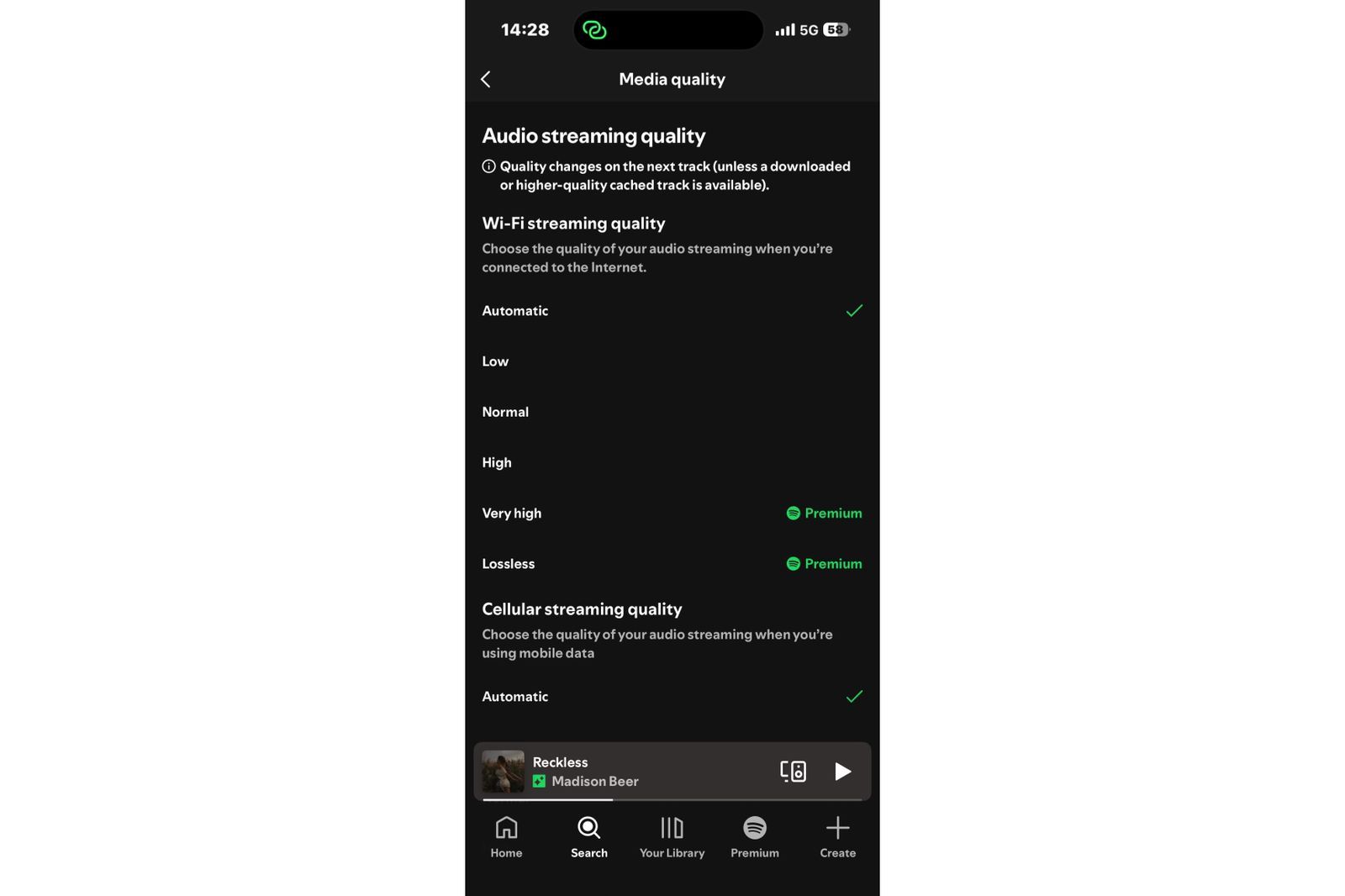
Audio quality setting access. Free users who navigate to audio quality settings encounter options that are visible but locked at the highest quality tier. A tooltip explaining that very high (320kbps) streaming and lossless audio (introduced via Spotify's lossless integration for Premium in 2025) requires Premium appears when they attempt to select it. The user was already in settings, already interested in audio quality. The prompt meets them inside that curiosity.
Daily on-demand quota exhaustion. After the 2025 Free Experience update, free users receive a daily allocation of on-demand listening time. When that quota runs out mid-session, the app reverts to shuffle mode and the six-skips-per-hour limit. At this transition point, Spotify shows an upgrade prompt that explains exactly what happened and what Premium would change. The user has just experienced a downgrade in their own session. The timing captures the frustration at its sharpest.
Playlist or album access on restricted content. Certain curated content remains Premium-only or returns to shuffle for free users after an initial play. Attempting to select a specific track in those contexts triggers a nudge. The user is not being told about a restriction abstractly. They are trying to do something and being told it requires upgrading.
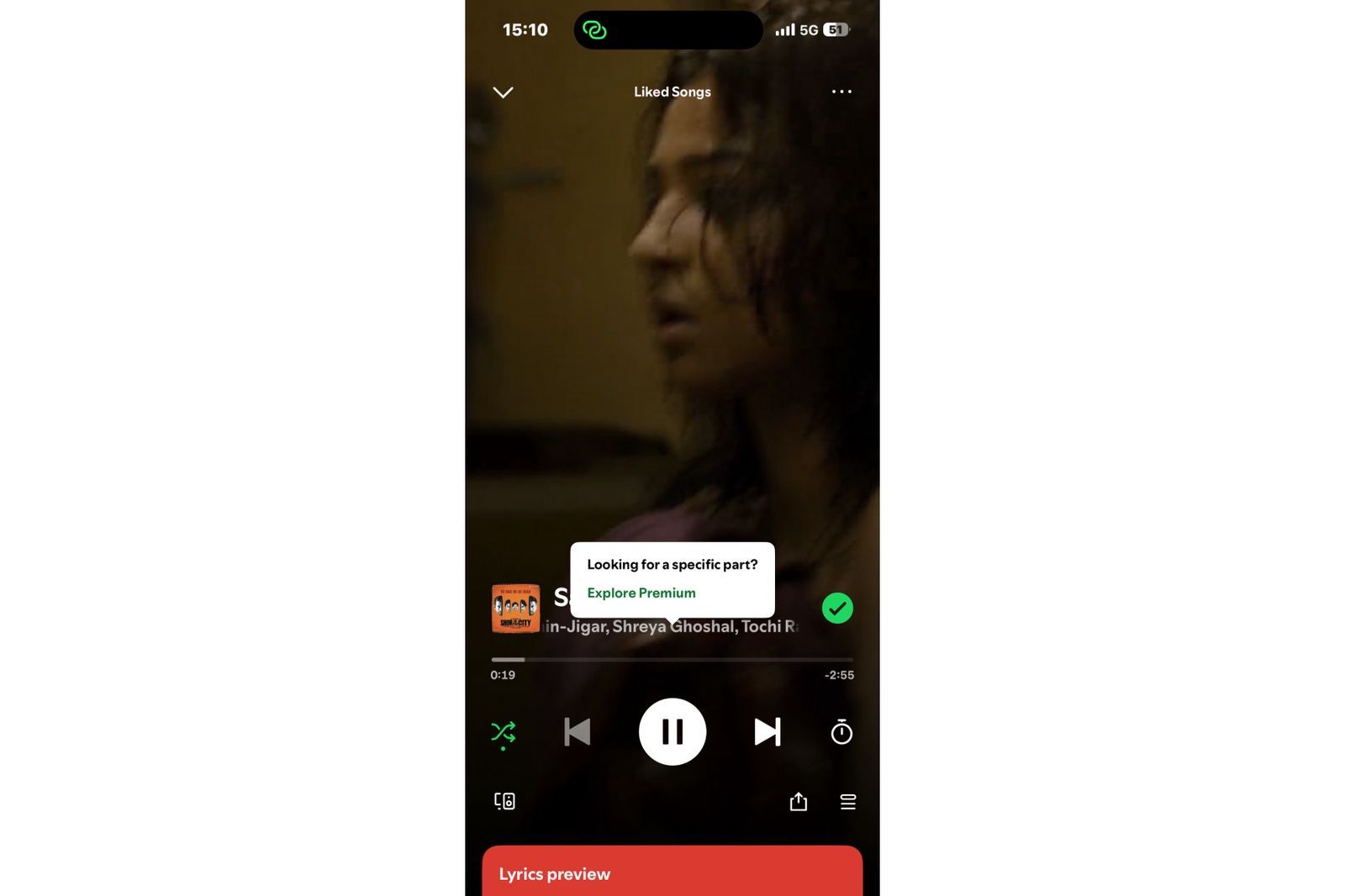
The common thread across all six: the prompt fires at the moment of failed intent, not at an arbitrary schedule.
Emotional vs. Functional Triggers: Two Different Users, Two Different Nudges
Spotify's triggers split cleanly into two categories, and understanding the distinction matters for anyone trying to apply this playbook elsewhere.
Functional triggers fire when a user attempts a specific action and the system blocks it. Download attempt, quality setting access, specific track selection, skip refusal. These are transactional frustrations. The user wanted to do X and could not. The upgrade prompt offers X as the resolution.
Emotional triggers fire when a user is in a particular affective state: deep session immersion broken by an ad, or habitual daily listening disrupted by a quota limit. These are experiential frustrations. The user was inside an experience and got pulled out of it. The upgrade prompt offers a return to that experience, uninterrupted.
The difference between them matters because they address different decision-making modes.
Functional frustration triggers rational evaluation. The user thinks: "I want to download this playlist for my commute. Premium costs this much per month. I commute five days a week. Is this worth it?" They are doing math. The upgrade prompt that works here is specific about the feature being unblocked, not generic about the Premium experience.
Emotional frustration triggers loss aversion. The user is not doing math. They are reacting to the interruption of something they valued. The upgrade prompt that works here frames Premium as the removal of the thing that just disrupted them, not as a list of features they are gaining. Behavioral research on loss aversion consistently shows that the desire to avoid losing something already experienced is stronger than the desire to gain something not yet experienced.
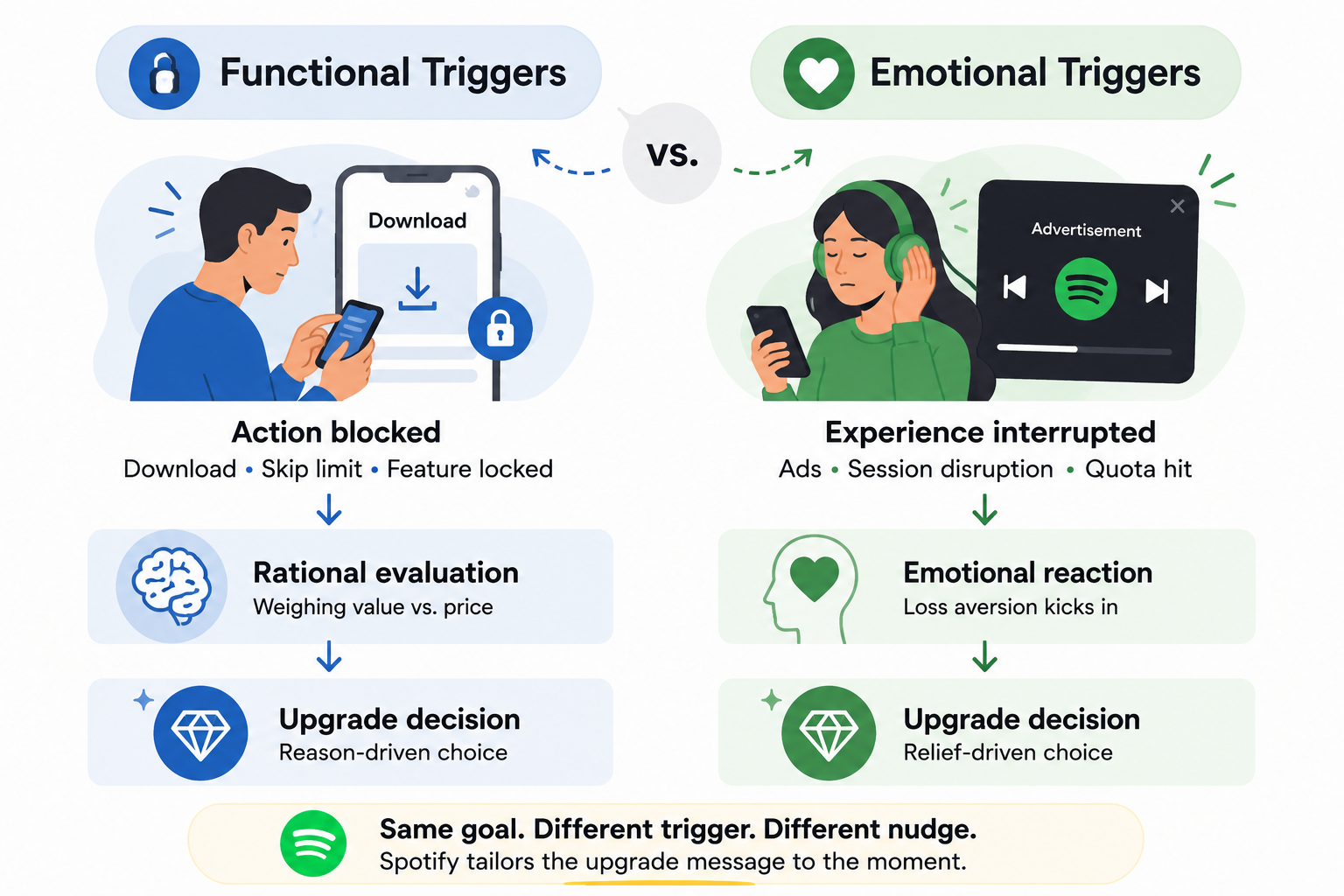
Spotify appears to distinguish between these states in how it presents the upgrade offer, though the specifics of the copy variations are not publicly documented. What is visible in the product is that the ad-interruption prompt tends to emphasize "no ads, ever," while the skip-limit prompt tends to emphasize control and unlimited skips. The frame shifts with the trigger.
The Free-to-Paid Journey: Gradual Friction Build vs. Sudden Paywall
The most important structural decision in Spotify's freemium design is also the most misunderstood: they chose gradual friction build over a sudden paywall.
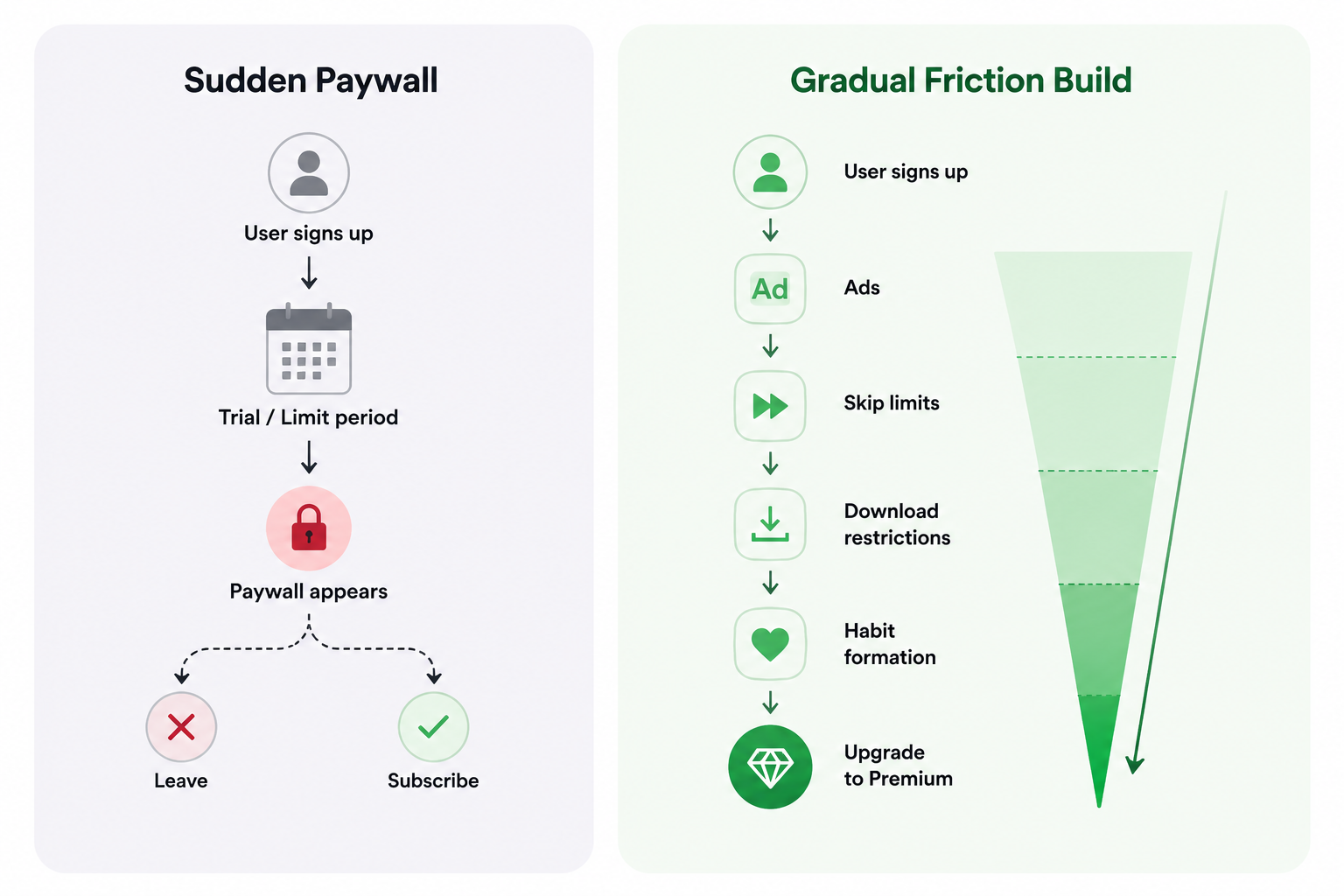
A sudden paywall is what most subscription apps default to. The user gets a set number of uses, or a time-limited trial, and then hits a hard stop. The stop is binary: either pay or leave. This creates a conversion event, but it also creates a departure event for every user who is not yet ready to pay.
Gradual friction build is different. The free experience is never broken. Users can always listen to something. The friction accumulates at the edges: more skips used than allowed, more ads heard in a long session, the occasional failed download attempt. The user continues listening. The frustration builds incrementally. The attachment to the product builds simultaneously.
Research in subscription economics shows that conversion improves when friction is present but tolerable. If friction is too strong, users churn. If it is too weak, they remain free indefinitely. The specific calibration of Spotify's free tier targets the space between those two failure modes. The experience is good enough to retain users through habit formation, and limited enough that the limitations become a recurring annoyance as usage intensifies.
This is why Spotify's conversion rate sits at roughly 39% as of Q2 2024, which is approximately eight to ten times the typical SaaS freemium benchmark of 2-5%. The users who convert are not casual users on a time limit. They are habitual users who have lived inside the free experience long enough that the friction has compounded to the point where paying is easier than tolerating it.
The implication for app teams is uncomfortable: a gradual friction model requires patience. The user who converts six months into their free experience contributes more long-term value than the user pushed to a paywall at day 14. But the six-month user requires a free tier that is genuinely good, which means investing in the product before recovering revenue from it.
Spotify makes that bet. Most apps do not.
The Champion/Evaluator Framework Applied to Nudge Timing
One angle that gets less attention in analyses of Spotify's freemium model is how it applies to different audience roles within a subscription decision. A music streaming subscription is usually an individual decision, but the nudge architecture has to account for users at different stages of commitment. In Spotify's model, the equivalent of a Champion is the habitual user who genuinely values the experience and is close to converting. The Evaluator is the lower-frequency user who is still testing whether the product fits their listening habits.
The timing system behaves differently for each of these.
For the Champion-equivalent user who opens the app daily and runs deep listening sessions, the triggers arrive naturally and frequently. They hit skip limits during morning commutes. They encounter ads mid-session on long gym playlists. The friction accumulates faster because they use the product more.
For the Evaluator-equivalent user who opens the app a few times a week and listens for shorter sessions, the triggers arrive less often and with less emotional intensity. They may encounter the skip limit once a week. The ad after three songs in a twenty-minute session is less disruptive than it would be for a two-hour session. The friction is real but mild.
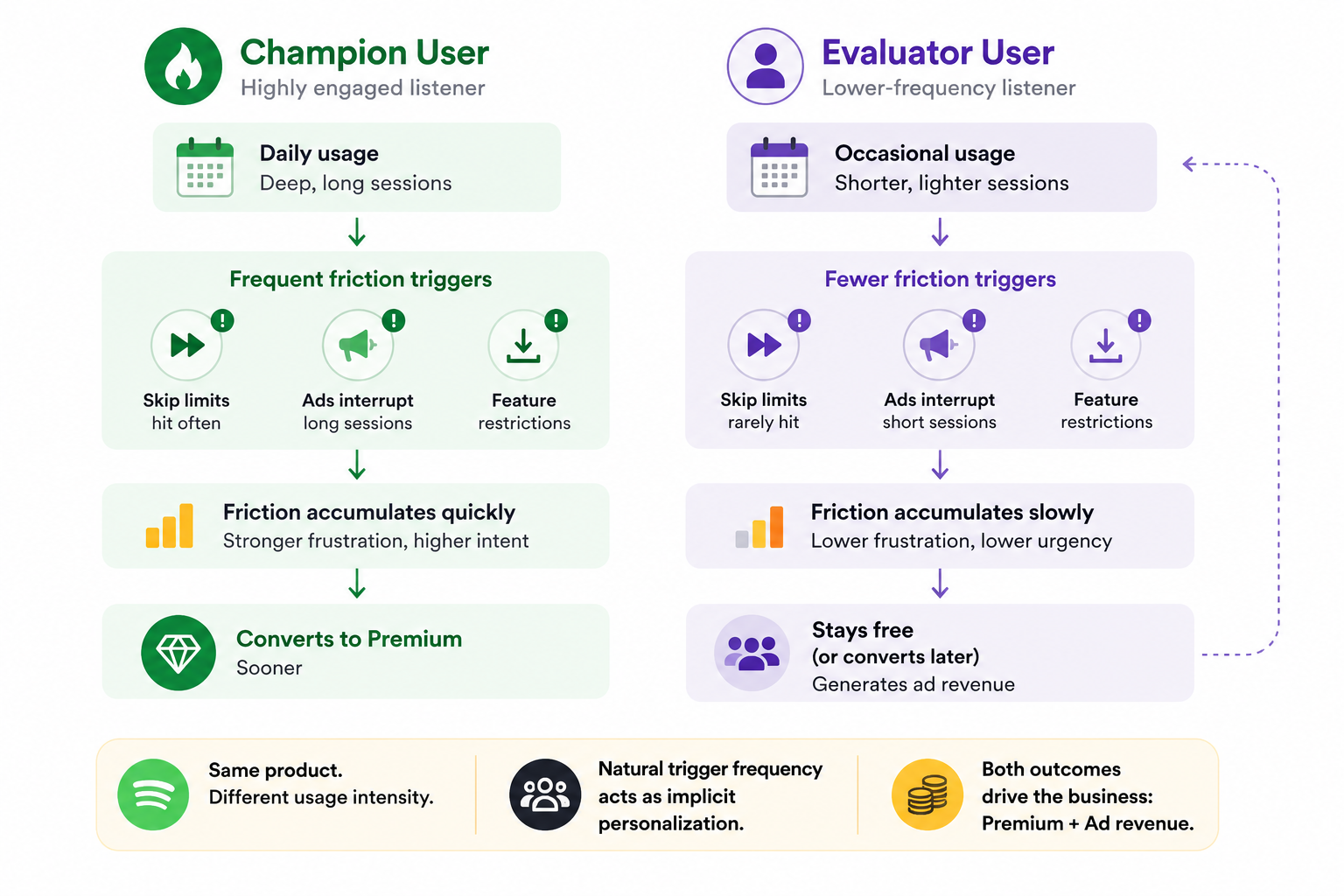
Spotify does not appear to suppress upgrade prompts for low-frequency users (unlike Zomato's approach with Gold membership, which likely adjusts the Gold prompt based on order frequency), but the natural trigger frequency acts as a kind of implicit personalization. The app shows more prompts to the users who earn them through higher usage, without requiring explicit segmentation logic to do so.
The Champion user converts sooner because they feel the friction sooner. The Evaluator either eventually becomes a Champion through increasing engagement, or they remain free indefinitely, generating ad revenue in the process. Both outcomes serve Spotify's business model. Ad-supported revenue reached €537 million in Q4 2024, which means free users who never convert are not dead weight. They are a separate revenue line.
This is what makes Spotify's model genuinely different from most freemium products: the free tier is not a conversion cost. It is a dual-purpose system that generates both ad revenue and future Premium subscribers from the same user base.
What Subscription Apps Can Actually Take from This Playbook
The Spotify nudge timing system is frequently misread as "add friction to drive upgrades." That reading produces the wrong execution: teams add irritating restrictions that drive churn instead of conversion, without building the habit foundation that makes frustration productive.
The actual playbook has four components, and they only work together.
Build genuine value before adding restrictions. Spotify gives away the entire music catalog, the recommendation engine, and playlist functionality for free. The free experience is genuinely good. The restrictions are applied to control mechanics (skip, shuffle, audio quality, offline) that matter after the user is already attached to the content. If the free experience is not genuinely valuable, the friction that follows produces churn, not upgrades.
Map restrictions to specific desires, not arbitrary feature tiers. Each of Spotify's restrictions targets a distinct listening desire: control, quality, continuity, offline access. Each Premium benefit resolves one of those desires precisely. The upgrade prompt can then make a specific claim: "This specific thing you just tried to do requires Premium." Generic "upgrade for more features" prompts are weaker because they require the user to connect an abstract benefit to a current frustration. Specific prompts make that connection for the user.
Time the prompt to the behavior, not to the calendar. A weekly nudge email sent on Tuesday regardless of what the user has done that week is a different category of intervention from a prompt that fires when the user hits a skip limit in the middle of a session. The behavioral trigger requires instrumentation. Teams need to know when users encounter friction events, and they need to be able to fire in-app experiences at those moments without engineering queue delays. Real-time event-triggered campaigns that fire in under 100ms capture the frustration moment. Campaigns that batch on a schedule miss it.
Design the free experience so that usage naturally escalates friction. The Spotify system works partly because the restrictions hit harder as usage increases. A daily listener hits the skip limit more often than a weekly listener. The ad in a 90-minute session is more disruptive than the ad in a 10-minute session. The restriction architecture is passive: it does not require targeting logic to deliver more friction to high-intent users. Usage escalation does that automatically. When designing a free tier, the goal is to create restrictions that feel mild to casual users and accumulate meaningfully for power users.
The Design of the Prompt Itself: What Spotify Shows at the Trigger Moment
The timing is half the system. The other half is what Spotify actually shows when the trigger fires.
At skip limit, the prompt is specific: it tells the user they have used their six skips and explains that Premium offers unlimited skips. It does not list every Premium benefit. It resolves the exact failure that just occurred.
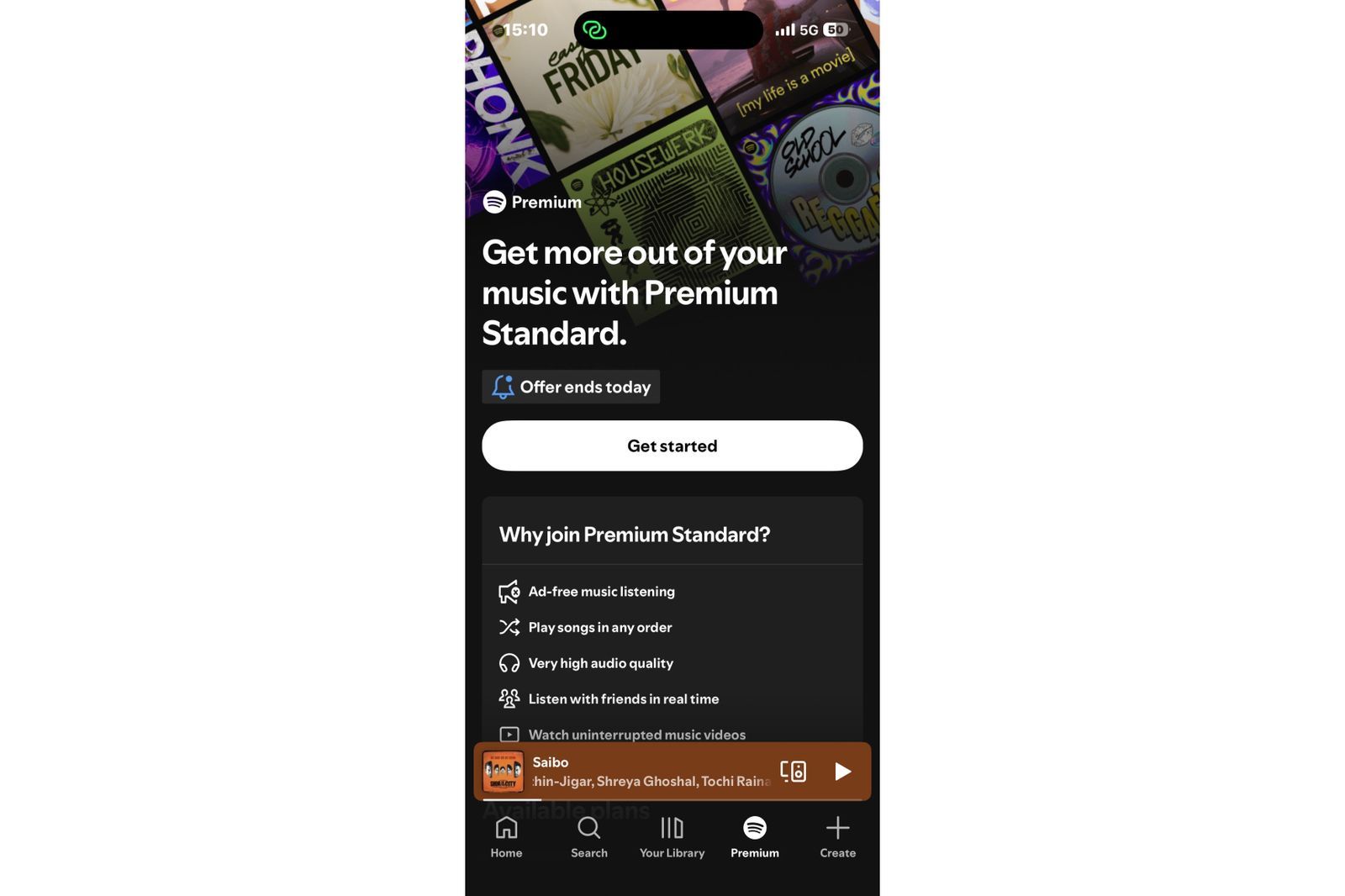
At ad play in a deep session, the prompt offers a trial to go ad-free. The framing is about removal: remove the thing that just interrupted you, not add a suite of new capabilities.
At download attempt, the locked state and accompanying prompt are focused on offline listening specifically. The user tried to download. The response is about downloading.
This is the content principle underlying the timing system: the message matches the trigger. The upgrade prompt is a response to what just happened, not a general pitch. This is what product teams mean when they say "contextual nudges": the context is not just the screen the user is on, it is the specific action they just attempted and the specific frustration it produced.
Building this requires three things: knowing which events constitute frustration triggers, being able to fire an in-app experience at the moment those events occur, and having the ability to configure different message content for different trigger types without a code change for each variant.
Key Takeaways
- Spotify's upgrade prompts are triggered by behavioral events, not timers or session counts. The six primary triggers are: skip limit exhaustion, ad play in a high-engagement session, download attempt on a locked track, audio quality setting access attempt, daily on-demand quota exhaustion, and specific track access in restricted contexts.
- The free tier is designed as gradual friction build rather than a sudden paywall. The free experience is genuinely valuable, and restrictions accumulate as usage increases, which means the friction hits hardest for the users who are already most attached to the product and most likely to convert.
- Spotify distinguishes between functional triggers (failed action) and emotional triggers (disrupted experience). The upgrade prompt content is matched to the trigger type. Functional triggers receive feature-specific messaging. Emotional triggers receive experience-restoration framing.
- The 2025 Free Experience update did not weaken the nudge system. It shifted the friction point from a permanent shuffle restriction to a daily on-demand quota that, when exhausted, creates a stronger trigger than the original passive restriction did because users now experience the unrestricted version being taken away.
- Habit formation must precede friction. The behavioral mechanics that make Spotify's timing system work (endowment effect, loss aversion, mere exposure effect) only operate on users who are already attached to the product. Applying friction before attachment produces churn. The sequence matters as much as the trigger design.
- Approximately 60% of Spotify Premium subscribers started as free users, and the company's global Premium subscriber count reached 281 million in Q3 2025, up 12% year-over-year. The nudge timing architecture is a measurable contributor to those conversion patterns.
Further Reading
From Digia Engage
In-App Nudges covers the event-trigger architecture that enables behavioral nudges to fire in real time when users encounter specific product states, which is the core technical requirement for replicating Spotify's trigger-based upgrade system.
Monetization Use Case breaks down how in-app prompts at high-intent moments reduce drop-off at conversion points, including upgrade flows and paywall encounters.
Timing Experiments: When to Trigger In-App Engagement covers the framework for testing nudge timing variables, including behavioral triggers vs. session-based triggers, and how to measure which timing approach converts best for a given product.
Zomato's Inline Banner Strategy for Upsell Flows covers a comparable case study on a food delivery app that places subscription prompts at the moment of maximum financial intent rather than at arbitrary intervals, using specific session-derived data to make the offer concrete.
Why Most In-App Nudges Fail (And How to Fix Their Timing) addresses the specific failure modes in nudge timing, including the calendar-based scheduling problem and the cost of firing prompts at the wrong psychological state.
Book a product demo to see how Digia Engage's behavioral event triggers and real-time in-app nudges can be configured to replicate trigger-based upgrade flows without engineering queue delays.
External Sources
Music Business Worldwide: Spotify Scraps Shuffle Restriction for Users of Free Tier covers the September 2025 Free Experience update in detail, including Gustav Gyllenhammar's explanation of the commercial logic, the advertising business rationale, and the distinction between what on-demand access now means for free users vs. Premium users.
Raw.Studio: How Spotify Converts Free Users by 40% with 4 Freemium UX Strategies provides a detailed breakdown of the behavioral principles underlying Spotify's freemium model, including the endowment effect, strategic friction calibration, and the specific timing logic behind upgrade prompt placement.
Spotify Q3 2025 Shareholder Letter (SEC Form 6-K) provides the official figures on Spotify's MAU and Premium subscriber counts, revenue split between Premium and Ad-Supported tiers, and management commentary on the Free Experience update as a growth driver.
Stratrix: Spotify Freemium Model Analysis covers the structural mechanics of Spotify's three-layer funnel, the data network effects that power recommendation quality, and the historical context of how the freemium model was designed as a counter to music piracy rather than as a standard subscription funnel.
Mihir Malhotra, Medium: Case Study on Spotify Premium Conversion offers a product case study perspective on where Spotify's current nudge system leaves conversion on the table, including specific proposals for tightening the friction calibration and improving the contextual specificity of upgrade prompts.
Digia Engage is a no-code in-app campaign platform for mobile growth teams. It supports real-time behavioral event triggers that fire in-app nudges in under 100ms, dynamic content fields that match message copy to the specific trigger event, and no-code configuration for A/B testing timing and message variants without an engineering sprint. SDK integration takes under 20 minutes. See how trigger-based upgrade flows work inside the platform.