




TL;DR
- India remains the world's largest mobile app market by volume, and 2026 is the year that scale converted into genuine monetisation and engagement depth rather than pure install growth.
- This report brings together the device and network reality Indian apps actually run on, and the regulatory landscape now actively shaping in-app design.
- It covers the payment-layer patterns unique to this market, and what is actually working across fintech, quick commerce, and gaming specifically.
- It covers the current vendor landscape and the architectural question every team is asking.
- It covers the hard data behind what converts, and where the category is heading next.
- Sourcing note: Every statistic and claim in this report is attributed to its original source, whether that source is independent market research or Digia's own previously published, separately sourced work.
Digia Engage works with growth and product teams across fintech, e-commerce, gaming, and media who are navigating exactly the conditions this report describes, and this piece exists to bring those conditions together in one place rather than leaving a team to piece them together from a dozen separate vendor blogs and regulatory notices. What follows is not a product pitch. It is the operating environment itself, stated plainly, with the specific implications for anyone building or evaluating in-app engagement in this market right now.
The Scale of the Opportunity
India remains the world's largest mobile market by download volume, generating around 25 billion downloads annually, with growth stabilising in 2025 as the market matured rather than continuing pure install expansion. Sensor Tower's official count puts 2025 downloads specifically at 25.5 billion, a genuine rebound from 2024's 24.6 billion, itself a decline from 2023's 25.9 billion, making India one of the only markets in the global top 10 to see downloads grow year on year in 2025.
The more consequential shift is not download volume. Annual in-app purchase revenue in India surpassed $1 billion for the first time in 2025 and is projected to reach $1.25 billion by the end of 2026, with growth increasingly driven by premium services, subscriptions, and higher-value users, and non-gaming apps accounting for a rising share of total consumer spend. Time spent inside apps rose from 1.13 trillion hours in 2024 to 1.23 trillion hours in 2025, and category growth is now concentrated in AI assistants, short-form drama apps, video editing, and food and grocery delivery specifically, driven by the continued rise of ultra-fast grocery delivery services, while social media and messaging categories saw a relative dip.
India's mobile application market revenue itself was valued at $10.59 billion in 2024 and is projected to reach $27.68 billion by 2030, a 17.8% compound annual growth rate. With 783 million smartphone users, India remains the second largest smartphone market globally by active users, and the average Indian user downloaded 31 apps in 2024 while spending less than $5 annually on apps, a figure that underscores exactly why engagement and retention, not acquisition alone, has become the dominant strategic question for Indian consumer apps entering 2026.
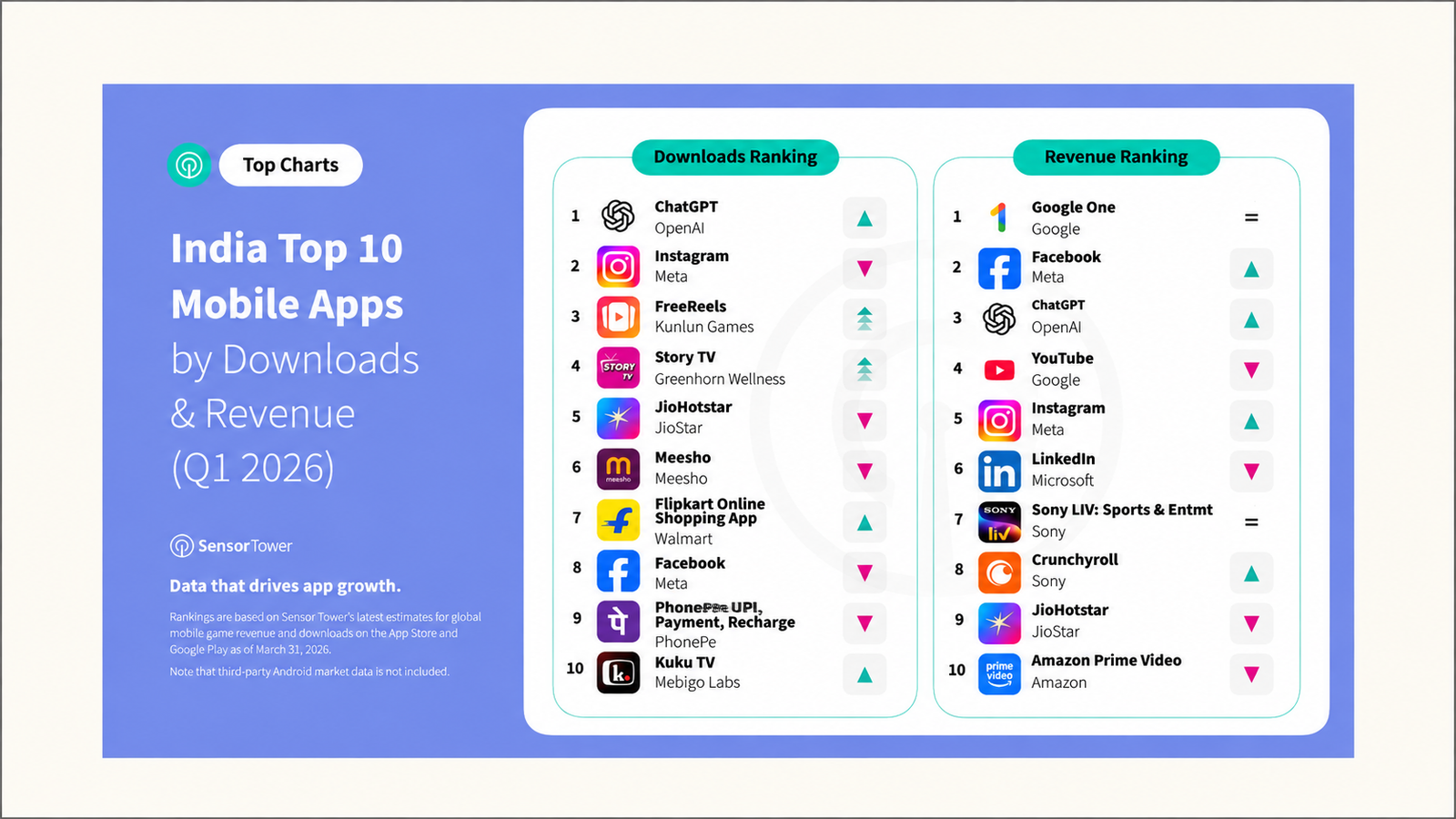
This is the specific market context every section that follows sits inside: enormous, still-growing scale, a genuine and recent shift toward monetisation depth, and a user base whose low per-app spend makes retaining and converting the users already acquired the single highest-leverage lever available.
The Device and Network Reality
The scale above runs on infrastructure meaningfully different from the device and network assumptions most in-app tooling was originally built against, and this difference shapes what actually works in this market specifically.
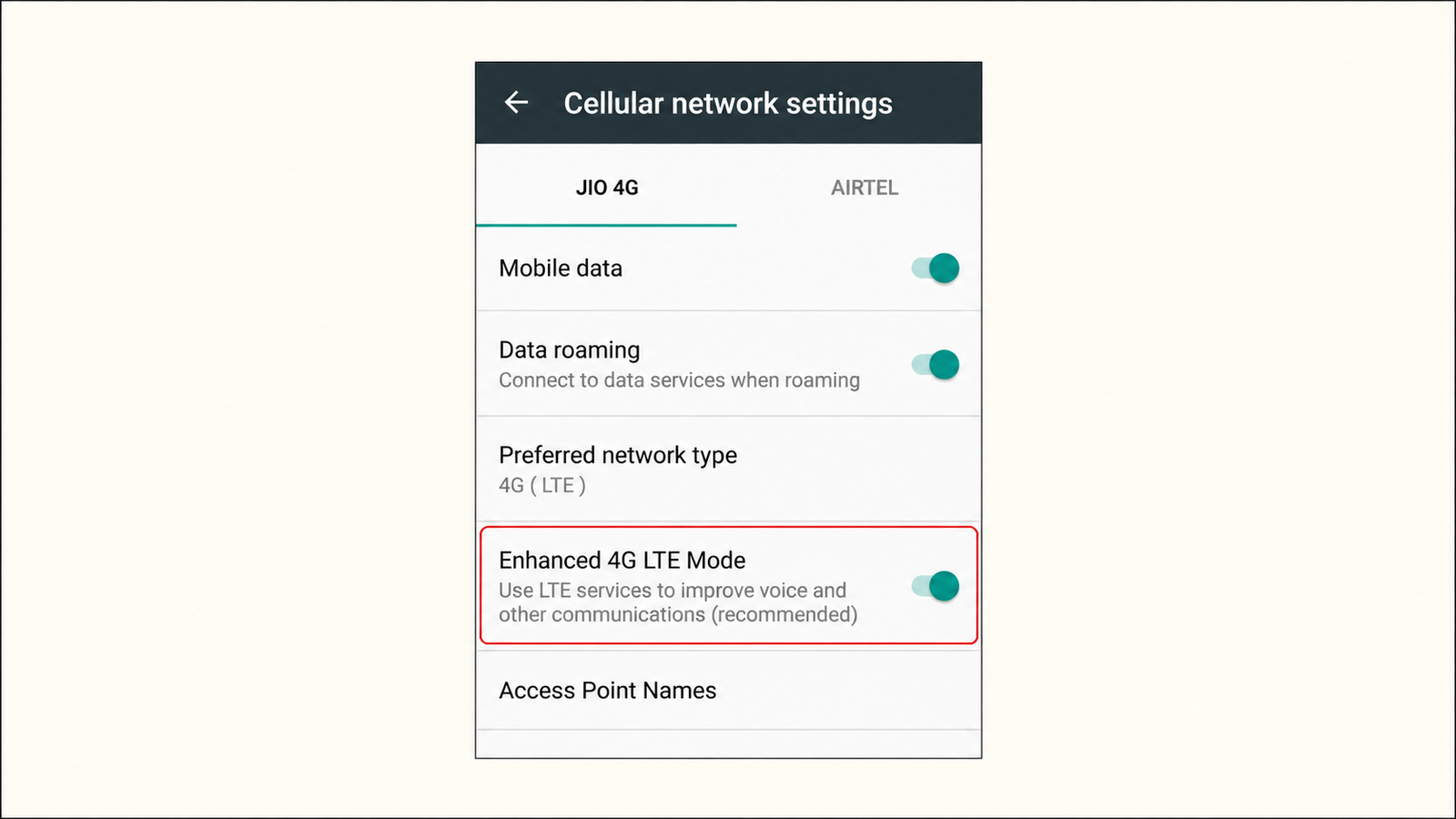
Only 22% of India-sold Android devices receive security patches beyond 18 months of launch, and most sub-₹15,000 devices receive just one OS upgrade and 24 months of security patches total, with devices in the $150 to $300 range typically offering 3 to 4GB of RAM. Over 24,000 distinct Android device variants exist globally, and India's download volume runs predominantly on Android, the platform where fragmentation and monetisation efficiency both work against an app in ways iOS does not.
Network conditions compound this: carrier-specific band fragmentation across Jio, Airtel, and Vodafone Idea, combined with intermittent connectivity as a normal daily condition rather than an edge case, means a tool built around a live-fetch assumption degrades badly for a meaningful share of Indian users. Google's own research found that for every 6MB increase in app size, install conversion decreases by approximately 1%, with the effect compounding at larger sizes, and this relationship hits harder specifically in markets where data cost and storage remain live, daily constraints rather than an abstract concern.
The practical consequence for any in-app tooling decision: SDK footprint, cold start impact, and offline resilience are not secondary technical details in this market. They are first-order design constraints that determine whether an engagement layer reaches its intended audience at all, or quietly degrades on precisely the device tier where the largest share of India's user growth is concentrated.
The Regulatory Landscape
2026 is the year India's regulatory environment moved from framework to active enforcement, and this shift now shapes in-app design decisions directly, not just legal review.
\
India's Digital Personal Data Protection Act applies to processing of personal data of Indian residents regardless of where that processing occurs, and every third-party vendor touching personal data, including analytics and engagement platforms, must have a signed Data Processing Agreement in place, with the data fiduciary, the app itself, remaining accountable for any misuse regardless of the vendor's own infrastructure. The Data Protection Board of India began active enforcement in Q1 2026 against app developers processing data without valid consent or with inadequate retention policies, making this a live compliance question, not a theoretical one.
For financial apps specifically, the regulatory tightening is even more direct. RBI's Commercial Banks Responsible Business Conduct Second Amendment Directions, coming into force January 2027, explicitly address digital journeys, user interfaces, and dark patterns, cautioning against practices including high-pressure sales tactics and festive-season loan targeting. SEBI's proposed Common Advertisement Code, under consultation through 2026, prohibits guaranteed-return claims and FOMO-style urgency messaging, and specifically proposes banning rewards-based customer acquisition for investment apps, a direct constraint on gamification mechanics tied to new-account signup in this category. This means the standard commerce gamification playbook, scratch cards and spin-the-wheel as signup incentives, does not transfer cleanly into a SEBI-regulated investment product without running into active regulatory scrutiny.
The Payment Layer: A Structural Difference From Most Markets
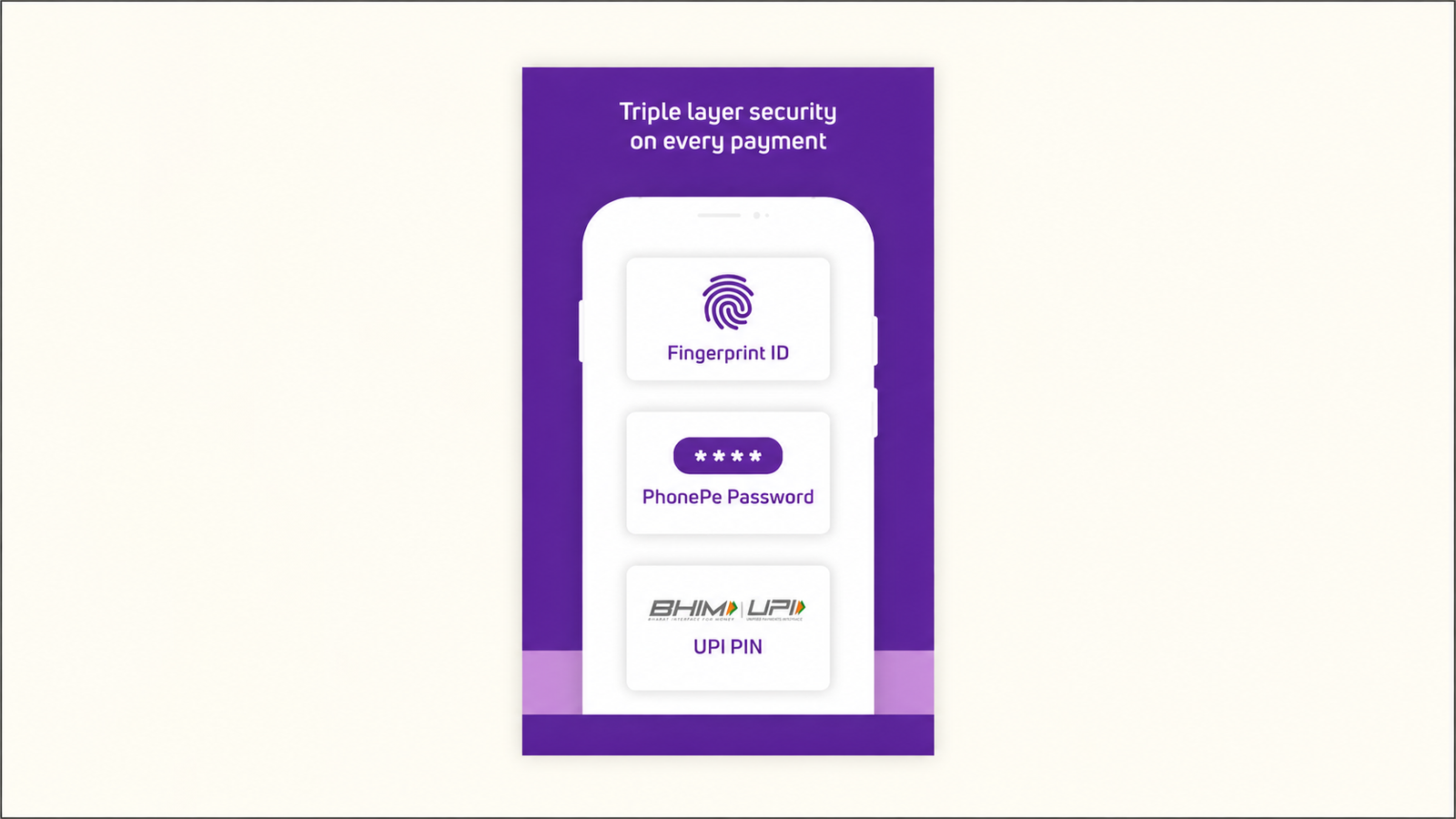
UPI is not simply India's preferred payment method. It is infrastructure that shapes in-app design decisions with no direct equivalent in markets where card-on-file is the default.
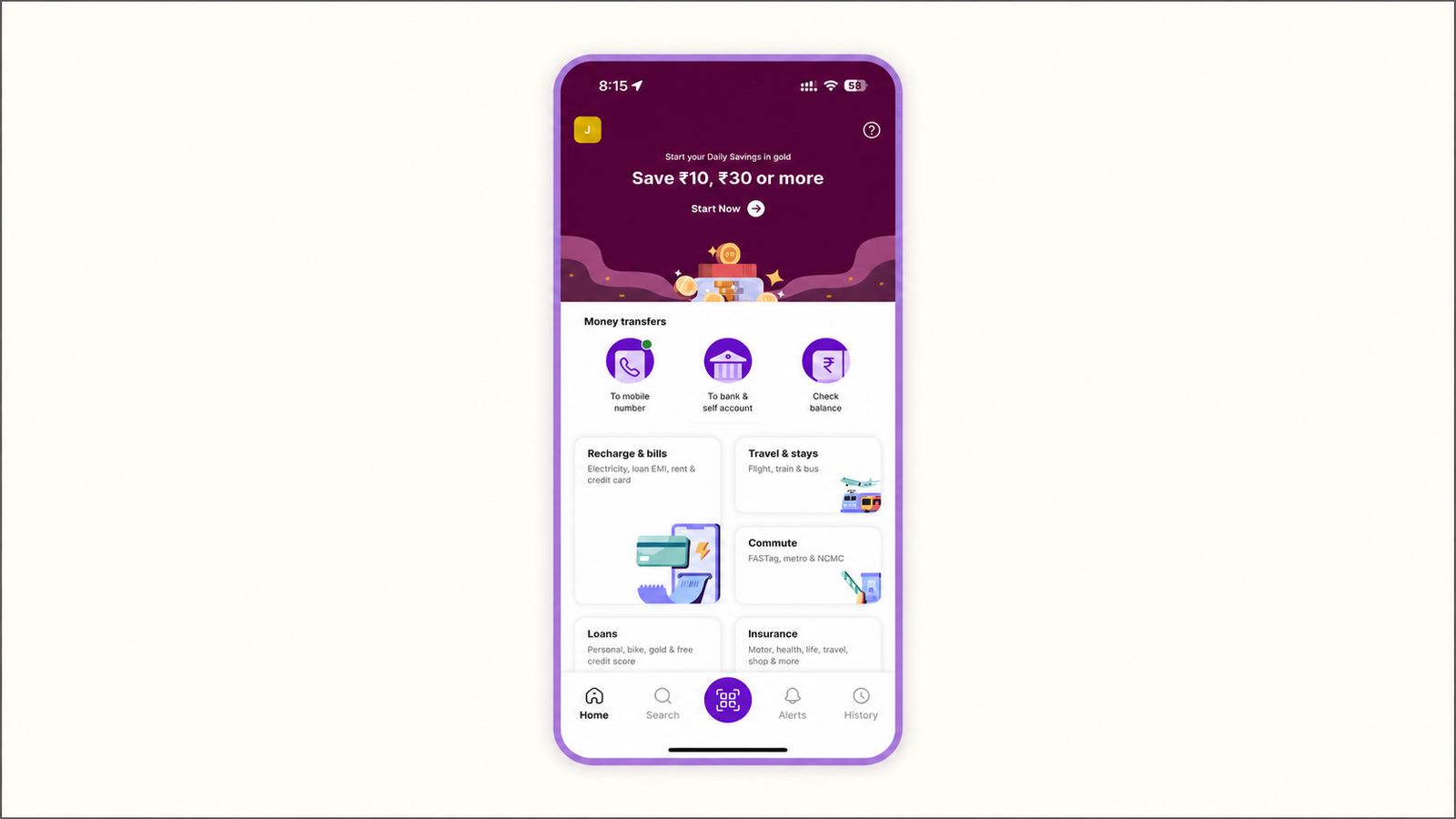
Zepto, Swiggy, and Zomato have all built in-app UPI capabilities that let a user complete a transaction without being redirected to a separate payment app, removing the specific app-switching friction that a standard UPI redirect flow introduces. Meesho's payment conversion work specifically documents the transition from cash on delivery, which historically brought millions of first-time Indian shoppers online who did not yet trust cards, wallets, or UPI, toward UPI, with COD orders carrying nearly three times higher return-to-origin rates than prepaid orders, a real, ongoing cost that shapes how Indian consumer apps design the payment moment itself. This is a specific, concrete in-app design requirement: a payment-method selection screen that reframes COD versus online payment without penalising the cash choice, since for a meaningful share of India's user base, COD is not a preference to be engineered away but a trust bridge to be respected during the transition period.
What's Actually Working, By Vertical
Fintech and BFSI. Groww's KYC copy states plainly why a step is legally required, tying the requirement to a specific, visible benefit, rather than presenting a regulatory requirement without context, and this pattern of honest, contextual explanation of mandatory steps is the specific mechanism that builds trust through friction rather than despite it. Dezerv drove more than $250,000 in new digital collections from a single bottom sheet nudge placed on SIP screens, built and shipped from a dashboard without an app release, appearing specifically at the moment a user was already engaged in a genuine financial decision, illustrating the broader principle that in a trust-first category, placement and timing precision outperform persuasive intensity, particularly given the regulatory constraints on urgency-driven messaging covered above.
Quick commerce and e-commerce. Zepto's onboarding compresses the path to a first order to under three minutes, with the delivery time promise functioning as a persistent trust and urgency signal throughout the session rather than being stated once and dropped. The EleFant scaled from 5 to 10 active in-app experiences within a single 30-day term, with its highest-performing experience, a contextual membership upsell shown on toy-view screens, achieving a 36.6% click-through rate, specifically because it met users at the moment they were already evaluating a purchase decision rather than broadcasting to an undifferentiated audience.
Gaming and opinion trading. This category carries the widest range of regulatory postures of any vertical covered in this report, from fully licensed, SEBI-adjacent products to categories with active enforcement scrutiny, which makes regulatory status itself a genuine first-order evaluation criterion for any platform or partnership decision in this specific vertical, not just a compliance afterthought.
The Vendor Landscape and the Architecture Question Every Team Faces
The Indian in-app engagement vendor landscape sorts into a small number of clear architectural categories, and understanding which category a team's actual need falls into matters more than comparing feature lists directly.
Full customer engagement platforms. CleverTap, MoEngage, and WebEngage each built their in-app channel as one delivery surface among several within a broader outbound-first platform, and a hands-on review of one such platform found native templates rendering as native UI, a genuine advantage over WebView-based rendering, but the template set itself remains limited to overlay shapes, with inline placement requiring separate engineering work. This pattern holds structurally consistent across the category: a team switching between these platforms specifically to fix an in-app rendering complaint is very likely to find a comparable constraint on the other side, since all three share the same underlying architectural pattern.
In-app layers that plug into an existing CEP. Digia Engage plugs directly into the CEP a team already runs, reusing the segments and events already managed there, with no duplicate data layer and no new stack required, rendering native components without a WebView and triggering campaigns in under 100ms. This architecture answers the specific objection that stalls most layering evaluations: a correctly layered integration does not forward raw events at all, reading the CEP's already-computed segments directly rather than duplicating the underlying computation, which avoids the segment-drift and duplicate-pipeline problem that undermines most attempts to add a second engagement tool to an existing stack.
Product-adoption platforms. Tools like Pendo and Appcues were built for B2B SaaS guided onboarding, with account-level analytics and MAU-metered pricing reflecting that origin, which creates a structural mismatch when applied to a consumer app running tens of millions of anonymous, low-ARPU users rather than a few thousand identified, high-ARPU B2B accounts.
The practical decision framework: a team with genuinely working segmentation inside an existing CEP, whose actual complaint is rendering quality and format flexibility, is best served by a layered architecture. A team building from zero, or one whose dissatisfaction extends into segmentation depth itself, is evaluating a different category of decision entirely, and vendor comparisons should be built around this distinction rather than a feature-by-feature checklist alone.
What the Data Shows
Promo-code and interstitial in-app formats consistently outperform standard banners and push notifications by a wide margin, with in-app messaging achieving CTRs several times higher than push in most published benchmarks, a gap measurably wider in the Indian market specifically given documented push notification fatigue. Financial services and fintech show the largest relative conversion lift of any vertical when shifting from broadcast to behavioural, in-app-inclusive messaging, and gamification produces a consistent, independently replicated roughly 2x conversion lift over static content across four separate sources using different methodologies. Transactional, contextually-triggered surveys achieve 25 to 40% response rates compared to 15 to 25% for scheduled, relational surveys, with trigger timing mattering more to response rate than industry, channel, or survey design alone. A full breakdown of this benchmark data, including format-level and vertical-level detail, is available in Digia's dedicated 2026 India benchmark report.
Where the Category Is Heading
Server-driven UI is becoming the baseline expectation, not a differentiator. The gap between a two-to-four-week engineering-dependent release cycle and a roughly 24-hour no-code deployment path is large enough that teams still operating on the former are structurally unable to test the volume of small, contextual experiments that increasingly define competitive performance in this category.
Gamification is maturing from novelty to calibrated, regulated design. The SEBI advertisement code proposals covered earlier signal that gamification's easy years, applying the same scratch card and spin-wheel playbook uniformly across every vertical, are ending specifically in regulated categories, pushing the format toward more deliberate reward calibration and category-aware design.
Privacy-first personalisation is shifting from a compliance checkbox to a design discipline. With DPDP enforcement now active, the distinction between personalisation using a user's own in-app behaviour versus personalisation drawing on inferred or third-party signals is becoming a genuine architectural decision teams have to make explicitly, not an afterthought handled by a legal team after the product is already built.
AI is entering the platform layer directly, not just the analytics layer. Plain-English audience segmentation, automated creative generation, and pre-launch campaign review are moving from experimental features to standard platform capability, reducing the setup overhead that has historically been the main friction point in running a high-velocity experimentation programme.
Key Takeaways
India remains the world's largest mobile app market by download volume, and 2026 marks a genuine shift from pure install growth toward monetisation depth, with in-app purchase revenue surpassing $1 billion for the first time and time spent in-app climbing to 1.23 trillion hours.
The device and network reality, low-RAM budget devices, inconsistent patch coverage, and carrier-fragmented, intermittent connectivity, makes SDK footprint and offline resilience first-order design constraints rather than secondary technical concerns.
DPDP enforcement is now active and RBI and SEBI have moved from framework to specific, in-app-relevant rules, including constraints on gamified customer acquisition for investment products specifically, which means regulatory posture is now a direct input into in-app design decisions, not a separate legal review step.
UPI-first payment design and the ongoing COD-to-digital transition are structural design requirements specific to this market, with no direct equivalent in markets where card-on-file is the default payment assumption.
Across verticals, the consistent winning pattern is contextual placement over broadcast reach: fintech nudges tied to genuine financial decision moments, commerce upsells shown at active evaluation points, and honest, benefit-tied explanations of mandatory regulatory steps all outperform broader, less-targeted alternatives.
The vendor landscape sorts into full CEPs sharing a common overlay-based rendering constraint, layered in-app tools built to extend an existing CEP without duplicating its data, and B2B-oriented product-adoption platforms whose pricing and architecture reflect a different customer shape entirely.
The benchmark data across format, vertical, and trigger type converges on a consistent finding: context and timing precision outperform broadcast reach and generic design by a wide, independently replicated margin, and this is the single most transferable principle across every section of this report.
Further Reading
From Digia Engage:
- India In-App Engagement Benchmarks 2026 — the full benchmark dataset referenced in this report's data section
- Why Indian Product Teams Need Different In-App Tooling Than US SaaS — the full device, network, and regulatory constraint analysis this report's infrastructure section draws on
- In-App Experiences for Fintech and BFSI Apps in India — the complete RBI and SEBI regulatory framework and trust-constraint design discipline
- In-App Experiences for E-commerce and Quick Commerce Apps — the compressed decision window and cart recovery patterns behind this report's commerce section
- How Meesho Improved Payment Conversions — the full COD-to-UPI transition detail behind this report's payment layer section
- How Zepto's Onboarding Gets Users to Their First Order in Under 3 Minutes — the full quick commerce onboarding teardown referenced in this report
- How The EleFant Scaled From One Upsell to 10 Live In-App Experiences in 30 Days — the complete case study behind this report's commerce vertical example
- How Dezerv's Growth Team Runs In-App Experiments Without a Dev Queue — the complete case study behind this report's fintech vertical example
- CleverTap Alternatives: 7 Tools for Teams Who Want Better In-App UI — the full vendor evaluation framework behind this report's landscape section
- What Is Digia Engage? The CEP-Layer Architecture Explained — the complete architectural explainer for the layered category this report describes
- Digia Engage — native in-app rendering, event-triggered engagement, and AI-assisted campaign tooling built for this specific market
External Sources:
- State of India Mobile App Market 2026 — Sensor Tower (2025 download and IAP revenue figures)
- India's App Downloads Rebounded to 25.5 Billion in 2025 — TechCrunch (category growth shifts and time-spent data)
- India App Market Statistics (2026) — Business of Apps (smartphone user base and per-user spend data)
- India Mobile Application Market Size & Outlook, 2026-2033 — Grand View Research (market revenue and CAGR projections)
- RCS vs Push Notifications India 2026 — Scalify Labs (India-specific push fatigue data)
- Customer Engagement Benchmarks for 2026 and Beyond — MoEngage (vertical-level conversion lift data)
- Gamifying the User Experience to Drive More Promo Conversions on Mobile App — MCE Systems (gamification vs static conversion data)
- NPS Survey Response Rate: Benchmarks and Tips — Qualaroo (transactional vs relational survey response rate benchmarks)
Digia Engage is built specifically around the constraints this report documents: native rendering without a WebView, event-triggered targeting that works within DPDP's consent requirements, sub-100ms trigger speed on real Indian network conditions, and pricing scoped to consumer app economics rather than B2B seat pricing. Book a demo to see how this architecture holds up against your own device base and regulatory requirements, or read the full India benchmark report for the complete data behind this flagship report.