


TL;DR: Flipkart recovers 8–12% of abandoned carts through a layered system that combines pre-abandonment friction reduction, context-based urgency nudges, a "Save for Later" intent buffer, and a two-track notification strategy that separates push from in-app by user state. The patterns are replicable across any high-consideration purchase flow, mobile-first or otherwise.
The Scale of the Problem Flipkart Is Solving
Global cart abandonment sits at 70.19% across all devices, according to Baymard Institute's meta-analysis of 49 independent studies. On mobile, that number climbs to 80.02%. Most of the people who leave without buying were not uninterested. They were undecided, distracted, or hit a friction point they didn't want to push through.
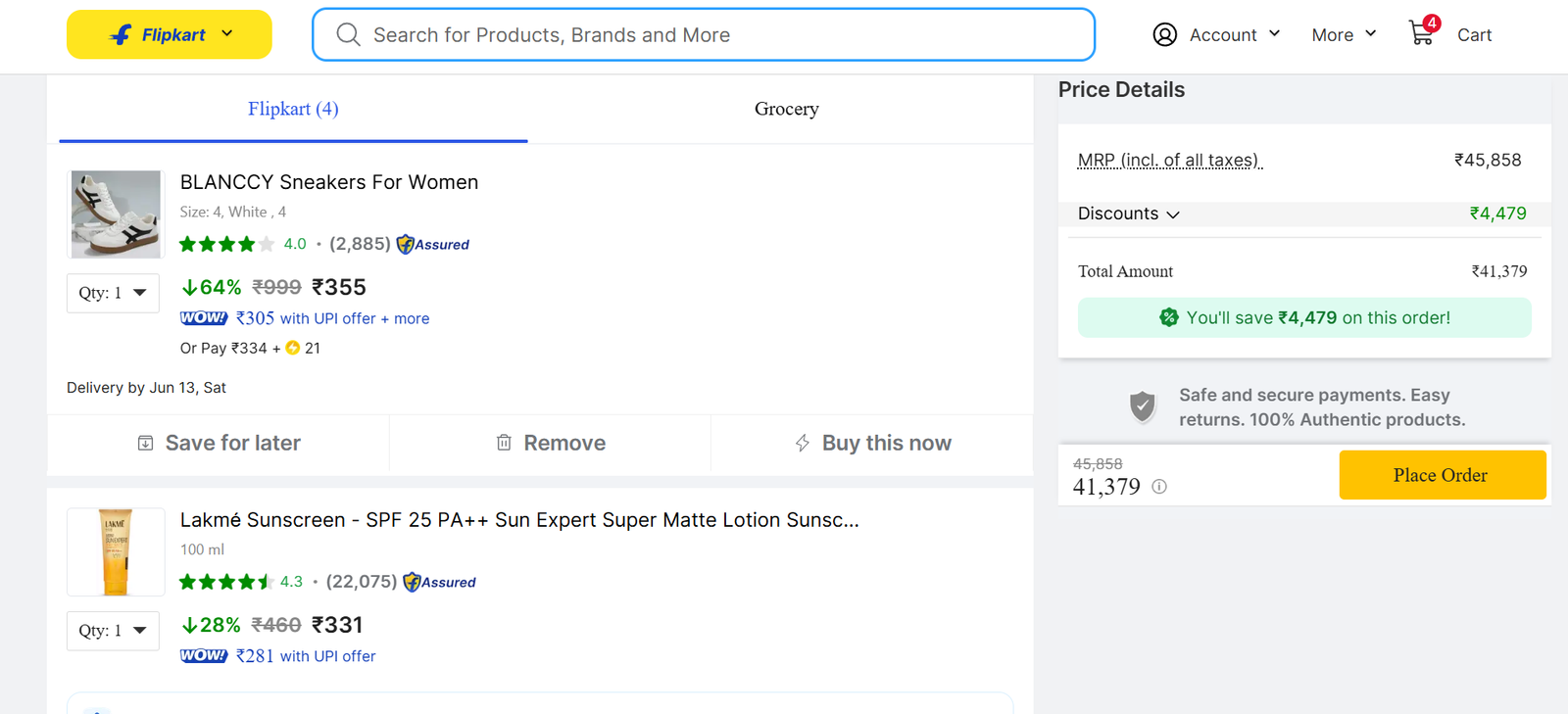
For Flipkart, which processes 5.5 million orders every single day and commands 47% of India's e-commerce market, even a fractional improvement in cart recovery translates to hundreds of millions of rupees in recovered revenue. The company treats cart recovery as a product problem, not a marketing problem. That distinction is what makes its UI patterns worth studying.
Amazon and Flipkart recover 8–12% of abandoned carts through multi-channel follow-ups. Most Indian e-commerce startups send one email and stop there. Flipkart runs a coordinated system across in-app nudges, push notifications, price and stock alerts, and an intent-preservation layer that many teams overlook entirely: the "Save for Later" flow.
Where Flipkart Intervenes in the Abandonment Journey
Cart abandonment is not a single event. It is a sequence of declining intent across four identifiable stages.
Stage 1: Browse without commitment. The user is exploring, comparing, and adding products to cart as a bookmarking behavior rather than a purchase signal. Research from Forrester shows that 59% of shoppers who abandon carts were browsing and hadn't decided what to buy. Flipkart addresses this stage by making the cart useful as a consideration space, not just a purchase staging area.
Stage 2: Active consideration with friction. The user wants to buy but is blocked or hesitating at a specific friction point. The top causes globally are unexpected costs (shipping, taxes) at 48%, site requiring account creation at 26%, and a complicated checkout process at 17%. Flipkart's cart UI surfaces delivery estimates and total costs before checkout, removing the surprise element.
Stage 3: Intent intact but timing wrong. The user plans to return but has left the app. This is where Flipkart's notification strategy becomes relevant. The window here is narrow: intent decays quickly and competing platforms refill the consideration set.
Stage 4: Comparison and competitive loss. The user has opened a competitor's app or website. This stage is the hardest to recover from in-session. Flipkart's stock and price urgency nudges are partly aimed at narrowing this window.
Flipkart's recovery UI targets all four stages, not just the last-ditch notification after the user has already left.
Pattern 1: Pre-Abandonment Urgency Nudges Inside the Cart
The most underappreciated pattern in Flipkart's cart UX is what it does before a user has any reason to leave. The nudges that appear inside the cart itself are designed to move users through the consideration stage before they exit, not to re-engage them after.
Low Stock Warnings
Flipkart surfaces stock counts directly on cart items when inventory runs low. Phrases like "Only 2 left" or "3 left in stock" appear inline within the cart item card. This is deliberate.
Precision in stock warnings matters. "Last 5 left" consistently outperforms "Running low!" in conversion lift because specificity signals real scarcity rather than manufactured urgency. Flipkart uses specific numbers rather than vague language. The distinction is not cosmetic. A vague warning can be dismissed as a dark pattern. A specific count tied to a real product SKU behaves like a factual update.
The timing of the stock warning within the cart flow matters too. Flipkart displays these inline, meaning the user sees them while reviewing their cart before checkout, at the moment they're already in a decision posture. Showing a stock count on a product page, before the user has committed to a cart, produces less action than showing it when the user has already selected the item and is one step from buying.
Price Drop Alerts on Wishlist and Cart Items
Flipkart's price alert system allows users to track price movements on both wishlist and saved items, with notifications delivered via push, email, and SMS. Within the cart, if a product's price drops while it's sitting in the user's cart, Flipkart surfaces a "Price Dropped" label on the cart item.
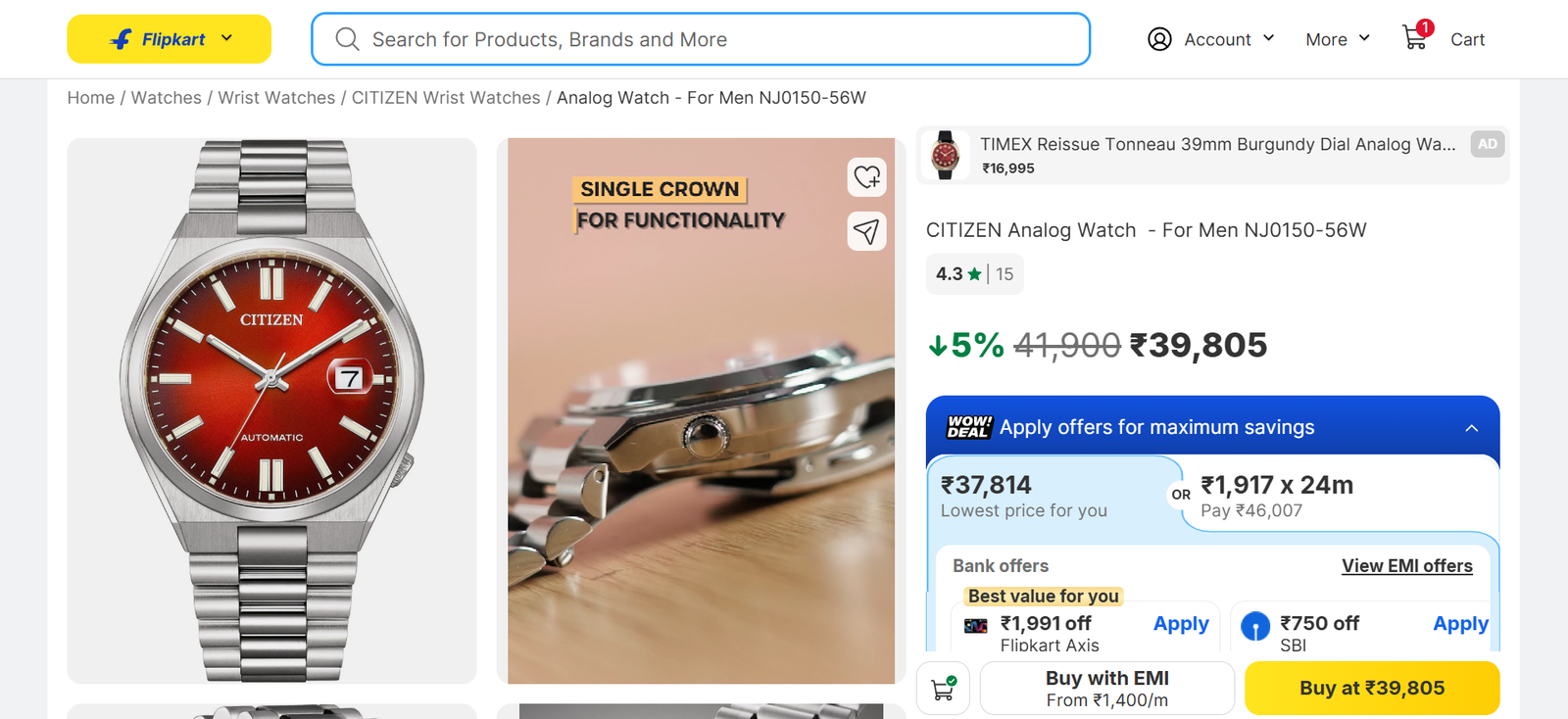
This is a smart recovery mechanism because it re-engages users who added a product at a price point they found acceptable but not compelling. A price drop while the item is already in cart functions as a reason to complete the purchase now, not just a reason to revisit.
The behavioral logic here is sound. A user who added an item at ₹8,499 is expressing a ceiling on their willingness to pay or at least signaling that they considered the price carefully. A drop to ₹7,299 removes the price friction that may have been slowing the conversion.
Delivery Date Transparency
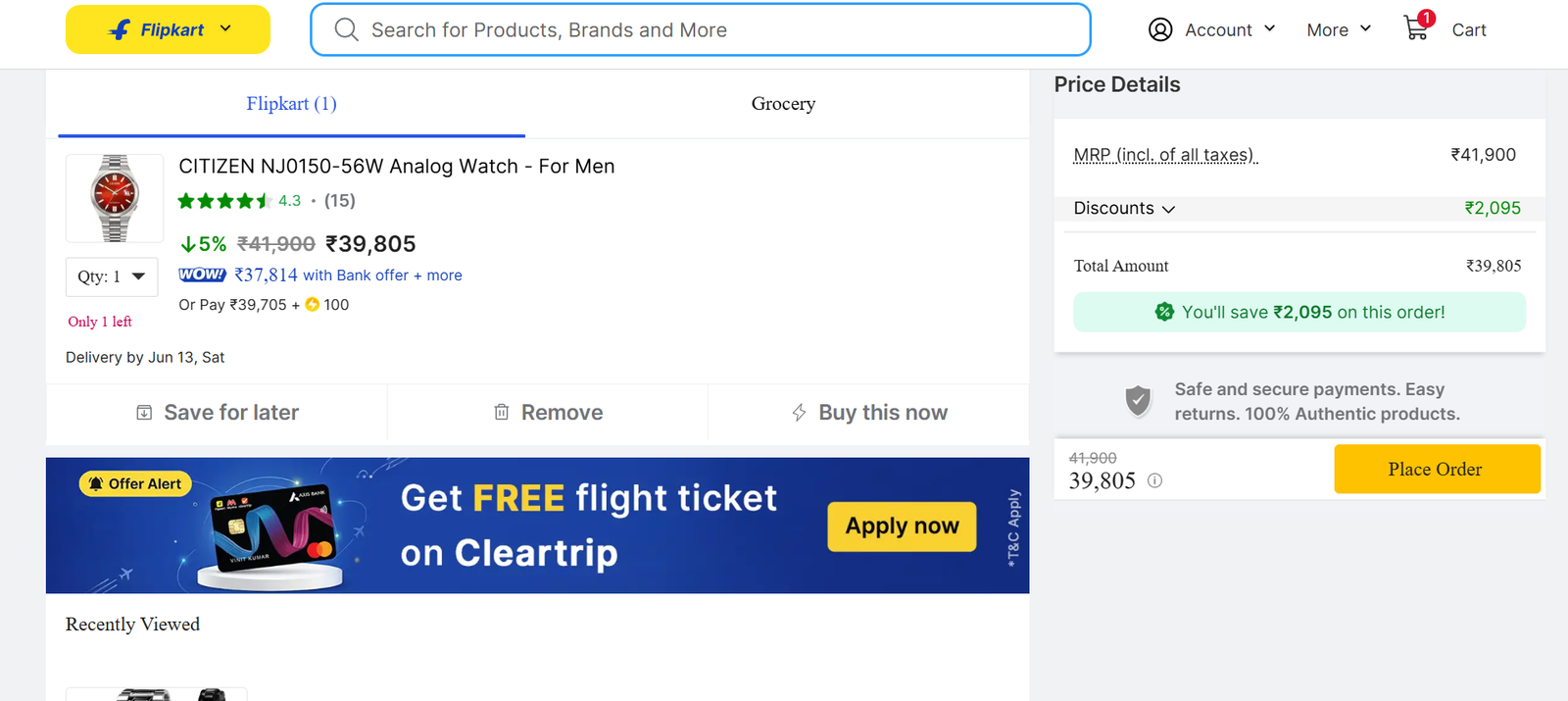
Flipkart shows estimated delivery dates directly on cart items, pincode-specific. This matters more in the Indian context than most teams realize. For users in Tier 2 and Tier 3 cities, delivery uncertainty is a genuine conversion blocker. Knowing that an item will arrive in 3 days vs. 7 days changes the purchase decision, particularly for time-sensitive categories like electronics or gifting.
Showing this inside the cart, rather than only at checkout, allows the user to evaluate delivery timing before they've committed to the payment flow. It removes a surprise at a stage where surprises cause exits.
Pattern 2: The "Save for Later" Flow as an Intent Preservation Layer
The "Save for Later" button in Flipkart's cart is one of the most strategically important, and most misunderstood, elements of its recovery architecture.
What "Save for Later" Actually Does
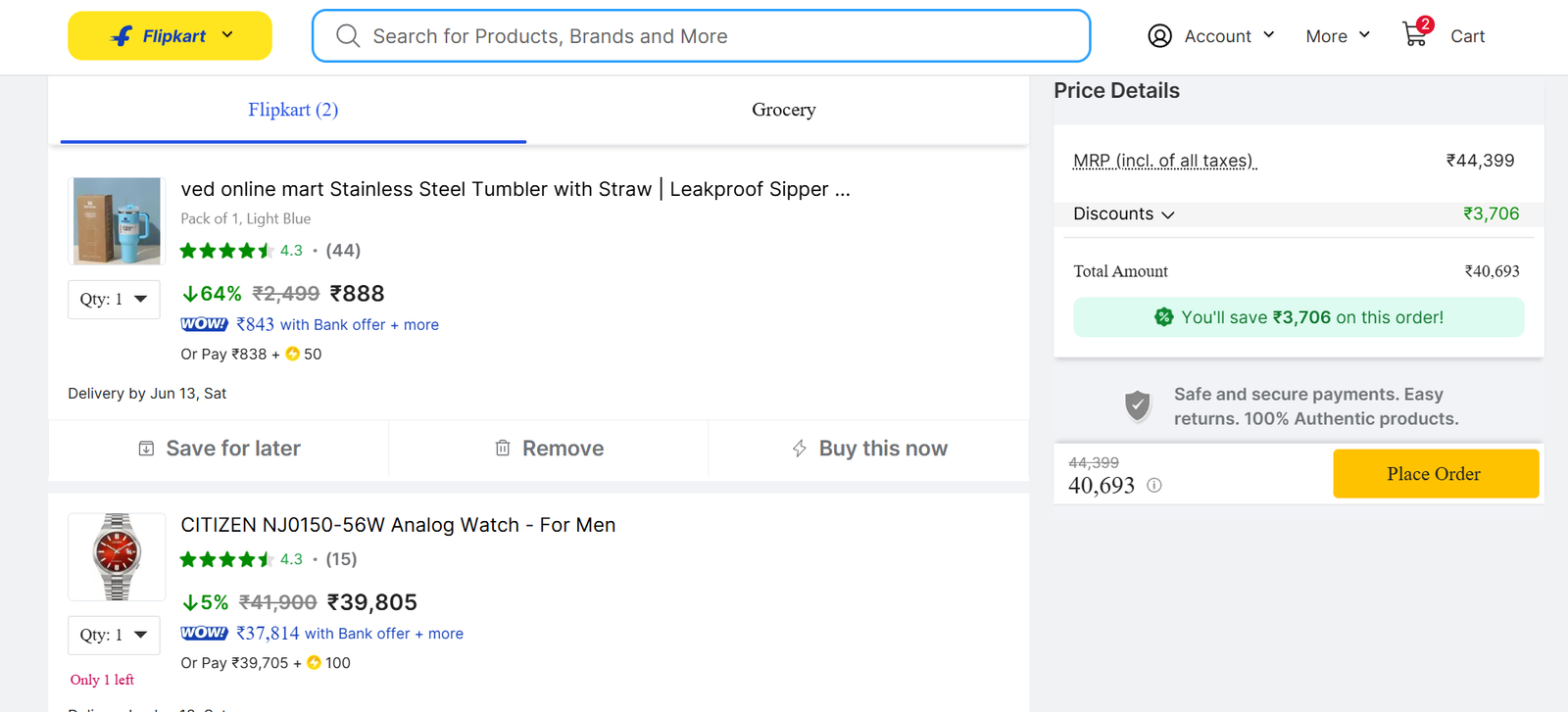
Flipkart's "Save for Later" feature moves items from the active cart to a section visible below the cart items. The item stays attached to the user's account. It retains the selected variant, quantity, and any active price. Critically, it sits in a persistent position on the cart page itself, not buried in a separate wishlist section.
This is different from a wishlist in both position and psychology. Nielsen Norman Group research shows that users treat wishlists as higher-commitment signals than carts, operating under the mental model that "I definitely want that" for wishlist items vs. "I might want that" for cart items. "Save for Later" operates inside the lower-commitment framing of the cart while preserving intent without pressure.
The "Save for Later" feature holds product quantity and variant data, so when the customer is ready to buy, they don't need to re-configure the item. This removes re-selection friction at the moment of return.
How It Keeps Intent Alive Without Creating Pressure
The psychological function of "Save for Later" is to give the user a graceful exit that is not an exit. When a user isn't ready to buy but doesn't want to abandon the item entirely, the default behavior on most apps is to close the cart and leave. The item either stays in cart (cluttering the purchase experience for items they do want to buy) or gets removed.
Flipkart's "Save for Later" creates a third path: the user declutters their active cart without losing access to the item, and the item stays visible in a non-pressuring position every time they return to the cart. It is a commitment-light holding pattern.
The re-engagement from "Save for Later" is organic. The item surfaces every time the user visits the cart to buy something else, creating repeated low-pressure exposure rather than a single recovery notification.
The Notification Bridge
Flipkart connects "Save for Later" to its price alert and stock alert notification systems. When a saved item's price drops or stock decreases, Flipkart sends a targeted notification. This transforms a passive holding area into an active re-engagement trigger.
The conversion quality from this approach is higher than a generic cart recovery notification because the signal is tied to a product-specific event the user already expressed interest in. The user was not cold-reached with a reminder; they were notified about a change that is directly relevant to their open purchase consideration.
Pattern 3: Push vs. In-App Recovery - How Flipkart Uses Both Differently
Flipkart runs two parallel cart recovery channels that do different jobs. Understanding the distinction matters because most teams treat push and in-app as interchangeable reminders. They are not.
Push Notifications: Re-Entry Triggers, Not Closers
Push notifications in Flipkart's cart recovery flow function as session re-entry triggers. Their job is to get the user back into the app when purchase intent is still warm but the session has ended.
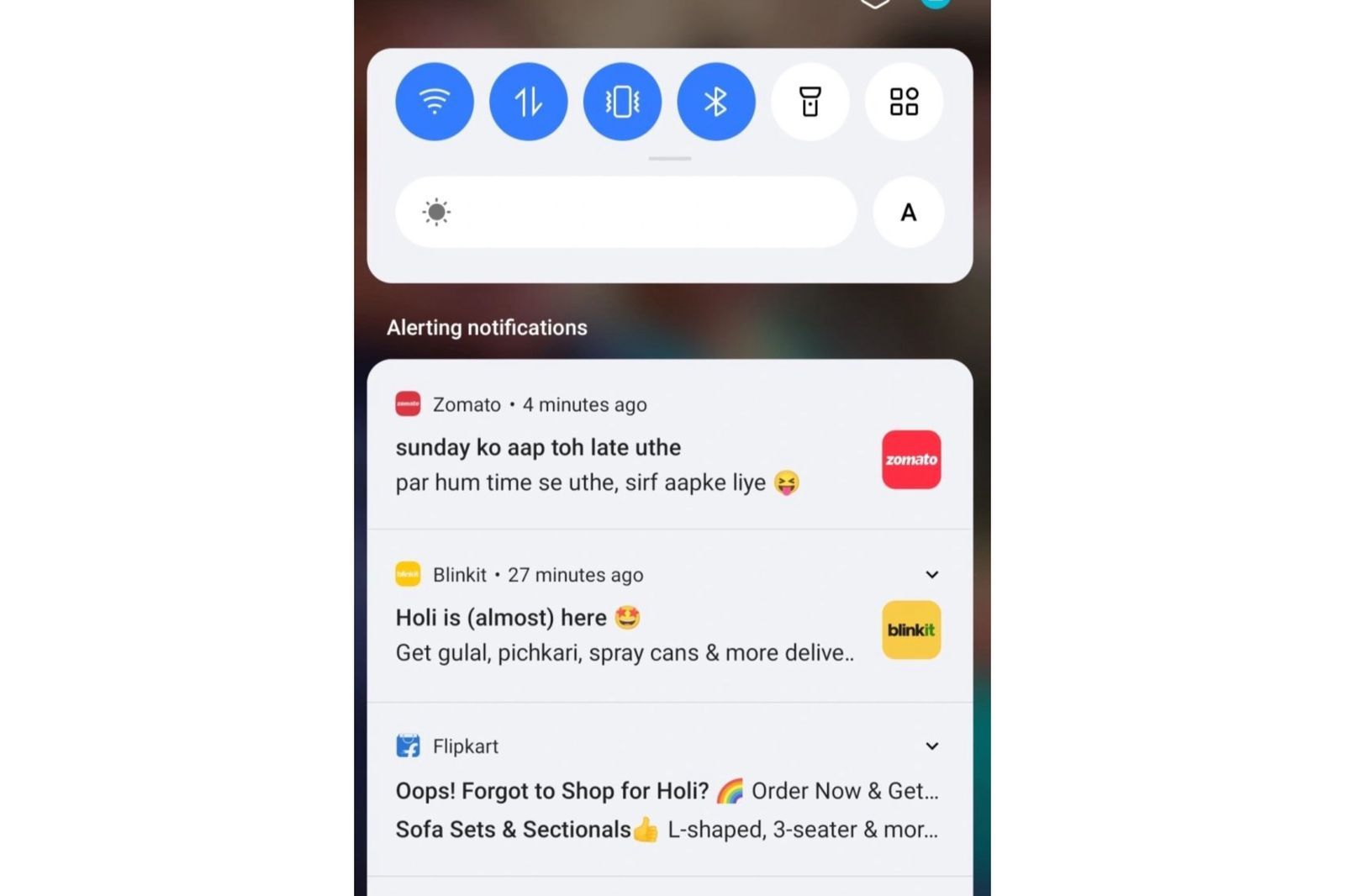
Flipkart uses push notifications for sales alerts, personalized recommendations, and order updates as part of its app-centric strategy, where the mobile app is the primary marketing channel. For cart recovery specifically, the push notification needs to arrive in the window where intent is still warm and re-entry to the app is plausible.
A multi-channel cart recovery sequence that starts with push typically looks like: push notification 1 hour after abandonment (push open rate 25–35%), followed by SMS 3 hours later (SMS open rate 98%), followed by WhatsApp if the cart remains abandoned by 6 hours. Flipkart's recovery push fires with cart-specific content, showing the product name and often a product thumbnail, not a generic "you left something in your cart" message.
Cart abandonment push notifications average a 16% click-through rate, significantly higher than typical ads or email. This is why push is the first channel Flipkart deploys, not the last resort.
The push notification's job is not to close the sale. Its job is to get the user back to the cart where the in-app experience can close the sale. Teams that write push notification copy designed to convert in the notification itself are solving the wrong problem. The copy should be specific and low-friction: product name, current price, and a direct deep-link to the cart.
In-App Messages: Context Closers When Intent Is Present
In-app messages in Flipkart's recovery flow operate under a different condition: the user is already in the app. This changes what the message needs to do.
In-app messages can address common abandonment causes in real time, surfacing free shipping offers or countdown timers to create urgency when the user opens the app. For a user who has returned to Flipkart after abandoning a cart, a banner or bottom sheet that surfaces the specific item they left behind is a conversion assist, not a re-entry nudge.
The in-app message has a structural advantage over push: it operates inside the purchase context. The user is already in a shopping mindset. The in-app nudge can reference stock levels, price changes, or delivery timelines with full UI richness that a push notification cannot carry.
Flipkart uses in-app banners and cart-page prompts that appear when a user returns to the app with items still in their cart. These are not aggressive full-screen takeovers. They are inline cart indicators and persistent cart icon badges that signal "your cart has items waiting" without interrupting the browsing session the user returned for.
The Sequencing Logic
The recovery sequence Flipkart runs is layered by user state, not by time alone:
- User abandons cart, session ends: Push notification fires in the 1–2 hour window, targeting the moment intent is still warm.
- User returns to the app for any reason (browsing, checking an order): In-app prompts surface the abandoned cart contextually, without interrupting the user's current task.
- User opens cart page: Full cart recovery experience activates with stock warnings, price updates, and any available offers.
This sequencing avoids the most common mistake in cart recovery, which is treating re-engagement and in-session conversion as the same problem requiring the same message.
Pattern 4: Offer-Based vs. Context-Based Recovery
Most cart recovery programs default to one approach: offer a discount. Flipkart runs both offer-based and context-based recovery, and the two approaches target different user segments for a reason.
Context-Based Recovery: When No Discount Is Needed
Context-based recovery uses product-specific signals (stock, price movement, delivery timeline) to create purchase motivation without eroding margin. Flipkart deploys this approach first.
When a user sees "Only 3 left in stock" on a cart item, the motivation to complete the purchase is not created by a discount. It is created by scarcity that already exists. The platform is surfacing a real product condition that the user would presumably want to know. This approach is more credible than discount-led recovery because it is grounded in inventory reality, not a promotional construct.
Similarly, when Flipkart's delivery estimate shows "Arrives by tomorrow if ordered in the next 4 hours," that is a context-based urgency signal with no margin cost. The urgency is genuine. The user either wants it by tomorrow or doesn't, and the UI is giving them the information they need to act.
Offer-Based Recovery: The Fallback for Price-Sensitive Segments
Flipkart uses offer-based recovery, typically in the form of limited-time discount coupons or cashback through its SuperCoins program, for carts that have not converted after context-based nudges.
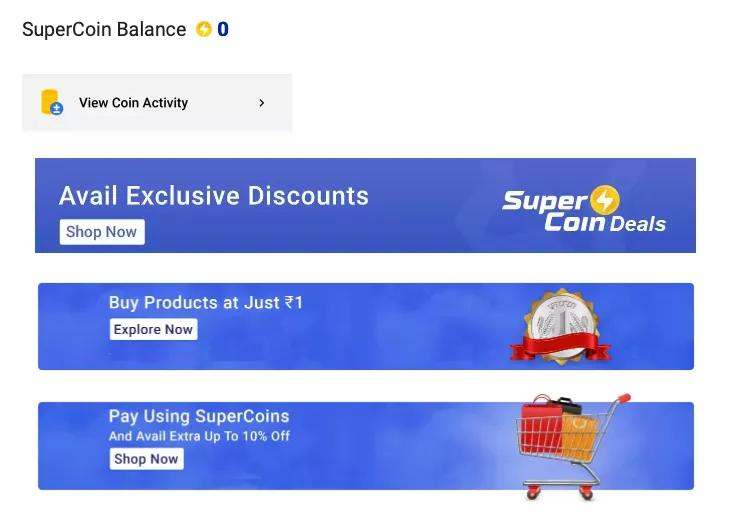
The offer serves a specific function: it provides a financial reason to act for users where price sensitivity is the actual conversion blocker, not timing or information gaps. Deploying offers indiscriminately to all abandoning users trains users to wait for discounts. Flipkart's approach is smarter: context-based signals go first, and offers are reserved for the segment where they're actually needed.
This segmentation logic is what separates mature cart recovery programs from immature ones. AI-powered personalized offers that match the offer to cart contents and browsing history convert at 6–10%, compared to generic discount popups at 2–4%. Flipkart's personalization layer, built on its recommendation engine, allows this targeting at scale.
What Flipkart's Cart UX Reveals About Its Understanding of Purchase Intent
The through-line in every pattern described above is a specific belief about purchase intent: it is not binary.
Most cart recovery programs operate on a binary model. The user either wants the item or they don't. If they don't buy, send them a discount and hope. Flipkart's UX architecture treats intent as a spectrum with identifiable stages, and it deploys different interventions at different stages.
A user who adds an item to cart and uses "Save for Later" is not abandoning with low intent. They are signaling high consideration with a timing problem. A user who receives a push notification and doesn't open it is either in a low-intent state or reached at a bad moment. A user who returns to the app and sees their cart is in a mid-intent state where in-app context can close the gap.
Flipkart's push notifications, gamified sales events, in-app live streams, and personalized recommendations turn a transactional app into a destination. Flipkart users open the app out of habit, not just intent. Cart recovery works better in this context because returning users are not only coming back for their cart. They're coming back for the app, and the cart is waiting for them when they arrive.
The cart is not just a checkout staging area in Flipkart's product model. It is a persistent consideration space that the user will encounter again as long as they remain an active app user. This is why "Save for Later" sits within the cart page rather than in a separate section. The product design team understands that the cart itself is a re-engagement surface.
Patterns Applicable to Any High-Consideration Purchase Flow
These patterns are not exclusive to large-scale e-commerce. Any mobile product with a high-consideration purchase flow, including fintech apps with investment products, subscription apps with paid tier decisions, and edtech apps with course purchases, can adopt the same architecture.
Pattern: Intent preservation without pressure. Build a "Save for Later" equivalent in any flow where users need time to decide. The key design requirement is that the saved item remains visible in the primary purchase context, not buried in a settings screen. The user should encounter it again naturally, not have to go looking for it.
Pattern: Context-based urgency before offer-based urgency. Use product-specific signals (limited availability, expiring pricing, deadline-driven delivery) before defaulting to a discount. Price-sensitive nudges like free shipping threshold popups convert at 7–12%, but context-based urgency nudges beat generic discounts when the urgency is real and specific.
Pattern: Push and in-app serve different functions. Push notifications are re-entry triggers. In-app messages are conversion assists for users already in session. Write the copy and design the experience accordingly. A push notification that tries to close the sale will underperform a push notification that gets the user back into the app where the in-app experience can close the sale.
Pattern: Sequence by user state, not time. The decision of which recovery message to send should be driven by where the user is, not how long ago they abandoned. A user who just opened the app deserves a different message than a user who hasn't opened the app in 48 hours.
Pattern: Match intervention depth to intent signal strength. Stock warnings and price drops are appropriate for any user who added an item to cart. A personalized offer is appropriate for users who showed high consideration (multiple visits, "Save for Later" usage) but have not converted despite context nudges. Deploying full offer recovery to low-intent users wastes margin and trains users to expect discounts.
Key Takeaways
Flipkart's cart recovery works because it meets users at each stage of the abandonment journey, not just the final exit.
The "Save for Later" flow is not a convenience feature. It is a structured mechanism for preserving purchase intent without pressure, and it functions as a persistent re-engagement surface every time the user returns to the cart.
Push notifications and in-app messages do different jobs. Push brings users back. In-app closes the gap once they're back. Treating them as the same channel with the same message is the most common mistake in mobile cart recovery.
Context-based urgency, specifically stock counts, price drop alerts, and delivery timeline nudges, converts better than blanket discount offers for most user segments. Offers should be reserved for users who have shown high consideration but remain price-blocked.
The cart page itself is a recovery surface. In-cart urgency signals that fire before a user has any reason to leave are more efficient than post-abandonment recovery because they operate when intent is at its highest point.
Any mobile product team running a high-consideration purchase flow can apply these patterns. The specific product category is less important than the underlying architecture: identify where intent lives, preserve it without pressure, and deploy the right recovery signal at the right stage.
Further Reading
From Digia Engage:
- 5 Bottom Sheet Experiments That Increase Conversion Rates
- Why Most In-App Nudges Fail (And How to Fix Their Timing)
- In-App Nudges: Tooltips, Bottom Sheets, Persistent Banners
- Retail & eCommerce In-App Engagement Solutions
- Monetization Use Case: Reduce Drop-Off at Key Conversion Points
Sources
- Global cart abandonment rate: 70.19% on desktop, 80.02% on mobile - ZeroCart AI, Cart Abandonment Statistics 2025 (April 2026)
- Amazon and Flipkart recover 8–12% of abandoned carts through multi-channel follow-ups - ProductGrowth, Cart Abandonment: The 7-Step Recovery System (April 2026)
- Flipkart commands 47% of India's e-commerce market, 450M+ users, 5.5M orders/day - BrewmyApp, Flipkart App Case Study (May 2026)
- 59% of cart abandoners were browsing and hadn't decided to buy - AllOut SEO, Cart Abandonment Stats (September 2025)
- Flipkart Save for Later feature: how to use it on Android - NewsBytesApp, How to Use Save for Later in Flipkart App (February 2025)
- Cart abandonment push notifications average a 16% click-through rate - MobiLoud, What is Abandoned Cart Recovery? (2025)
- Users treat wishlists as higher-commitment than carts; "Save for Later" operates in the lower-commitment cart framing - Nielsen Norman Group, Wishlist or Cart? (November 2018)
- "Save for Later" retains product quantity and variant data, reducing re-selection friction on return - Webkul, Difference Between Add to Wishlist and Save for Later (2019)
- Flipkart uses push notifications for personalized recommendations, sales alerts, and cart recovery as part of its app-centric strategy - Digital Market Academy, Inside Flipkart Digital Marketing 2025 (September 2025)
Want to ship cart recovery nudges, price drop alerts, and "Save for Later" re-engagement flows inside your mobile app without waiting on a dev sprint? See how Digia Engage handles in-app nudges and event-based triggers for retail and e-commerce teams, or book a demo.