


Most Mobile App Onboarding advice on the internet was written for SaaS products. Search for a “SaaS onboarding checklist,” and you will find structured flows filled with setup sequences, guided tours, workspace configuration, and milestone-driven activation paths. These frameworks dominate search results because they are organized, systematic, and proven within their original environment.
Mobile teams often borrow these frameworks without questioning their origins. The reasoning feels logical: onboarding is onboarding. If a checklist increases activation for a SaaS platform, it should do the same for a mobile app.
That assumption is where the problem begins.
SaaS products and mobile apps operate inside entirely different behavioral environments. The terminology may be identical, but the psychological context is not. When mobile teams replicate SaaS onboarding patterns without adapting them to mobile behavior, activation does not crash dramatically. It declines quietly, masked by surface-level metrics that look healthy but fail to translate into long-term retention.
What a Typical SaaS Onboarding Checklist Looks Like
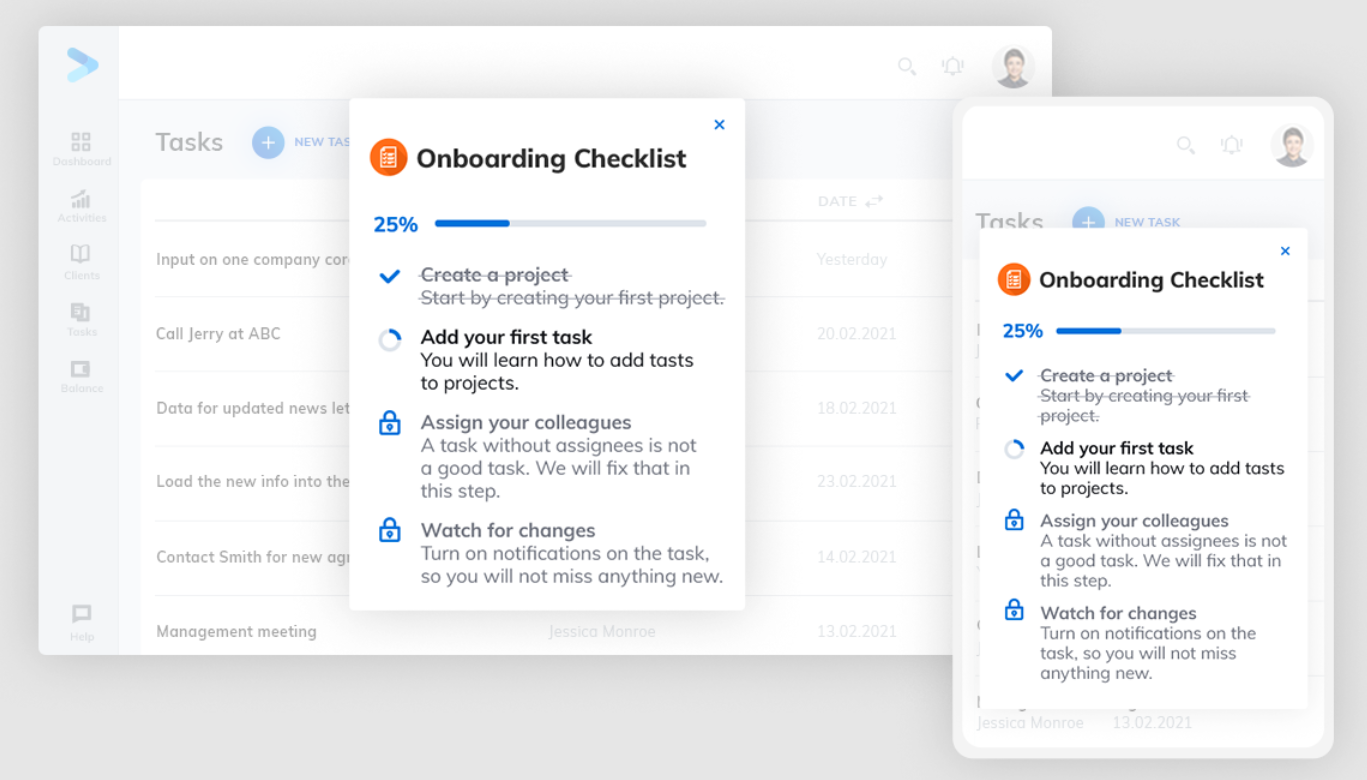
A traditional SaaS onboarding checklist is structured around progressive setup.
The sign-up process establishes identity and grants access to the system. It marks the transition from visitor to user and creates the foundation for everything that follows. Email verification adds a layer of trust and security, confirming ownership while setting up future communication.
Creating a workspace introduces structure. Instead of interacting with a blank product, the user now has a defined environment where projects, data, and tasks will live. This space becomes the container for ongoing activity, making the system feel organized rather than abstract.
Configuring settings allows personalization. Users adjust preferences, define roles, or select workflows so the product aligns with their specific goals. This stage helps the tool feel tailored instead of generic.
Inviting teammates expands the experience beyond individual use. In many SaaS products, collaboration is where the real value compounds. Shared workspaces, assigned tasks, and collective visibility transform the tool into a working system rather than a solo utility.
Guided tours and interface exploration reduce early confusion. Instead of leaving users to figure everything out on their own, the product introduces key areas step by step. This builds familiarity and confidence without overwhelming them.
Finally, completing the first meaningful action changes the relationship between the user and the product. It is no longer something being tested. It becomes something being relied upon. That shift, from exploration to usage, is where true adoption begins.
In this context, the checklist is not just a set of instructions. It gives structure to a product that might otherwise feel overwhelming. By breaking the experience into clear, manageable steps, it helps users move forward with confidence. The setup process does not feel like friction because users expect it. It feels like a necessary investment in getting long-term value.
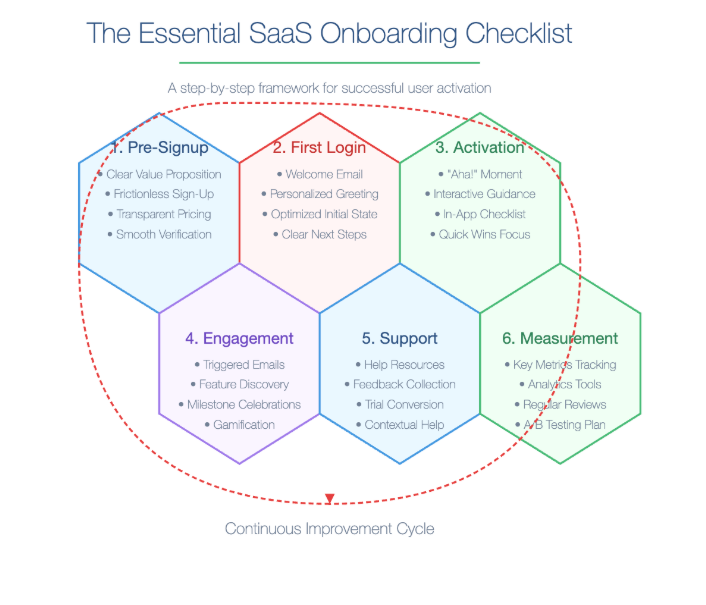
Why SaaS Onboarding Works in Its Own Environment
SaaS onboarding succeeds because it aligns with how users approach SaaS products. Most of these tools are accessed on desktop devices, where users are seated, focused, and intentionally engaging with a task. They have opened a browser tab for a specific reason.
Attention spans are longer in this context. Switching costs are higher. The environment is often professional, and the user expects to configure workflows, define processes, and make structured decisions that shape future usage.
In this setting, structured onboarding does not feel burdensome. It aligns with the mindset of long-term optimization. The checklist signals progress. Each completed step reinforces commitment. What might appear as friction in another environment feels like momentum here.
However, this logic begins to unravel when transplanted into mobile ecosystems.
Mobile Is Not a Smaller Version of SaaS
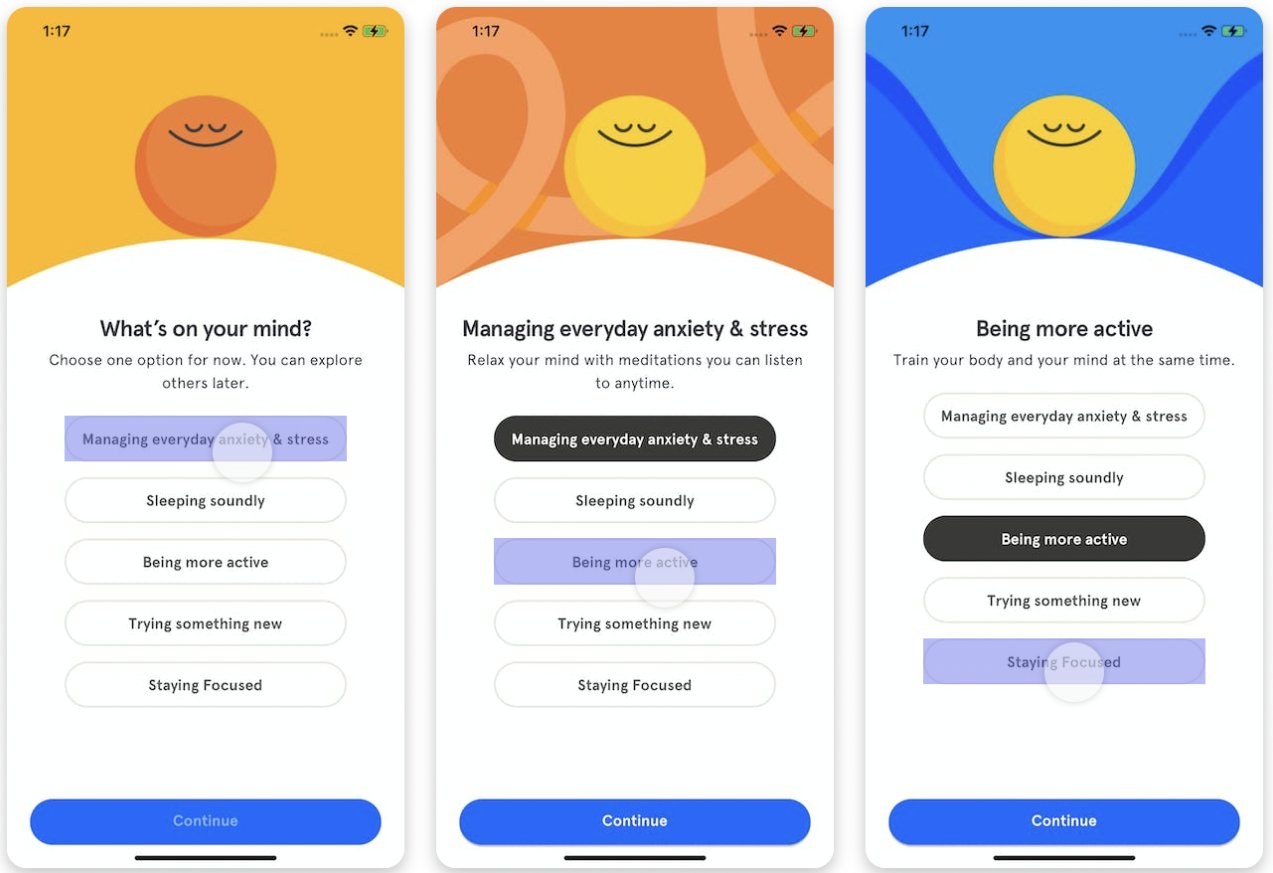
Mobile is not SaaS condensed onto a smaller screen. It is an entirely different behavioral space.
Mobile sessions are fragmented. They occur between moments: while commuting, waiting in line, multitasking, or shifting attention rapidly. The user is rarely in a focused configuration mindset. Their engagement is shorter, their patience thinner, and their expectations more immediate.
Most importantly, mobile users are not in setup mode.
They are in relief mode.
They installed the app because something in their current situation felt inefficient, frustrating, or inconvenient. They expect improvement quickly. When a SaaS-style setup sequence interrupts that expectation, the friction feels amplified. What feels like structured guidance on desktop feels like delay on mobile.
And delay, in a mobile context, reduces activation.
Where Copying SaaS Patterns Breaks in Mobile
The failure rarely announces itself loudly. On the surface, metrics can look stable.
Onboarding completion rates might even improve. Funnel drop-offs may shrink because the flow feels structured and intentional.
Yet activation weakens in less visible ways.
Users complete steps but do not build conviction. They progress through screens but do not internalize value. The friction is subtle, but the consequence is measurable in retention curves that flatten too early. What appears efficient at the interface level becomes ineffective at the behavioral level.
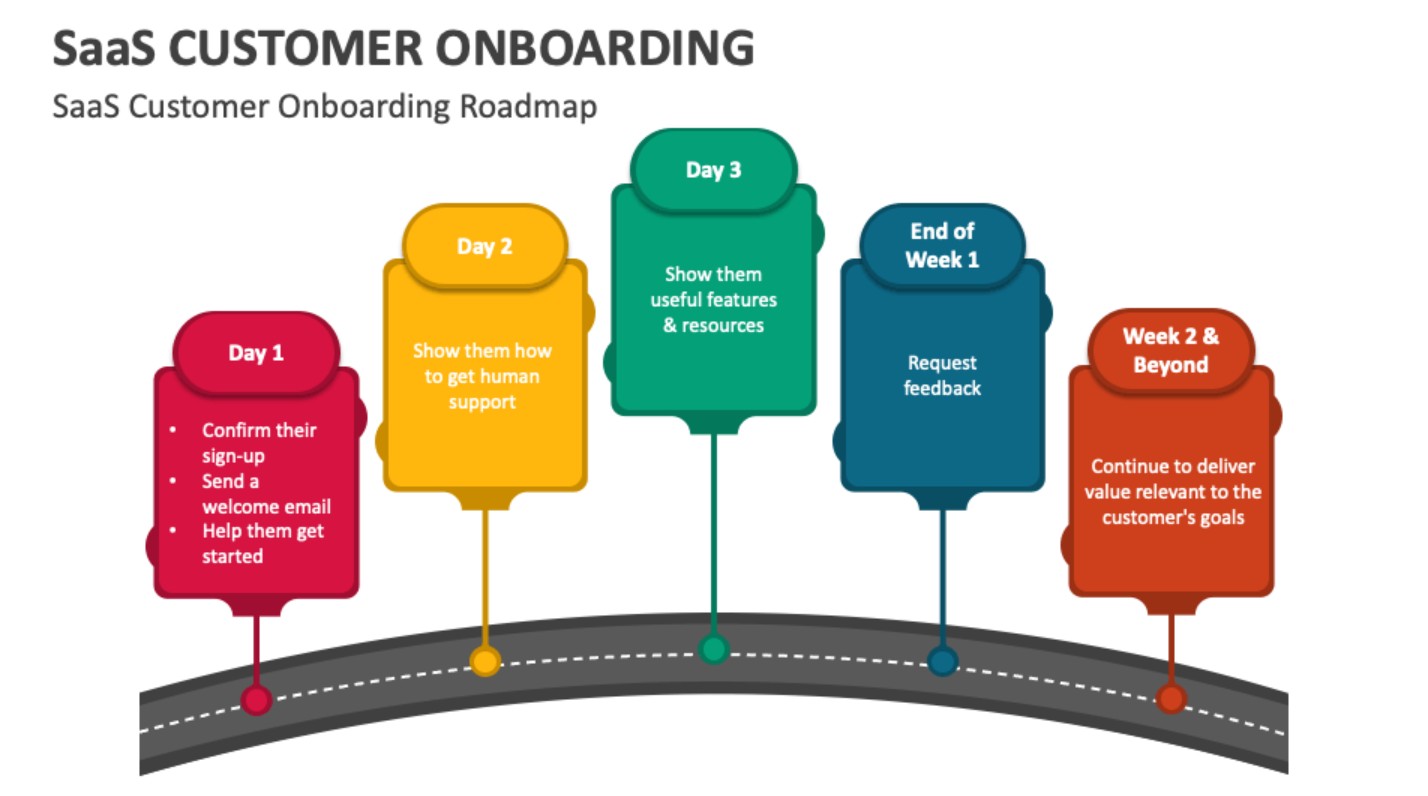
If you look at a typical SaaS onboarding flow, like the one shown above, you’ll notice how structured and sequential it is. The steps are clearly defined. Progress is measurable. The system walks the user from account creation to configuration to first meaningful action in a controlled, linear path. In a desktop environment, this structure feels reassuring. It signals professionalism and order.
Now compare that to the mobile onboarding screens shown. The interaction model is different. The screens are lighter, more focused, often centered around a single action or quick demonstration of value. There is less emphasis on configuration and more emphasis on immediacy. The experience feels faster, more contextual, and less demanding upfront.
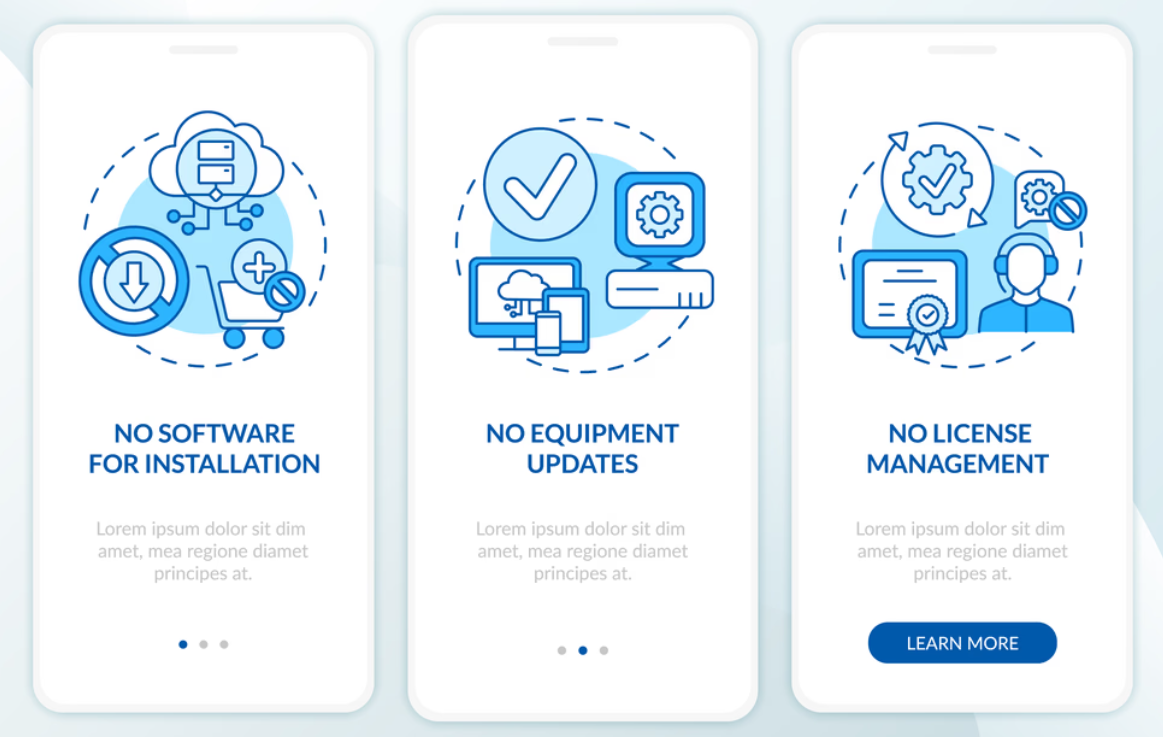
The problem begins when the structure of the first image is imposed on the environment of the second.
Below are the most common ways SaaS onboarding patterns quietly break when transplanted into mobile environments.
- Forced Account Creation
- Linear Product Tours
- Feature-First Activation
- Checklist Completion Bias
Forced Account Creation
In SaaS environments, account creation is foundational. As the SaaS flow illustrates, everything begins with identity and access. The product revolves around persistent workspaces, collaboration, saved data, and cross-device continuity. Signing up is not perceived as friction; it is perceived as entry into the system.
Mobile operates under a different emotional contract.
When a user installs a mobile app, their mindset is exploratory. They are evaluating, not committing. In many mobile onboarding examples, the product allows some level of interaction before demanding registration. When a SaaS-style sign-up wall appears immediately on mobile, it interrupts that exploratory mindset. Personal data becomes a cost, and the benefit remains abstract.
The internal dialogue shifts dramatically:
In SaaS: “I need this tool.” In mobile: “I’m trying this app.”
That distinction changes tolerance for friction. On desktop, the user expects to invest. On mobile, they expect to sample. When sign-up blocks sampling, uncertainty increases and motivation decreases.
The result is not always immediate abandonment. More often, it is shallow engagement. The user signs up, explores briefly, and never returns.
Linear Product Tours
SaaS onboarding frequently relies on guided tours that walk users step by step through interface elements. In structured SaaS flows, this creates clarity. Each stage builds on the previous one, reinforcing how the system works as a whole.
But mobile compresses both space and attention.
In many mobile onboarding screens, guidance is lightweight and contextual rather than linear and exhaustive. When a desktop-style “next, next, next” tour is applied to mobile, explanation becomes detached from action. The user passively consumes information without interacting meaningfully with the product.
By the time the tour ends, the user has technically seen the product but has not felt its value. They may remember what the buttons do, yet remain unclear about why the app matters in their life.
Completion, in this case, is mistaken for comprehension.
A user who understands navigation is not necessarily a user who understands impact.
Feature-First Education
Many SaaS onboarding checklists are organized around feature discovery. The logic is sequential: introduce capabilities, explain configuration, then allow usage. This structure works well in systems that are inherently complex and require understanding before execution.
Mobile users, however, are outcome-driven. In most mobile onboarding examples, the first few screens communicate benefit before depth. They show what the app will help the user achieve, not how every feature works.
If onboarding emphasizes tools before transformation, it increases cognitive load without delivering emotional reward. Explaining functionality before demonstrating benefit forces the user to imagine value rather than experience it. That mental effort is expensive in a fragmented attention environment.
Mobile activation depends on outcome-first exposure. Show improvement first. Explain mechanics later.
Checklist Completion Bias
SaaS checklists often include visible progress indicators. “3 of 7 steps completed.” “80% set up.” In structured desktop environments, these signals create momentum and reinforce commitment. Each completed task feels like advancement toward mastery.
In mobile, the same mechanism can create a misleading signal.
Users may complete every onboarding step without ever integrating the app into their behavior. They follow prompts, fill fields, and finish tours because the flow guides them. Yet once onboarding ends, so does engagement.
The checklist measures procedural completion, not behavioral adoption.
Activation is not defined by how many screens a user has seen. It is defined by whether the product has altered their behavior in a meaningful way. If the checklist optimizes for completion rather than transformation, it can inflate vanity metrics while undermining retention.
When you place the structured, system-heavy logic of SaaS onboarding into the fast, relief-oriented context of mobile, the mismatch becomes clear. The design may look polished. The metrics may look stable. But the user leaves without conviction. And without conviction, activation cannot sustain itself.
The Psychological Gap: Setup Versus Relief
The core difference between SaaS and mobile onboarding lies in expectation. SaaS onboarding is built around setup investment. The user configures the system today to benefit tomorrow. The time investment is accepted because the return feels proportional.
Mobile onboarding operates under a different contract. The user expects immediate relief. They want to feel progress quickly, not configure potential.
When a mobile app introduces friction before delivering value, it violates the emotional promise made at installation. Retention depends not merely on speed, but on sequencing. Relief must precede education. Value must precede commitment.
This sequencing determines whether onboarding builds certainty or erodes it.
What a Mobile App Onboarding Checklist Should Prioritize
If copying SaaS checklists undermines mobile activation, the solution is not to eliminate structure. It is to redesign structure around context.
A mobile onboarding checklist should prioritize early value delivery, friction reduction, and contextual guidance. Exploration should often precede registration. Demonstration should precede explanation. Instead of linear tours, mobile experiences benefit from progressive disclosure, where features reveal themselves naturally during usage.
Measurement must also shift. Rather than optimizing for onboarding completion rates, teams should focus on the first meaningful action. What behavior signals that the user experienced real value? That moment, not the final onboarding screen, defines activation.
Mobile onboarding should feel less like configuration and more like unfolding utility. The objective is not to guide users through screens, but to guide them into certainty.
Side-by-Side Comparison: SaaS and Mobile Onboarding Logic
The contrast becomes clearer when examined directly:
| SaaS Onboarding Logic | Mobile Onboarding Logic |
|---|---|
| Structured setup before value | Immediate value before setup |
| Account-first | Experience-first |
| Feature walkthroughs | Outcome demonstrations |
| Linear guided tours | Contextual cues |
| Checklist completion as progress | Behavioral change as activation |
| Long-term productivity framing | Immediate psychological reward |
The surface mechanics may appear similar, but the intent behind them diverges fundamentally. SaaS optimizes for system adoption. Mobile must optimize for emotional confirmation.
Additional Factors Often Overlooked
Beyond psychology, structural differences reinforce this divide. App store environments create low switching costs. Users can uninstall within seconds, making tolerance for friction significantly lower than in browser-based SaaS contexts. Notifications, competing apps, and constant interruptions fragment attention further.
Monetization models also influence onboarding strategy. Many SaaS platforms rely on subscription commitments after onboarding, whereas mobile apps frequently integrate freemium models, in-app purchases, or ad-based revenue. Early perceived value becomes even more critical when long-term commitment is uncertain.
Device ergonomics matter as well. Small screens limit visible information, increasing cognitive load if onboarding becomes text-heavy or instructional. Mobile design must compress clarity without overwhelming attention.
When SaaS Patterns Do Work in Mobile
There are legitimate exceptions. B2B mobile apps that function as extensions of desktop platforms may benefit from structured onboarding similar to SaaS. Workflow-heavy or collaboration-driven mobile tools can justify setup investment because users approach them with professional intent.
In such cases, structured checklists align with user expectations. However, these products resemble portable SaaS systems more than consumer mobile apps.
For most consumer-focused applications in productivity, health, education, lifestyle, and utilities, copying SaaS onboarding patterns introduces unnecessary resistance. Context, not convention, should dictate the checklist.
Stop Borrowing. Start Designing for Context
Onboarding is not a universal template to be replicated across platforms. It is a behavioral adaptation to user mindset, device constraints, and contextual expectations.
SaaS onboarding checklists succeed because they align with desktop workflows and long-term investment thinking. Mobile onboarding must align with fragmented attention, emotional immediacy, and rapid evaluation.
Copying without adaptation may feel efficient, but it is not strategic. It is the comfort of familiarity disguised as best practice.
If activation is the true objective, context must shape the checklist. Tradition cannot.