


TL;DR
- Scratch cards work because of one specific psychological mechanism: the reveal. Anticipation, not the reward itself, is what drives engagement.
- Teams that design scratch cards around the reward rather than the reveal build a mechanic that generates one-time novelty and then quietly stops converting.
- This article covers the three psychological components behind why scratch cards work.
- It covers where they fit and don't fit in a mobile engagement strategy.
- It covers the specific design decisions that preserve or ruin the reveal mechanic.
- It covers what the data shows about trigger timing.
- It covers the prize calibration problem and how to solve it, and the hard limits on what scratch cards can compensate for.
- It covers conversion and redemption data against other gamification formats, and how to A/B test variants correctly.
- Sourcing note: All statistics and technical claims are attributed to their sources throughout.
A scratch card is not a discount delivery mechanism with decoration on top. If a team builds it that way, treating the scratch gesture as a skippable animation between the trigger and the reward, they have built an expensive discount banner and will get discount-banner performance from it. The entire value of the format sits in the three to five seconds between the user's first touch and the reveal, and every design decision covered in this article either protects that window or quietly destroys it.
This is a companion piece to Digia's broader gamification and retention guide, which covers scratch cards alongside spin-the-wheel and the Indian app examples that popularised both formats. This article goes narrower and deeper: the specific design mechanics, trigger timing data, prize calibration, and testing methodology for scratch cards specifically.
The Psychology Behind Scratch Cards
Three distinct psychological mechanisms are at work in a scratch card interaction, and each contributes a different piece of the engagement effect.
Anticipation. The window between the user beginning to scratch and the prize becoming visible is where the strongest neurological response occurs. Dopamine activity peaks during the anticipation of an uncertain outcome, not at the moment the outcome is revealed. This is why a scratch card that reveals its content in under a second, or worse, auto-reveals without requiring any interaction, has already discarded the mechanism that makes the format work. The scratch gesture is not decoration around the reward. It is the delivery vehicle for the anticipation itself, and shortening or removing it removes the majority of the psychological effect the format exists to produce.
Variable reward. The brain's response to an uncertain outcome is measurably stronger than its response to a predictable one. This is the same mechanism behind slot machines, loot boxes, and every variable-ratio reinforcement schedule studied in behavioural psychology since Skinner's original operant conditioning experiments. A scratch card where every reveal produces the same, known outcome is not a variable reward mechanic at all. It is a fixed reward with a three-second delay attached, and it will not produce the return-engagement effect that a genuinely variable prize pool produces.
The completion instinct. Once a user has started scratching, a partially revealed card creates a mild but real compulsion to finish. This is a specific instance of the Zeigarnik effect, the well-documented tendency for incomplete tasks to occupy more mental attention than completed ones. A scratch card interface that shows partial reveal progress, rather than an all-or-nothing reveal, is deliberately activating this mechanism, and design choices that interrupt or delay the path from first scratch to completion (a loading screen mid-scratch, for instance) work directly against it.
These three mechanisms compound. A user experiences rising anticipation as they scratch, does not know what the variable outcome will be, and feels a mild pull to finish once they have started. Removing or shortening any one of the three weakens the whole effect, which is why so many scratch card implementations that look visually similar produce very different engagement outcomes.
Where Scratch Cards Fit in a Mobile Engagement Strategy
Scratch cards are not a general-purpose engagement tool. They fit specific moments in a user journey and fail, sometimes actively backfire, in others.
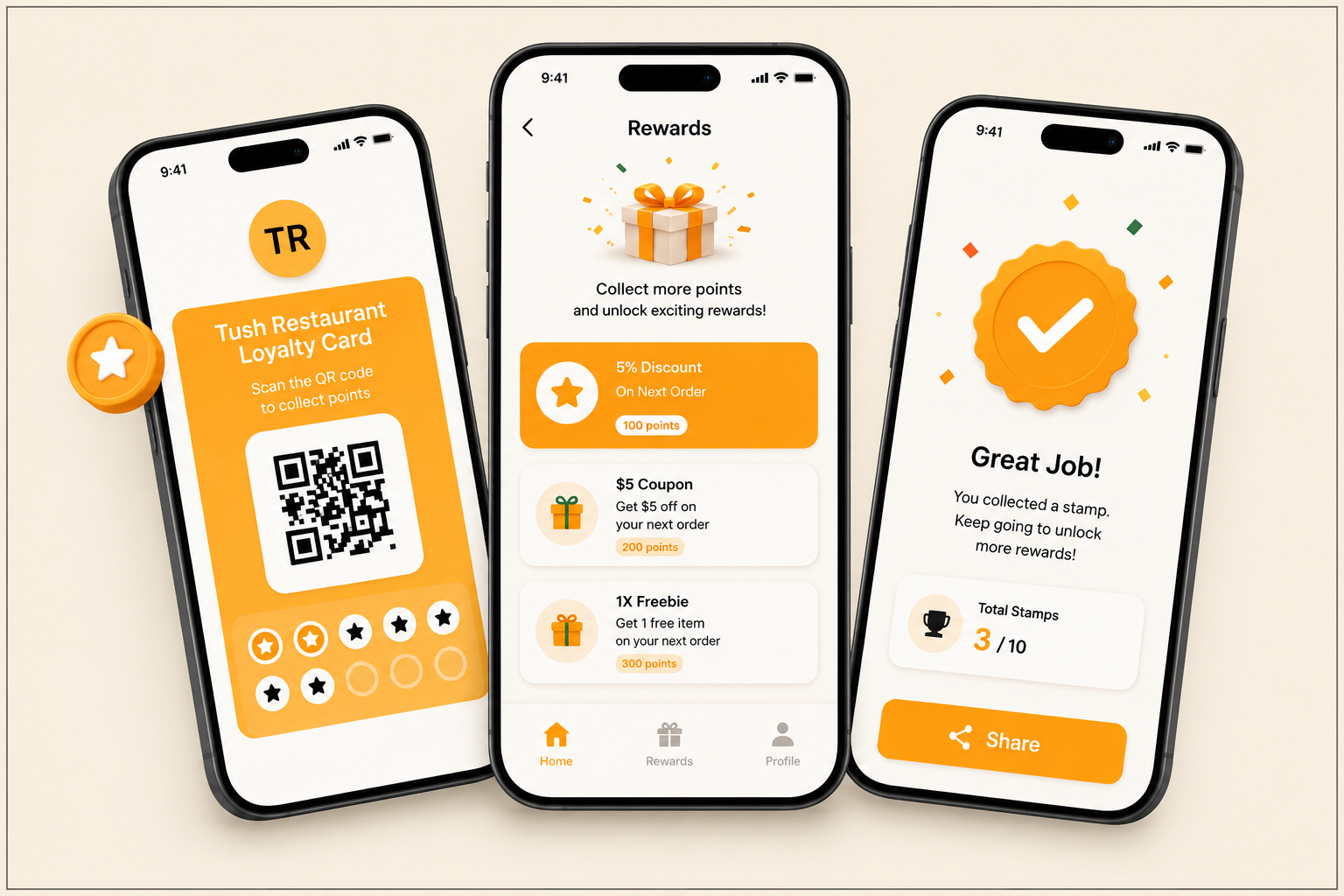
Where they fit: retention milestones. A scratch card that fires when a user crosses a meaningful usage threshold, a 7-day streak, a 30-day account anniversary, a completed onboarding sequence, connects the reward to an accomplishment the user is already aware of. The card functions as a celebration of something real, not an arbitrary interruption.
Where they fit: re-engagement triggers. A scratch card delivered to a lapsed user on their return session gives them an immediate, low-effort reason to feel good about coming back, before asking anything further of them. This works specifically because it requires no prior context. The user does not need to remember what they were doing last time. The mechanic is self-contained.
Where they fit: post-transaction rewards. The post-order screen, delivered immediately after a completed purchase, is the moment of highest attention and lowest competition for that attention in an entire session, because the user has just completed the action the app exists to facilitate and has nothing else competing for their focus in that instant.
Where they don't fit: as a substitute for onboarding value. A scratch card shown to a brand-new user who has not yet experienced the product's actual value is asking them to be excited about a mechanic disconnected from any reason they downloaded the app. It produces a moment of novelty with nothing underneath it.
Where they don't fit: as a recovery mechanic for a broken core experience. A scratch card cannot compensate for a product that does not deliver on its basic promise. This limitation is covered in more depth later in this article, but it is worth flagging early: the format amplifies an already-positive relationship with the product. It does not create one from nothing.
Design Principles That Preserve the Reveal
What to put behind the scratch, and what ruins the mechanic. The content revealed needs to justify the anticipation that preceded it, at least often enough that users do not learn to expect nothing. A prize pool that reveals "better luck next time" on the overwhelming majority of scratches, with no visible acknowledgement of the attempt, trains users that the anticipation phase is a false signal. The reveal does not need to always contain a monetary prize. It can contain a badge, a small in-app currency amount, or a piece of content, but it needs to contain something that registers as an outcome, not a null result presented identically to a win.
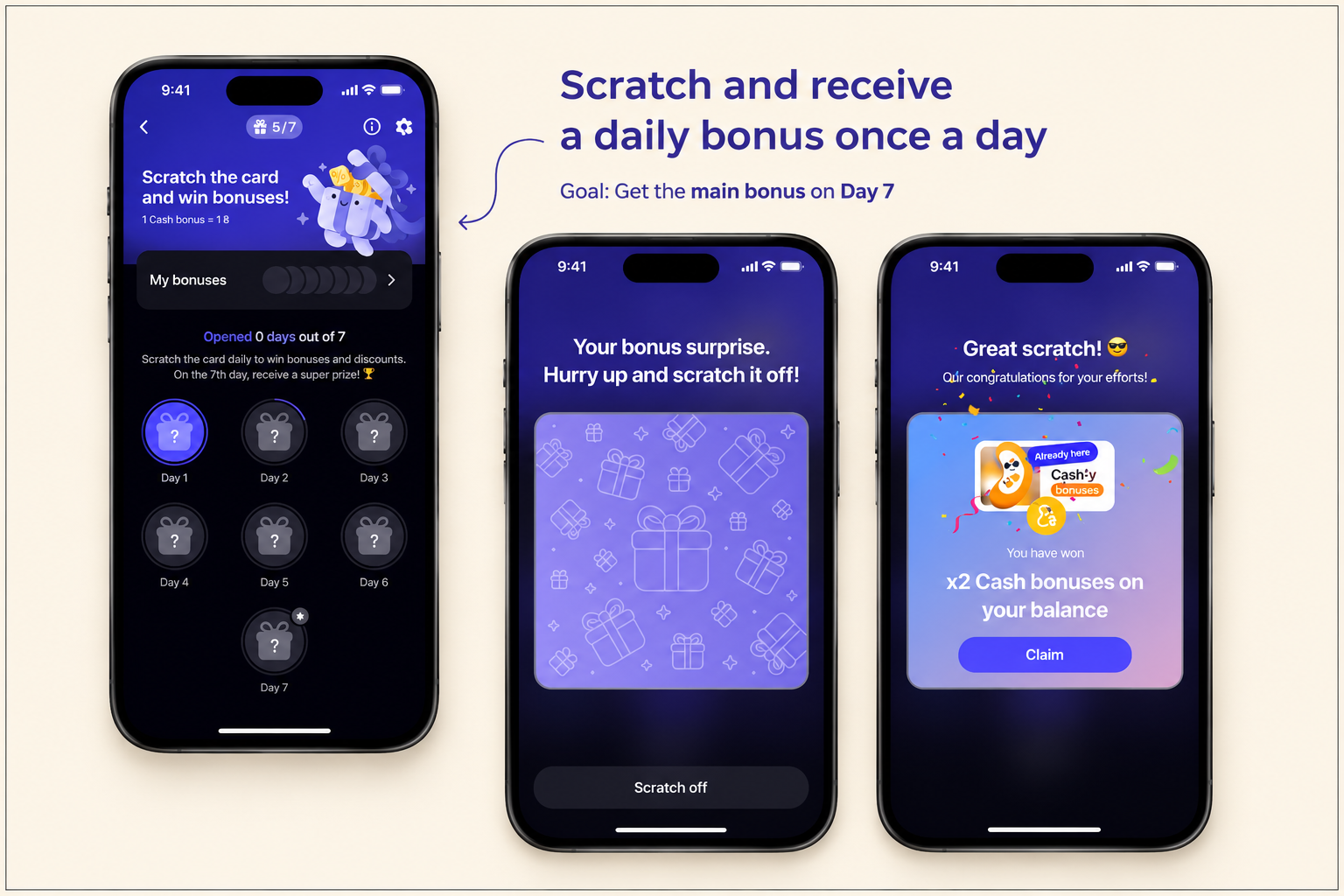
Animation quality and reveal speed. The technical implementation of the scratch gesture itself materially affects whether the mechanic feels premium or cheap. A well-built scratch card renders the scratch gesture as a true erasing effect, using the user's touch path to progressively reveal the content beneath a foil layer, running at a full 60 frames per second so the interaction feels physically responsive rather than laggy. The reveal threshold, the percentage of the card that must be scratched before the full prize is automatically revealed, is commonly set around half the card's surface area, sampled from a lower-resolution mask for performance, with a haptic pulse and a brief prize animation firing at the moment of completion. A threshold set too low removes most of the anticipation window entirely. A threshold set too high frustrates users who have to scratch an unreasonable portion of the card before anything happens.
The scratch gesture vs automatic reveal trade-off. An automatic reveal, where the card opens on tap with no scratch gesture required, removes the anticipation-extending mechanism almost entirely and functions closer to a simple notification than a genuine scratch card. A manual scratch gesture preserves anticipation but adds an accessibility requirement that many implementations miss: the scratch gesture needs a non-visual alternative, a "reveal card" action that announces the prize through a screen reader, because a reward locked behind a sighted-only gesture is a reward some users can never access. Building the accessible alternative from the start avoids retrofitting it later and ensures the mechanic does not silently exclude a portion of the user base.
Outcome determination happens before the reveal, not during it. The prize outcome should be server-issued, tied to the user's account, and auditable, determined before the card is presented to the user rather than generated client-side during the scratch interaction itself. This is both a fraud-prevention requirement and a design clarity point: the scratch gesture renders a fact that has already been decided, it does not request or influence an outcome. Users should never be able to perceive, correctly or not, that scratching harder, faster, or in a specific pattern changes what they receive.
The regulatory line the reveal mechanic must not cross. The combination of stake, chance, and cash payout is the specific formula that defines gambling in most regulatory frameworks. Scratch cards in mobile apps stay clear of this line by using free reveals and loyalty-based unlocks only, never requiring the user to pay or stake anything to access the reveal. A scratch card the user must purchase or spend in-app currency to access, with a cash or cash-equivalent prize pool, moves into a materially different regulatory category than a free reward mechanic tied to usage milestones, and this distinction should be treated as a hard design constraint, not a legal afterthought reviewed once at launch.
Timing: When to Trigger a Scratch Card
The trigger moment is as consequential to conversion as any visual design decision, and the available data points to specific patterns by trigger type.
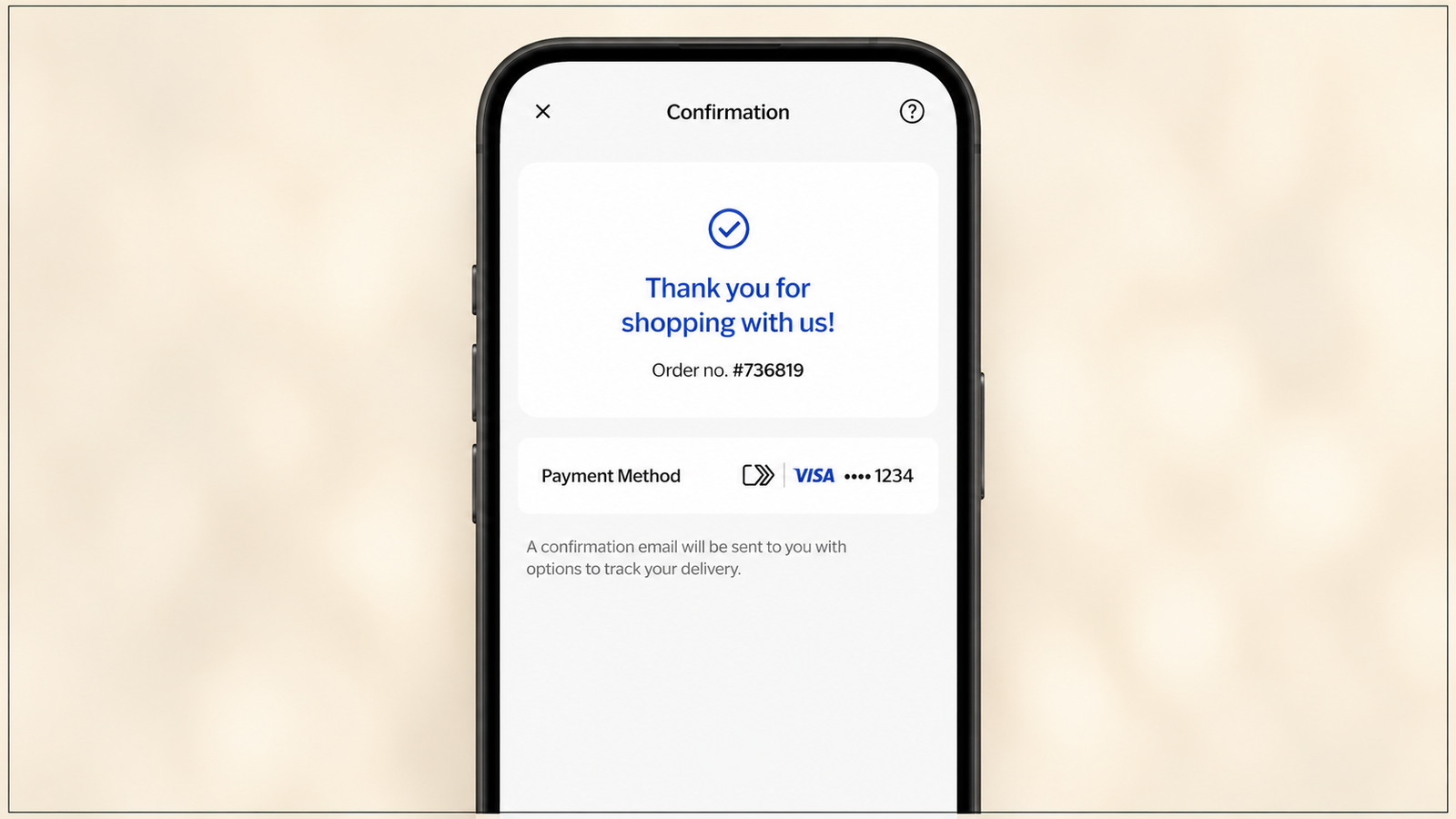
Post-transaction triggers benefit from the highest attention and lowest competing context of any trigger moment, because the user has just completed the action the app exists to facilitate and their focus has nowhere else to go in that instant. This is the trigger type most systematically documented in prior research on post-order engagement surfaces, where the captive-attention window immediately following a completed purchase consistently outperforms equivalent mechanics shown at other points in a session.
Session milestone triggers (a specific screen reached, a specific number of actions completed within a session) work best when the milestone itself is something the user is consciously aware of achieving. A scratch card tied to an invisible internal counter the user has no way of perceiving feels arbitrary when it fires, regardless of how well-designed the reveal animation is.
Day N return triggers (a scratch card that appears specifically on a user's third, seventh, or thirtieth day since installation) function as both a retention reward and an implicit signal to the user that the app is tracking and valuing their continued presence. This trigger type is most effective when the specific day chosen aligns with a known retention cliff in the product's own cohort data, so the reward arrives just before the point where users are most likely to lapse, rather than after.
Random interval triggers are the weakest-performing category when used as the sole trigger mechanism, because they disconnect the reward entirely from anything the user did or achieved, which removes the sense of the card being earned. Variable reward schedules are powerful specifically because the prediction of when a reward will arrive cannot be formed, but this principle applies to the outcome of a triggered card, not to whether the trigger itself is arbitrary. A card that fires at a genuinely random moment with no connection to user behaviour reads as a system glitch or an ad interruption rather than a reward, even when the underlying prize mechanic is identical to a milestone-triggered card.
The general pattern across trigger types: cards connected to something the user did or achieved consistently outperform cards that fire independent of user behaviour, because the connection itself is part of what makes the reward feel earned rather than arbitrary, which is a separate and additional driver of engagement beyond the three psychological mechanisms covered earlier.
The Value Calibration Problem
Setting the prize distribution correctly is the least visually obvious and most consequential design decision in the entire mechanic, because it determines whether the format sustains engagement over months or burns out within weeks.
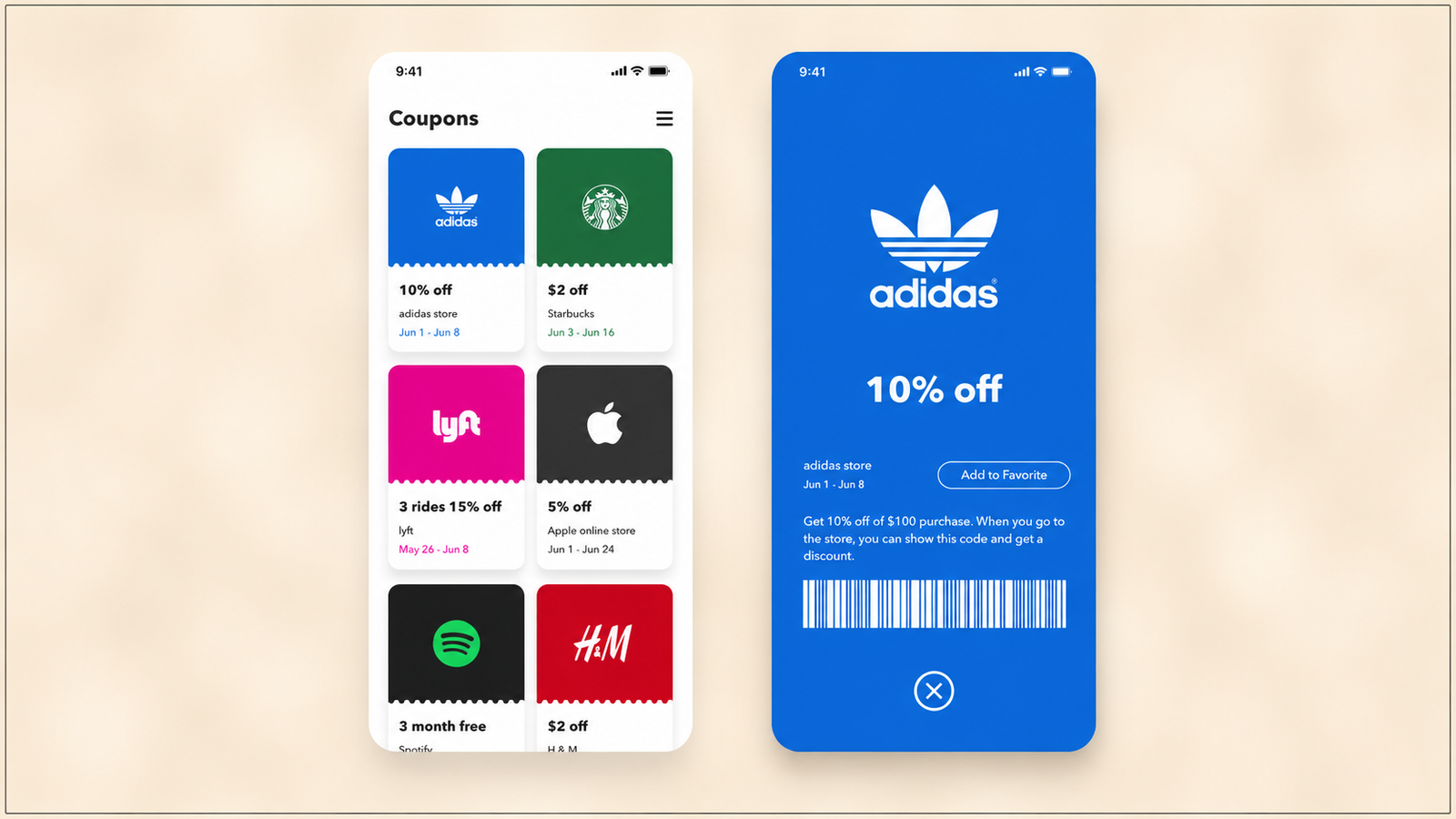
Prizes too small produce a feeling of manipulation. A scratch card that delivers, after the full anticipation build-up, a prize with negligible practical value produces a specific negative reaction: the user feels the anticipation was manufactured to deliver almost nothing, which damages trust in the mechanic more than a card with no reward at all would have. The anticipation phase creates an implicit expectation of proportional payoff, and a trivial reward breaks that implicit contract.
Prizes too generous or too variable are unsustainable. A prize pool weighted too heavily toward high-value outcomes produces short-term engagement spikes that the business cannot sustain once usage scales, forcing an abrupt reduction in prize value that users notice and resent more than if the pool had been modest from the start. Research on gamified reward architectures in mobile apps found that when users enter a state of flow purely around the game mechanic itself, the mechanic's effect on the underlying value-added behaviour it was meant to encourage actually weakens, based on a peer-reviewed analysis of 18,952 users on a gamified market research app. This is the specific risk of over-calibrating toward excitement: a reward pool so compelling that users optimise for the game mechanic itself, disconnected from the underlying behaviour the mechanic was built to reinforce.
The calibration approach that holds up over time. A prize distribution with a small number of high-value outcomes (rare enough to maintain genuine variable-reward uncertainty), a larger tier of modest but real value outcomes (frequent enough that most reveals feel worthwhile), and a limited allocation of pure-acknowledgement outcomes (a badge, a small currency amount, anything other than nothing) tends to sustain engagement longer than either a uniformly generous or uniformly modest distribution. The specific ratios need to be calibrated against the individual product's economics and tested rather than copied from a generic template, but the structural principle, genuine rarity at the top combined with a floor above zero, is what prevents both the manipulation feeling and the unsustainability problem simultaneously.
What Scratch Cards Can't Do
They cannot substitute for core product value. A scratch card layered onto a product experience that does not deliver on its fundamental promise produces engagement with the scratch card, not with the product. 90% of companies lose prospects during digital onboarding for reasons connected to the core experience itself, not the absence of a reward mechanic, and a scratch card introduced to compensate for that underlying drop-off addresses a symptom without touching the cause. Users who are engaging with a product purely for its reward mechanics, disconnected from any use for the product itself, are not retained users in any durable sense. They are reward-seekers who will leave the moment a competing app offers a better mechanic.
Frequency kills the novelty effect, and this decay is well documented. Up to 75% of users who install health apps quit using them within two weeks of first installation, a category where gamification mechanics including reward-based formats are heavily deployed specifically to counter this drop-off, with mixed and often temporary success. A scratch card shown too often stops producing the anticipation effect that makes it work, for the same reason any variable reward schedule degrades when the interval between deliveries shrinks: the mechanism depends on genuine uncertainty and a meaningful gap between occurrences, and a card appearing every session collapses both. Nike+ removed badges from its fitness app in 2016 on the theory they were a superfluous mechanic, and the removal produced a measurable reduction in user involvement and a documented increase in dissatisfaction, which demonstrates the mechanic had real value at the frequency and context it was deployed in. The lesson is not that gamification mechanics are dispensable or indispensable in the abstract. It is that their value is highly sensitive to calibration, and both over-deployment and premature removal produce measurable negative effects.
Conversion Data: Scratch Cards vs Other Gamification Formats
Apps using gamification broadly see 47% higher retention rates in the first 90 days compared to non-gamified alternatives, and 73% of users report being more likely to engage with gamified financial apps compared to traditional interfaces, per Deloitte research cited in industry analysis. These figures describe the gamification category broadly, spanning streaks, badges, leaderboards, and reward reveals including scratch cards, rather than isolating scratch card performance specifically, and should be read as category context rather than a scratch-card-specific benchmark.
Fintech apps specifically using gamification report a 22% increase in saving habit formation and a 20% increase in average user savings, by converting routine transactions into milestone-based, reward-connected moments, which is directly relevant to the post-transaction scratch card trigger pattern covered earlier, since this is the exact mechanism (transaction plus milestone plus reward) that produces the reported lift.
Redemption rate versus issuance rate is the metric that reveals whether a scratch card programme is working, not the raw number of cards shown. A high issuance volume with a low redemption or claim rate indicates users are receiving cards but not completing the reveal or claiming the underlying prize, which points to a friction problem in the reveal or claim flow rather than a targeting problem in who receives the card. Tracking these two numbers separately, rather than a single blended "engagement" metric, is what allows a team to diagnose whether an underperforming scratch card programme has a design problem or a distribution problem.
The drop-off curve after initial introduction is steep by default and is the expected pattern, not a failure signal on its own. Novelty-driven engagement mechanics reliably show their strongest performance in the first several weeks after launch, followed by a decline as the format becomes familiar. The academic research on gamified reward engines specifically studied whether reward architectures can delay this wear-out curve, finding that game rewards increase engagement significantly beyond what value-based rewards alone produce, particularly for users in closer proximity to both reward types simultaneously. The practical implication: a scratch card programme's success should be measured against its own decay curve over time, comparing performance at week 12 against week 1 to gauge how much of the initial lift is durable, rather than judged only on launch-week performance, which will overstate the mechanic's long-term contribution regardless of how well it is designed.
How to A/B Test Scratch Card Variants
What to test, isolated one variable at a time. The three highest-leverage variables to test independently are the reveal mechanic (scratch gesture versus automatic reveal, or different reveal threshold percentages), the prize range and distribution shape, and the trigger moment (post-transaction versus session milestone versus Day N return, for a comparable audience segment). Running a test without enough users or data produces unreliable results, and no single test result should be treated as conclusive without confirming the direction holds across multiple testing rounds, which applies directly to scratch card testing: a single winning variant in one test window should be validated with a second confirmation run before it is adopted as the permanent default, since reward-based mechanics are especially prone to short-term novelty effects that can produce a misleading first-round winner.
What sample size you need to call a winner. The required sample size depends on the baseline conversion or redemption rate and the minimum effect size the team considers meaningful, calculated before the test begins rather than assumed. A test comparing two prize distributions with a small expected difference in redemption rate needs a substantially larger sample than a test comparing a scratch gesture against an automatic reveal, where the underlying mechanic difference is large enough to produce a bigger, more easily detectable gap. Teams should calculate the required sample size using their own baseline redemption rate and desired statistical confidence before launching the test, rather than running the test for a fixed calendar period and checking significance retroactively, which is the single most common methodology error in gamification testing and produces false positives from stopping a test the moment it happens to cross a significance threshold by chance.
What "winning" should actually be measured against. A variant that produces a higher immediate reveal or engagement rate but no corresponding lift in the downstream retention or transaction behaviour the scratch card programme was built to support has not actually won anything meaningful. The correct test structure includes a holdout group that receives no scratch card at all, so the comparison is not simply "variant A versus variant B" but "does either variant produce a measurable lift over no intervention," which is the only structure that reveals whether the entire mechanic is contributing real value versus simply redistributing engagement that would have happened anyway.
Topics Not in the Brief That Teams Should Know
The flow-state risk is a specific and counterintuitive failure mode. The peer-reviewed research on gamified reward engines found a genuine "dark side" to well-executed reward mechanics: when users enter a state of flow purely around the game element, the game engagement's positive effect on the value-added behaviour it was meant to encourage becomes weaker, not stronger. This means a scratch card mechanic that is, by conventional measures, extremely engaging can simultaneously be failing at its actual business purpose if users have started optimising for the mechanic itself rather than the underlying product behaviour it was designed to reinforce. Tracking engagement with the scratch card in isolation from the downstream behaviour it is meant to drive is not sufficient. Both need to be measured together.
Server-side outcome determination is a security requirement, not just a fairness principle. Beyond the fraud-prevention rationale covered earlier, a client-side prize determination system is exploitable through app tampering or network interception in ways a server-issued, pre-determined outcome is not. Any scratch card implementation handling real monetary or monetary-equivalent value should treat server-side determination as a non-negotiable security baseline, independent of the UX argument for it.
Localisation of prize framing matters beyond simple translation. A prize amount or type that reads as generous in one market context reads as trivial or even insulting in another, and a global product rolling out a single prize calibration across all markets without adjusting for local purchasing power and cultural reward expectations risks the "prizes too small" trust problem in some markets while overspending in others.
The wear-out curve differs by user cohort, not just by calendar time. New users and long-tenured users experience the same scratch card mechanic differently: a new user has no baseline expectation and experiences full novelty, while a long-tenured user has likely already been exposed to the format elsewhere in the same product or a comparable one and starts from a lower novelty baseline. Testing and calibration should account for cohort tenure, not assume a single wear-out curve applies uniformly across a user base with very different histories with the mechanic.
Key Takeaways
Scratch cards work through three compounding psychological mechanisms: anticipation (peaking before the reveal, not at it), variable reward (the brain's stronger response to uncertain outcomes), and the completion instinct (the pull to finish a partially revealed card). Removing or shortening any one weakens the whole effect.
The format fits retention milestones, re-engagement triggers, and post-transaction moments, where the reward connects to something real the user did or achieved. It does not fit as onboarding decoration for users who have not yet experienced core product value, and it cannot compensate for a product that does not deliver on its fundamental promise.
Design decisions that preserve the reveal include a genuine 60fps scratch gesture with a threshold reveal around 50% scratched, server-issued and auditable outcomes determined before the reveal, a non-visual accessibility alternative to the scratch gesture, and strict adherence to the free-reveal, no-stake boundary that keeps the mechanic outside gambling regulation.
Trigger timing data consistently favours moments connected to user behaviour, post-transaction, session milestone, Day N return, over purely random intervals, because the connection to something the user did is what makes the reward feel earned rather than arbitrary.
Prize calibration has to avoid two failure modes simultaneously: prizes too small feel manipulative given the anticipation invested, and prizes too generous or variable are unsustainable and produce a resented reduction later. A distribution with genuine rarity at the top and a floor above zero at the bottom tends to hold up longest.
Frequency is the primary threat to durability. Novelty-driven mechanics show their strongest performance in the first weeks after launch and decline as familiarity sets in, which is expected, not a failure signal, but over-deployment collapses the anticipation mechanism the format depends on.
A/B testing scratch card variants requires isolating one variable at a time, calculating required sample size from the baseline redemption rate before testing rather than checking significance retroactively, confirming a winning variant across multiple test rounds, and always including a no-intervention holdout so the comparison reveals whether the mechanic adds real value rather than just redistributing engagement that would have happened anyway.
Further Reading
From Digia Engage:
- Scratch Cards and Spin-the-Wheel in Mobile Apps: How They Drive Engagement — the broader gamification psychology and Indian app examples companion piece to this article
- Gamification in Mobile Apps: Streaks, Rewards and Retention Mechanics — instant versus deferred reward architecture and the 47% retention lift data referenced in this article
- How to Know If Your Personalization Is Actually Working — the holdout group methodology this article applies to scratch card testing specifically
- When NOT to Show a Nudge: Building a Suppression Logic — the frequency and suppression discipline directly relevant to preventing scratch card wear-out
- Digia Engage Gamification — scratch card and reveal mechanics configurable without engineering tickets after initial SDK integration
External Sources:
- Scratch Card UI in React Native + Expo: Skia Guide — VP0 Journal (60fps rendering technique, threshold reveal mechanics, accessibility requirements, server-issued outcome determination, and the gambling regulation boundary)
- Driving Mobile App User Engagement Through Gamification — Journal of Marketing, Paschmann et al. (peer-reviewed study of 18,952 users on a gamified market research app; the flow-state dark side finding)
- Exploiting Mobile Gamification to Foster Physical Activity: A Remotely-Managed Field Study — National Center for Biotechnology Information (75% two-week health app dropout rate; Nike+ badge removal case study)
- App Gamification: Mobile App Engagement — StriveCloud (22% saving habit increase and 20% average savings increase from fintech gamification; Shine's 80% onboarding conversion case study)
- Mastering A/B Testing in Mobile App Development — Medium, Praveen Sharma (sample size and statistical significance methodology for mobile app testing)
Scratch card reveal mechanics, trigger conditions, prize distribution, and holdout-based A/B testing are all configurable in Digia Engage's gamification module without engineering tickets after initial SDK integration. Triggers fire within 100ms of a qualifying event, which preserves the connection between user action and reward that this article identifies as central to why the mechanic works. Book a demo to see a scratch card campaign configured for a specific trigger and prize calibration, or explore the gamification product page for the full component specification.