


TL;DR
- User onboarding and in-app onboarding used to mean the same thing. They do not anymore.
- Three forces split them apart: multi-channel systems that coordinate email, push, in-app, and SMS as one journey, AI-personalized first-session flows that adapt without a fixed script, and no-code in-app tooling that gave growth teams direct control of the in-app layer without an engineering dependency.
- This article covers how the conflation happened, and what split the two apart.
- It covers a clear definition of each: in-app onboarding and the broader user onboarding journey.
- It covers why the distinction matters for team structure and tooling.
- It covers how user expectations shifted in 2026.
- It covers why action-first onboarding now consistently outperforms tour-first.
- It covers what to prioritise when evaluating an in-app engagement platform specifically for this layer.
For most of the last decade, "user onboarding" and "in-app onboarding" were used interchangeably, and the collapse made sense at the time. When a product's entire new-user journey happened inside a single app screen, the terms described the same thing because there was nothing else to separate them from. A welcome screen, a short tour, a few tooltips, done. One team built it. One tool managed it. One metric, usually a vague sense of whether users seemed confused, told you whether it worked.
That collapse no longer holds. The SaaS activation benchmark now sits at 37.5%, with a median time-to-value of 1 day 12 hours, meaning almost two out of three new signups across the average product still never reach first value, and the reason is rarely that the in-app tour was badly written. It is that the journey to activation now spans channels, personalisation logic, and tooling that a single in-app flow was never built to coordinate. Teams that still treat "onboarding" as one undifferentiated problem are, in practice, building a worse version of both the in-app experience and the broader journey around it, because neither gets the specific attention its own mechanics require.
The Historical Conflation: How "User Onboarding" Came to Mean "Show Users How the App Works"
The conflation was not a mistake. It was an accurate description of a simpler reality. In the era when "user onboarding" entered common product vocabulary, the new-user journey for most consumer and B2B SaaS products genuinely began and ended inside the product itself. A user signed up, saw a welcome screen, clicked through a tour, and either understood the product or did not. There was no separate email nurture track running in parallel, no cross-channel push and SMS sequence coordinating with what the in-app experience was doing, no distinct system managing the journey outside the app.
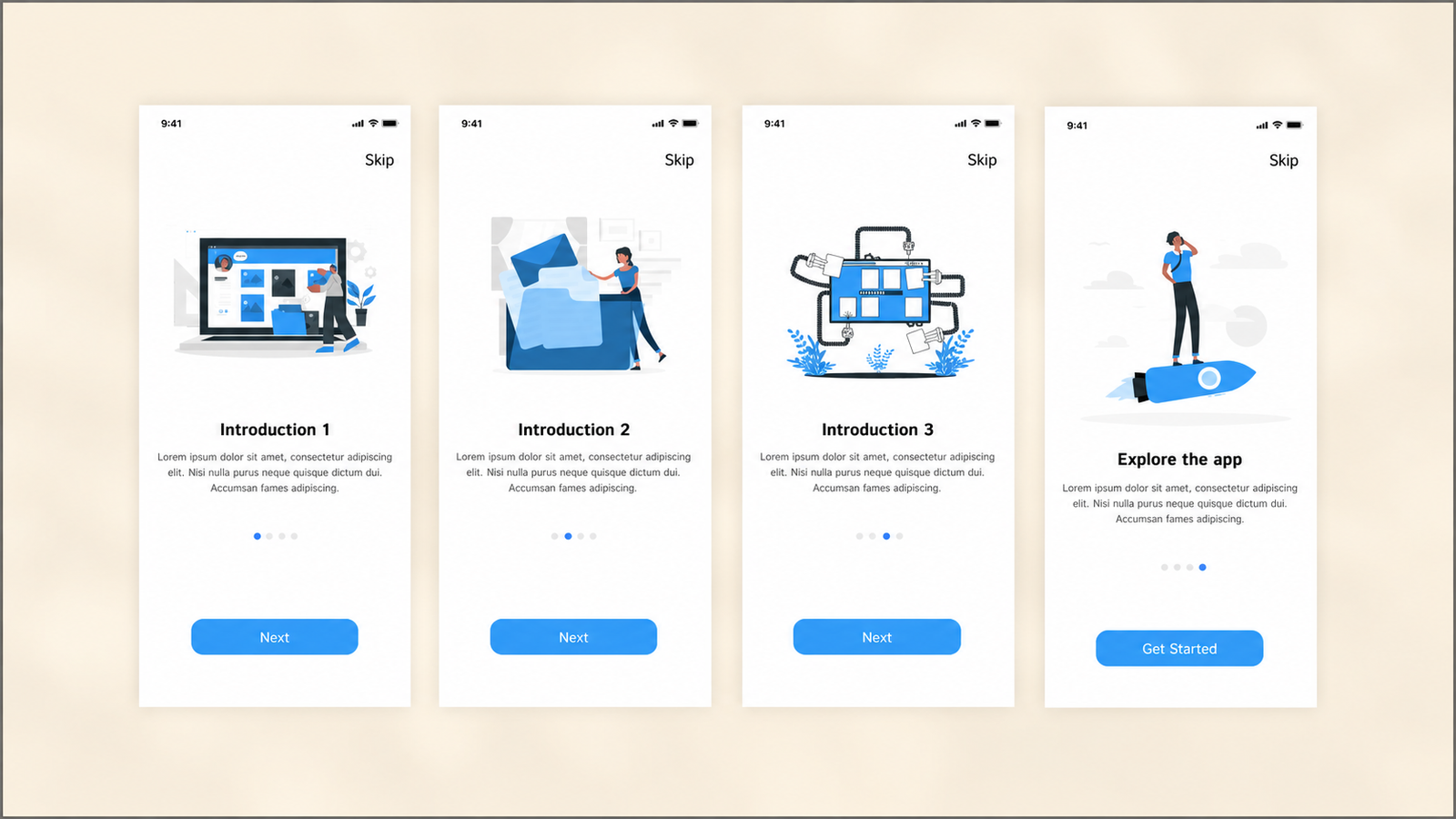
Under that reality, defining "user onboarding" as "show users how the app works" was not a narrow definition. It was the whole scope of the problem, because there was nothing happening for a new user outside the four corners of the product screen. The tools that emerged to solve onboarding, tooltips, product tours, checklists, were built for exactly this scope, and they were adequate to it.
What changed is not that this definition became wrong. It became incomplete, because the actual new-user journey grew a set of components that exist entirely outside what happens inside the app, and the old definition has no vocabulary for describing them.
What Split Them Apart
Three specific developments, arriving roughly together, are responsible for the divergence.
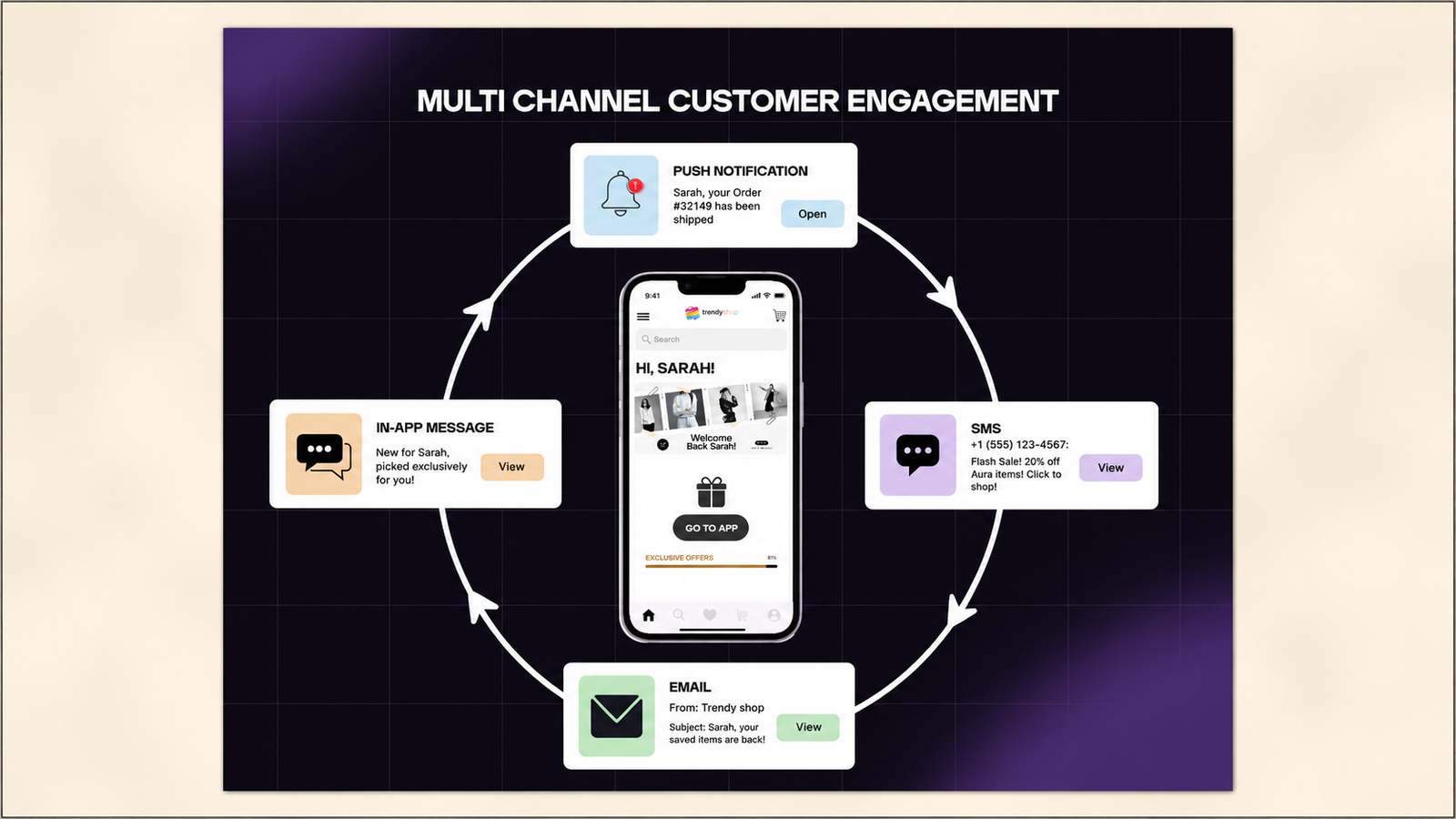
Multi-channel onboarding as a coordinated system, not a collection of separate channels. Modern onboarding workflows orchestrate multi-channel journeys across in-app messages, email, push notifications, and surveys from a single builder, rather than treating each channel as an independent campaign. This is a structurally different capability than simply having an email onboarding sequence and an in-app tour that happen to both exist. It means a user's progress through the in-app flow now determines what fires on email, push, or SMS, and vice versa, which requires infrastructure and ownership that a single in-app tool was never designed to provide. Once onboarding becomes a coordinated cross-channel system rather than a single-surface experience, the in-app layer is one component of that system, not the whole of it.
AI-personalized first-session flows that adapt in real time rather than following a fixed script. Adaptive AI onboarding personalises guidance in real time using behavioural signals, role context, and lifecycle stage, turning a one-size-fits-all first session into a guided path to a defined success event, with every step responding to real user behaviour rather than a predetermined schedule. A fixed, scripted tour is a single artefact that a design team builds once. A behaviourally adaptive flow is a system that requires real-time event data, a decision layer, and content variants, which is categorically more infrastructure than the original in-app tooling was ever built to support, and which frequently now spans both the in-app layer and other channels responding to the same behavioural signal.
No-code in-app tooling that gave growth teams direct control of the in-app layer specifically. The rise of platforms that let a non-technical growth team member build, target, and publish in-app experiences without an engineering ticket did something specific to team structure: it made the in-app layer independently operable, separate from whatever team or tooling manages the broader cross-channel journey. Before this shift, the in-app experience was often built once by a product or design team as part of a release cycle, then left largely static. Once a growth team can iterate on the in-app layer directly and continuously, it develops its own cadence, its own metrics, and frequently its own ownership, distinct from whoever owns the email and push sequences running alongside it.
Each of these three developments, independently, would have stretched the old single definition of onboarding. Together, arriving in the same period, they made the old definition actively misleading if used to describe the current scope of either the in-app experience or the broader journey.
In-App Onboarding Defined
In-app onboarding is what happens inside the product itself, from the moment a user first opens the app to the moment they complete a defined activation event. It covers the welcome screen, the permission requests, any progressive profiling, the guided path to the first meaningful action, and the confirmation that signals success. Its scope is bounded by the app's own screens. It does not extend to an email that arrives the next morning or a push notification that fires three days later, even if that email or push notification exists specifically to bring the user back to complete the same in-app activation step.
The metrics that measure in-app onboarding are session-scoped: time-to-value (the elapsed time from first open to first meaningful success), activation rate within the first session, and step-level drop-off within the flow itself. Time-to-value is one of the strongest early predictors of long-term retention, and the relationship shows a threshold effect: users who do not reach activation in the first session are disproportionately likely to never return. This is a specifically in-app metric because it is measuring what happens within a single continuous session, not across a multi-day cross-channel sequence.
The tooling for in-app onboarding specifically has to solve for what happens on a single screen at a single moment: rendering the right guidance, responding to what the user just did, and getting out of the way as soon as the user demonstrates they understand what to do next.
User Onboarding Defined
User onboarding is the broader journey from signup to habit formation, and it covers every touchpoint the user encounters during that period, not only the ones inside the app. It includes the in-app experience as one component, but it also includes the email sequence that follows signup, the push notifications that bring a lapsed new user back, any SMS-based verification or nudge, and increasingly, any AI-assisted support interaction that helps a confused new user during their first week.
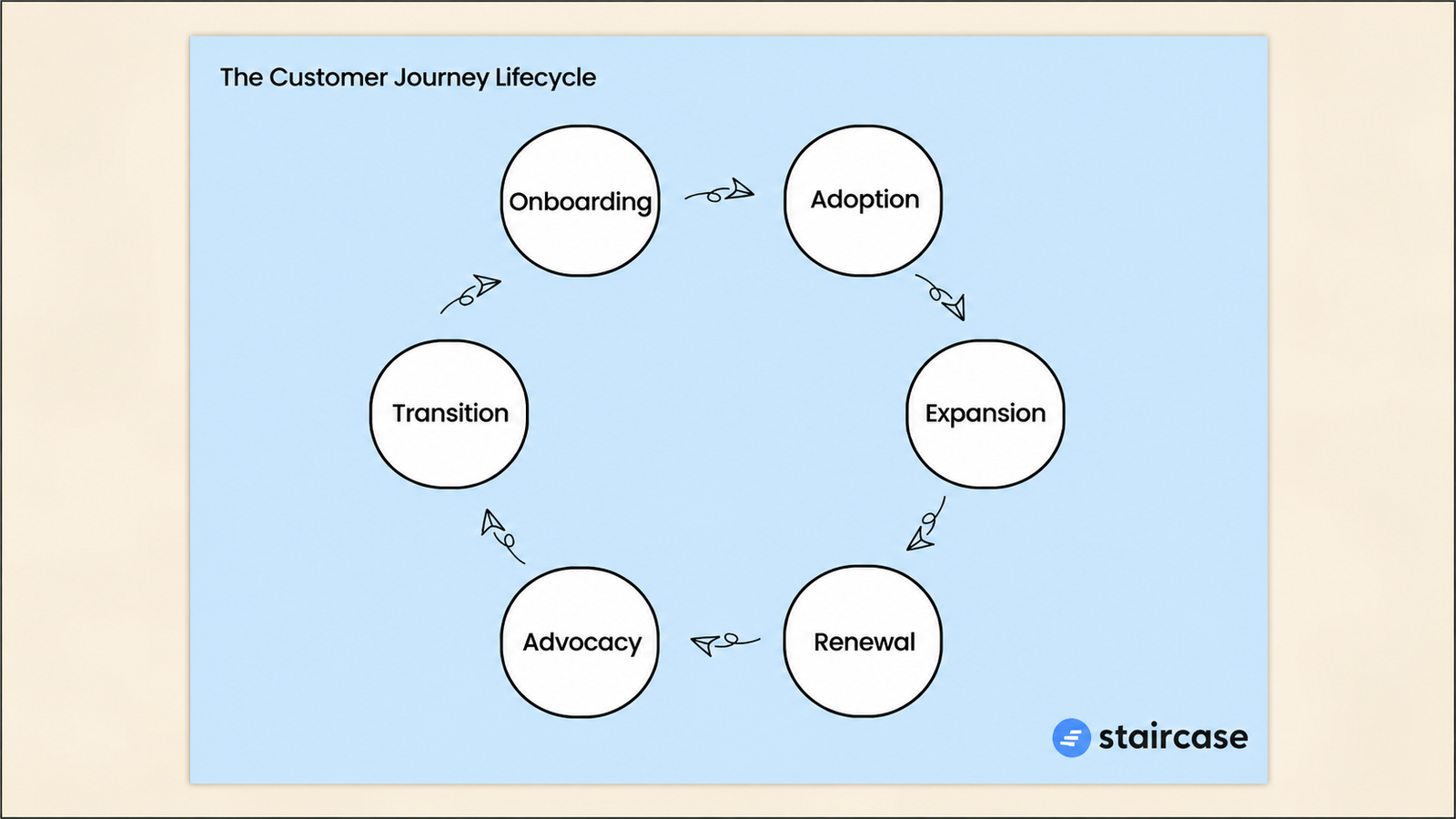
The metrics that measure user onboarding operate on a longer time horizon and span multiple sessions: Day 1, Day 7, and Day 30 retention, habit formation indicators (does the user return without being prompted), and full-funnel activation rate across every channel a user might complete the defining action through, not just the in-app one. High-performing organisations typically structure onboarding ownership with a product-led growth or customer success function as the primary driver, but with clear input and accountability from other functions, because marketing optimises for signups, product optimises for activation, and customer success optimises for retention, and when these functions are not aligned, the result is inconsistent messaging and onboarding flows optimised for one team's metric at the expense of another's.
The tooling for user onboarding at this broader scope has to coordinate across channels, which means it needs a shared data layer that tracks a user's state regardless of which channel they last interacted through, and a decision layer that determines which channel is appropriate for the next touchpoint given what the user has and has not done.
Why the Distinction Matters for Team Structure
The practical consequence of treating in-app onboarding and user onboarding as the same problem is that one team ends up making decisions it is not equipped to make well, using tools built for a different scope than the decision actually requires.
Who owns in-app onboarding. In-app onboarding is most effectively owned by a growth or product team with direct, no-code access to the in-app layer, because the decisions involved (what to show at a specific step, how to phrase a specific prompt, whether a specific screen is causing drop-off) are iterative, high-frequency decisions that need to be testable within hours, not weeks. This team's primary tool is an in-app engagement platform with self-serve audience targeting, template-based creative, and event-based triggering, the specific capability set covered later in this article.
Who owns the broader user onboarding journey. The cross-channel journey is most effectively owned by a function with visibility across the full funnel, frequently a growth or lifecycle marketing team working in close coordination with product, because the decisions involved (which channel should carry which message, how to sequence touchpoints across days rather than seconds, how to avoid contradicting what a different channel just told the user) require a system-level view that a team focused purely on the in-app screen does not naturally have. This team's primary tool is typically a customer engagement platform or a dedicated onboarding orchestration tool that spans email, push, SMS, and in-app together.
What breaks when one team owns both without the right tooling. Ask most organisations who owns onboarding and the answer is rarely precise. Design owns clarity. Engineering owns implementation. Marketing owns messaging. Product owns timelines. Each optimises locally, and no one owns the behavioural outcome: did the user actually activate?. This diffusion of ownership is precisely the failure mode that emerges when the in-app and cross-channel layers are treated as one undifferentiated responsibility without a clear owner for either. The fix is not consolidating both under one team by default. It is defining which team owns which layer, giving each team tooling matched to its layer's actual decision cadence, and establishing a shared activation definition both teams optimise toward, so the two layers reinforce rather than contradict each other.
How User Expectations Shifted in 2026
The tolerance users have for a slow, explanation-heavy first experience has continued to compress, and three specific shifts explain why.
Faster expected time-to-value. A good user onboarding flow in 2026 is short, three to five screens, personalised based on one or two questions that visibly change the experience, and gets the user to a first meaningful action within 60 seconds. Sixty seconds is not an aspirational target in this framing. It is the baseline expectation, which means a flow that takes several minutes to reach the same point is not simply slower than ideal. It is now outside the range users implicitly expect before deciding whether a product is worth continuing with.
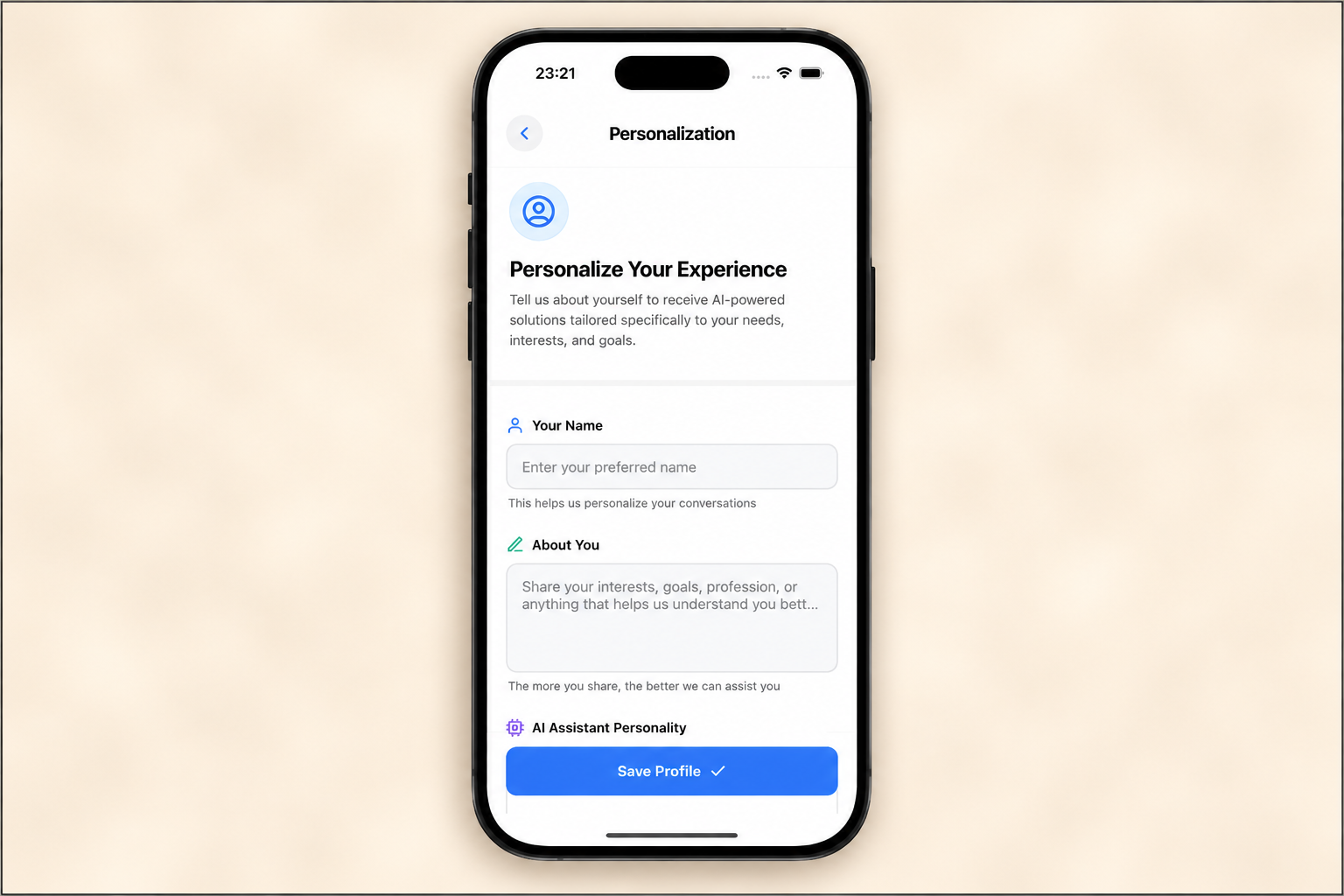
Fewer manual steps, driven by AI-assisted configuration replacing manual data entry. Products increasingly infer context (role, likely use case, relevant starting configuration) from behavioural and account signals rather than asking the user to answer a wizard's worth of setup questions before reaching any value. One well-targeted question at signup beats a five-question wizard. Users tolerate one question. They abandon a flow that asks five, and if behavioural data is already available, there is frequently no need to interrogate users about preferences they have not yet formed. This shift is a direct consequence of the AI-personalization development covered earlier: when a system can infer from behaviour what it previously had to ask for directly, every question removed from the upfront flow raises the bar for what remaining friction users will tolerate.
Tolerance for long tours at an all-time low. Adobe's 2026 AI and Digital Trends report found that 80% of organisations want future customer experiences to be highly personalised and anticipatory in real time, and nearly 90% of onboarding and implementation teams surveyed in a 2025 State of Customer Onboarding report planned to use AI and automation in their flows. The expectation of anticipatory, personalised experience is not limited to enterprise software. It has become the ambient standard users bring to every product they open, which means a generic, one-size-fits-all tour reads as dated regardless of how well it is designed, simply because it does not meet an expectation users now bring by default.
The Shift from Tour-First to Action-First
The clearest behavioural change in 2026 onboarding design is the near-total shift away from leading with an explanation of what a user will eventually be able to do, toward leading with a task the user can complete immediately.
AI-native products deliver value in the first few seconds, with onboarding reduced to a minimum before taking the user straight into a working session. Lovable, for instance, lets a user do something real before creating an account, landing on a ready-to-use interface that prompts sign-up only once the user has already started, reporting 85% Day 30 retention as a result. This is the action-first pattern in its most extreme form: the product does not explain itself before asking for commitment. It demonstrates itself, and the commitment (account creation) is requested only after the user has already experienced enough value to want to continue.
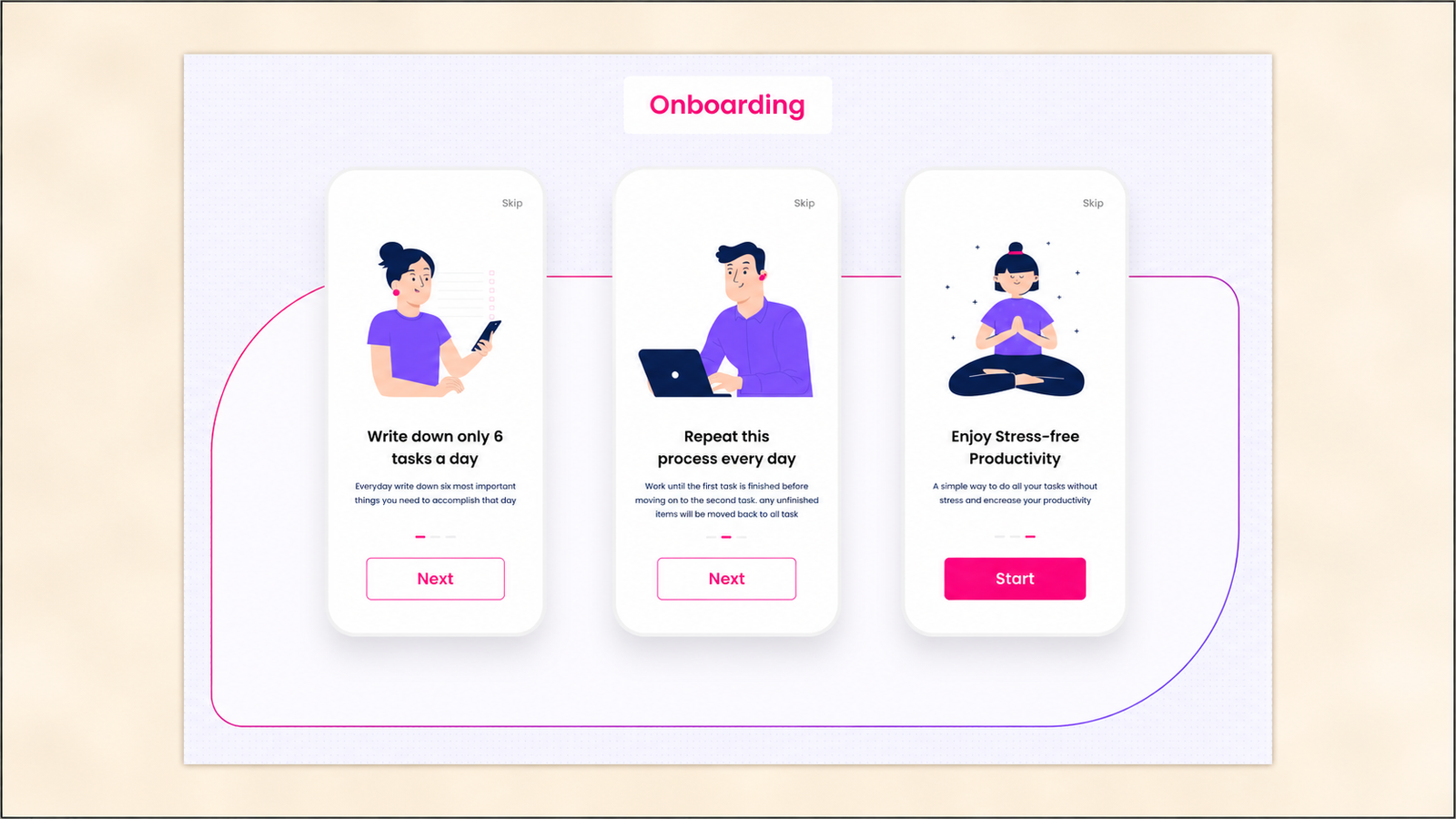
The pattern extends beyond AI-native products specifically. Uber, Lyft, and Airbnb use progressive flows that let users search and see results before any account creation or payment step, deferring authentication until it is genuinely needed for the actual transaction, rather than requiring it as a gate before the user has seen anything of value. Slack, when a user first lands inside the product, does not leave them with an empty workspace and a long tour to complete. It creates a few starter channels immediately and uses those spaces to demonstrate what to do next, rather than describing the concept of channels before the user has one to interact with.
The mechanism behind why action-first consistently outperforms tour-first is straightforward once stated: an explanation of future value is an abstraction the user has to trust before experiencing anything. A completed task is evidence the user has already witnessed. Checklists remain one of the best tools for driving this pattern in 2026, because they trigger the brain's urge to close an open loop, the Zeigarnik effect and the endowed-progress effect both pushing users to complete activation tasks once they see a partial list rather than a blank slate. A tour tells the user what is possible. A checklist, or any action-first mechanic, shows the user something already partially true and lets the remaining steps feel like completion rather than instruction. What works better in practice is not eliminating the tour entirely, but offering it as an optional path alongside a default action-first flow: give the tour as an option and put a checklist next to it, so users who genuinely want to be walked through can take the tour, while the product's own first-session behaviour handles the rest of onboarding for everyone else.
What This Means for Growth Teams Evaluating In-App Engagement Platforms
For a growth team specifically evaluating tooling for the in-app onboarding layer, as distinct from the broader cross-channel platform decision, several capabilities matter more than others given everything covered above.
No-code, self-serve flow building without an engineering dependency. The commoditised baseline capability in 2026 is generating a tooltip sequence or a checklist from a prompt. The differentiating question is no longer whether a platform can build a flow, but whether it can build the right one for a specific segment, which requires the platform to support genuine behavioural targeting and segment-specific variants, not just a single generic flow with cosmetic customisation.
Native in-app rendering, not a web-view wrapper. Because the action-first shift depends on the first-session experience feeling like an integral part of the product rather than an overlay bolted on top of it, the rendering quality of the in-app layer matters more in 2026 than it did when tours were expected to look and feel like separate instructional content. A platform that renders through a web-view produces a visible seam between the product and the onboarding layer, which works against the action-first design principle at a fundamental level.
Behavioural event triggering, not fixed scheduling. Given that AI-personalized flows respond to real user behaviour rather than a predetermined schedule, the underlying platform needs to support triggering off specific in-product events (feature accessed, task attempted, session depth reached) rather than only supporting time-based or step-based sequencing. A platform that can only fire "on session start" or "after step 3" cannot support the adaptive, action-first patterns that now define competitive onboarding design.
Coordination capability with the broader cross-channel system, without requiring the in-app team to own that system. Because in-app onboarding and user onboarding are now distinct layers with distinct owners, the in-app platform should be able to pass activation state and behavioural signals to whatever system manages the broader cross-channel journey (typically a CEP like CleverTap, MoEngage, or WebEngage), rather than requiring the growth team to duplicate cross-channel logic inside the in-app tool itself. MoEngage, for instance, is built specifically for multi-channel onboarding campaigns across mobile, web, email, and push, using AI-driven segmentation to personalise journeys across channels, but is optimised for campaign orchestration rather than granular in-app behavioural response, which is precisely the division of labour this article has been describing: the CEP owns the cross-channel journey. A dedicated in-app layer owns the moment-to-moment in-product experience, and the two need to exchange state cleanly rather than one trying to do the other's job.
Iteration speed independent of the app release cycle. Given how compressed the expected time-to-value window has become, a platform that requires an app store submission cycle to test a copy change or a new flow variant cannot keep pace with the iteration speed the current expectation bar demands. Server-driven onboarding, where screens, messaging, and sequencing are controlled from a backend rather than hardcoded into the app binary, removes this ceiling entirely, letting teams update onboarding copy, layout, and sequencing without an app store submission, and A/B test activation paths across segments in near real time, which is a precondition for the kind of continuous, action-first iteration the current environment now requires as standard practice, not a nice-to-have.
Topics Not in the Brief That Teams Should Know
The instrumentation gap most teams do not realise they have. Many onboarding flows are heavily polished visually but lightly instrumented behaviourally, meaning the flow looks refined but the team lacks visibility into where users hesitate, which steps trigger re-reads, or where drop-off actually occurs within a single step. This gap becomes more consequential once in-app and user onboarding are treated as distinct layers, because each layer's owner needs its own behavioural visibility, and a shared dashboard built for one layer's cadence (session-level, for in-app) is frequently inadequate for the other layer's cadence (multi-day, for the broader journey).
Completion rate as a persistently misleading metric. A user can complete every screen in an onboarding flow and still never reach the actual moment of first success, because completion rate measures whether the user survived the flow, not whether the flow delivered the value it was built to deliver. Teams splitting in-app and user onboarding ownership should explicitly agree that neither layer optimises for completion or open rate as a primary metric. The shared metric both layers should optimise toward is the same defined activation event, measured however each layer's tooling is best equipped to measure it.
The permission and payment deferral pattern as a specific instance of action-first design. Location permissions and payment setup are consistently the highest-friction barriers in mobile onboarding specifically, and the pattern that consistently outperforms front-loading them is letting users browse, search, or otherwise experience value before either is required. This is worth calling out as its own design decision distinct from the general action-first principle, because permission and payment requests carry a specific trust cost that ordinary onboarding steps do not, and deferring them until the moment they are functionally necessary, rather than front-loading them for convenience, is one of the highest-leverage single changes most mobile onboarding flows can make.
The risk of over-personalizing before enough behavioural signal exists. AI-personalized flows work well once sufficient behavioural data exists to make an accurate inference. For a genuinely new user in their very first minutes, that signal frequently does not yet exist, which means an over-eager personalization system can make confident but wrong inferences early in a session, producing an experience that feels presumptuous rather than perceptive. The practical mitigation is a cold-start default (a broad, action-first path that works reasonably well for most users) that personalization progressively refines as real signal accumulates within the session, rather than attempting to personalize the very first screen based on minimal or no data.
Key Takeaways
User onboarding and in-app onboarding used to be the same problem because the entire new-user journey happened inside a single app screen. Multi-channel coordination, AI-personalized adaptive flows, and no-code in-app tooling have since given each layer its own infrastructure, cadence, and natural owner, which is what actually split the two apart.
In-app onboarding is what happens inside the product from first open to a defined activation event, measured through session-scoped metrics like time-to-value and step-level drop-off. User onboarding is the broader cross-channel journey from signup to habit formation, measured through multi-day metrics like D1, D7, and D30 retention across every touchpoint a user encounters, not only the in-app ones.
The distinction matters for team structure because each layer requires a different decision cadence and different tooling. In-app onboarding needs a team with fast, iterative, no-code access to the product surface. The broader journey needs a team with full-funnel visibility across channels. Diffusing both under one undefined owner produces the exact failure mode where no one owns whether the user actually activated.
User expectations in 2026 compressed around three axes: faster expected time-to-value (a 60-second baseline, not an aspiration), fewer manual steps as AI-assisted inference replaces upfront data collection, and near-zero tolerance for long, explanation-first tours given the ambient expectation of anticipatory, personalised experience.
The shift from tour-first to action-first reflects a simple mechanism: an explanation of future value is an abstraction the user has to trust, while a completed task is evidence the user has already witnessed. Leading with an action the user can complete now, rather than a description of what they will eventually be able to do, consistently outperforms the reverse.
Growth teams evaluating in-app engagement platforms specifically for this layer should prioritise no-code self-serve flow building, native in-app rendering rather than web-view wrapping, behavioural event triggering rather than fixed scheduling, clean state-sharing with whatever platform owns the broader cross-channel journey, and iteration speed independent of the app store release cycle.
Further Reading
From Digia Engage:
- Mobile App Onboarding Is a Growth Lever, Not a UX Checklist - the deep dive on activation path design, time-to-value, and server-driven onboarding architecture that this article builds on
- How to Build an In-App Onboarding Flow That Gets Users to Their First Win - the tactical framework for defining and designing toward the first win this article references throughout
- The Anatomy of a Great In-App Onboarding Tour - the format and step-count principles relevant to the optional tour path covered in the action-first section
- How to Launch an In-App Campaign in Under 24 Hours: A Checklist - the operational speed case for why in-app onboarding needs independent iteration capability from the broader journey
- Digia Engage Nudges - no-code, event-triggered in-app onboarding components configurable without engineering tickets
- CleverTap Integration - how in-app activation state flows into the broader cross-channel journey managed by a CEP
External Sources:
- User Onboarding in 2026: Is Yours Ready for PLG in the AI Era? - Userpilot (37.5% SaaS activation benchmark; Lovable's action-first 85% D30 retention case; one-question versus five-question wizard data)
- My Personal Take on 7 AI-Powered Onboarding Platforms for 2026 - Userpilot (multi-channel workflow orchestration definition; the commoditisation of flow generation)
- AI Tools for SaaS User Onboarding 2026: 8 Platforms That Reduce Early Churn - DEV Community (MoEngage's multi-channel campaign orchestration positioning versus granular in-app response tools)
- AI Onboarding That Adapts to Users: The 2026 Playbook - Jimo (adaptive AI onboarding architecture and the behavioural signal inputs that drive it)
- 12 Apps with Great User Onboarding (2026 Examples) - UXCam (60-second first-action benchmark; Uber, Lyft, and Airbnb's deferred authentication pattern)
- Best User Onboarding Experiences in 2026 - Userpilot (checklist mechanics; the Zeigarnik and endowed-progress effects)
- 10 Onboarding UX Examples and How AI Changes First User Experiences - Userpilot (Adobe 2026 AI and Digital Trends data; Slack's starter-channel action-first pattern)
- SaaS Onboarding Examples: Lessons from 20+ Top Products - Appcues (onboarding ownership structure and the risks of siloed function-level optimisation)
- 12 User Onboarding Tools for SaaS: How to Build Your Stack (2026) - Appcues (session-one activation rate as the benchmark signal for prioritising in-app investment)
The no-code, self-serve, natively rendered in-app onboarding layer described in this article is what Digia Engage is built to provide, with event-based triggering, audience targeting, and full activation state passed cleanly to CleverTap, MoEngage, or WebEngage for the broader cross-channel journey. Book a demo to see how the in-app layer and your existing CEP can work as coordinated systems rather than one team's overloaded responsibility, or read the first win onboarding guide for the tactical framework behind the activation event this article references throughout.