


TL;DR
- Pendo is built around a B2B SaaS assumption: a small number of high-value accounts, a long evaluation cycle, and pricing that bills you more as your product succeeds. Consumer mobile inverts every one of those.
- Millions of anonymous users instead of a defined account list, seconds-long attention windows instead of a scheduled onboarding call, and no admin console rolling a change out to a workforce.
- This article covers the B2B design assumptions baked into Pendo's core architecture, and why consumer mobile breaks each one.
- It covers what Pendo Mobile's SDK actually does well and where consumer teams hit its ceiling.
- It covers the real pricing mechanics and what MAU-based billing means once a consumer app's adoption succeeds.
- It covers the analytics overlap question most teams never ask before buying.
- It covers the alternatives categorised by architecture, a comparison table, and the specific evaluation criteria that differ for an Indian product team, including DPDP obligations that apply regardless of where Pendo's own infrastructure sits.
- Sourcing note: Pricing and capability claims are drawn from Pendo's own documentation and multiple independently verified 2026 market sources, with figures cross-checked across sources rather than taken from a single origin.
Pendo was built to answer a specific question well: is our enterprise software adoption succeeding across the accounts we sold it to. That question assumes a defined, known, relatively small population, an admin who can push a guide to that population, and an evaluation cycle measured in weeks. A consumer mobile app answers a different question entirely: are millions of people we cannot individually name finding value in the first ninety seconds. The tool doesn't fail a consumer team on features so much as on the shape of the problem it was built to solve, and that shape is stamped into the product from pricing to analytics to the guide-building workflow itself.
The B2B SaaS Design Assumption
Pendo's account-level analytics reflects who it was built for. Pendo's Insights module summarises account-level, retention-focused behavioural trends across your human users, and the platform's product scope spans behavioural analytics, in-app guides, session replay, agent analytics, and sentiment tracking, built for post-login product experiences and tracking what users do once they're inside your app. "Account-level" is the operative phrase. The platform's default unit of analysis is a company or organisation using your software, with individual users nested inside that account, which is precisely the structure of B2B seat-based software adoption and precisely the structure a consumer app does not have.
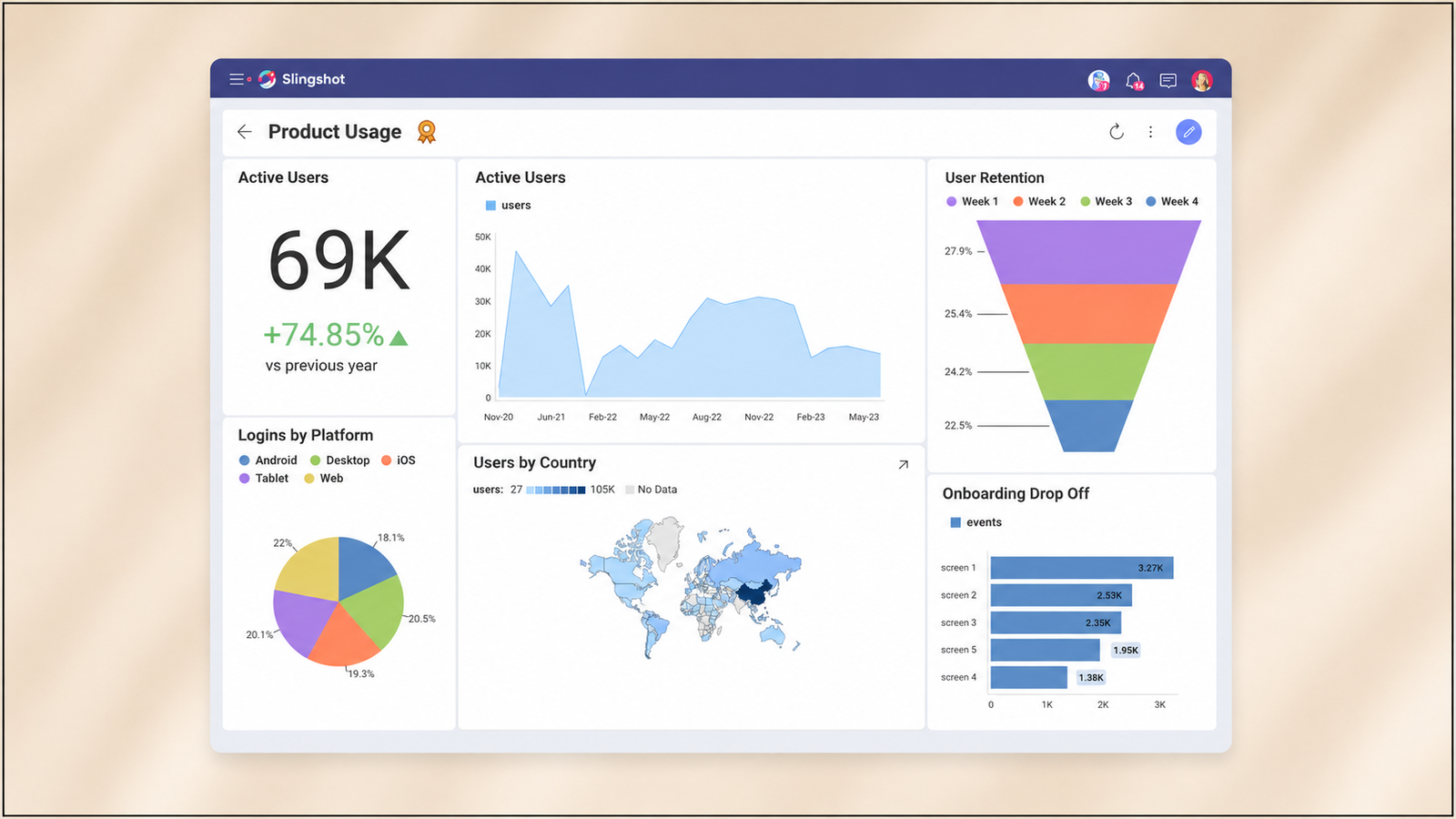
The pricing model reflects the same assumption from a different angle. Pendo charges by Monthly Active Users rather than seats, because it instruments the whole product, not just the admins who build guides, and the side effect is that the bill climbs as adoption succeeds and more people use the software, which is the opposite of how most teams expect a tool to reward a good rollout. This makes complete sense for a B2B context: a vendor selling enterprise software wants its pricing to scale with the customer's own successful adoption, because that adoption is the value being delivered. It makes considerably less sense as a default for a consumer product where user growth is the entire point of the business, not an upsell signal.
The guide-building workflow itself assumes an evaluation and rollout cadence built for enterprise software teams. Custom event tagging and passing user metadata for segmentation may still need developer support depending on your product architecture, though most day-to-day work, creating guides, building segments, launching surveys, is no-code once initial setup is complete. This workflow, an initial developer-assisted setup followed by ongoing no-code iteration by a product team, mirrors how a B2B software team rolls a new onboarding flow out to its existing customer base over a period of weeks. It does not mirror the cadence a consumer growth team needs, where a specific in-app moment might need to change within hours in response to a live campaign or a seasonal event.
Why Consumer Mobile Breaks Those Assumptions
Millions of anonymous users, not a defined account list. Pendo's mobile SDK explicitly supports anonymous visitor sessions, started by passing null or an empty string as the Visitor ID, with the auto-generated anonymous ID unable to be tracked back to the specific visitor. This capability exists and functions correctly. The architectural tension is that Pendo's richest analytics, account-level retention trends, Product Engagement Score, journey orchestration, were built around an identified, account-attributable user population, and a consumer app whose majority of daily activity is genuinely anonymous, or identified only by a device ID with no account-level grouping that means anything, is using the platform's core analytics engine against a population it was not primarily designed to model.
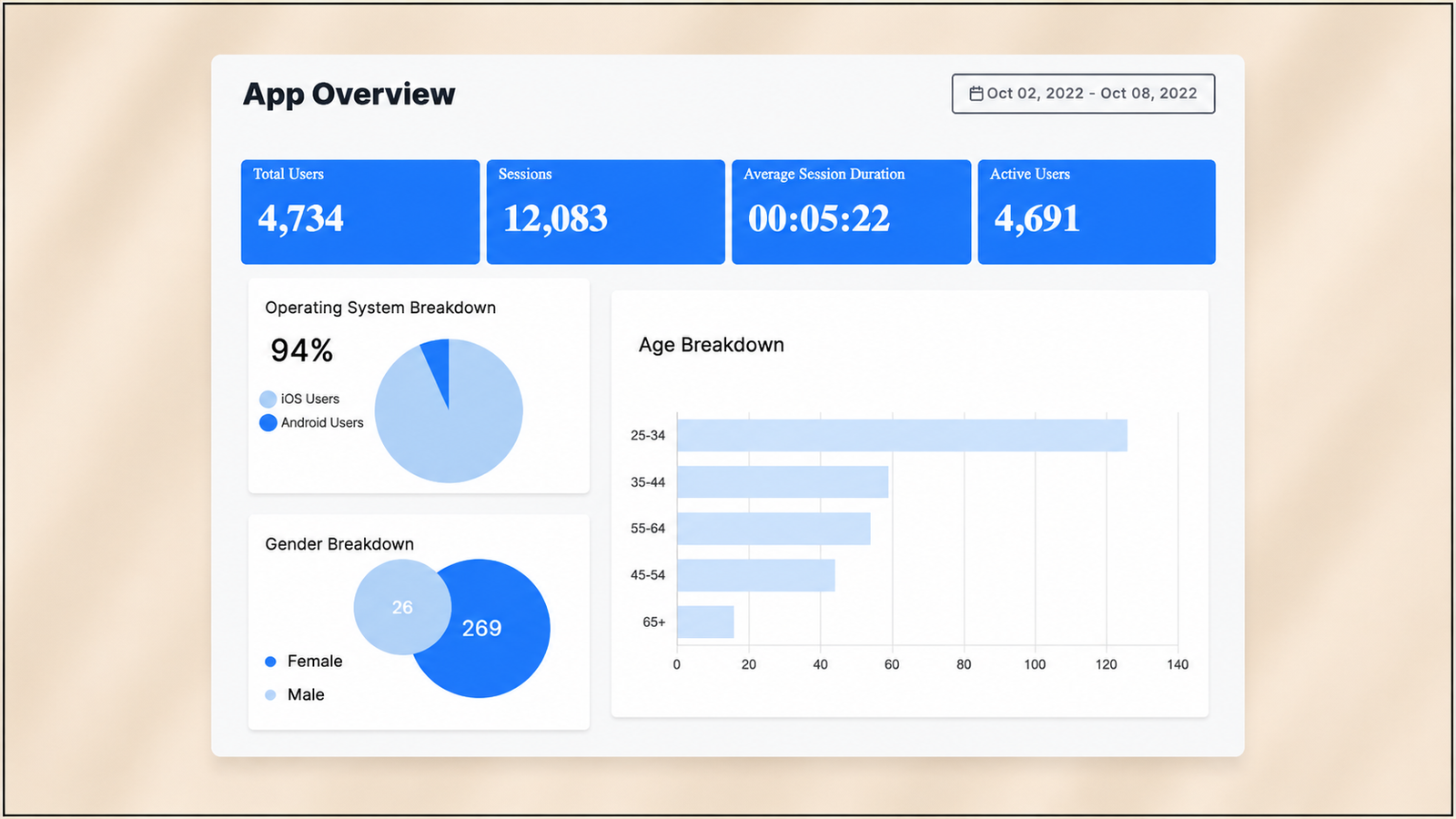
Seconds-long attention windows, not a scheduled onboarding call. B2B SaaS onboarding assumes a user who has made a considered purchase decision, has organisational buy-in, and is motivated to sit through a guided walkthrough because their job depends on learning the tool. A consumer mobile user's tolerance for a guided flow is measured in seconds, and the entire in-app experience has to earn continued attention moment by moment rather than relying on a pre-existing institutional commitment to finish onboarding.
No admin to roll out a change to. Enterprise software adoption has a defined intermediary: an IT admin, a customer success manager, or a designated internal champion who pushes a new guide out to a known user population and can follow up directly if adoption lags. Consumer mobile has no equivalent. There is no single person accountable for whether a specific segment of anonymous users saw and engaged with a specific in-app moment, which means the entire adoption motion has to be automated, targeted, and measured at a scale and speed that the admin-mediated B2B model was never built to require.
Pendo Mobile's Actual Capabilities and Limits
Pendo Mobile is a genuinely capable native SDK, and it is worth being precise about what it does well before covering where consumer teams hit its ceiling.
What it does well. The Pendo Mobile SDK is a codeless library that collects analytics retroactively across all versions of your app, starting as soon as it is integrated, with the ability to display in-app messages, tooltips, and multi-step walkthrough guides built using Pendo's Visual Design Studio. Pendo offers SDKs for major mobile frameworks including iOS, Android, Jetpack Compose, React Native, and Flutter, with cross-platform support that lets a single team analyse, guide, and communicate with users across both web and mobile from one system. Offline support is built in: the mobile SDKs collect analytics even when users are offline, storing up to 10MB of data on-device on a first-in-first-out basis, and syncing automatically once the device reconnects. This is a real, thoughtfully engineered native SDK, not a wrapper bolted onto a web-first product.
Where consumer teams hit the ceiling. The retroactive analytics capability, tracking any user action without prior app tagging, is a genuinely useful feature for a B2B product team debugging adoption after the fact. It is less central to a consumer growth team's actual need, which is usually forward-looking event-based targeting tied to a specific campaign, not retroactive discovery of what happened. The guide format library, lightboxes, tooltips, and multi-step walkthroughs, mirrors the same category Appcues and comparable product-adoption tools ship, which means it shares the same scope limitation: no native gamification mechanics, no stories-format content, no in-app video, and no inline widgets that render within a screen's layout rather than as an overlay on top of it. G2 reviews consistently flag Pendo's in-app guidance as unintuitive and dependent on CSS customisation to look genuinely native inside a product, which for a consumer team without dedicated frontend resources to spend on styling a third-party overlay is a real, recurring cost.
The Pricing Mismatch
The mechanics of Pendo's pricing are consistent across independent market data, and the pattern is worth stating plainly because it directly explains why the model fits a consumer app poorly.
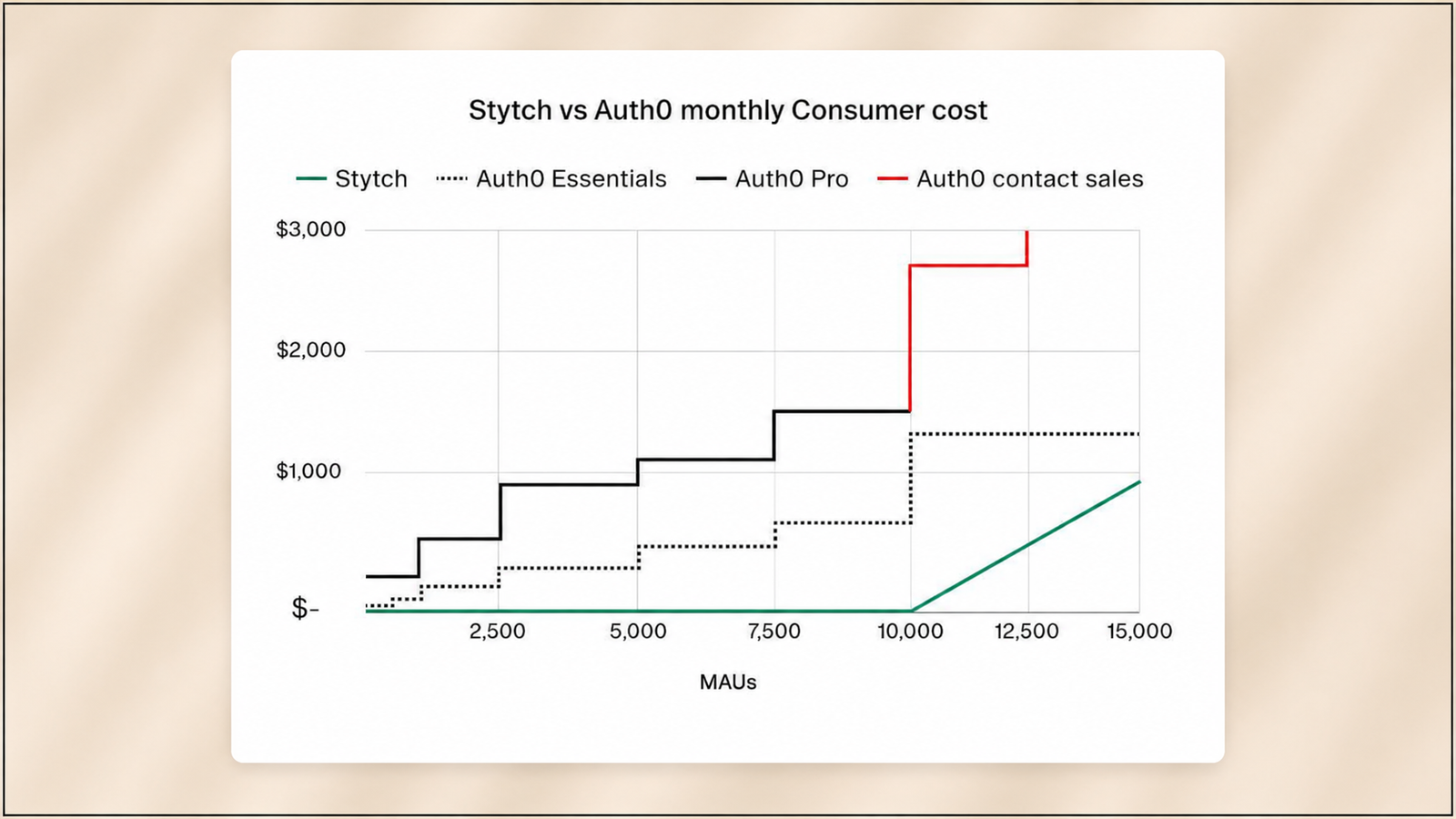
Pendo offers a free plan for up to 500 MAUs, then moves into quote-based Base, Core, and Ultimate tiers. Third-party marketplace data from 523 verified purchases puts the median annual contract at $48,500, with paid plans ranging roughly from $15,000 to $142,476 a year and separate estimates placing the entry-level Base tier around $7,000 to $15,000 a year for roughly 2,000 MAUs. Core, covering 5,000 to 15,000 MAUs, unlocks session replay and Product Engagement Score. Ultimate, covering 50,000-plus MAUs, adds custom CSS and JavaScript for guides, SOC 2 Type 2 compliance, and dedicated support, with one documented customer example reporting $120,000 annually on a mandatory three-year commitment, totalling $360,000 in contract value.
The mechanism that makes this a genuine mismatch, not just an expensive tool, is how the bill responds to success. Pendo notes that cost per MAU decreases as volume increases, but the total contract still climbs because it is metered on total active usage, not a fixed seat count, which means a team seeing 8,000 to 15,000 net-new monthly active users per quarter can find a quote that looked manageable at signing becoming a procurement problem by renewal. For a B2B SaaS vendor, this is a reasonable trade because their own revenue scales with their customer's account growth too. For a consumer mobile app, user growth is not a proxy for revenue growth in the same direct way, and a pricing model that taxes exactly the metric a growth team is trying to maximise creates a structural disincentive at the worst possible moment, right when the product is working.
Add-on costs compound this further: session replay and NPS surveys are separate line items at the Base tier, and one documented case reports a $30,000 annual quote purely for webhook access, which means the effective cost of a consumer-scale deployment frequently runs meaningfully above the headline MAU-tier number once the specific capabilities a team actually needs are added back in.
The Analytics Overlap Question
Most consumer mobile teams evaluating Pendo already run a dedicated mobile analytics stack, Firebase, Amplitude, Mixpanel, or a comparable event pipeline, before Pendo enters the conversation at all. This makes the honest evaluation question narrower than "is Pendo good analytics." It is "what part of Pendo's value is genuinely additive on top of an analytics stack we already have and are already paying for."
The answer, for most consumer teams, concentrates in two places rather than the full product. The in-app guide rendering and targeting layer is additive, because a general-purpose analytics tool does not typically render in-app content at all. Session replay is additive if the team does not already have a dedicated session replay tool, though several are available at a fraction of Pendo's price for that capability alone. The core behavioural analytics, funnels, retention curves, cohort analysis, is largely duplicative for a team that already has Amplitude or Mixpanel instrumented, because both categories of tool answer overlapping questions about user behaviour from the same underlying event stream.
This reframes the actual decision. A consumer team is rarely choosing Pendo as a replacement for its analytics stack. It is evaluating whether to pay Pendo's full-platform pricing specifically for the in-app guide and targeting layer, while the analytics half of the bill duplicates capability the team already owns. Once framed this way, the relevant comparison set shifts toward tools that price and scope themselves specifically for the in-app rendering and targeting problem, rather than bundling it with a full analytics suite the team does not need to buy twice.
The Alternatives
Mobile-native in-app layers. Platforms built mobile-first, rendering native in-app components without a B2B account-analytics core bundled in, and designed to integrate with whatever analytics or CEP stack a team already runs rather than replacing it. Digia Engage is built specifically around this architecture: native rendering for nudges, widgets, surveys, gamification, and video, sitting on top of existing segmentation rather than duplicating an analytics suite the team has already paid for once. This category fits a consumer team whose actual need is the in-app rendering and targeting layer specifically, priced and scoped for that need alone.
CEPs with in-app modules. Platforms like CleverTap, MoEngage, and WebEngage bundle in-app messaging alongside push, email, SMS, and behavioural segmentation built for consumer-scale, event-driven user bases from the ground up, rather than an account-level B2B model retrofitted for anonymous users. A hands-on review of one such platform found its in-app channel constrained to overlay template formats, with inline placement and richer format needs requiring a separate rendering layer, which mirrors the same rendering ceiling that in-app-focused product adoption tools carry, just with genuinely consumer-native segmentation and pricing underneath it.
Analytics-plus-engagement combinations. For a team that has not yet built a mobile analytics stack and wants a single integrated system rather than assembling one from parts, a combined analytics-and-engagement platform priced and architected for consumer scale from the start is a reasonable path. The distinction from Pendo specifically is that these platforms are built with anonymous, high-volume, event-driven consumer usage as the primary design case, not the secondary one.
For Indian Product Teams Specifically
Local pricing. Pendo's pricing is quoted and billed in USD with no published India-specific tier, which means Indian teams absorb exchange rate volatility on top of an already opaque, sales-gated quote process, the same structural issue documented for comparable US-headquartered product-adoption tools serving Indian consumer apps.
Support timezone overlap. Enterprise-tier Pendo support includes a dedicated customer success manager and premium SLAs, but the standard support model is built around US and European business hours, which creates a meaningful overlap gap for an Indian team's working day compared to a vendor with India-based support staff operating in IST.
DPDP considerations. India's Digital Personal Data Protection Act applies to processing of personal data of Indian residents regardless of where that processing occurs, meaning a US-based vendor like Pendo processing an Indian consumer app's user data is squarely within scope even though Pendo itself is not an Indian company. Every third-party vendor that touches personal data, including analytics services, must have a signed Data Processing Agreement in place, and the data fiduciary, the Indian app itself, remains accountable for any misuse or violation regardless of what the vendor's own contract or infrastructure looks like. The Data Protection Board of India began its first enforcement actions in Q1 2026 against app developers found processing data without valid consent or with inadequate retention policies, which makes this a live, not theoretical, compliance question for any Indian consumer app currently evaluating a US-headquartered analytics and engagement vendor.
The evaluation criteria that differ from a US buyer's. A US buyer evaluating Pendo is typically weighing feature depth against a known, dollar-denominated budget with a domestic support relationship as the default. An Indian product team's evaluation has to add at least three additional dimensions a US buyer rarely has to price in explicitly: currency risk on a multi-year contract, the DPA and vendor accountability chain required under DPDP, and whether the support relationship functions in real time during the Indian team's actual working hours rather than requiring an overnight response cycle for anything urgent. A vendor with India-based infrastructure, support, and pricing removes all three considerations from the evaluation simultaneously, which is a meaningfully different starting position than comparing feature lists alone.
Topics Not in the Brief That Teams Should Know
The CocoaPods deprecation is a near-term migration cost worth planning for now. The CocoaPods registry becomes read-only in December 2026, and Pendo will stop publishing new iOS SDK versions to CocoaPods, recommending migration to Swift Package Manager as soon as possible. Any team currently integrated via CocoaPods needs to budget engineering time for this migration regardless of whether they stay on Pendo or switch, and it is worth confirming any alternative vendor's own distribution mechanism is not facing a comparable near-term deprecation.
Pendo's roadmap is shifting toward AI-agent analytics, which is a B2B-specific investment area with limited consumer relevance. Pendo's most significant recent launch, Agent Analytics, tracks how users interact with embedded AI agents and chatbots inside a product, reaching general availability in 2025 and priced as a separate module. This is a genuinely useful capability for a B2B SaaS product embedding an AI assistant, and largely irrelevant to most consumer mobile apps, which is worth noting because it signals where Pendo's own product investment is concentrating going forward, further from the consumer mobile use case rather than toward it.
Pricing has been trending upward, not just remaining stable. Pendo's pricing has increased 20 to 34 percent year-over-year depending on segment, and monthly payment terms have been phased out in favour of annual commitments only, which is directionally relevant for any team modelling a multi-year total cost of ownership rather than a single-year quote.
Contract terms include auto-renewal with a real cancellation cost. Pendo contracts auto-renew with a minimum one-year commitment, and disabling auto-renewal reportedly requires director-level approval on the customer's side, which is a procurement detail worth surfacing during any evaluation, since it affects how easily a team can exit if the consumer-scale mismatch becomes apparent after signing rather than before.
Key Takeaways
Pendo's architecture reflects a B2B SaaS design assumption at every layer: account-level analytics as the default unit of measurement, MAU-based pricing that bills more as adoption succeeds, and a guide-building workflow paced for enterprise rollout cycles rather than consumer-speed iteration.
Consumer mobile breaks each of these assumptions structurally, not incidentally: millions of genuinely anonymous users instead of a defined account list, attention windows measured in seconds rather than a scheduled onboarding session, and no admin intermediary accountable for rolling a change out to a known population.
Pendo Mobile is a real, capable native SDK with genuine iOS, Android, React Native, and Flutter support and built-in offline analytics collection. Its ceiling for consumer teams is scope, not execution quality: the guide format library matches other product-adoption tools, tooltips, modals, walkthroughs, without gamification, stories-format content, video, or inline widgets.
Pendo's MAU-metered pricing, with a median annual contract around $48,500 and enterprise-tier deployments reaching $120,000 or more, structurally taxes the exact growth a consumer team is trying to produce, which is the opposite incentive a growth-stage business needs from its tooling budget.
Most consumer teams already run a dedicated mobile analytics stack before evaluating Pendo, which means the honest question is not whether Pendo's analytics are good, but whether the in-app guide and targeting layer alone justifies paying for a full analytics suite that duplicates capability already owned.
The alternatives sort into mobile-native in-app layers scoped specifically for rendering and targeting, CEPs with in-app modules built consumer-native from the start, and analytics-plus-engagement combinations for teams building their stack from scratch.
Indian product teams carry three additional evaluation dimensions a US buyer does not: currency risk on USD-denominated multi-year contracts, DPDP-mandated vendor accountability and data processing agreements that apply regardless of where the vendor is headquartered, and support timezone overlap that affects how quickly an urgent issue actually gets resolved.
Further Reading
From Digia Engage:
- Appcues Alternatives for Native Mobile Apps (Not Web Products) — the comparable web-first-versus-mobile-native diagnosis applied to Appcues specifically
- CleverTap Alternatives: 7 Tools for Teams Who Want Better In-App UI — the CEP category evaluated in more depth, including the diagnosis-first framework this article builds on
- CleverTap In-App Messaging: What It Can Do and Where Teams Hit a Wall — the hands-on evidence base for the CEP in-app module category referenced in this article
- Scratch Cards and Spin-the-Wheel in Mobile Apps: How They Drive Engagement — the gamification mechanics referenced as outside a product-adoption tool's scope
- Privacy-First Personalization: Building Relevance Under iOS ATT, GDPR, and User Trust — the DPDP context referenced in the India-specific section, covered in fuller depth
- Digia Engage Nudges — native, event-triggered in-app formats configurable without engineering tickets
External Sources:
- Mobile Product Analytics & In-App Guidance Software, Pendo — Pendo (native SDK framework support, offline analytics collection, cross-platform capability confirmed directly from the vendor)
- Pendo Mobile SDK, GitHub — Pendo (SDK architecture, CocoaPods deprecation notice, retroactive analytics capability)
- Plan Your Mobile Implementation, Pendo Help Center — Pendo (anonymous visitor support, guide format library, integration requirements)
- Mobile SDK Data Collection, Pendo Help Center — Pendo (identified versus anonymous session mechanics)
- Mobile Offline Support for Analytics, Pendo Help Center — Pendo (10MB local cache, FIFO storage, sync-on-reconnect mechanics)
- Pendo Pricing 2026: What It Really Costs by MAU — Supered (MAU-based pricing mechanics and the growth-penalty framing)
- Pendo Pricing 2026: Free up to 500 MAUs, Paid Plans from ~$15K/year — Usercall (net-new MAU growth as a renewal-time procurement risk)
- Pendo Pricing 2026: Real Costs ($25K-$80K+ Decoded) — Apty (per-MAU cost decrease versus total contract increase mechanics)
- Pendo Pricing in 2026: Hidden Costs and When To Look Elsewhere — Userpilot (add-on costs including the documented $30,000 webhook access quote)
- Pendo Pricing 2026 - Plans, Features, and Cost Optimization, Userorbit — Userorbit (tier breakdown, the $120,000/year three-year commitment example)
- How Much Does Pendo Cost? Full Pricing Breakdown (2026) — Getcor (Base tier entry pricing estimate)
- Pendo Pricing 2026: $7,000-$133,000/per year — Costbench (median contract value from 523 verified purchases; auto-renewal and cancellation terms)
- Pendo Analytics Review: What You Get for $50K+ Per Year — Userpilot (account-level analytics architecture and product scope)
- What Is Pendo? Features, Pricing & Review (2026) — Userpilot (Agent Analytics launch, year-over-year pricing increases, guide-building workflow)
- Pendo Alternatives: 9 Best Analytics & DAP Picks 2026 — Appcues (G2-sourced criticism of Pendo's CSS-dependent in-app guidance)
- The DPDP India 2026 Handbook — Levo.ai (third-party vendor DPA requirements and fiduciary accountability)
- Digital Personal Data Protection Act India: Compliance Guide 2026 — Atlas Systems (extraterritorial scope of DPDP applying to non-Indian vendors)
- India DPDP Act 2026: Compliance Reality for App Developers — Make An App Like (Q1 2026 enforcement actions and staggered compliance deadlines)
Digia Engage is a mobile-native in-app layer scoped specifically for the rendering and targeting problem, nudges, widgets, surveys, gamification, and in-app video, without bundling in a duplicate analytics suite most consumer teams have already built. It integrates with an existing analytics or CEP stack rather than replacing it, and is priced and supported for consumer mobile scale from India. Book a demo to see the format library against your actual MAU growth trajectory, or read the Appcues alternatives comparison for the equivalent evaluation framework applied to product-adoption tools generally.